Part 4 of 5
I did not open Kelsey’s envelope in front of the children.
That was the first decision.
The second was more difficult.
I didn’t open it in front of Nick either.
Not because I wanted to punish him.
Because my daughter had addressed it to me.
I needed to hear her voice privately before hearing anyone else’s explanation.
I took the envelope home.
Set it on my kitchen table.
Made tea.
Let the tea go cold.
At eleven-thirty, I opened it.
The letter was dated five years before Kelsey’s death.
Lily had been four.
Owen was not yet two.
Gracie wasn’t born.
Mom,
There is something I keep meaning to tell you, and every time I try, I decide I’m being dramatic.
That probably means I should tell you.
I stopped.
This wasn’t written by a woman expecting to die.
It was not a final message.
It was an ordinary letter never delivered.
That made it more unsettling.
Kelsey wrote about Nick.
Not the Nick of the last three years.
The younger man she’d married.
The father still learning how to support a family.
Their marriage had gone through a difficult period.
Money.
Exhaustion.
Nick working too much.
Kelsey feeling alone with two small children.
For several months, she had considered leaving.
My chest tightened.
I had never known.
She wrote:
I don’t think Nick is a bad man.
I think he panics when he feels like he’s failing.
Then he tries to solve the feeling instead of the problem.
That sentence sounded so much like the man I now knew that I had to put the letter down.
After a moment, I continued.
During that difficult year, Nick had secretly opened a credit card.
Not to gamble.
Not for another woman.
Nothing dramatic.
He used it to cover groceries, repairs and small expenses when their bank account ran low.
He hid the balance from Kelsey because he was ashamed.
By the time she discovered it, the debt had become significant.
They fought.
Nick promised no more hidden money.
They attended counseling.
They made a budget.
Things improved.
Kelsey wrote:
I believe him when he says shame makes him stupid.
I just don’t know whether understanding that is enough.
I am afraid that if something big goes wrong someday, his first instinct will always be to hide it until the hiding becomes worse than the thing itself.
I closed my eyes.
The fifty-two thousand.
The refinance.
My move.
Nick had not invented his pattern after Kelsey died.
Grief had amplified it.
But the pattern existed before.
Kelsey’s letter continued.
If the children ever become old enough to notice the tension between us, I don’t want them thinking love means pretending everything is fine.
I want them to know adults can make mistakes and still be responsible for repairing them.
I want them to know being ashamed is not permission to lie.
And I want them to know that asking for help before things collapse is a kind of courage.
Then came the sentence that made my throat close.
Mom, if I ever start making excuses for things that hurt me just because I understand why Nick did them, remind me that understanding and accepting are not the same thing.
I read it again.
Understanding and accepting are not the same thing.
For three years after Kelsey died, I had used understanding to excuse almost everything.
Nick is grieving.
Nick is exhausted.
Nick needs time.
Nick wants a new marriage.
Nick wants his house back.
All of those things could be true.
And none made it acceptable to erase my sacrifice.
I finished the letter.
Kelsey ended by saying she loved Nick.
That they were doing better.
That she believed they could build a good marriage if both of them learned to speak before fear became secrecy.
Then:
I probably won’t give you this because you’ll worry.
See? I’m doing it too.
Maybe we’re all cowards in different ways.
Love you.
Kels
Despite everything, I laughed.
That was my daughter.
Self-awareness arriving one sentence too late.
The next morning, Nick came to my apartment.
I had called him.
He sat across from me.
I placed the letter between us.
“I read it.”
He nodded.
“You knew about it?”
“No.”
“But you knew what she was referring to.”
“Yes.”
“The credit card.”
“Yes.”
“How much?”
“Fourteen thousand at the worst point.”
I breathed out.
“You paid it off?”
“Eventually.”
“Did you hide other debt from her?”
“No.”
“From me?”
He looked ashamed.
“The refinancing.”
“I know about that.”
“There was also a small personal loan after the funeral.”
“How small?”
“Eight thousand.”
“What for?”
“Funeral balance. Childcare. A furnace repair.”
“Still active?”
“No. Paid off last year.”
“Why didn’t you tell me?”
He almost said the old phrase.
I could see it forming.
I was going to.
Instead he stopped.
“Because I was ashamed.”
“Better.”
He frowned.
“Better?”
“Not what you did. The answer.”
He understood.
I handed him Kelsey’s letter.
He read it slowly.
Halfway through, his face changed.
By the end, tears were running down his cheeks.
“She knew me.”
“Yes.”
“Better than I knew myself.”
“Probably.”
He laughed weakly.
“That sounds like her too.”
We sat quietly.
Then Nick said, “I thought after she died, if I could just keep everything together, then the kids would be okay.”
“You weren’t keeping things together.”
“No.”
“You were making the appearance of togetherness.”
He nodded.
“That’s fair.”
I pointed toward the letter.
“She was afraid you’d keep doing this.”
“I know.”
“Are you?”
“Trying not to.”
That was a more honest answer than promising never again.
I appreciated it.
We talked about the children.
Not whether they should read Kelsey’s letter now.
They shouldn’t.
They were too young.
But someday.
Especially Lily.
She was beginning to understand enough to ask complicated questions.
“Do we tell them you made me leave?” I asked.
Nick looked stricken.
“Not like that.”
“That isn’t what I asked.”
He thought.
“Someday, yes.”
“Why?”
“Because if I lie, then I’m doing the same thing again.”
Good.
“What do we tell them now?”
“That adults made a bad decision.”
“We?”
He looked at me.
“Me.”
The correction mattered.
“That I asked you to move when I should have handled things differently.”
“And the money?”
“When they’re old enough.”
I nodded.
No child needed to know the details of mortgage principal at nine.
But one day, they deserved an honest history.
Not to choose sides.
To understand family.
That Saturday, Ashley came to my apartment alone.
She brought no documents.
No bakery box.
Just herself.
“I wanted to ask you something.”
“All right.”
“Could you come with me tomorrow?”
“Where?”
“To pick paint.”
I stared.
“For what?”
“The spare bedroom.”
My old room.
Every muscle in my body tightened.
Ashley saw it.
“Not for me.”
“Then?”
“For the kids.”
I frowned.
“They have rooms.”
“I know.”
She sat opposite me.
“Lily suggested making the spare room a family room. Somewhere they can keep things that belonged to Kelsey. Photo albums. Her books. Things they want access to without having to ask.”
I didn’t know what to say.
“I thought it was a good idea,” Ashley continued. “But I don’t want to design a shrine.”
“No.”
“And I don’t want to make it look like I’m displaying her because I feel guilty.”
“No.”
“So I thought maybe you could help.”
I looked at her.
“Why me?”
“Because you knew her.”
“So did Nick.”
“He cries every time I ask what color Kelsey liked.”
That sounded believable.
“What color did she like?”
“Yellow.”
Ashley smiled.
“That’s what Gracie said.”
Of course.
Yellow.
Kelsey had painted her first bicycle yellow.
Bought yellow kitchen towels.
Worn yellow rain boots in college because she claimed gray weather needed opposition.
We picked a soft warm cream instead.
Not yellow walls.
Too much.
But we found yellow cushions.
A small lamp.
Shelves.
I brought over Kelsey’s old recipe box.
Nick contributed books.
The children chose photographs.
Nobody called it Kelsey’s room.
It became the family room.
That distinction mattered.
In January, the repayment agreement was formally signed.
Three thousand upfront.
Three hundred fifty monthly.
The number would not make me wealthy.
At that rate, repayment would take years.
But every payment represented something larger than money.
Acknowledgment.
Nick had signed a sentence stating clearly:
The $52,000 contribution made by Roxanne Brennan was not rent.
I kept a copy in my filing cabinet.
Not because I wanted to read it every day.
Because I never again wanted someone else’s convenient version of events to become the only record.
Winter passed.
Then spring.
My apartment began to feel less temporary.
I bought curtains.
A narrow bookshelf.
Two planters for the porch.
I stopped calling the house on Third Street “this little rental” and began calling it home.
That surprised me.
I had thought getting justice would mean reclaiming what I’d lost.
Instead, part of healing was discovering I didn’t actually want my old room back.
I wanted respect.
Choice.
A relationship with the children.
My own front door.
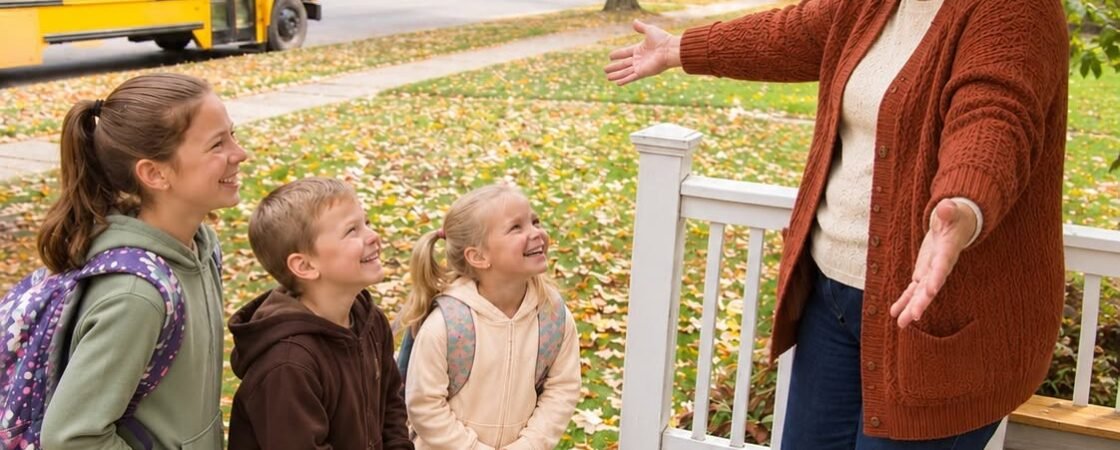
On a warm April afternoon, Ashley arrived to collect the kids.
Nick had been delayed at work.
She came inside.
Gracie was drawing.
Owen was reading.
Lily sat unusually quiet.
“Everything okay?” Ashley asked.
Lily looked at her.
Then at me.
Then she said, “We’re having Family Day at school.”
I smiled.
“That’s nice.”
“No, it’s not.”
“Why?”
“We have to bring two adults.”
Ashley and I exchanged a glance.
“What kind of adults?” I asked.
“Family.”
“Your dad?”
“He can’t come. Work meeting.”
“All right.”
Lily stared at the floor.
“My teacher said stepfamilies count.”
Ashley sat beside her.
“They do.”
Lily nodded.
“And grandparents.”
“They do too,” I said.
She looked up.
“I want both of you.”
Ashley went still.
So did I.
“Sweetheart—”
“No.”
Lily’s voice cracked.
“I don’t want to pick.”
My heart broke quietly.
“We aren’t asking you to.”
“Everybody always says that.”
Tears filled her eyes.
“But it feels like picking anyway.”
Ashley took one of Lily’s hands.
I took the other.
For the first time, we sat on either side of my granddaughter without either woman feeling she had to make herself smaller.
“We’ll both go,” Ashley said.
I looked at her.
Then at Lily.
“Yes.”
Lily’s shoulders dropped.
“Really?”
“Really.”
She hugged us both at once.
Awkward.
Too many elbows.
Perfect.
Two weeks later, we attended Family Day.
Lily introduced Ashley first.
“This is my stepmom.”
Then me.
“This is my grandma.”
A little boy asked, “Where’s your mom?”
Lily looked at me.
Then Ashley.
I held my breath.
She answered herself.
“She died when I was little.”
The boy looked uncomfortable.
“Oh.”
Lily continued.
“But we talk about her.”
No drama.
No shame.
No secrecy.
Just truth in a nine-year-old’s voice.
On the way home, I cried in the car.
Not because I was sad.
Not entirely.
Because Kelsey had feared her children might learn that love required pretending.
They were learning something else.
Then my phone rang.
Nick.
I answered.
“Everything okay?”
His voice sounded strange.
“Roxanne, where are you?”
“Driving home.”
“Can you come to the house?”
“What happened?”
“I found something.”
My stomach tightened.
We were apparently a family incapable of locating ordinary objects.
“What?”
“Behind Kelsey’s old dresser.”
“What kind of something?”
“A letter.”
I sighed.
“Nick.”
“This one isn’t from Kelsey.”
I pulled into a parking lot.
“Who is it from?”
He was silent.
“Nick?”
When he answered, his voice had changed.
“Your husband.”
I stopped breathing.
My husband, Daniel, had been dead for eleven years.
“What are you talking about?”
“It’s addressed to Kelsey.”
I gripped the phone.
“Why would Daniel have written Kelsey a letter and hidden it in her house?”
“I don’t know.”
Then Nick said the words that made every hair on my arms rise.
“But the first line says, ‘Your mother must never know what I did with the money.’”
-END OF Chapter 4–