Part 2 of 5
I did not sleep well after meeting Ashley.
At sixty, I had become familiar with bad nights.
There were the nights after Kelsey died when I woke convinced the phone had rung.
The nights after I moved out when I reached toward the bedside table expecting to hear Gracie padding down the hallway after a nightmare.
The nights when I wondered whether selling my house had been generous or foolish.
But this was different.
Nick had written that there was a real reason he wanted me gone.
And he believed I wouldn’t forgive him if I knew it.
By morning, I’d imagined half a dozen possibilities.
None improved with daylight.
At eight, Ashley texted.
I’m sorry I left you with that.
I replied:
Did you ask him?
Not yet.
Good.
I stared at my own response.
Then added:
I want to hear it from him.
She sent back:
I agree.
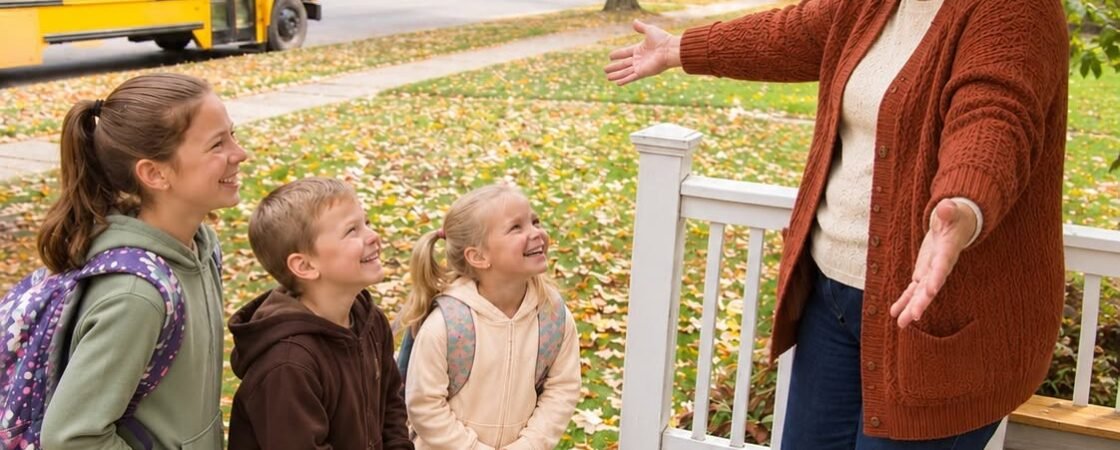
That afternoon the children arrived at 3:40 as always.
I said nothing.
Ashley had apparently said nothing too.
That was important.
Lily watched me more closely than usual.
Owen complained about fractions.
Gracie drew a horse that looked like a sofa with legs and became offended when I failed to identify it immediately.
Normality returned for two hours.
Then Nick came.
This time, he got out of the truck.
I knew before he reached my porch that Ashley had spoken to him.
He looked exhausted.
“Can I come in?”
I stepped aside.
The children were gathering coats.
Nick crouched to zip Gracie’s jacket.
“Go wait in the truck, guys.”
Lily looked from him to me.
“Everything okay?”
“Yes,” I said.
Nick answered at the same time.
“We’re just talking.”
Lily’s eyes narrowed.
“That’s what people say before something is not okay.”
Nine years old.
Too perceptive for her own peace.
I kissed her cheek.
“Homework tomorrow. Don’t forget your spelling sheet.”
After they left, Nick remained by the door.
“Coffee?”
He stared at me.
“You’re offering me coffee?”
“I’m not promising it’s good.”
That almost produced a smile.
He sat at my tiny kitchen table.
In his old house—Kelsey’s house, the children’s house, his house, whatever name belonged to it now—we had owned a table large enough for eight.
Mine seated four if nobody breathed too deeply.
I poured two cups.
“What’s the reason?”
He looked at the coffee.
“Ashley told you.”
“She told me what she found.”
“I didn’t know she was going through that box.”
“She said you told her to organize the garage.”
“I did.”
“Then perhaps you should’ve remembered what you wrote.”
He nodded.
Fair.
I waited.
Nick rubbed his thumb along the mug.
“The kids were starting to come to you instead of me.”
I blinked.
“What?”
“That’s the reason.”
I sat back.
“Explain.”
His eyes stayed lowered.
“After Kelsey died, I was gone a lot.”
“Working.”
“Some of it.”
“What does that mean?”
“Sometimes I stayed late because I couldn’t come home.”
That admission surprised me.
I remembered hearing the garage door at ten.
Eleven.
Sometimes after midnight.
I’d assumed overtime.
“Why?”
He looked toward the window.
“Because Kelsey was everywhere.”
I understood.
Perhaps better than he expected.
“And the children?”
“I loved them.”
“I know.”
“But they needed things I couldn’t give.”
“Like dinner?”
He winced.
“Like their mother.”
Neither of us spoke.
“You gave them routine,” he continued. “You knew how Kelsey did bedtime. You knew what food they liked. You knew Lily needed the hallway light on but would deny it. You knew Owen’s croup got worse if the room was too dry.”
“I was their grandmother.”
“You were better at being there.”
The bitterness in his voice wasn’t directed at me.
That made it sadder.
“Then Ashley came.”
I waited.
“Lily had a school assignment about family.”
I remembered.
A poster.
Photographs arranged around a paper tree.
“She put Kelsey’s picture in the middle,” Nick said.
“She should have.”
“I know.”
“She put mine beside it.”
I remembered that too.
Grandma Roxanne.
Red marker.
“She put you near the top,” he continued. “She put me off to one side.”
“Nick, she was eight.”
“I know.”
“Do you?”
He looked at me.
“I was ashamed of what it made me feel.”
There was the first piece.
Not anger.
Jealousy.
Not romantic jealousy.
Parental jealousy.
“I started noticing everything. When Gracie fell at the playground, she called for you. When Owen had a nightmare, he came to your room before mine. Lily asked you questions she wouldn’t ask me.”
“Because I was there.”
“I know.”
He said it more sharply this time.
Then immediately softened.
“That’s exactly it.”
He rubbed his forehead.
“I started feeling like a visitor in my own family.”
My anger rose.
“So you solved that by removing the person who had held that family together while you grieved?”
His face tightened.
“When you say it like that—”
“How else should I say it?”
He looked away.
I let silence sit between us.
Eventually, he spoke.
“I wanted to become their father again.”
“You never stopped being their father.”
“It felt like I had.”
“And you blamed me.”
“Yes.”
There are apologies that arrive before the person is ready to hear them.
Nick didn’t offer one yet.
I was grateful.
“Did Ashley know?”
“No.”
“Did you tell her I wanted to leave?”
“Yes.”
“Why?”
“Because I knew if I told her the truth, she’d think I was awful.”
I gave him a level look.
He nodded.
“I know how that sounds.”
“Probably because it sounds accurate.”
“Yes.”
I stood and carried my coffee to the sink.
My hands had begun trembling.
Not from weakness.
From years of restraint suddenly finding language.
“I sold my home.”
“I know.”
“I retired early.”
“I know.”
“I put fifty-two thousand dollars into that house.”
“I know.”
“I raised your children while you learned how to breathe again.”
His eyes filled.
“I know.”
“And when they became attached to me because I was the adult who showed up every day, you decided my presence was keeping you from being their father.”
“I know.”
I turned.
“No. Stop saying that.”
He stared at me.
“Knowing something now doesn’t make what you did smaller.”
“I don’t think it does.”
“Good.”
I sat again.
“Why call the money rent?”
He swallowed.
“Because you asked for it back.”
“I asked what would happen to it.”
“And I panicked.”
“About money?”
“Yes.”
“Anything else?”
He hesitated.
“The house.”
“What about it?”
“If I admitted it wasn’t rent, then I had to admit you had a claim.”
“Maybe not legally.”
“I wasn’t thinking legally.”
“Then what?”
“A claim on the home.”
His voice dropped.
“I wanted one thing that felt like mine.”
I stared at him.
The house Kelsey had chosen.
The house my money had helped save.
The house where three children slept under photographs of their dead mother.
And Nick wanted it to feel like his.
I understood the feeling.
I did not excuse the method.
“You could have told me that.”
“I know.”
“Could’ve asked for boundaries.”
“Yes.”
“Could’ve said you needed more nights alone with the children.”
“Yes.”
“You could’ve asked me to get a nearby apartment and discussed repaying me.”
He nodded.
“I know.”
“Instead you rewrote the last three years.”
“Yes.”
That one hurt him to say.
Good.
Not because I wanted him harmed.
Because truth should have weight.
“Does Ashley know this?”
“Some of it.”
“Tell her all of it.”
His head lifted.
“Roxanne—”
“If your marriage requires a false story about me, it isn’t much of a marriage.”
He nodded.
“I will.”
“And the money?”
His shoulders dropped.
“I can’t give you fifty-two thousand.”
“I know.”
“I have maybe six thousand liquid.”
“I don’t want Ashley’s money.”
“She said the same thing.”
That surprised me.
“What?”
“She told me if I expect her to help fix this, we’re going to have a serious problem.”
I almost smiled.
“She has sense.”
“She does.”
He looked embarrassed.
“More than I have lately.”
“That’s not my problem.”
“No.”
Another good answer.
We agreed on one thing that evening.
Nothing would happen quickly.
Not money.
Not forgiveness.
Not family repair.
Nick would bring me copies of the mortgage records.
We would meet with a mediator or financial counselor to discuss a repayment arrangement.
I would not threaten access to the children.
He would not threaten mine.
More importantly, he would stop using the children as emotional proof that he was their father.
“They can love you and me,” I said.
“I know.”
“You’re doing it again.”
He almost smiled.
“I’m learning.”
At the door, he paused.
“Roxanne?”
“Yes?”
“I didn’t make you leave because Ashley wanted your place.”
“I understand that now.”
“I made you leave because I thought if the kids needed you less, maybe they’d need me more.”
The sentence sounded uglier spoken aloud than it had in his notebook.
His face showed that he heard it too.
I said nothing.
He left.
The following afternoon, Ashley came to collect the children.
For the first time.
She arrived at 5:30.
When I opened the door, she held a bakery box.
“Bribery,” she said.
“With what?”
“Apple turnovers.”
“Effective.”
She smiled nervously.
The children were finishing a board game.
Gracie saw Ashley.
“You came!”
She ran to her.
That told me something.
Ashley knelt and opened her arms.
Gracie collided with her.
No hesitation.
No uncertainty.
Something inside me tightened.
Not anger.
Something less flattering.
Jealousy.
There it was.
The exact feeling I’d judged Nick for.
I hated recognizing it.
Ashley looked at me over Gracie’s shoulder.
Perhaps she saw something on my face.
Perhaps not.
We ate turnovers.
For twenty minutes, nobody discussed money or grief.
Ashley helped Owen with a word puzzle.
Lily described a science project.
Gracie put icing on her nose.
When it was time to leave, Lily lingered.
“Grandma?”
“Yes?”
“Are you and Dad mad?”
“Sometimes.”
She frowned.
Children dislike nuanced answers.
“Are you going to stop seeing us?”
“No.”
The answer came easily.
“Promise?”
I hesitated.
Promises are dangerous when they depend on other people.
So I chose carefully.
“I promise I will do everything in my power to stay part of your lives.”
She thought about that.
“That’s not the same.”
“No.”
“Why can’t adults just say yes?”
“Because sometimes adults say yes when they should tell the truth.”
Lily looked toward the driveway.
Ashley was buckling Gracie into her seat.
Then Lily whispered, “I found something.”
My stomach tightened.
“What?”
“In Mom’s old art box.”
“What were you doing in there?”
“Looking for construction paper.”
Fair.
“What did you find?”
She reached into her coat pocket.
A folded piece of stationery.
My daughter’s handwriting.
I knew it immediately.
“Did you read this?”
“Only the top.”
She looked guilty.
“It says Grandma.”
I unfolded it carefully.
It was dated six years earlier.
Before Gracie was born.
Before anyone had imagined Kelsey’s life could end at thirty-one.
The first line read:
Mom,
Nick and I finally made a decision about the house, and before we tell anyone else, I want to tell you why.
I looked up.
Lily watched me.
“What decision?”
“I don’t know yet.”
At the bottom of the page, beneath Kelsey’s handwriting, was a small hand-drawn floor plan.
Two homes.
Side by side.
Connected by a porch.
And suddenly I realized my daughter had once imagined a future none of us had ever known about.
-END OF Chapter 2–