Part One — What Was Hidden in the Garage
A couple of times each week, I pick up my five-year-old grandson Noah from kindergarten and bring him back to my house until his parents finish work. Those drives are some of my favorite moments because that boy can talk for twenty uninterrupted minutes about dinosaurs, cafeteria pizza, and why apparently everyone in his class is terrible at coloring inside the lines.
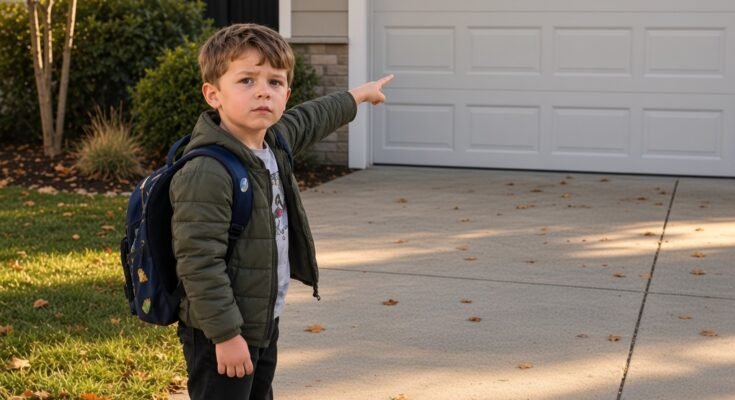
That afternoon, Noah was safely buckled into his car seat and explaining something very serious about a plastic stegosaurus when he suddenly lowered his voice.
“Grandma, I’m going to tell you a secret Mom and Dad said even the police can’t know.”
I laughed.
“Good Lord. What are those two doing now?”
Noah didn’t laugh back.
“It’s in the garage.”
I glanced at him in the mirror. “What’s in the garage?”
“I’m not supposed to tell you. Dad said nobody can know until it’s ready.”
At that point I assumed my daughter, Laura, and her husband, Ben, were preparing some ridiculous surprise. My birthday was six weeks away. Maybe they had bought patio furniture. Maybe Ben was building something.
Then Noah added, “But I saw it yesterday. Mommy was crying.”
My smile disappeared.
“Why was Mommy crying?”
“She was sitting inside it.”
“Inside what?”
Noah hesitated.
Then the secret came spilling out the way secrets always do when entrusted to five-year-olds.
“The green truck.”
I nearly missed my turn.
“What green truck?”
“The old one. Dad says it was Grandpa’s. It has the dent on the back where you hit the mailbox.”
My foot came off the accelerator.
There had only ever been one green truck with that dent.
My husband, Thomas, had owned a pale-green 1972 Chevrolet pickup for most of our marriage. He bought it used before Laura was born. We took her home from the hospital in it. Thomas taught her to drive in it. We hauled Christmas trees, bicycles, furniture, and twenty years of family life in that truck.
And yes, I backed it into our mailbox in 1994.
Thomas never fixed the dent because he said it was “historical evidence.”
But the truck was gone.
I knew because I had sold it nine years earlier.
Thomas had pancreatic cancer. By the final year, there were medications, home-care expenses, travel for appointments, and bills arriving faster than I could understand them. The truck had been sitting in our garage barely driven, so I sold it to a collector in Wisconsin.
Thomas cried when it left.
Not in front of the buyer.
Afterward.
He stood at the kitchen window watching the trailer disappear and said, “That’s forty years leaving on four tires.”
He died seven months later.
I never saw the truck again.
Until Noah said it was inside his parents’ garage.
I turned the car around.
“Grandma, we’re not going to your house?”
“No.”
“Am I in trouble?”
“No, sweetheart.”
“Mom said if I told you, the surprise would be ruined.”
“The surprise is experiencing serious mechanical difficulties.”
He seemed satisfied with that.
I reached Laura’s house twenty minutes later. Her car was in the driveway, which surprised me because she wasn’t supposed to be home until five.
I left Noah buckled for the thirty seconds it took me to open the garage door.
Then I stopped.
The truck was sitting under bright work lights.
Pale green.
Same long hood.
Same white roof.
Same dent above the left side of the rear bumper.
For several seconds, I couldn’t breathe.
Laura was standing beside the driver’s door wearing old jeans and holding a polishing cloth.
“Mom?”
I put one hand against the garage frame.
“How?”
Her face fell.
“Noah told you.”
“He said the police were involved.”
She closed her eyes.
“Of course he did.”
Noah shouted proudly from the car, “I kept most of the secret!”
Ben appeared from behind the truck.
He looked at his son.
“You lasted three days.”
“I’m five.”
“Fair defense.”
But I wasn’t laughing.
I walked slowly toward the truck and touched the hood.
Cold metal.
Real.
Not memory.
Not another green Chevrolet somebody had found and restored to look similar.
I walked to the back.
There was the dent.
Thomas once drew a tiny smiley face beside it with a black marker after teasing me about the mailbox.
The marker was faded.
But still there.
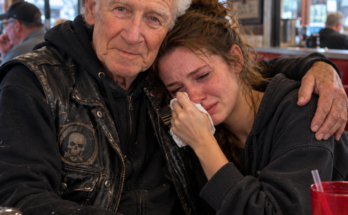
I started crying.
“What did you do?”
Laura came beside me.
“We found it.”
“How?”
“Dad kept every service receipt he ever received. One of them had the VIN.”
Of course he did.
Thomas kept receipts for windshield wipers bought during the Reagan administration.
Laura had spent almost two years tracing the vehicle. After I sold it, the Wisconsin collector kept it for several years before selling it again. It eventually went to an older man in Iowa who used it rarely and stored it in a barn.
Laura contacted him.
He initially said no.
Then she sent him a photograph of Thomas standing beside the truck with six-year-old Laura sitting on the hood.
The man changed his mind.
“You bought it?”
She nodded.
“With what money?”
“Mom.”
“How much?”
“Enough.”
I turned toward Ben.
“You have two children and a mortgage.”
“We didn’t empty the college fund.”
“That’s a suspiciously specific answer.”
He smiled carefully.
“We’ve been saving for it.”
I stared at my daughter.
“Why?”
Her eyes filled.
“Because last Christmas you said something.”
I didn’t remember.
“You were looking at that picture of Dad with the truck.”
She swallowed.
“You said, ‘Sometimes I wish I could sit beside him in that stupid thing one more time.’”
I looked away.
I probably had said it.
Grief makes you careless with wishes.
Laura touched the hood.
“We couldn’t give you Dad.”
Her voice cracked.
“But we found the stupid thing.”
I started crying harder.
Then I remembered something.
“The police.”
Ben actually laughed.
“There are no police.”
“Noah said—”
Laura groaned.
“Ben told him the project was classified and not even Chief Reynolds could know until your birthday because Chief Reynolds can’t keep a secret.”
Chief Reynolds had worked with Thomas for twenty-seven years.
Thomas had been a police officer.
Not the dramatic kind from television. Mostly traffic accidents, domestic calls, neighborhood disputes, lost children, paperwork, and forty-hour weeks that routinely became fifty.
Apparently several of his old colleagues had been quietly helping Ben with the restoration.
Which meant Noah had transformed don’t tell Grandpa’s old police friends who aren’t helping into even the police can’t know.
Reasonable, for five.
I opened the driver’s door.
The smell hit me first.
Old vinyl.
Machine oil.
The faint dusty scent of a vehicle that had spent decades aging.
Then I saw the steering wheel.
I put both hands on it.
For nine years, I had believed the last time I touched that wheel was the morning I drove the truck onto the buyer’s trailer because Thomas was already too weak to do it.
I sat down.
My daughter climbed into the passenger seat.
Neither of us spoke.
Then Noah came running into the garage.
“Grandma!”
I wiped my face.
“What?”
“You’re not supposed to see the inside yet.”
I laughed through my tears.
“Apparently this family needs better security.”
Then Noah climbed between us.
He pointed beneath the dashboard.
“Did you see Grandpa’s secret?”
Laura turned sharply.
“What secret?”
Noah reached under the passenger seat.
And pulled out a small, dusty metal box.
That was when Laura stopped smiling.
Because none of us had put it there.
━━━━━━━━━━━━━━━━━━━━
Part Two — The Box Thomas Left Behind
The metal box was barely larger than a paperback book. Its latch had rusted, but Ben opened it carefully with a screwdriver.
Inside were three things.
An old police badge.
A photograph.
And a cassette tape.
The photograph was of Thomas and me in 1981, leaning against the truck on our first camping trip after we married. I was twenty-four, sunburned, and laughing at something outside the frame.
On the back, Thomas had written:
Evelyn still thinks this is my truck. It’s hers. Everything good that ever happened in it happened because she was sitting beside me.
I had to stop reading.
Laura took the picture.
“Oh, Mom.”
The cassette had one handwritten label:
FOR EVELYN — IF YOU EVER SELL THE TRUCK
I stared at it.
Thomas had never told me.
Ben found an old cassette player two days later.
We listened together.
The recording had been made during the last year of Thomas’s life.
His voice was weaker than I remembered but unmistakably his.
He said he knew I would eventually sell the truck because keeping an old vehicle out of guilt was “exactly the sort of foolish thing Evelyn would pretend wasn’t foolish.”
I laughed and cried at the same time.
Then he said:
If you’re listening because you sold her, good. A truck is metal. Don’t turn it into a shrine. Use the money for something useful. And if somehow this ridiculous vehicle ever finds its way back to you, take it for one drive, complain about the steering, and stop feeling guilty for letting it go.
I covered my mouth.
For nine years, part of me had carried guilt about selling that truck.
Thomas knew I would.
Of course he knew.
The recording ended with:
And Evelyn, if you’re listening alone, you’re not betraying me by having a life after me. I had forty-three years with you. I was greedy enough. Go use whatever’s left.
Nobody spoke for a long time.
Then Noah asked:
“Can we listen to Grandpa again?”
So we did.
━━━━━━━━━━━━━━━━━━━━
Part Three — The Drive We Never Finished
The truck wasn’t ready for the road yet.
That became important because my immediate instinct was to start it and drive until something fell off.
Ben stopped me.
“The brakes are currently more philosophical than mechanical.”
“What does that mean?”
“They believe in stopping. They don’t consistently practice it.”
So my birthday surprise survived in a reduced form.
Over the next six weeks, I became part of the restoration.
Laura complained because the entire point had been doing it for me.
I told her she had already lost control of the surprise when she trusted a kindergartner with classified information.
Chief Reynolds came over twice.
So did two other officers who had worked with Thomas.
I hadn’t seen some of them since the funeral.
They brought stories.
One remembered Thomas driving that truck through a snowstorm to deliver groceries to an elderly couple after his shift.
Another remembered Laura throwing up in the back seat during a Fourth of July parade.
Laura denied this.
Three witnesses disagreed.
For the first time in years, Thomas’s name came up in my life without everyone lowering their voice afterward.
That was unexpected.
After he died, people became careful around me. They avoided stories because they worried they would make me sad.
So eventually they stopped telling them.
Grief became quiet.
The truck made it noisy again.
We laughed.
Argued about paint.
Found one of Thomas’s old coffee thermoses behind the bench seat.
Noah discovered a petrified french fry that might have qualified for historic preservation.
Then came my birthday.
Ben handed me the keys.
The old Chevrolet sat in their driveway looking almost exactly as it had twenty years earlier.
They had not made it perfect.
That was my request.
The dent remained.
The faded smiley face remained.
The upholstery had been repaired where necessary, but nobody replaced everything simply because it looked old.
It wasn’t supposed to become a new truck.
It was supposed to remain ours.
Laura climbed into the passenger seat.
Noah sat properly secured in the rear seating arrangement Ben had added for safe rides.
I put the key into the ignition.
Then stopped.
For a second, I saw Thomas’s hands.
Big knuckles.
Wedding ring scratched from years of work.
His habit of tapping the steering wheel twice before starting the engine.
I did the same thing.
Tap.
Tap.
Then turned the key.
The engine coughed.
Stopped.
Ben shouted from the driveway, “Don’t flood it!”
“I was married to a man who owned this truck before you were born.”
“Yes, and apparently neither of you understood carburetors!”
Second attempt.
The engine started.
No dramatic music.
No miracle.
Just an old V8 rumbling beneath the hood.
I cried anyway.
We drove six miles.
Past the elementary school Laura attended.
Past Saint Mark’s, where Thomas and I married.
Past the grocery store that had changed names four times.
Then we reached the cemetery road.
I almost turned.
Laura put one hand over mine.
“You don’t have to.”
“I know.”
That was why I did.
We drove to Thomas’s grave.
Noah ran ahead and announced to a headstone:
“Grandpa! We found your truck!”
I laughed so hard I had to lean against the hood.
Then Noah became serious.
“Do you think he can see it?”
I looked at the stone.
“I don’t know.”
“Mom says heaven probably has good Wi-Fi.”
Laura closed her eyes.
“I have never said that.”
“You said Grandpa can see us.”
“That is not the same—”
I stopped listening.
I sat on the hood of the truck.
The same hood where Laura had sat as a child.
For years after Thomas died, I believed continuing meant moving away from him.
Different routines.
Different holidays.
Putting photographs into drawers because seeing them hurt.
Selling his clothes.
Selling the truck.
Closing doors.
But sitting there, I understood something I wish someone had told me earlier.
Moving forward doesn’t require leaving everything behind.
Sometimes you carry pieces.
A voice on an old cassette.
A dent from a mailbox.
A photograph.
A ridiculous green truck.
And sometimes those things do not trap you in the past.
Sometimes they remind you that you survived long enough to have a present.
After my birthday, I started driving the truck occasionally.
Not every day.
It was still fifty years old and consumed gasoline like it had a personal grievance against the environment.
But Sunday mornings became mine.
Coffee.
Truck.
Country roads.
Sometimes Laura came.
Sometimes Noah.
Sometimes I drove alone.
That last part mattered.
Thomas’s recording had said:
If you’re listening alone, you’re not betraying me by having a life after me.
For nine years, I had technically been living.
But I had arranged my life around absence.
I stopped traveling because Thomas wasn’t there.
Stopped attending dances because dancing with somebody else felt wrong.
Turned down dinners because coming home alone afterward seemed worse than never going.
The truck began changing that in stupid little ways.
Chief Reynolds invited me to a retired officers’ picnic.
I went.
A widow named Margaret asked if I wanted to join her walking group.
I went.
Laura convinced me to take a trip to Yellowstone with her family.
I went.
Nothing dramatic happened.
That was the point.
Life started containing things again.
Three years later, Noah was eight.
He climbed into the truck one morning and asked, “Grandma, remember when I told the secret?”
“I’ve been trying to forget.”
“I saved the surprise.”
“You destroyed the surprise.”
“I saved you six weeks of waiting.”
“That is an extraordinary interpretation.”
He smiled.
Then asked, “Was Grandpa mad?”
“For what?”
“That we found his box.”
I looked toward the dashboard.
“No.”
“How do you know?”
I thought about Thomas’s voice.
His instructions not to make a shrine.
His warning that guilt was not the same thing as love.
“Because Grandpa knew me.”
Noah considered that.
Then said, “Mom says I know you too.”
“That should frighten me.”
“It should.”
Five-year-olds become eight-year-olds frighteningly fast.
I’m seventy-four now.
The truck still runs.
Barely, according to Ben.
Perfectly, according to me.
Someday it will belong to Laura.
After her, probably Noah, assuming civilization still allows gasoline-powered antiques by then.
The cassette stays in a fireproof box.
We digitized it years ago.
But I kept the original because Thomas’s handwriting is on it.
Sometimes people hear this story and think the important part is that my daughter found her father’s truck.
It isn’t.
The truck is metal.
Thomas was right.
What mattered was what finding it forced us to uncover.
Laura had spent years thinking she needed to protect me from memories because memories made me cry.
I spent years thinking grief was something I handled best alone.
And Thomas, before he died, somehow understood both of us well enough to leave a message telling us not to turn love into a reason to stop living.
The afternoon Noah leaned forward from his car seat and whispered that Mom and Dad were hiding something “even the police can’t know,” I genuinely thought my family was involved in something alarming.
Instead, a five-year-old ruined a birthday surprise.
And thank God he did.
Because if he hadn’t, I would have received an old truck six weeks later.
Beautiful.
Restored.
Unexpected.
But I might never have crawled underneath that seat while the garage was still dusty enough to find a little metal box everyone else had missed.
Noah thought the secret was the truck.
It wasn’t.
The real secret had been waiting underneath the passenger seat for nine years.
A dead husband telling his wife:
You are allowed to keep going.
And after all those years, I finally listened.