
Part One — The Four Bags
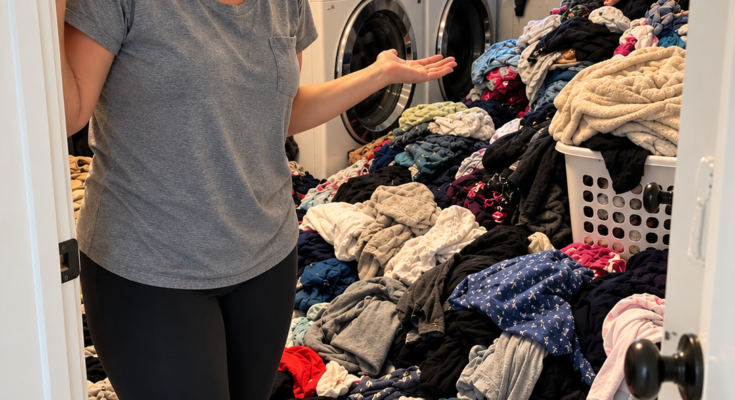
My daughter-in-law kept bringing her laundry to my house and expecting me to wash it—so instead of arguing with her again, I decided to teach her a lesson. It started with one basket. “Would you mind tossing these in with yours?” Vanessa asked one Saturday afternoon. Fine. She and my son Daniel had two young children, both worked, and I understood what it was like to fall behind.
Then one basket became two. Before long, every Saturday Vanessa would arrive with Daniel and the children, unload three enormous bags of dirty clothes, and leave them beside my washing machine. She stopped asking. She simply expected everything to be washed, dried, folded, and waiting by the time they went home Sunday evening.
At sixty-eight, I had no problem helping my family. What bothered me was the assumption. Laundry for four people meant six or seven loads, towels, sheets, sorting, folding, and hours of going up and down the basement stairs with knees that already complained about everything. One Sunday, after folding yet another mountain of socks, I finally said, “Vanessa, I’m happy to help sometimes, but I’m not your personal laundromat.”
She laughed. “Margaret, you’re home all day anyway.”
I looked at Daniel. My son stared down at his plate and said nothing. That silence hurt almost more than Vanessa’s words because I had raised him to know better. I waited for him to say, “Vanessa, Mom has a point.” Instead he suddenly became fascinated by mashed potatoes.
So the next weekend, when Vanessa arrived carrying four bags, I didn’t complain. I smiled and said, “Leave them downstairs.” She almost looked disappointed that there wasn’t going to be another argument.
That afternoon, while everyone was outside eating hamburgers with the children, I carried the bags into the laundry room. I had spent the week planning something simple. I was going to sort everything, leave it unwashed, put detergent and instructions beside the machine, and tell Vanessa that from now on she was welcome to use my washer—but she would be doing the work herself.
I dumped the first bag onto the floor and separated Daniel’s shirts from Vanessa’s clothes and the children’s things. Then I opened the second bag. That was when I noticed something strange.
There were men’s dress shirts I had never seen Daniel wear. Expensive trousers several sizes too small for him. Three crisp white button-downs still carrying tags from a dry cleaner across town. I picked one up and checked the collar. Inside, written neatly in permanent marker, were the initials R.M.
My son’s initials were D.H.
For one ugly second, my mind went somewhere I’m ashamed to admit. I wondered whether my daughter-in-law was having an affair and somehow careless enough to bring another man’s clothing into my house. Then I told myself to stop. A strange shirt in a laundry bag was not proof of anything, and whatever those clothes meant was between Vanessa and Daniel.
I finished what I had originally planned. I placed each person’s dirty clothes into separate baskets, set a bottle of detergent on top, and taped a large handwritten sign above the washer:
THE HENDERSON FAMILY LAUNDROMAT
Machines: Free
Detergent: Free
Grandma Doing Six Loads While Everyone Eats Burgers Upstairs: RETIRED
Underneath I added: If you can carry four bags down these stairs, you can carry one load into the washer. Love, Margaret.
I thought it was funny. Maybe a little petty, but harmless. Then I carefully returned the unfamiliar men’s clothing to the bag exactly where I had found it because I wanted no part in whatever story belonged to those shirts.
At six o’clock, Vanessa went downstairs to collect the laundry. A few seconds later, I heard her scream, “What did you do?!”
Everyone rushed toward the basement. Daniel reached the bottom first. Vanessa was standing beside four untouched bags, staring at my sign. “You didn’t wash anything?” she demanded.
“No.”
“We need these clothes tomorrow!”
“Then I suggest starting with whites.”
Daniel read the sign. To my surprise, his mouth twitched like he was trying not to laugh. Vanessa did not find it funny. She grabbed one bag angrily, and the bottom seam split.
Clothes spilled across the floor.
One of those white dress shirts landed directly at Daniel’s feet.
He bent down, picked it up, and stared at the initials inside the collar.
R.M.
His expression changed immediately.
“Vanessa,” he said quietly. “Why do you have your father’s clothes?”
Vanessa went completely still.
That was the moment I realized I had misunderstood much more than just the laundry.
━━━━━━━━━━━━━━━━━━━━
Part Two — What Vanessa Hadn’t Told Anyone
Vanessa’s father was named Richard Mercer. I had met him only a handful of times because he lived nearly an hour away and had never been particularly social. He was seventy-one, divorced, stubborn, and according to Vanessa, determined to remain independent until someone carried him out of his own house.
Daniel held up the shirt. “You told me your dad was doing better.”
Vanessa looked at the floor. The anger disappeared from her face so quickly it frightened me. “He was.”
“What happened?”
She sat down on the basement steps and covered her face. “He fell again.”
Daniel’s voice softened. “When?”
“Three months ago.”
My stomach dropped. Three months was almost exactly when the laundry bags had started multiplying.
Vanessa finally told us the truth. Richard had developed worsening tremors and balance problems after a neurological illness. He could still live at home with some help, but ordinary tasks had become harder. Buttons frustrated him. Carrying a laundry basket down his basement stairs had become dangerous. Twice a week, Vanessa had been driving to his house before work, taking groceries, cleaning, changing his sheets, collecting laundry, and pretending to everyone—including Daniel—that things were still manageable.
“Why didn’t you tell me?” my son asked.
Vanessa looked up. “Because you’re already working overtime. The kids need you. Your mom has her own problems. I thought I could handle it.”
I almost laughed at the irony. “So your solution was secretly giving his laundry to me?”
She looked embarrassed. “Not at first. The first basket really was ours. Then Dad needed help, and I started throwing his things in too. Then I got behind on ours, and…” She rubbed her face. “I don’t know. It just became easier to bring everything here.”
“That still doesn’t explain telling me I’m home all day,” I said.
Vanessa closed her eyes. “It doesn’t.”
For once, she did not defend herself.
“I’m sorry, Margaret. That was awful.”
The basement became quiet except for the washing machine upstairs in my neighbor’s house vibrating faintly through the wall. Daniel sat beside his wife. “Why didn’t you ask for help?”
Vanessa gave him a sad look. “Because everybody already thinks I have everything together.”
That sentence softened something in me, but not enough to erase the problem. I sat on the step below her. “Being overwhelmed explains why the bags kept coming. It doesn’t make me responsible for washing them without being asked.”
“I know.”
“You don’t get to turn somebody else into your solution because you’re afraid to admit you need one.”
“I know.”
Daniel looked at me. “And I should have said something when you asked us to stop.”
“Yes, you should have.”
He nodded. “I’m sorry.”
I believed him because he looked miserable.
Then our eight-year-old granddaughter, Lily, came halfway down the stairs. “Are we in trouble?”
All three adults looked at her.
“No,” I said. “The grown-ups are learning how washing machines work.”
She considered that and said, “That’s weird. I already know.”
Daniel laughed so hard he had to cover his face.
The four bags did eventually get washed that evening—but not by me. Daniel started the first load. Vanessa sorted the next. Even the children matched socks at the dining table. I made coffee and sat on the porch.
Nobody died.
The next day, Daniel drove with Vanessa to Richard’s house. What he found worried him. Richard had been hiding more than laundry. His refrigerator was nearly empty because carrying groceries hurt his balance. He had stopped showering regularly because stepping over the bathtub edge scared him. He had stacks of unopened mail because his tremor made handling paperwork frustrating.
Vanessa hadn’t realized all of it either. She had been rushing in, solving the most visible problems, and leaving before her father could admit the rest.
That week, the family finally stopped improvising.
Richard agreed—reluctantly—to a medical reevaluation. An occupational therapist helped make his house safer. Daniel installed grab bars and moved the washer and dryer hookups into a small utility area on the main floor with a plumber’s help. They arranged grocery delivery and a weekly home-care visit. Vanessa continued helping, but she was no longer secretly trying to hold her father’s entire life together by herself.
And at my house, the Saturday laundry service officially ended.
I told them they were welcome to use my machines if theirs broke.
The key word was use.
Not deliver.
For the first time in months, Saturday came and there were no bags beside my basement stairs.
I almost missed them.
Almost.
━━━━━━━━━━━━━━━━━━━━
Part Three — The Basket at My Door
Things changed slowly after that. Vanessa became more careful about asking instead of assuming. Sometimes she would call and say, “Margaret, Dad has an appointment Thursday. Could you pick Lily up from school?” If I could, I said yes. If I couldn’t, I said no. Nobody treated either answer like a moral failure.
Daniel changed too. He started paying more attention to the invisible work happening around him. One evening he admitted, “I think I learned something terrible from Dad.” My late husband had been a good man, but he came from a generation where laundry simply appeared clean and folded as if shirts reproduced inside drawers. Daniel had grown up watching me do everything and apparently absorbed more of that than either of us realized.
“I should have noticed how much Vanessa was carrying,” he said.
“Yes.”
“And I should have noticed what I was dumping on you.”
“Yes.”
He frowned. “You’re enjoying this.”
“A little.”
Richard eventually reached a point where living alone no longer made sense. The decision wasn’t forced on him after one dramatic emergency. His family talked with him for months, visited several places, and let him participate. He chose a small senior apartment complex ten minutes from Daniel and Vanessa because, in his words, “Their coffee is terrible, but at least the elevators work.”
The first time I visited, Richard was wearing one of those white button-down shirts.
I pointed to it. “I know that shirt.”
He looked confused.
“Long story.”
Vanessa nearly choked on her coffee.
Richard became part of our strange extended family after that. He came to Thanksgiving. He complained about my turkey being dry. I told him next year he could cook. He immediately withdrew the criticism.
Then, about eighteen months after my little laundromat rebellion, I had knee replacement surgery.
Suddenly I was the one who couldn’t carry baskets down stairs.
For the first two weeks, Vanessa came by every other evening. She brought dinner, checked the mail, and helped with whatever I couldn’t manage. I hated needing it.
One Tuesday she walked into my bedroom carrying my laundry basket.
“I can do that,” I said automatically.
“You can’t even get downstairs.”
“I’ll do it later.”
She raised one eyebrow.
It was irritatingly familiar.
“Margaret.”
“I don’t need you washing my underwear.”
“Trust me, this isn’t how I dreamed of spending Tuesday.”
I laughed.
Then she carried the basket downstairs.
An hour later, she returned with everything folded.
On top was a handwritten note.
I unfolded it.
THE HENDERSON FAMILY LAUNDROMAT
Machines: Free
Detergent: Free
Temporary Grandma Service During Knee Recovery: ALSO FREE
Complaints: $25
I laughed until my knee hurt.
Vanessa stood in the doorway smiling.
“I kept your original sign.”
“You did?”
“It’s in our laundry room.”
“Why?”
She shrugged. “Reminder.”
“Of what?”
She thought for a moment. “That help isn’t the same thing as entitlement.”
That was exactly it.
Before she left, Vanessa sat on the edge of the chair beside my bed. “I really am sorry about how I treated you back then.”
“I know.”
“I was drowning and acting like everyone else owed me a life raft.”
“That happens.”
“You didn’t owe me one.”
“No.”
She smiled. “You helped anyway.”
“After making you wash four bags of dirty clothes.”
“I deserved that part.”
I couldn’t argue.
My knee healed. I went back to doing my own laundry. Vanessa never again arrived with bags expecting me to wash them, though every Christmas she gives me laundry detergent as a joke.
Richard died three years later after a short illness. When we cleaned out his apartment, we found those same three white dress shirts hanging neatly in his closet.
Vanessa ran her hand across one collar.
“He loved these.”
“I remember.”
She looked at me. “You thought I was having an affair, didn’t you?”
I stared at her.
“How did you know?”
“You looked at those shirts like they contained a dead body.”
We both started laughing.
Then she said, “Why didn’t you tell Daniel?”
“Because finding unfamiliar clothes in a laundry bag wasn’t enough evidence to blow up your marriage.”
She hugged me.
That surprised me more than the shirts ever had.
Looking back, I’m glad I didn’t turn that Saturday into the dramatic confrontation it could have become. I had every right to stop doing Vanessa’s laundry. I did not have the right to invent a story from three shirts and treat suspicion like proof.
What we actually discovered was more ordinary.
And more human.
Vanessa was overwhelmed.
Daniel wasn’t paying attention.
Richard was losing independence and hiding how much help he needed.
And I was resentful because my generosity had quietly turned into an expectation.
Nobody needed humiliation.
We needed boundaries.
We needed honesty.
And apparently we needed four bags of dirty laundry dumped across my basement floor before any of us were willing to have the conversation.
I still have that handwritten laundromat sign.
It’s taped inside the cabinet above my washing machine.
The marker has faded, but the final line is still readable:
If you can carry the bag downstairs, you can help with the load.
Over the years, I’ve realized that rule applies to more than laundry.
Families work better when helping each other remains an act of love instead of becoming someone’s assigned job.
And when help is needed, the respectful thing isn’t to drop the burden at somebody else’s feet and assume they’ll carry it.
It’s to say:
“This is getting too heavy for me. Can you help?”