Part One — Still My Dandylion
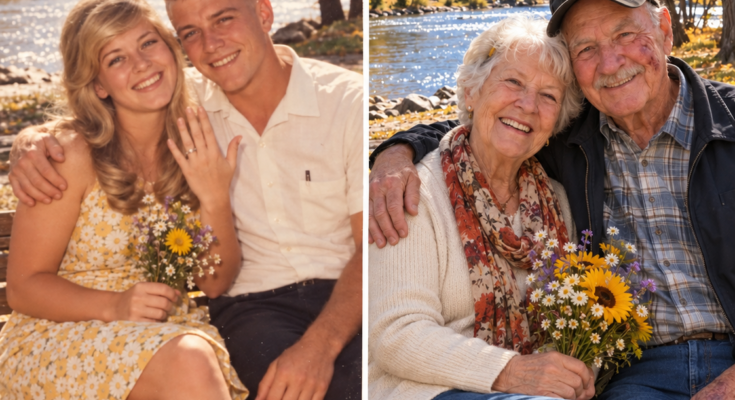
I was eighteen and wearing a yellow dress the night Danny Wirth asked me to dance.
That’s why he called me Dandelion.
Only he spelled it Dandylion every single time, and I never once corrected him.
Everybody else in Reno called me Sukey. My real name is Susan.
But to Danny, I was a weed in a yellow dress.
And I loved it.
He gave me a ring in October of 1968 on a bench beside the river downtown.
It was a chip of a diamond.
The band turned my finger green by Christmas.
Nine days later, he was on a bus to the Army.
He wrote me thirty-one letters.
I kept every one.
First beneath my bed.
Then in my closet.
Eventually in a Whitman’s candy box inside my cedar chest.
His capital D always leaned to the right like it was tired.
In the spring of 1969, the letters stopped.
In June, one came from his mother instead.
She had gone to Texas to be near him, she wrote.
Danny had been badly burned overseas and transferred to a military hospital in San Antonio.
He hadn’t survived.
His family had buried him in Ohio.
Then came the sentence that kept me awake for years:
Don’t come. There’s nothing left to see. Remember him how he was.
I was nineteen.
I didn’t have money for a bus ticket to Ohio.
I didn’t even have enough sense to ask which town.
I lay in my mother’s house for almost a week and cried until my face hurt.
Two years later, I married Ted Haldane.
Ted was a good man.
I want that said plainly.
Not a replacement.
Not someone I settled for because Danny was gone.
Ted sold insurance.
Eventually I sold it beside him.
We built a life.
Two children.
Four grandchildren.
A house off the freeway with a lemon tree that never produced one decent lemon.
I loved my husband.
And somewhere in my cedar chest, I kept thirty-one letters from a boy who had died at nineteen.
Ted knew about them.
Once, maybe fifteen years into our marriage, he found me reading one.
He sat beside me.
“Danny?”
I nodded.
Ted didn’t get jealous.
He just asked:
“Good memory or bad one?”
“Both.”
He kissed the top of my head.
“Those are usually the important ones.”
Ted died three years ago.
Afterward, my life became small.
Not miserable.
Small.
A pension deposit.
Coffee.
Grocery lists.
A casserole in the freezer for emergencies.
I still kept a pencil behind my ear from forty years of filling out insurance forms.
Then last Saturday, the doorbell rang.
A teenage boy stood there holding a mason jar filled with wildflowers.
Black-eyed Susans.
Tiny blue blossoms.
And one dandelion in the middle.
“Ma’am? These are for Susan.”
There was a white card tucked into the ribbon.
I knew the capital D before I understood anything else.
Still my Dandylion.
Spelled wrong.
Exactly the same.
I sat down on my own front step.
My first thought was that somebody was playing a vicious joke on an old woman.
My second was that nobody alive knew that name.
I called the florist.
Dialed the number wrong twice.
Finally a young woman answered.
“An older gentleman came in Thursday,” she told me. “Paid cash. Filled out the card himself.”
“Did he leave a name?”
“D. Wirth.”
My hand started shaking.
“And a phone number?”
A 530 number.
Northern California.
I called.
A woman answered.
“My name is Susan Haldane. I’m looking for Danny Wirth.”
The line went silent.
Then she hung up.
My grandson found the address in minutes.
Susanville.
About two hours north.
My daughter thought I had lost my mind.
“Mom, you’re seventy-seven. You’re going to drive across state lines chasing somebody who supposedly died in 1969?”
“He bought flowers Thursday.”
“Or somebody using his name did.”
“Then I want to know who.”
I didn’t sleep that night.
I read all thirty-one letters at the kitchen table.
At sunrise, I drove north.
The address belonged to a little green house with a wheelchair ramp leading to the porch.
There were old men’s work boots beside the door.
Polished.
Neatly placed.
I knocked.
A woman around fifty opened it wearing scrubs.
Gray at the temples.
Tired eyes.
She looked at me and immediately knew.
“You’re her.”
I couldn’t breathe.
“The Dandelion.”
“Is Danny here?”
Her eyes filled.
“I’m Selena. I’m his daughter.”
I grabbed the porch rail.
“Is he alive?”
“Yes.”
The word nearly knocked me down.
“Can I see him?”
Selena looked over her shoulder.
Then back at me.
“He wanted you to have the flowers.”
“Why didn’t he call?”
“He didn’t want to disrupt your life.”
“My life has already been disrupted.”
“He never expected you to come.”
“I’m here.”
Her voice broke.
“He doesn’t want you to see him like this.”
She started closing the door.
Then, from somewhere inside the house, I heard a man’s voice.
Older.
Rough.
Weaker.
But I knew it.
“Selena.”
The door stopped.
“Wait.”
She closed her eyes.
Then slowly stepped aside.
I entered.
Danny Wirth was sitting in a wheelchair beside the living-room window.
For fifty-eight years, I’d remembered him at nineteen.
Dark hair.
Long legs.
Crooked grin.
Army jacket thrown over one shoulder.
The man in front of me was seventy-seven.
His hair was almost entirely white.
One side of his face carried shiny burn scars from his jaw into his neck.
Two fingers were missing from his left hand.
A recent stroke had weakened one side of his body.
But his eyes—
those were Danny’s.
He looked at me.
I looked at him.
Neither of us spoke.
Then I pulled the flower card from my purse.
Held it up.
“You still spell dandelion wrong.”
Danny made a sound halfway between a laugh and a sob.
And suddenly we were both crying.
━━━━━━━━━━━━━━━━━━━━
Part Two — The Letter His Mother Never Gave Him
I didn’t run into his arms.
We were seventy-seven.
One of us was using a wheelchair, and the other had arthritis in both knees.
Instead I walked over slowly and sat in the chair beside him.
Danny stared at me.
“You got old.”
“So did you.”
“Wasn’t supposed to happen.”
“No.”
Selena quietly left the room.
For a long time, we simply looked at each other.
Finally I asked:
“Why did your mother tell me you were dead?”
Danny closed his eyes.
“I didn’t know she had.”
He told me what happened.
His unit had been hit overseas.
Danny suffered burns, severe injuries to his left hand, and damage that required months of surgeries.
For weeks, he drifted in and out under heavy medication.
His mother, Helen, traveled to San Antonio.
“When I started asking about you,” Danny said, “she told me you’d written.”
My stomach tightened.
“What did she say?”
“That you’d decided you couldn’t handle this.”
He gestured toward his scars.
“She said you wanted to remember me before.”
The exact language from her letter to me.
Remember him how he was.
I felt sick.
“Danny, I never said that.”
“I know now.”
“When did you find out?”
“1998.”
Almost thirty years later.
After his mother died, Danny and Selena went through boxes in her attic.
Inside one was a bundle of papers.
Hospital records.
Old photographs.
And letters.
Mine.
Several I’d mailed to Helen’s house after Danny’s letters stopped.
Unopened.
One had been written before Helen told me he was dead.
Danny had saved it.
Selena brought it from another room.
The envelope was yellow with age.
My handwriting stretched across the front.
Danny had opened it only after his mother’s death.
Inside, nineteen-year-old me had written:
I don’t care what happened to your face or hands or anything else. Tell me where you are. I’ll get there somehow.
My eyes blurred.
“I wrote that?”
Danny nodded.
“You also threatened to hitchhike to Texas.”
“That sounds irresponsible.”
“You were always a little nuts.”
I laughed.
Then I started crying again.
“Why didn’t you contact me in 1998?”
Danny looked toward a photograph on the mantel.
A woman with dark hair stood beside him.
A little girl between them.
“My wife, Ruth.”
I nodded.
“You were married?”
“Thirty-nine years.”
“Were you happy?”
His face softened.
“Very.”
Good.
Strangely, genuinely good.
“And you?”
“Ted. Forty-six years.”
“Happy?”
“Yes.”
Danny nodded.
“Then that’s why.”
He explained that after finding my letters, Selena helped him search.
The internet was still a strange new thing to him, but they eventually found my name.
Susan Haldane.
Married.
Two children.
Insurance business with my husband.
“I sat with your phone number for three days,” Danny said.
“Why didn’t you call?”
“Because my mother had already stolen enough.”
I frowned.
Danny continued.
“She took our choice when we were nineteen. I wasn’t going to show up thirty years later and steal another choice by dropping myself into your marriage.”
That silenced me.
“I wanted to know you were okay.”
“And then?”
“I put the number away.”
His wife Ruth knew.
That surprised me.
“She was the one who told me to call you if I needed to.”
“And you didn’t?”
Danny smiled.
“I loved my wife.”
“So did I.”
There was no competition in the room.
That mattered.
The lives we had built were not mistakes simply because they began after a lie.
Then I asked:
“Why now?”
Danny’s eyes moved toward Selena.
She had returned quietly.
Selena answered.
“Dad had a stroke four months ago.”
Danny rolled his eyes.
“She’s dramatic.”
“You couldn’t speak for nine days.”
“Details.”
Selena smiled despite herself.
Then her expression softened.
“Afterward he started going through things. Writing instructions. Giving away tools.”
Danny looked embarrassed.
“I realized there were things I didn’t want buried with me.”
“Like me?”
“Like the truth.”
He didn’t send the flowers asking me to come back.
He didn’t expect romance.
He didn’t even expect an answer.
He wanted me to know one thing before one of us died:
I had not been abandoned.
I had not loved a man who simply stopped writing.
He had not forgotten me.
Two young people had been separated by somebody else’s decision.
Danny’s mother had probably believed she was protecting both of us.
She had seen her badly injured son and decided a nineteen-year-old girl would eventually leave.
So she made the leaving happen herself.
“She was scared,” Danny said.
“She lied.”
“Yes.”
“She robbed us.”
“Yes.”
He didn’t defend her.
But he didn’t turn her into a monster either.
“She spent years caring for me after I came home. Changed dressings. Drove me to surgeries. Sat beside me when I woke screaming.”
He looked down.
“She loved me.”
I understood.
“And she still did something terrible.”
“Yes.”
Both things could be true.
That might have been the hardest lesson of all.
━━━━━━━━━━━━━━━━━━━━
Part Three — What Was Stolen, and What Wasn’t
I stayed four hours that first day.
We did not spend them imagining the marriage we might have had.
At first, we tried.
Danny said:
“You probably would’ve gotten sick of me.”
“I was already sick of you in 1968.”
“Exactly.”
“You chewed with your mouth open.”
“You snored.”
“I was eighteen. Eighteen-year-old girls don’t snore.”
Danny looked at Selena.
“She snored.”
“How would you know?”
“You fell asleep at the drive-in during The Graduate.”
“I was resting my eyes.”
For a few minutes, we were ridiculous teenagers again.
Then something shifted.
I pulled out my phone.
“Want to see Ted?”
Danny nodded.
I showed him pictures.
Ted holding our first baby.
Ted wearing an absurd fishing hat.
Ted asleep in a recliner with two grandchildren piled across him.
Danny smiled.
“He looks kind.”
“He was.”
Then Danny showed me Ruth.
At their wedding.
Holding Selena as a newborn.
Standing beside him at Yosemite.
Wearing a ridiculous Christmas sweater.
“She was beautiful.”
“She was bossy.”
“So was Ted.”
We laughed.
That was the moment I stopped thinking of the previous fifty-eight years as time somebody had stolen from me.
Something had been stolen.
Yes.
The truth.
Our right to choose at nineteen.
Maybe years together.
Maybe a marriage.
Maybe nothing beyond a few more letters before two very young people discovered they weren’t suited to adulthood together.
We could never know.
But Ted was not stolen time.
Ruth was not stolen time.
Our children weren’t consolation prizes created by tragedy.
The lives we had lived mattered.
Before I left, Danny asked:
“Do you still have the ring?”
I stared at him.
“Somewhere.”
“You kept that cheap thing?”
“It turned my finger green.”
“I was earning a dollar seventy-five an hour.”
“You could’ve done better.”
He grinned.
There was the nineteen-year-old boy again.
I drove home after dark.
My daughter was waiting in my kitchen.
The moment she saw my face, she stood.
“It was him?”
“Yes.”
“Oh, Mom.”
She hugged me.
Then asked carefully:
“Are you okay?”
I thought about it.
“No.”
Then:
“Yes.”
Then I laughed.
“I don’t know.”
For the next seven months, I drove to Susanville almost every Tuesday.
Sometimes Selena brought Danny to Reno instead.
We had lunch.
Watched baseball.
Argued about music.
Talked about Ted and Ruth.
Sometimes we talked about 1969.
Often we didn’t.
Danny’s health continued to decline.
The stroke had uncovered other problems.
Heart disease.
Kidney trouble.
The ordinary unfairness of an old body.
No reunion cured any of that.
I never moved in.
He never proposed with a second ring.
That would have turned our story into something it wasn’t.
What we recovered wasn’t a romance frozen perfectly for fifty-eight years.
It was friendship.
Truth.
The ability to look at each other and know neither of us had willingly disappeared.
One afternoon, Danny handed me a box.
Inside were copies of the letters his mother had hidden.
On top was the one I’d written telling him I’d come to Texas.
“I want you to have them.”
I shook my head.
“They’re yours.”
“They were yours first.”
Then he handed me something else.
A photograph.
Eighteen-year-old me in a yellow dress.
I laughed.
“Oh God.”
“Beautiful.”
“My hair is enormous.”
“Beautiful enormous hair.”
On the back, Danny had written in 1968:
My Dandylion.
Still wrong.
Always wrong.
Danny died in October.
Selena called me before sunrise.
I knew before she spoke.
He had died at home.
Quietly.
She had been beside him.
I sat on my bed with the phone against my ear.
For a moment, I was nineteen again receiving a letter telling me Danny Wirth was dead.
Except this time the truth came with it.
There was no hidden hospital room.
No lie.
No stolen goodbye.
“Was he scared?” I asked.
“No.”
“Did he hurt?”
“Not at the end.”
Then Selena said:
“He asked me to tell you something.”
I closed my eyes.
“What?”
“He said, ‘Tell Dandylion I finally got home.’”
I cried until afternoon.
Then I went to his funeral.
This time, nobody told me not to come.
I sat beside Selena.
She held my hand.
There were photographs of Danny at every age.
Nineteen.
Thirty.
Forty-five.
Seventy.
Scarred.
Laughing.
Holding babies.
Standing beside Ruth.
Working on an old pickup.
Alive.
That was important.
Afterward, Selena gave me a small envelope.
Inside was the flower card.
The original.
Still my Dandylion.
She had apparently made a copy for the florist because Danny wanted me to have the shaky version he’d written himself.
At the bottom, beneath what I’d already seen, was another line I hadn’t known about.
I never forgot. I just didn’t want remembering me to cost you the life you already had.
I carried it home.
The Whitman’s candy box still sits in my cedar chest.
Thirty-one letters from 1968 and 1969.
Now there are several more beside them.
Not love letters exactly.
Notes Danny wrote during those final months.
One says:
Ruth would’ve liked Ted. They could’ve complained about us together.
Another:
Selena says I can’t live on pie. This feels unconstitutional.
And my favorite:
You were right about one thing. I still chew too loud.
I also found the little engagement ring.
The diamond still looks like a chip of broken glass.
The band is dull.
I don’t wear it.
It belongs to the girl I was.
Sometimes my grandchildren ask whether Danny was the great love of my life.
I tell them that’s the wrong question.
Ted was a great love.
Danny was a great love too, in a different season and under different circumstances.
Love doesn’t become false because another love existed before it.
And a life does not become second-best simply because somewhere in its beginning there was a road you weren’t allowed to take.
What hurt most wasn’t discovering Danny had survived.
It was realizing two frightened young people had been denied the chance to decide for themselves.
His mother thought she was protecting her wounded son from pity.
Instead, she replaced uncertainty with a lie.
But she didn’t get the final word.
Fifty-eight years later, a boy rang my doorbell carrying wildflowers.
One dandelion stood in the middle.
And in shaky handwriting was the name only one person had ever called me.
I drove two hours thinking I was chasing a ghost.
I wasn’t.
I was going to meet an old man who had once been a boy I loved.
We couldn’t get back the years between us.
We didn’t try.
We simply spent the time we still had telling each other the truth.
And after fifty-eight years, that was enough.