Part One — The Envelope on the Counter
Nine days after we buried our mother, my sister came into the house on Maple Thorn Road with a real estate agent, a developer in a navy suit, and the kind of smile people wear when they think grief makes you agreeable.
I was washing her coffee mug in the sink.
I had not really left the house since the funeral. I slept in my childhood bedroom because I couldn’t bring myself to change the sheets in Mom’s. Her slippers were still beside the back door. Her reading glasses sat on the kitchen counter exactly where she’d left them.
Then the key turned in the front door without a knock.
That was the first thing.
I heard Sarah’s voice before I saw her.
“And this is the living room. Original hardwood. Obviously it needs updating, but the bones are fantastic.”
A man’s voice answered, “The lot is the real value.”
I stood at the sink with my hands in soapy water.
Sarah entered the kitchen holding a folder and several glossy property sheets.
“Oh, good. You’re here.”
Behind her was a realtor with a tight blond ponytail and a sympathetic expression that somehow felt rehearsed.
The developer walked toward the back window.
He looked at Mom’s yard the way people look at empty land.
“What are you doing?” I asked.
Sarah smiled.
“We’re getting an idea of value.”
“This house isn’t for sale.”
“Claire, don’t start.”
She opened the folder.
“Mom would have wanted us to be practical. Neither of us needs this much house, and the taxes alone are ridiculous.”
“I live here.”
“For now.”
I stared at her.
She continued as if discussing furniture.
“We sell, split everything fifty-fifty, and move on. That’s fair. Dad would’ve wanted that.”
“We never agreed to sell.”
“We talked about figuring things out.”
“At Mom’s funeral reception.”
“And now we’re figuring them out.”
Nine days.
Nine days since I watched our mother disappear beneath flowers and soil.
Sarah was already measuring grief in square footage.
The developer ran his fingertips across Mom’s marble counter.
“This kitchen would come out anyway.”
Something inside me changed.
Not rage exactly.
Recognition.
Sarah had chosen now because she thought I was too tired to fight.
“I need all of you to leave.”
The realtor looked uncomfortable.
Sarah ignored her.
“Claire—”
“Now.”
Her smile tightened.
Then she removed a manila envelope from her folder and placed it on the kitchen counter.
My name was written across the front in Mom’s handwriting.
Sarah pressed her palm over it.
“Mom signed everything before she died. She wanted this handled quickly and cleanly.”
My throat tightened.
“What is that?”
“You’ll understand after you read it.”
There was something smug in her face.
As though whatever was inside would finish the argument for her.
Then she led the realtor and developer back toward the front door, already talking about the roof and the possibility of two luxury townhouses on the lot.
I stood alone in the kitchen.
The envelope rested exactly where Mom used to roll pastry dough on Sunday mornings.
For almost ten minutes, I couldn’t touch it.
Then I opened it.
Inside was a letter.
And beneath the letter was a certified copy of a recorded deed.
I recognized Mom’s handwriting immediately.
My dearest Claire,
If you’re reading this, then I am probably gone, and Sarah is probably already talking about selling Maple Thorn Road.
I sat down.
The next sentence made me cover my mouth.
Please don’t hate your sister. But please don’t let her rush you either.
I kept reading.
Eighteen months earlier, Mom had met privately with an estate attorney.
The house had been placed through a recorded deed arrangement that left Mom the right to live there for the rest of her life and transferred full ownership to me upon her death.
Not Sarah and me.
Me.
Mom explained why.
You gave up your apartment and reduced your work hours when the cancer returned. You slept in the chair beside me after chemotherapy. You learned every medication, every insurance form, every appointment. I offered to pay you many times, and you kept saying, “You’re my mother.”
My eyes filled.
Then:
This house is not payment for loving me. Love should never become a bill. It is simply the place you already made your home while caring for me, and I want you to remain safe here after I’m gone.
I pressed the letter to my mouth.
There was more.
Mom had become concerned about Sarah’s finances.
Sarah’s husband Greg owned a restaurant that had been struggling.
Mom suspected she’d signed checks she didn’t fully understand during treatment.
She had preserved copies and asked her attorney to review them after her death.
Not because she knew Sarah had committed a crime.
Because she had started asking questions.
At the bottom, Mom wrote:
There is a blue folder in the sewing-room safe. Give it to Mr. Bennett. Don’t confront Sarah yourself. Let facts be facts before anger turns them into something larger.
That sounded exactly like Mom.
Even dying, she was telling me not to become cruel just because someone else might have been dishonest.
I cried until the letter blurred.
Then I called the attorney.
━━━━━━━━━━━━━━━━━━━━
Part Two — The House Was Already Mine
Mr. Bennett did not tell me Sarah was going to prison.
He did not say the checks proved theft.
He said:
“Bring me everything. Don’t alter it. Don’t accuse anybody until we know what it shows.”
The next morning, we opened the blue safe.
Inside were canceled checks, bank statements, handwritten notes from Mom, and copies of transfers.
Some went to legitimate medical expenses.
Others went to the restaurant Greg owned.
The total was significant.
But Mr. Bennett was careful.
“Your mother may have authorized some of these. We need records, signatures, dates, and context.”
That mattered to me.
I didn’t want vengeance.
I wanted to know what Mom had known.
We also confirmed the house documents.
The deed had been properly recorded long before Mom died.
Mom had retained her right to occupy the house during her lifetime, but upon her death, ownership passed according to the deed.
The house was not an estate asset for Sarah to list and divide.
Maple Thorn Road was mine.
Two days later, Sarah returned.
This time she brought Greg.
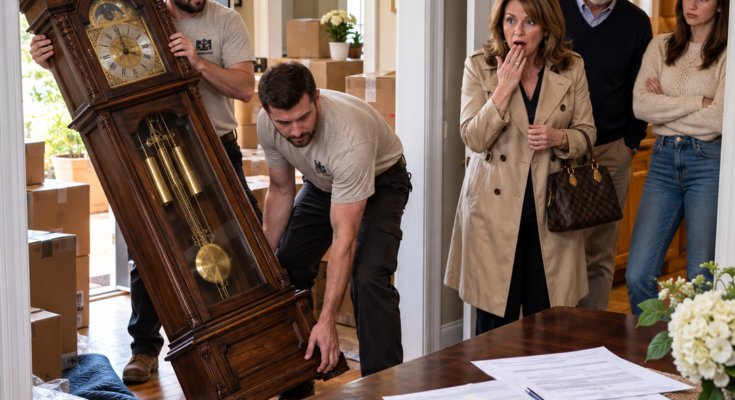
A moving van followed them into the driveway.
Two movers climbed out.
I watched from the dining-room window as Sarah pointed toward the front porch like a project manager arriving at a job site.
She entered using the old key before I could reach the door.
“Claire, good, you’re dressed.”
I stared at her.
“Why is there a moving truck outside?”
“The developer made an offer.”
“I told you the house isn’t for sale.”
She sighed.
“We don’t have time for this.”
She waved toward the movers.
“Start with the living room furniture.”
One man reached toward Mom’s grandfather clock.
“Please don’t touch that.”
He stopped immediately.
Sarah snapped:
“She doesn’t have authority. I’m handling the estate.”
I looked at the movers.
“This property is privately owned. There is a dispute, and you do not have my permission to remove anything.”
Both men stepped back.
Smart men.
Greg frowned.
“What dispute?”
I looked at Sarah.
“You didn’t read the envelope.”
Her expression flickered.
“What?”
“You brought me Mom’s envelope and never read it.”
“I knew what was in it.”
“No, you assumed.”
I placed the certified deed on the dining table.
Greg picked it up.
His face changed first.
“Sarah.”
She grabbed it.
“What?”
He pointed.
“This was recorded last year.”
Sarah scanned the page.
Her mouth opened.
“No.”
I stayed seated.
“The house transferred according to Mom’s recorded deed. It isn’t part of the probate estate.”
“That can’t be right.”
“It is.”
“She promised us fifty-fifty.”
“Did she?”
Sarah’s eyes snapped toward me.
I hated how satisfying that moment wanted to feel.
So I remembered Mom’s letter.
Don’t let anger turn facts into something larger.
I pushed another folder toward her.
“There’s also a financial review happening.”
Her face went still.
“What financial review?”
“Mom left records involving payments to Greg’s restaurant.”
Greg looked at Sarah.
“What records?”
She didn’t answer.
I continued.
“Her attorney and an accountant are reviewing whether she knowingly authorized all of them.”
Sarah’s voice rose.
“You’ve been going through her accounts?”
“Her attorney has.”
“That money was hers to give.”
“Maybe. If she understood and authorized it, then the records will show that.”
Greg sat down slowly.
“How much?”
Sarah whispered:
“Greg, don’t.”
He looked at her.
“How much?”
She began crying.
Not dramatically.
Quietly.
That frightened me more.
“Sarah?”
She wiped her face.
“The restaurant was going under.”
“That wasn’t my question.”
She closed her eyes.
“About eighty thousand.”
Greg stood so quickly the chair scraped backward.
“You told me Mom invested.”
“She was helping us.”
“Did she know?”
Sarah didn’t answer.
That was all Greg needed.
He walked out onto the porch.
I looked at my sister.
She suddenly looked less like the woman who had arrived with a developer and more like the girl who used to crawl into my bed during thunderstorms.
“Claire, please.”
I waited.
“We were going to pay it back.”
“If she gave it knowingly, say that to the accountant.”
“She was sick.”
“Yes.”
“I was scared.”
“So was I.”
Her eyes filled.
“If they make me repay everything, Greg and I could lose our house.”
I looked around Mom’s dining room.
Nine days earlier, Sarah had been willing to sell mine before I had even finished grieving.
That thought hurt.
But I didn’t throw it at her.
Instead I said:
“You need your own lawyer.”
She stared at me.
“You’re not going to threaten me?”
“No.”
“Why?”
“Because Mom specifically told me not to.”
That finally broke her.
Sarah sat down and cried.
The movers left.
The realtor never came back.
The developer withdrew the offer as soon as he learned the title wasn’t Sarah’s to sell.
And for the first time since Mom died, nobody talked about bulldozing Maple Thorn Road.
━━━━━━━━━━━━━━━━━━━━
Part Three — What Mom Actually Left Us
The financial review took nearly a year.
The truth was complicated.
Sarah had not forged every payment.
Mom had knowingly helped Greg’s restaurant several times.
But there were also withdrawals and checks signed during periods when Mom was heavily medicated and hospitalized, and documentation surrounding them was poor.
Rather than turn the entire thing into a family war, the attorneys negotiated repayment for the amounts that could not be satisfactorily supported as gifts or authorized expenses.
Greg sold his interest in the restaurant.
It hurt.
But he did not lose his home.
Neither did Sarah.
She and I barely spoke during that year.
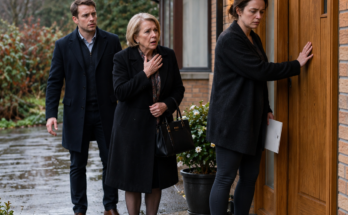
Then one Sunday afternoon, someone knocked.
Not unlocked the door.
Knocked.
When I opened it, Sarah stood on the porch holding Mom’s lemon-patterned dish towel.
I hadn’t realized it was missing.
“I took this after the funeral.”
I looked at it.
“Why?”
She gave a small, embarrassed smile.
“Because it smelled like her kitchen.”
That was the first thing she’d said in months that wasn’t about lawyers or property.
I moved aside.
“Come in.”
She stopped.
“Are you sure?”
That question mattered.
“Yes.”
We sat in the kitchen.
Sarah ran her fingers across the faded lemons.
Finally she said:
“I hated you.”
I looked up.
“When?”
“When Mom got sick.”
I said nothing.
“You became the good daughter.”
“I wasn’t trying to.”
“I know.”
She began crying.
“I couldn’t handle seeing her like that. Every time I visited, I saw what was happening. You were better at it.”
“No, I wasn’t.”
“You stayed.”
That was true.
Sarah continued.
“So I started telling myself staying made you controlling.”
My eyes filled.
“And then I needed money. Greg was losing the restaurant. Mom offered help at first, and after that…”
She stopped.
“After that, asking became easier.”
I waited.
“Then taking became easier.”
There it was.
Not a courtroom confession.
Just my sister finally naming the slope she’d been sliding down.
“And when she died,” Sarah said, “I thought selling the house would fix everything. The restaurant debt. The guilt. All of it.”
“So you brought a developer nine days after we buried her.”
She nodded.
“I did.”
“That hurt me.”
“I know.”
“No. I need you to hear it.”
She looked at me.
“You walked into the house while her slippers were still by the door and started describing what walls could come down.”
Sarah covered her face.
“I’m sorry.”
I believed her.
Not because she cried.
Because she stopped defending herself.
We did not become close again immediately.
Trust returned in small pieces.
She called before visiting.
She stopped talking about what was “fair” when she meant what benefited her.
I stopped using the house as evidence that Mom loved me more.
Because she didn’t.
Mom loved two daughters differently because they had become two very different adults.
Years later, Sarah asked something I had wondered about myself.
“Do you ever feel guilty that Mom left you the house?”
“Yes.”
“All the time?”
“Less now.”
“Why?”
I looked around the kitchen.
“Because I finally understood she didn’t leave it to me as a prize for being the better daughter.”
Sarah’s face tightened.
“I know.”
“She left it because it was already my home.”
That distinction healed something in both of us.
I kept Maple Thorn Road.
I repaired the roof.
Repainted the upstairs hallway.
Turned Mom’s bedroom into a guest room only after nearly two years.
Her slippers stayed by the back door until the soles cracked.
I could not throw them away.
Eventually, Sarah came over with her daughter to help me sort Mom’s sewing room.
We found patterns from the 1980s.
Buttons in old baby-food jars.
Half-finished quilts.
At the bottom of one drawer, Sarah found another envelope.
Both our names were written on it.
We stared at each other.
“You open it,” she said.
Inside was one sheet of paper.
Mom had written:
Girls, if you are reading this together, then at least one thing went right.
We both laughed and cried at the same time.
The rest was short.
A house can be divided. Money can be counted. Furniture can be sold. None of those things are worth turning grief into a competition over who was loved more.
Then:
Claire stayed when I was sick because that is who Claire became. Sarah ran because fear has always made Sarah run. I understood both of you better than you understood each other.
Sarah’s hand covered her mouth.
Mom continued:
I hope Claire learns that caring for someone does not mean carrying everyone forever. I hope Sarah learns that leaving when something hurts does not make the hurt disappear.
And at the bottom:
Please keep the lemon towel. It was ugly when I bought it, and it is ugly now. Stop pretending otherwise.
Sarah laughed so hard she had to sit down.
I laughed too.
For the first time since the funeral, that kitchen sounded like home instead of evidence.
I still own Maple Thorn Road.
Sarah still knocks before entering.
The lemon towel hangs from the oven handle.
It is, objectively, hideous.
And every time I look at it, I remember the morning my sister walked into Mom’s house with a realtor and thought grief had made me too weak to say no.
She was wrong.
But I had been wrong about something too.
For months, I believed the deed was the most important thing Mom left behind.
It wasn’t.
The deed protected a house.
Her letters protected something harder.
They stopped me from turning betrayal into identity.
They reminded Sarah that desperation did not excuse what she’d done.
And they gave two grieving daughters a way to tell the truth without spending the rest of our lives using our mother’s death as a weapon against each other.
Nine days after we buried Mom, Sarah came through the front door without knocking because she thought everything inside could be divided, priced, and sold.
Years later, she still comes through that door.
But now she knocks.
And I choose to open it.