My 72-year-old mom’s younger boyfriend always left family dinner before dessert—one night, my daughter followed him and came back in tears.
Part One — The Briefcase
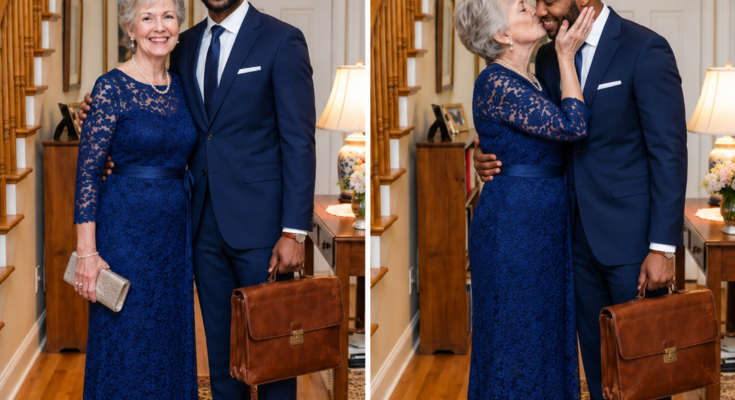
My seventy-two-year-old mom had been alone for eleven years when she met Richard, a charming fifty-seven-year-old man at her community gardening club.
Within months, I saw a version of Mom I thought we’d lost with Dad. She bought a red dress, started wearing perfume again, and sometimes smiled at her phone like a teenager.
Richard seemed wonderful too. He brought her flowers, repaired her porch railing without being asked, and treated my fifteen-year-old daughter, Chloe, kindly.
There was just one thing none of us understood.
He never stayed past 7:30 p.m., which seemed strange for a fifty-seven-year-old man who supposedly lived alone and answered to nobody.
Richard joined us for Sunday dinner almost every week, but around seven, he’d start checking his watch. By 7:25, his leather briefcase would already be in his hand.
His explanations changed constantly.
Once, he had to call an overseas client at exactly eight. Another Sunday, his neighbor supposedly needed help taking medication. The following week, a plumber was somehow coming to his house at night.
Individually, the excuses sounded possible. Together, they sounded ridiculous.
Even stranger, after six months of dating, Mom had never been invited inside his house. Chloe had also noticed twice that he drove south after dinner when he supposedly lived twenty minutes north.
We started wondering whether Richard had another woman—or even another family.
Mom refused to believe it.
Then, during her birthday dinner, Richard checked his watch just as she brought out the chocolate pie she’d made especially for him.
7:26.
“I’m sorry, sweetheart. I have to go.”
Mom’s smile disappeared.
“Can’t you stay ten minutes? It’s my birthday.”
“I really can’t.”
He kissed her cheek, grabbed his briefcase, and hurried outside.
Chloe watched him through the window.
A moment later, she mumbled something about needing to run out and disappeared too.
Nearly forty minutes passed.
Then our front door burst open.
Chloe stood there, crying.
And clutched against her chest was Richard’s leather briefcase.
I jumped up.
“Where did you get that?”
Chloe struggled to catch her breath.
“I followed him.”
My mother went pale.
“You what?”
“I took my bike. I know I shouldn’t have, but I wanted to know where he kept going.”
“Chloe, that’s dangerous.”
“I know.”
Her voice broke.
“But Grandma… he lied.”
Mom gripped the edge of the table.
I saw something inside her collapse before Chloe had even explained.
“Is there another woman?”
Chloe shook her head.
“No.”
Mom stared at her.
“Then what?”
Chloe looked down at the briefcase.
“He stopped at a building near St. Matthew’s Hospital.”
“What building?”
“I don’t know. It looked like an apartment, but nurses were going inside.”
My mother frowned.
Chloe continued.
“He got out of his car really fast. He put the briefcase on the roof while he was grabbing something from the back seat.”
She lifted it slightly.
“He forgot it.”
“So you stole it?”
“I was going to give it back.”
“Then why is it here?”
Tears ran down Chloe’s face.
“Because I saw him through the window.”
Mom whispered:
“With who?”
Chloe swallowed.
“A boy.”
That wasn’t the answer any of us expected.
“What boy?”
“I don’t know. Maybe twenty? Older than me. He was in a wheelchair.”
She wiped her face.
“Richard hugged him.”
Mom sat down.
Then Chloe said:
“And the boy started crying when Richard tried to leave.”
The room went quiet.
I looked at the briefcase.
“Did you open it?”
Chloe looked guilty.
“It fell and came open.”
Inside were several folders.
A prescription bag.
Insurance paperwork.
A worn photograph.
And a laminated visitor badge.
I picked up the photograph.
Richard was much younger in it.
Beside him stood a woman I didn’t recognize.
Between them was a boy of perhaps eleven, grinning at the camera with one arm around Richard’s waist.
On the back, someone had written:
RICHARD, EVAN & MELISSA — LAKE ERIE, 2014
My mother stared at the picture.
“Evan.”
She had never heard the name.
Neither had I.
Then I picked up one of the papers.
At the top were the words:
LONG-TERM NEUROLOGICAL REHABILITATION PLAN
Patient:
Evan Michael Hale.
Emergency contact:
Richard Hale — Father and Legal Guardian.
My mother covered her mouth.
“He has a son.”
Chloe nodded.
“A son he never told you about.”
That was when headlights swept across our front windows.
Richard’s car had pulled into the driveway.
And for the first time in six months, he had come back after 7:30.
━━━━━━━━━━━━━━━━━━━━
Part Two — The Person Waiting at Eight
Richard didn’t knock.
He rang the bell once and stood on the porch looking terrified.
When I opened the door, his eyes immediately went to the briefcase on the kitchen table.
Then to Chloe.
“You found it.”
Chloe whispered:
“I’m sorry.”
He wasn’t angry.
That surprised me.
He simply closed his eyes.
Mom remained seated.
“Who is Evan?”
Richard looked at her.
For a few seconds, nobody spoke.
Then he walked inside and sat across from her.
“My son.”
“You told me you didn’t have children.”
“No.”
“You said you’d been married once and there were no children.”
“I said my marriage ended a long time ago.”
“That isn’t the same thing.”
“No.”
Her voice sharpened.
“Why didn’t you tell me?”
Richard looked toward Chloe.
“Did you see him?”
She nodded.
His face softened.
“How did he look?”
That question told me something.
Even after being exposed, his first thought was not the lie.
It was Evan.
Chloe said:
“He looked happy when you came in.”
Richard smiled faintly.
“He usually is.”
“Then he cried when you left.”
The smile vanished.
“I know.”
Mom folded her arms.
“Richard.”
He looked at her.
“Tell me the truth.”
So he did.
Evan was twenty-two.
At seventeen, he had been riding in a car with friends when a drunk driver crossed the center line.
Evan survived.
His best friend did not.
A severe traumatic brain injury left Evan with limited speech, weakness on his left side, seizures, and cognitive changes that made independent living unsafe.
Richard and his former wife, Melissa, had spent years coordinating rehabilitation.
Eventually their marriage collapsed.
Not because Evan caused it.
Richard was careful about that.
“We were already bad together,” he said. “The accident exposed everything we’d been avoiding.”
Melissa later moved to Arizona and remained in contact with Evan, but Richard became his primary legal guardian.
Evan lived in a small supported residential program near St. Matthew’s.
Every evening at eight, Richard visited.
Not because the facility required it.
Because he’d made a promise.
“After the accident, nights were horrible for him,” Richard explained. “He’d wake confused and think he was still in the hospital. For almost a year, I sat beside his bed every evening until he fell asleep.”
“Every night?” I asked.
“Yes.”
“And you still go?”
“Almost every night.”
Mom’s voice was quiet.
“Why did you tell me you lived north of town?”
Richard rubbed his forehead.
“I used to.”
“And now?”
“I rent a room south of town, five minutes from Evan.”
Mom’s eyes filled.
“So basically everything about your life after seven-thirty was a lie.”
Richard did not defend himself.
“Yes.”
That mattered.
But it didn’t erase anything.
Mom pushed back from the table.
“You could have told me you had a disabled son.”
“I know.”
“Did you think I would reject you?”
He hesitated.
“Yes.”
Mom looked wounded.
“Why?”
Richard stared at his hands.
“Because the last woman I dated did.”
The room went still.
He explained that two years after his divorce, he dated someone for nearly a year.
When she realized how much of his life revolved around Evan, she told him she had not signed up to become “second place to a grown child.”
Then she left.
After that, Richard stopped dating seriously.
Until Mom.
“I liked you too much,” he said.
“That made you lie?”
“It made me afraid.”
Mom shook her head.
“No. Fear explains why you lied. It doesn’t turn lying into something noble.”
Richard nodded.
“You’re right.”
She stared at him for a long time.
Then she asked:
“Why leave tonight? On my birthday?”
His face crumpled slightly.
“Because Evan knows Sunday is pie night.”
Mom blinked.
“What?”
“I bring him dessert from wherever I’ve eaten.”
He pointed toward the dining room.
“Chocolate pie is his favorite.”
My mother looked toward the untouched pie she’d made.
Richard continued.
“He doesn’t understand birthdays the way he used to, but he understands routines. Last Sunday I told him tonight was your birthday and that I’d bring him a piece of your pie.”
Mom wiped her cheek.
“You could have brought him here.”
“I didn’t know if that was fair to him.”
“What do you mean?”
“Evan isn’t a secret I was ashamed of.”
He looked at the floor.
“He was a part of my life I was afraid you’d refuse.”
Mom answered immediately.
“So you refused me the choice instead.”
Richard looked up.
She was crying now.
“That is what you did. You decided what I could handle and lied so I would give you the answer you wanted.”
He nodded.
“Yes.”
There was no defense left.
Then Chloe stood.
“I need to say something.”
Everyone looked at her.
“I shouldn’t have followed you.”
Richard said:
“No, you shouldn’t have.”
“And I shouldn’t have looked at the papers.”
“No.”
Chloe wiped her eyes.
“But I’m glad Evan isn’t another girlfriend.”
Despite everything, Richard laughed.
So did I.
Even Mom smiled for half a second.
Then she looked at Richard.
“Go.”
His face fell.
“Margaret—”
“I don’t mean forever.”
She pointed toward the pie.
“Take Evan his slice.”
Richard stared at her.
Then Mom said:
“And tomorrow we’re going to decide whether I can trust the man who comes back.”
━━━━━━━━━━━━━━━━━━━━
Part Three — The Dinner That Finally Made It Past Dessert
Mom did not forgive Richard the next morning.
Or the next week.
People wanted her to.
My aunt said:
“He lied for a good reason.”
Mom answered:
“He had a reason. That’s different.”
I was proud of her for that.
Richard did not pressure her.
He stopped inventing excuses.
When he had to leave at 7:25, he said:
“I’m going to see Evan.”
When Evan had an appointment, Richard said so.
When Melissa called from Arizona about a guardianship document, he told Mom who had called rather than referring vaguely to “an old client.”
The secrecy ended before the hurt did.
About three weeks later, Mom asked:
“Can I meet him?”
Richard stared at her.
“Evan?”
“No, the president.”
She rolled her eyes.
“Of course Evan.”
Richard became strangely nervous.
“You don’t have to do that to prove anything.”
“I know.”
“He can get overwhelmed with new people.”
“Then tell me what he needs.”
That was the right question.
Not:
What is wrong with him?
Not:
How should I behave?
What does he need?
Richard explained that Evan liked people to introduce themselves clearly, hated being touched without warning, and sometimes repeated the same question several times.
Mom nodded.
“Does he still like chocolate pie?”
Richard smiled.
“Very much.”
Their first meeting lasted twenty-five minutes.
Mom did not hug Evan.
She asked whether he wanted a handshake.
He didn’t.
She accepted that.
He asked her six times whether she grew tomatoes.
She answered six times.
“Yes. Too many.”
On the seventh, Mom said:
“Richard says you’re good with motorcycles.”
Evan’s face lit up.
That was it.
By the next visit, he remembered her as:
“Tomato lady.”
Mom considered this an honor.
Their relationship grew slowly.
Not into some sentimental fantasy where Mom became Evan’s replacement mother.
He already had a mother.
Melissa called regularly and visited when she could.
Mom became Margaret.
Then Maggie.
Eventually, for reasons none of us understood, Evan called her Red, apparently because of the red dress she wore the first time Richard showed him a photograph of her.
Mom loved it.
The more complicated part was Mom and Richard.
Love hadn’t been the problem.
Trust had.
They went to counseling for several months.
Richard had to learn that protecting himself from possible rejection by hiding important truths still manipulated the person he loved.
Mom had to decide whether she could build something with someone whose fear had made him dishonest.
There was no grand moment when she announced forgiveness.
Instead, I noticed little things.
Richard began leaving his briefcase beside Mom’s chair instead of carrying it everywhere.
Mom stopped checking the clock at seven.
Some Sundays she went with him to see Evan.
Other Sundays she didn’t.
Richard stopped acting as though either choice contained a hidden message about their relationship.
Then, nearly a year after the birthday dinner, something changed.
Richard arrived at our house at six.
Mom had made roast chicken.
Chloe was home from a school event.
I was cutting bread when the doorbell rang again.
I opened it.
Richard stood on the porch beside Evan.
Evan was wearing a navy jacket and gripping the handles of his wheelchair.
In his lap sat a bakery box.
Richard looked nervous.
“Evan wanted to come.”
From behind me, Mom said:
“Then why are you keeping him on the porch?”
Evan looked at her.
“Red.”
Mom’s entire face softened.
“Hi, sweetheart.”
Then she caught herself.
“Can I hug you?”
Evan thought about it.
“No.”
“Okay.”
He rolled past her.
Five minutes later, he was inspecting the dining room as if conducting a building survey.
Dinner was chaotic.
Evan dropped his fork twice.
Asked Chloe whether she drove a motorcycle nine times.
Told me my potatoes were “too beige.”
He was correct.
At 7:24, Richard looked at his watch automatically.
Then stopped.
Evan noticed.
“Pie.”
Richard smiled.
“Yes.”
Mom brought out dessert.
Chocolate.
For the first time since we’d known him, Richard remained at the table after 7:30.
Then eight.
Then eight-thirty.
Not because Evan had stopped needing him.
Because Evan was there too.
I watched Mom cut a second slice of pie.
“Small piece?” she asked.
Evan shook his head.
“Big.”
Mom laughed.
“Finally, a man in this family with reasonable priorities.”
Richard looked at her across the table.
There was gratitude on his face.
But something else too.
Relief.
Not because Mom had agreed to take responsibility for Evan.
She hadn’t.
Not because Richard had finally found somebody willing to “accept his baggage.”
I hated that phrase.
A human being is not baggage.
Richard was relieved because the two parts of his life he had been terrified to place in the same room were simply sitting together eating pie.
Years later, Mom told me something I still think about.
She and Richard never married.
They didn’t need to.
They maintained separate homes, traveled together when care arrangements made it possible, gardened every spring, and built a life around reality rather than pretending reality was simpler than it was.
When Mom turned seventy-eight, I asked whether she regretted staying with him after discovering the lie.
She shook her head.
“No.”
“Do you regret that he lied?”
“Of course.”
“What’s the difference?”
She thought for a moment.
“Forgiving what someone did doesn’t require pretending it was necessary.”
That sounded like Mom.
Richard had eventually apologized without mentioning his ex-girlfriend, his fear, or the difficulty of caring for Evan.
Just:
“I lied because I wanted control over what you would decide about me. That was wrong.”
Mom told me that was the apology that allowed them to move forward.
Richard died unexpectedly at sixty-five.
A heart attack.
By then, he and Mom had been together eight years.
Evan was thirty.
He understood enough to know his father was not coming back.
For months, Sundays were difficult.
At 7:15, he would start watching the door.
The first time I saw it, I had to leave the room.
Mom did not try to take Richard’s place.
Nobody could.
But she kept visiting.
Sometimes Chloe went too.
So did Melissa when she was in Ohio.
One Sunday, Mom brought chocolate pie.
Evan looked at the door.
Then at the pie.
“Dad?”
Mom sat beside him.
“No, sweetheart. Dad isn’t coming tonight.”
He looked down.
“Why?”
“Because he died.”
Evan’s face tightened.
Mom didn’t soften it into “went away.”
Richard had spent too much of their relationship hiding hard truths.
She wasn’t going to continue that pattern.
Evan began to cry.
Mom waited.
After a while, he pointed toward the pie.
“Big.”
Mom laughed through her tears.
“Big.”
She gave him the largest slice.
The old leather briefcase eventually ended up with Chloe.
Not because it contained money or important documents anymore.
Those had all gone where they belonged.
Richard had once joked that Chloe deserved it because she had “kidnapped it first.”
She uses it now for college papers.
The leather is cracked.
One buckle sticks.
Inside the flap, she taped the faded photograph we found that first night.
Richard.
Melissa.
Eleven-year-old Evan.
All three smiling beside Lake Erie.
Whenever I see that briefcase, I remember how certain we were that we knew what Richard’s secret would be.
Another woman.
A second family.
Some ugly betrayal.
We were wrong about the secret.
But we were right about one thing.
Secrets change relationships even when the thing being hidden is not shameful.
Evan was never the problem.
Richard’s devotion to him was never the problem.
The problem was that Richard believed love could survive only if the person he loved received a carefully edited version of his life.
Mom taught him otherwise.
She didn’t stay because his lie became acceptable once she learned the sad reason behind it.
She stayed because after the truth came out, Richard stopped demanding that she love him without all the information.
And the Sunday dinners changed too.
Nobody checked the clock at 7:25 anymore.
Sometimes Richard left early.
Sometimes Mom went with him.
Sometimes Evan came to us.
But after that birthday, whenever Richard stood from the table, he no longer invented plumbers, clients, or sick neighbors.
He simply said:
“I’m going to see my son.”
And that was enough.
Because the truth does not guarantee that someone will stay.
It does something more important.
It gives them the right to choose.