Part 3: The Truth
I didn’t answer David’s calls that day.
Or the next day.
Or the day after that.
I needed time. Time to breathe. Time to think. Time to figure out what I wanted to say.
I found a small apartment in a quiet neighborhood in Lisbon. It had a balcony overlooking a garden. The sun shone almost every day. The food was fresh. The people were kind.
For the first time in years, I felt like I could breathe.
But I knew I couldn’t ignore David forever.
On the fifth day, I answered.
“Mom?” His voice was raw. “Mom, is that you?”
“It’s me.”
“Where are you? Are you okay? We’ve been so worried.”
I sat on my balcony, watching the sunset.
“I’m fine.”
“Where are you?”
“Portugal.”
There was a long pause.
“Portugal? Why?”
“Because I needed to leave.”
“Mom, please come home. We can figure this out.”
“Can we?”
“Of course we can. We love you.”
I closed my eyes.
“Do you?”
“What kind of question is that?”
“A fair one. You laughed at me, David. You laughed while your wife read a card telling me Christmas wasn’t for me. You laughed while I stood there, holding that card, trying to understand how my own son could treat me like that.”
Silence.
“I didn’t know what was in the folder.”
“No. You didn’t. Because you never bothered to look. You never bothered to ask who was paying your mortgage. Who was paying your daughter’s tuition. Who was keeping your family afloat while you chased one failed business after another.”
“I didn’t know—”
“That’s the problem, David. You didn’t know because you didn’t want to know. You were happy to take. You were happy to let me pay. But when I needed you—when I needed a little compassion, a little patience—you decided I was a burden.”
The silence stretched.
“Mom, I’m sorry.”
“I know you are. But sorry isn’t enough. Not this time.”
“What do you want me to do?”
I thought about it.
“I want you to become the man I raised. The man who cares about people more than money. The man who does the right thing because it’s right, not because someone is watching.”
“I can do that.”
“Then do it. And when you’ve proven it—when you’ve shown me that you’ve changed—maybe we can talk about me coming back.”
“Maybe?”
“Maybe.”
He started to cry.
“I love you, Mom.”
“I love you too, David. That’s why this hurts so much.”
I didn’t go back for two years.
In that time, I built a life in Portugal. I made friends. I joined a Parkinson’s support group. I walked by the ocean every morning and watched the sun rise over the water.
David called every week. At first, he was desperate. Then he was angry. Then he was sad. Then, slowly, he became something else.
Humble.
He told me about the changes he was making. The therapy he was attending. The conversations he was having with Zuri about her behavior. The way he was learning to be honest, to be present, to be grateful.
He told me he had started paying his own bills. That he had sold the house and moved into something smaller. That he was finally learning what it meant to stand on his own.
I didn’t trust him at first.
But over time, I started to believe him.
On the second Christmas after I left, David and his family came to Portugal.
They stayed for two weeks.
We walked along the coast. We ate fresh seafood. We talked about everything—the past, the pain, the mistakes we had all made.
Zuri apologized.
Not with words. With actions.
She cooked meals. She cleaned up. She asked about my health. She listened when I spoke.
It wasn’t perfect. It wasn’t easy. But it was a start.
On the last night of their visit, David sat beside me on the balcony.
“Mom, I know I can never make up for what I did. But I want you to know that I’m trying. Every day. To be the man you raised.”
I looked at him.
“The man I raised is already there. He just needed to remember.”
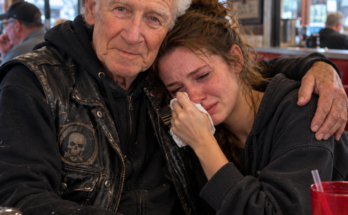
He cried.
I held his hand.
And for the first time in years, I felt like I had my son back.
I still live in Portugal.
I visit Connecticut once a year. I see my grandchildren. I have dinner with David and Zuri. We laugh together. We talk. We are family.
But the folder is still in my drawer.
I keep it as a reminder. Not of what I did. Of what I learned.
I learned that you don’t owe anyone your dignity. That you don’t have to accept mistreatment just because someone is family. That sometimes the most loving thing you can do is walk away—and let them figure out what they lost.
I also learned that people can change.
They just have to want to.
David wanted to.
And now, finally, he has.
The End