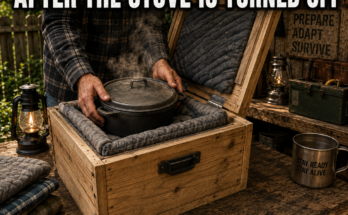
When a winter outage shuts down electric furnaces, heat pumps, thermostats, and circulation fans, many modern homes begin cooling almost immediately.
For many Amish households, however, losing grid electricity does not automatically mean losing heat. Their heating systems and winter routines are often built around locally stored fuel, natural air circulation, simple equipment, and daily attention.
The central principle is straightforward:
Stored dry fuel + a properly installed stove + retained heat + disciplined routines = greater winter resilience
But there is no single “Amish heating system.” Amish communities vary significantly by affiliation, location, household, and the technologies permitted by their church district. Some use traditional wood stoves, while others may use coal, propane, kerosene, hydronic systems, or combinations of several fuels.
The useful lesson is not that every household should copy one historical lifestyle. It is that dependable winter warmth begins long before the electricity fails.
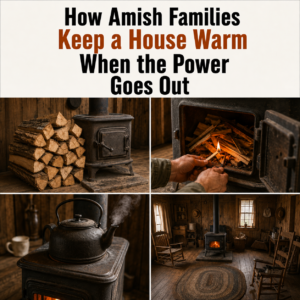
Why Their Heating Systems Can Work Without Grid Power
Many modern central-heating systems require electricity for:
- Thermostats
- Ignition controls
- Furnace blowers
- Heat-pump compressors
- Boiler circulation pumps
- Zone valves
- Fuel-delivery controls
Even a gas furnace normally cannot heat the house if its electrical blower and controls stop operating.
A traditional wood stove works differently. Heat enters the room through:
- Radiation from the stove’s surface
- Natural convection as warm air rises
- Heat stored in nearby masonry and furnishings
- Limited air movement through doors and adjoining rooms
No electric blower is necessarily required.
However, a wood stove is only genuinely outage-ready when its chimney, clearances, fuel supply, detectors, tools, and operating routine are already prepared.
Lesson 1: Heat One Important Living Area
One of the most effective strategies is to stop trying to heat every room equally.
A centrally located stove may primarily warm:
- The kitchen
- Dining area
- Main living room
- Adjacent sleeping spaces
Less frequently used rooms may remain cooler. Interior doors can be managed to concentrate heat where people spend most of their time.
During an emergency, a modern household can use the same principle by creating a temporary “warm zone.”
Choose a room that:
- Contains a properly installed heating appliance
- Can accommodate the household safely
- Has limited exterior exposure
- Can be closed off from unused rooms
- Has working smoke and carbon-monoxide alarms
- Retains heat reasonably well
- Does not block an evacuation route
Do not place improvised combustion heaters in a small sealed room. Fuel-burning equipment requires correct installation, venting, combustion air, and clearances.
Lesson 2: Install the Stove Before the Emergency
A wood stove cannot be safely improvised after a winter storm begins.
The stove, chimney and hearth form one engineered system. Safe installation must account for:
- Appliance listing and instructions
- Chimney height and diameter
- Required draft
- Wall clearance
- Ceiling clearance
- Floor protection
- Chimney penetrations
- Nearby combustible materials
- Structural support
- Outside air requirements
- Local building and fire codes
EPA guidance emphasizes that proper clearances, floor protection, vent sizing, chimney configuration and professional installation all affect safety and performance. (US EPA)
Never connect a stove to:
- An unlined or damaged chimney
- Dryer vent material
- Ordinary HVAC duct
- Single-wall pipe passing through a wall or ceiling
- A flue shared with an incompatible appliance
- An improvised window opening
- A chimney that has not been inspected
A used antique stove may look attractive, but cracks, warped components, damaged doors and missing internal parts can make it inefficient or unsafe.
Lesson 3: Store Fuel Months Ahead
A power-independent heater is only useful if adequate fuel is available before roads become icy or blocked.
Traditional wood-heating households commonly treat fuel preparation as a seasonal cycle:
- Wood is cut or purchased.
- Logs are split into suitable sizes.
- Pieces are stacked off the ground.
- The top is protected from rain.
- Air is allowed to move through the stack.
- Wood is given sufficient time to dry.
- A smaller supply is moved near the home before storms.
EPA recommends burning dry, seasoned wood with a moisture content below approximately 20 percent. Its guidance suggests seasoning softwood for at least six months and hardwood for at least one year. (US EPA)
Wet wood:
- Produces less usable heat
- Creates more smoke
- Makes starting difficult
- Increases creosote formation
- Wastes energy evaporating moisture
- Can cause neighbors greater smoke exposure
Use a moisture meter on a freshly split face—not only on the outside of the log.
Lesson 4: Build Small, Hot, Controlled Fires
A smoky, smoldering fire is not automatically safer because it appears less intense.
Efficient combustion normally requires:
- Dry kindling
- Correctly sized firewood
- Adequate airflow
- A warming chimney
- A hot combustion zone
- Correct damper operation
- An appropriate amount of fuel
A basic starting sequence is:
- Remove excessive ash according to the stove manual.
- Confirm the flue and air controls are open.
- Place dry kindling and an approved natural fire starter inside.
- Light a small fire.
- Allow the chimney to begin drafting.
- Add several small pieces of dry wood.
- Add larger pieces only after a strong flame is established.
- Adjust airflow according to the manufacturer’s directions.
- Keep the stove door closed during normal operation.
Never use gasoline, diesel fuel, kerosene, charcoal lighter fluid, or other volatile liquids to start an indoor wood fire.
EPA advises maintaining a hot, efficient fire, keeping combustibles away and never burning garbage, plastic, painted wood, pressure-treated lumber, plywood or other glued wood products. (US EPA)
Lesson 5: Keep Heat in the House
Producing heat is only half the job. The other half is slowing its escape.
Practical heat-retention measures include:
- Weatherstripping exterior doors
- Caulking appropriate window gaps
- Closing curtains at night
- Opening sun-facing curtains during bright days
- Adding attic insulation
- Insulating exposed water pipes
- Using storm windows
- Sealing unused exterior openings
- Closing doors to unused rooms
- Placing rugs over cold floors
- Repairing roof and wall leaks
The CDC recommends weatherstripping doors and windows, insulating walls and attics, protecting exposed water lines and using storm or thermal-pane windows when preparing for winter storms. (CDC)
Do not seal a home so tightly that a combustion appliance lacks the air or draft required by its manufacturer. Air sealing and fuel-burning equipment should be evaluated together.
Lesson 6: Use Clothing and Bedding as Part of the System
Traditional winter resilience does not depend on keeping every room at summer-like temperatures.
People can remain comfortable in a cooler house by using:
- Wool socks
- Thermal base layers
- Sweaters
- Warm trousers
- Hats
- Layered blankets
- Quilts
- Draft-free sleeping areas
- Shared daytime living space
Layering reduces the amount of fuel required to maintain comfort.
However, extra clothing is not a substitute for adequate heat when protecting:
- Older adults
- Infants
- People with medical conditions
- Anyone taking medications affecting temperature regulation
- People with limited mobility
Watch for signs of hypothermia, including shivering, confusion, clumsiness, exhaustion, slurred speech and unusual drowsiness.
Lesson 7: Let Daily Activity Support the Heating Plan
In a household built around wood heat, warmth is managed continuously.
Someone must:
- Check the stove
- Bring in dry wood
- Remove ashes
- Monitor room temperature
- Watch the chimney
- Adjust airflow
- Keep combustible objects away
- Notice unusual odors or smoke
- Prepare the next fire before the house becomes dangerously cold
This routine is one reason a simple heating system can remain dependable. The equipment is familiar, frequently observed and maintained as part of daily life.
For preparedness, every responsible adult should know:
- How to operate the appliance
- Which wood is safe to burn
- How to recognize poor draft
- Where the fire extinguisher is
- How to respond to a chimney fire
- How to shut the stove down
- When to evacuate
- Who performs chimney inspections
Written instructions should remain near the heating area.
Lesson 8: Use the Stove Top Carefully
A flat stove top may provide useful heat for:
- Warming water
- Heating wash water
- Preparing certain foods
- Maintaining a kettle of warm water
But the stove top is not an ordinary kitchen range.
Important precautions include:
- Use stable, heat-resistant cookware.
- Keep handles away from walking paths.
- Never leave cooking oil unattended.
- Do not overfill kettles.
- Use insulated gloves.
- Keep plastic objects away.
- Do not allow water to boil dry.
- Follow the stove manufacturer’s instructions.
- Maintain access to the stove controls.
A decorative cast-iron kettle does not necessarily add meaningful humidity. Humidity should be measured because excessive indoor moisture can condense inside walls, windows and roof assemblies.
Never use a kitchen oven, charcoal grill or outdoor camp stove to heat the home. The CDC warns that charcoal and portable gas camp stoves can produce deadly carbon monoxide indoors. (CDC)
Lesson 9: Treat Ashes as a Live Fire Hazard
Ash can hide hot embers for days.
Safe ash handling requires:
- Allowing the fire and ashes to cool as much as practical
- Wearing appropriate gloves
- Using a metal shovel
- Placing ashes in a covered metal container
- Carrying the container carefully outdoors
- Setting it on a noncombustible surface
- Keeping it away from buildings, decks and firewood
- Waiting until the contents are completely cold before final disposal
Never use:
- Plastic buckets
- Cardboard boxes
- Paper bags
- Wooden containers
- Ordinary household trash cans
- Vacuum cleaners not specifically designed for cold ash
EPA recommends storing removed ashes outdoors in a covered metal container on a nonflammable surface. (US EPA)
Lesson 10: Maintain the Chimney
Creosote forms when combustible components of smoke condense inside a cooler chimney.
Buildup is encouraged by:
- Wet wood
- Low-temperature smoldering
- Restricted airflow
- Oversized flues
- Cold exterior chimneys
- Improper stove operation
- Heavy overnight loading
- Poorly insulated chimney sections
Creosote can ignite and cause an intense chimney fire.
Warning signs may include:
- Loud roaring
- Vibrating stovepipe
- Sparks or flames leaving the chimney
- Extremely hot walls near the flue
- Strong burning odors
- Rapid, uncontrollable fire
If a chimney fire is suspected:
- Get everyone out.
- Call emergency services.
- Close stove air controls if this can be done safely.
- Do not pour water into a hot stove.
- Do not reenter the building.
- Do not use the system again until it has been professionally inspected.
The stove, chimney and venting should be inspected and serviced annually. (US EPA)
Carbon-Monoxide Protection Is Essential
Carbon monoxide is colorless and odorless. A household may not realize that a chimney is blocked or an appliance is venting incorrectly.
Possible symptoms include:
- Headache
- Dizziness
- Weakness
- Nausea
- Chest pain
- Confusion
- Unusual sleepiness
- Loss of consciousness
Install:
- Smoke alarms on every level
- Carbon-monoxide alarms on every level
- Carbon-monoxide alarms outside sleeping areas
- Battery-powered or battery-backup alarms
- A readily accessible fire extinguisher
Test alarms regularly and replace them according to their manufacturer’s instructions.
If a carbon-monoxide alarm activates:
- Move everyone into fresh air.
- Call emergency services.
- Do not search the building for the source.
- Do not reenter until responders say it is safe.
Wood-Smoke Health Considerations
Wood heat is not pollution-free.
Smoke contains fine particles and harmful gases that can aggravate:
- Asthma
- Bronchitis
- Heart disease
- Lung disease
- Other respiratory conditions
EPA explains that wood smoke contains fine-particle pollution and toxic substances; efficient appliances and properly seasoned fuel reduce smoke but do not eliminate it. (US EPA)
Reduce exposure by:
- Using an appropriately sized, EPA-certified stove when available
- Burning only dry wood
- Maintaining a hot, clean fire
- Opening the loading door slowly
- Keeping the door closed during operation
- Repairing leaks immediately
- Maintaining the chimney
- Observing local air-quality restrictions
- Never burning household waste
If smoke is regularly visible or smelled inside the house, stop using the system and have it inspected.
Creating a Modern Power-Outage Heating Plan
You do not need to live like an Amish household to use the resilience principles.
Before winter
- Have the primary heating system serviced.
- Have the wood stove and chimney inspected.
- Install smoke and carbon-monoxide alarms.
- Obtain properly seasoned fuel.
- Weatherstrip doors and windows.
- Insulate vulnerable pipes.
- Identify one warm living area.
- Prepare blankets and winter clothing.
- Test backup lighting.
- create a family communication plan.
- Learn where and how to shut off utilities.
- Check local heating-appliance regulations.
Before a forecast storm
- Bring in a limited supply of dry wood.
- Charge phones and power banks.
- Fill necessary prescriptions.
- Move vehicles away from trees.
- Check detectors.
- Confirm that chimney caps and vents are clear.
- Prepare food that requires little cooking.
- Place thermometers in important rooms.
- Review fire and evacuation procedures.
- Check on vulnerable neighbors.
During an outage
- Concentrate activity in the warm zone.
- Close off unused rooms.
- Dress in layers.
- Monitor indoor temperatures.
- Operate the stove exactly as instructed.
- Keep a responsible adult awake and attentive while establishing a fire.
- Keep children and pets away from hot surfaces.
- Use battery lighting instead of open candles where possible.
- Monitor official weather information.
- Leave if the house cannot be kept safely warm.
How Much Firewood Is Needed?
There is no reliable universal answer.
Consumption depends on:
- Climate
- Home size
- Insulation
- Air leakage
- Stove efficiency
- Wood species
- Fuel moisture
- Desired indoor temperature
- Chimney performance
- Number of heated rooms
- Length of the heating season
Do not plan fuel needs using only internet averages.
A better approach is to document actual consumption:
| Date | Outdoor low | Indoor temperature | Wood used | Moisture | Burn time |
|---|---|---|---|---|---|
After a full season, add an emergency reserve appropriate for your climate and storage space.
Store the main woodpile outdoors—not against the house or surrounding the stove.
Common Mistakes
Buying firewood after the storm begins
Good fuel may be unavailable, wet or extremely expensive.
Burning green wood
Wet wood produces less useful heat and more smoke and creosote.
Installing an unapproved stove
Improvised installation can ignite nearby walls, floors or roof framing.
Closing the damper too far overnight
Starving the fire of air may create heavy smoke and creosote.
Keeping firewood beside the stove
Only a limited working supply should be inside and kept at the required clearance.
Ignoring chimney inspection
A chimney can contain creosote, animal nests, cracks or damaged liners.
Depending on a fireplace for whole-house heat
Many open fireplaces send substantial heated indoor air up the chimney and may provide limited net heating.
Leaving the door open for “more heat”
An open stove door can release sparks, smoke and carbon monoxide.
Using a fan without considering power loss
A system dependent on an electric circulation fan may not distribute heat during an outage.
Assuming old methods are automatically safe
Traditional equipment still produces fire, smoke, burns, pollution and carbon-monoxide hazards.
Emergency Heating Checklist
Heating equipment
- Appliance is approved and correctly installed
- Chimney has been professionally inspected
- Required clearances are maintained
- Hearth protection is undamaged
- Stove door and gasket seal properly
- Chimney cap is unobstructed
- Fire extinguisher is accessible
Fuel
- Wood is properly seasoned
- Moisture measures below approximately 20%
- Main supply is stored outside
- Wood is stacked off the ground
- Stack has airflow
- Top is protected from precipitation
- No painted or treated lumber is present
Household safety
- Smoke alarms work
- Carbon-monoxide alarms work
- Battery backups are fresh
- Escape routes are clear
- Everyone understands the alarm sound
- Ash container is metal and covered
- Emergency numbers are available
- Vulnerable residents have a relocation plan
Final Takeaway
Many Amish families remain warm without depending entirely on grid electricity because their homes, fuel supplies and daily routines are organized around that possibility.
Their resilience generally comes from several measures working together:
- A simple heat source
- Months of fuel preparation
- Dry, properly stored firewood
- Concentrated living space
- Heat-retention improvements
- Layered clothing and bedding
- Familiar operating routines
- Regular chimney care
- Constant attention to the fire
The lesson is not to install an old cast-iron stove and assume the problem is solved.
A safe modern wood-heating plan requires an approved appliance, professional installation, correct clearances, seasoned fuel, annual chimney inspection, smoke alarms, carbon-monoxide alarms and a practiced emergency plan.
The most dependable outage heat is prepared, installed and tested long before the lights go out.