Part 1: The Barbecue
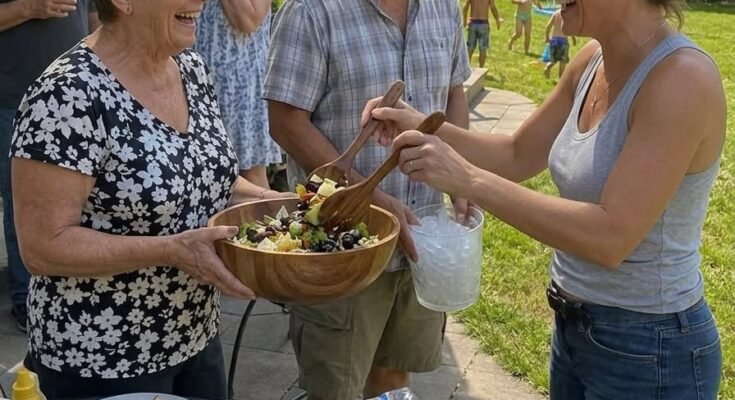
The patio went silent the second Susan realized I had heard every word. I was standing at the screen door with a salad bowl in my hands, the smell of grilled burgers and sweet corn hanging in the summer air. My grandchildren were still running through the sprinkler. My brother-in-law stared into his beer.
Susan, my daughter-in-law of fifteen years, had just called me “the plague that ruined our lives.”
My son Michael looked like the color had drained from his face. “Mom, she didn’t mean—”
“I heard exactly what she meant.”
My hands were trembling, but my voice was not. I looked directly at Susan. “The plague that ruined your lives has been paying the mortgage on your house for eight years.”
Her chin lifted. Nobody spoke.
“But don’t worry,” I said. “I won’t be ruining your lives much longer.”
I set the salad bowl down, picked up my purse, and walked out. I sat in my locked car for thirty minutes, crying into the steering wheel. When I finally drove away, the barbecue was still going.
For years, I had told myself everything I did was simply what mothers did. When my husband Jim died, Michael was twenty and halfway through college. I went back to work at the hospital, taking extra nursing shifts so he could stay in school. Later, when Michael and Susan wanted a house, their credit was too poor to qualify. I put down $50,000. I became the primary borrower. Then I started making the mortgage payments.
Eight years later, I had paid more than $150,000 toward the house they called theirs. And that was not all. Cars. Credit cards. Braces. Ballet lessons. A $30,000 kitchen renovation. Every time Michael called, I fixed it.
Three days after the barbecue, he finally phoned. “Mom, Susan wants to apologize.” Not “I’m sorry.” Not “I should have defended you.” Susan wants to apologize.
“She was stressed,” he said. “You know how she gets when money is tight.”
I opened the desk drawer where I kept the mortgage statements. “Michael, do you remember what the bank said when you bought your house?”
A pause. “We didn’t qualify.”
“And what did I do?”
“Mom—”
“What did I do?”
He sighed. “You put down the money and cosigned.”
“I didn’t just cosign. I’m the primary borrower.” Silence. “I’ve paid that mortgage for eight years.”
Then his tone changed. “So what? We’re supposed to bow down every day because you helped us?”
I stopped breathing for a second. “I never asked you to bow down. I asked for respect.”
“Well, I’m sorry you don’t feel respected.”
Then came the part I should have expected. “We’re drowning here, Mom.”
Part 2: The Discovery
“How much?” I asked.
“Eight thousand. Just to catch up.”
That night, I realized I had become so used to rescuing them that I asked the amount before asking whether they were telling the truth. The next day, my friend Dorothy told me something I did not want to hear. “They don’t appreciate you, Emma. They depend on you.”
I drove past Michael and Susan’s house afterward. The lawn was perfect. Susan’s new SUV sat in the driveway. Then I saw a pool company truck. Workers were in the backyard. Susan stood beside a man holding blueprints. They were planning a swimming pool.
The same people who supposedly needed $8,000 for emergency bills.
I called my sister-in-law Janet. “Please tell me the truth. Are they really broke?”
She went quiet. Then she said, “Emma, they put $15,000 down on the pool last week.”
I gripped the phone tighter. “Where did they tell people the money came from?”
Another pause. “Susan said it was an early anniversary present from you.”
That was the moment something inside me stopped bending. I opened ten years of banking records. For the first time, I looked at everything as numbers instead of favors. Mortgage payments. Renovations. Cars. Bills. Loans never repaid.
By midnight, my spreadsheet told a story I had refused to read for years. Hundreds of thousands of dollars had left my future and gone into theirs.
The next morning, I met with a financial adviser. She studied my accounts and frowned. “At your current rate, you could run out of retirement savings within five years.”
Five years. I had spent decades working as a nurse. Buried my husband. Raised my son. Delayed my own plans. And now I was risking my retirement to maintain a lifestyle for two adults who called me a plague.
I called the mortgage company. Then the county clerk. Then my friend Robert, a real estate attorney. By the end of the week, I understood something Michael and Susan apparently never had: My name was first on the mortgage. My name was first on the deed. And that changed the conversation.
Part 3: The Reckoning
A week later, my doorbell rang. Michael and Susan stood on my porch. Susan wore a designer blouse, arms crossed tightly. Michael held his phone like another unpaid bill was waiting on the screen.
“We’re in serious trouble,” he said.
I stepped aside. “Come in.”
They entered my living room but refused to sit. “Our credit cards are maxed out,” Michael said. “We owe about thirty thousand.”
Susan stepped forward. “Emma, I know there was a misunderstanding at the barbecue, but we could lose everything.”
“A misunderstanding?”
Her eyes shifted.
“You called me a plague.”
“I was stressed.”
“Like when you told Janet the swimming pool was an anniversary gift from me?”
Susan’s face went white. Michael turned toward her. “What swimming pool?”
For the first time, Susan had no quick answer.
I walked to the coffee table and placed a thick folder in front of them. Mortgage statements. Bank records. Retirement projections. Property documents. Ten years of receipts.
“Sit down,” I said. Neither moved.
I opened the folder. “For the past ten years, I have paid for your emergencies, your renovations, your cars, your debts, and your house.”
Michael stared at the pages. Susan stared at me.
“And tonight,” I said, sliding the first document across the table, “you’re finally going to find out what happens when the person paying for everything stops being afraid to say no.”
The first document was a formal notice. I had filed it with the county clerk that morning. It stated that I was withdrawing my financial support effective immediately. The mortgage payments would stop. The credit cards would be canceled. The loans would be called in.
“Mom, you can’t—”
“I can,” I said. “And I am. You called me a plague. You told people I gave you money for a swimming pool. You used me. You drained me. And now it’s over.”
Susan’s voice was shrill. “We’ll lose the house!”
“Then you should have thought about that before you took my money for granted,” I said. “Before you defamed me at your own barbecue. Before you lied about where that pool money came from.”
Michael tried to argue. He begged. He threatened. He pleaded. I didn’t waver.
“This house was never really yours,” I said. “It was mine. You were just living in it. And now you’ll have to live with the consequences of your choices.”
They left that night with nothing but the folder and their anger. I watched them walk to their SUV—the same SUV I had helped pay for—and I felt nothing but relief.
The following months were difficult. They tried to fight me. They hired a lawyer. But the documents were clear. The mortgage was in my name. The deed was in my name. I had every right to withdraw my support.
They lost the house. They moved into a smaller rental. The pool was never finished. The credit cards went into default. Susan’s designer blouses were replaced by thrift store finds. Michael’s phone got disconnected.
I didn’t gloat. I didn’t celebrate. I just felt… free.
I started rebuilding my retirement. I traveled to places I had always wanted to see. I spent time with friends who appreciated me. I stopped answering Michael’s calls.
A year later, Michael showed up at my door. He looked different. Older. Humbled.
“Mom, I’m sorry,” he said. “I was wrong. You deserved better. I don’t expect you to forgive me, but I wanted you to know that I finally understand what you did for us. And I’m ashamed.”
I looked at my son. I saw the boy I had raised, the man he had become. I knew he was telling the truth. But I also knew that some wounds take time to heal.
“I’m glad you understand,” I said. “And I forgive you. But I’m not going back to the way things were. You’ll need to build your own life now. And I’ll be here if you need advice—not money.”
He nodded slowly. “I understand.”
We hugged for the first time in months. It wasn’t perfect. It wasn’t easy. But it was a start.
I learned something from all of this: generosity without boundaries is not kindness. It’s enabling. And the people who love you will respect your boundaries. The people who don’t will show you who they really are.
Now I live my life on my terms. I have enough for myself. I give freely to causes I believe in. But I no longer give to people who see me as a resource instead of a person.
And when I think back to that barbecue, I don’t feel anger anymore. I feel gratitude. Because it was the moment I finally stopped being a plague—and started being myself. ❤️