Part 1: The Stranger
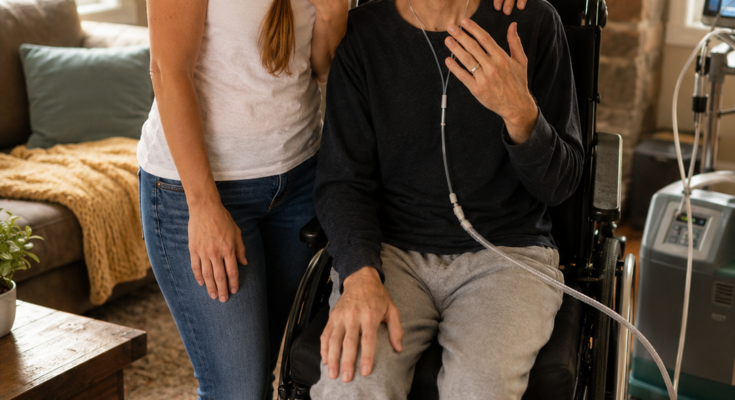
Three times a week, I volunteered with a local hospice support program. Most of the people I visited were elderly or seriously ill and needed a little help around the house. A few months ago, I started visiting a new patient. His name was Carl. He was around forty, had stage four cancer, and lived completely alone.
Carl was sweet, kind, and easy to talk to. We became friends almost immediately. I brought him meals, helped clean his house, and often we simply played board games over a cup of tea. There was something about him that felt familiar, though I couldn’t quite place it. He would look at me sometimes with an expression I couldn’t read—something between sadness and gratitude.
Then one day, Carl looked at me and said: “Marry me. I know how this sounds, but I’d like to die knowing I’m not alone.”
I was caught off guard. “Carl, we haven’t known each other for very long…”
He replied: “I know. But that’s been enough time for me to understand what kind of person you are. It would truly mean everything to me. It’s the one thing I’d like to do before I die.”
I don’t know how to explain it, but I felt some kind of connection between us. Something deep and unexplainable. So I agreed.
The very next day, a priest came to Carl’s house and married us. I simply put on a white T-shirt because it was the only white thing I had in my closet. Standing there in his living room, with no guests, flowers, or music, we became husband and wife. I could see how happy he was in that moment. His eyes were bright, and for the first time since I’d met him, he seemed at peace.
Carl died ten days later. I truly grieved for him. I hadn’t known him long, but he had touched my heart in a way I couldn’t explain. I sat by his bedside in his final hours, holding his hand, telling him it was okay to let go.
“Thank you,” he whispered. “For everything.”
I kissed his forehead. “You’re welcome, Carl. Rest now.”
He smiled. Then he closed his eyes and was gone.
Part 2: The Letter
After his funeral, I was at home when someone suddenly knocked on the door. A man was standing there. He introduced himself as Carl’s lawyer and said: “Carl made me wait until today to tell you the truth about who he really was.”
My heart started pounding. “What do you mean?”
He handed me an envelope and said that once I read the letter inside, I would understand everything. “I’ll wait,” he said. “Take your time.”
My hands were shaking as I opened the envelope and began reading the first line:
*”My dearest Sarah,*
*Our meeting was NOT an accident. I’ve known you your entire life and quietly watched over you. You don’t know me, but I have always known you. Because I’m your father.*
*When you were just a baby, I made a terrible mistake. I was young, scared, and unable to take care of you. I gave you up for adoption. I told myself it was for the best. But I never stopped thinking about you. I never stopped loving you.*
*I spent years trying to find you. When I finally did, I saw that you had grown into a wonderful woman. You were kind, strong, and full of love. I wanted to meet you, but I was afraid. Afraid you would reject me. Afraid you would hate me for what I had done.*
*Then I got sick. I knew I didn’t have much time left. So I arranged to meet you through the hospice program. I wanted to know you, even if you never knew who I really was.*
*Our time together was the greatest gift of my life. You made me feel loved, even in my final days. You gave me peace I never thought I would find.*
*I know this letter will be a shock. I know you might be angry, confused, or hurt. And I understand. But I also want you to know that I am so proud of the woman you have become. I am so grateful for every moment we shared.*
*I love you, Sarah. I have always loved you. And I will always be watching over you.*
*Your father,*
*Carl.”*
Part 3: The Truth
I read the letter three times. Each time, the words hit me differently. First disbelief. Then confusion. Then a flood of emotions I couldn’t name. Anger. Grief. Sadness. But also something else. Something I hadn’t expected. Understanding.
I looked up at the lawyer. “He was my father?”
The lawyer nodded. “He found you years ago. He followed your life from a distance. He saw you graduate, start your career, and become the woman you are. He wanted to reach out so many times, but he was afraid.”
“Why didn’t he tell me?” I asked.
“He was afraid of being rejected. He didn’t want to hurt you. And when he got sick, he knew he didn’t have much time. So he arranged to meet you through the hospice program. He wanted to know you—even if you never knew who he really was.”
I looked down at the letter again. I thought about Carl—the man I had married, the man I had held as he died. I thought about the connection I had felt, the familiarity I couldn’t explain. Now I understood.
He wasn’t just a stranger. He was my father. And he had loved me all along.
“He left you something,” the lawyer said. “He left you the house. And a trust fund. He wanted to make sure you were taken care of.”
I shook my head. “I don’t want money. I just want to understand.”
The lawyer nodded. “Then maybe this will help.”
He handed me another envelope. Inside was a series of photographs. Baby pictures. School pictures. Graduation pictures. My pictures. Carl had been collecting them for years. He had watched me grow up from a distance, never interfering, always loving.
I cried. Not from sadness. From the overwhelming realization that I had been loved by someone I had never known—until the end.
I sat in my living room for hours, looking at the photographs, reading the letter over and over. I thought about Carl. I thought about the man who had given me up, who had been too afraid to reach out, who had spent his final days just wanting to know his daughter.
I wasn’t angry. I couldn’t be. He had made a terrible mistake, but he had spent his entire life trying to make up for it. And in the end, he had given me the most precious gift of all: the truth.
That night, I went to Carl’s grave. I stood there in the quiet, the moon casting a soft glow over the headstone.
“I forgive you,” I whispered. “I understand. And I love you too.”
The next day, I visited the hospice center. I didn’t tell them about the letter. I didn’t tell them about Carl. I just signed up to volunteer again. Because I had learned something important: love doesn’t always come in the ways we expect. Sometimes it comes in the form of a dying stranger who just wants to know his daughter.
I continued visiting hospice patients. I held hands. I listened. I gave comfort. And every time I looked at someone’s face, I thought about Carl. I thought about the father I had never known, who had loved me in silence.
Years passed. I kept the photographs in a box under my bed. I visited his grave every year on the anniversary of his death. I told him about my life, my struggles, my joys. I told him I was okay.
I never married again. Not because I couldn’t, but because I had already experienced something rare: a love that transcended time, distance, and even death.
Carl was my father. And I was his daughter. Even if we only had ten days.
Sometimes, the shortest connections are the deepest. Sometimes, the people we meet for a brief moment change us forever.
Carl changed me. He taught me that love is never wasted. That forgiveness is always possible. That family isn’t always about blood—it’s about connection.
And I will always be grateful for the stranger who was never really a stranger at all. ❤️