Part 3
Quill didn’t resist the cuffs. Men like him rarely do once the audience shifts from a scared kid on a dark road to two federal agents and a running camera. His shoulders, so wide and certain twenty minutes earlier, curled in on themselves the moment the cuffs clicked shut.
“You can’t just—” he started.
“We can, and we did,” Webb said, guiding him toward the sedan. “Assault with a deadly weapon on a federal officer, obstruction, and that’s before we even open the trunk of your cruiser.”
They opened it twenty minutes later, once a Texas Ranger unit arrived to secure the scene.
Inside was a gym bag stuffed with cash in a dozen different denominations, none of it logged, none of it matched to a single case file. Rubber-banded stacks. A worn bank envelope with a university’s name printed on the flap.
Ronan’s tuition money. Untouched, still counted the way a scared nineteen-year-old had counted it a hundred times on the drive to orientation.
Delaney held that envelope for a long moment before handing it to Agent Nair for evidence processing, the same careful, procedural distance she’d been trained to keep for eleven years — and the hardest distance she’d ever had to hold.
The investigation that followed moved faster than these things usually do, mostly because Delaney’s hidden footage, combined with the trunk full of cash, gave prosecutors a case that didn’t need a single witness willing to testify against a man with a badge. Even so, seventeen of them came forward anyway, once word got around Cedar Ridge that somebody had finally caught him on camera. Truckers. A retired schoolteacher. A father who’d been pulled over twice in one month and paid Quill’s “processing fee” both times rather than risk what might happen if he argued. Each new statement matched the last in the details that mattered most: no receipts, no case numbers, cash that simply disappeared.
Quill was charged with theft, extortion, and deprivation of rights under color of law. The department’s internal affairs division — the same one that had received four prior complaints about him over six years, all quietly closed — got its own separate, considerably less comfortable review.
Ronan started college three weeks late, on an emergency deferment the university granted once the FBI sent a letter confirming exactly why his tuition money had vanished for a month. He called Delaney the night before his first class.
“I keep thinking about what would’ve happened if you hadn’t come,” he said.
“You’d have found another way,” Delaney told him, though she didn’t fully believe it, and neither did he.
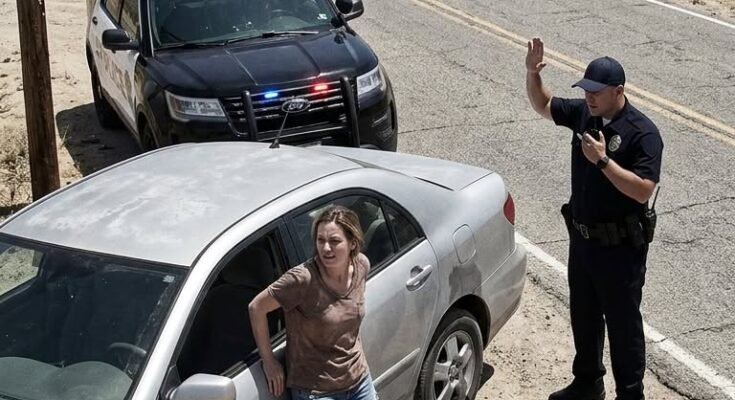
She testified at Quill’s trial seven months later, in the same plain gray T-shirt and jeans she’d worn on the roadside, because a lawyer on the prosecution team said the jury should see exactly who Quill had assumed he was dealing with.
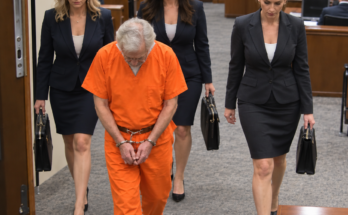
He was convicted on all counts. The judge, reading the sentence, specifically cited the trunk full of unlogged cash as evidence of “a pattern, not an incident” — language the local paper printed on its front page the next morning, above a photo of the Cedar Ridge police station that made no effort to flatter it.
Delaney went back to Cedar Ridge once more after the sentencing, alone, no camera this time, no rental SUV with a hidden lens tucked under the dash. She drove the same stretch of highway past the bleached barbecue sign and the feed store with its snapping flag, slower than she needed to, the way people do when they’re finally allowed to just be a woman driving somewhere on a hot Texas afternoon.
Nobody pulled her over.
For the first time in longer than she could remember, that felt like the whole point.