Part 3: The Condition
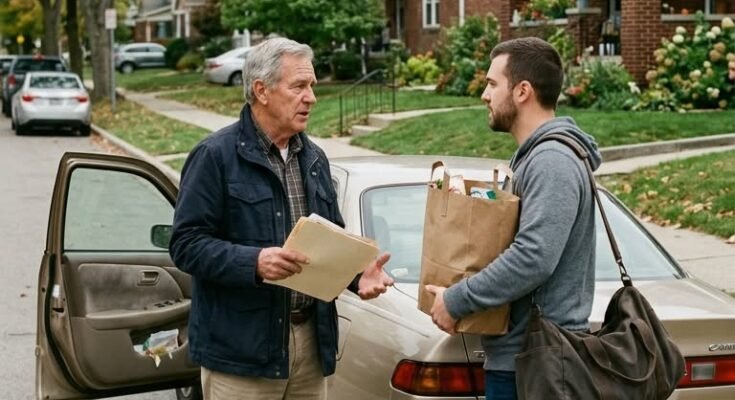
We sat in a diner booth twenty minutes later, and I ate like I hadn’t eaten in a week, because I basically hadn’t. Richard waited patiently, sliding a folder across the table only once my plate was empty.
“Your grandfather built Brooks Structural Group from nothing,” he said. “Started as a two-man contracting crew, grew it into one of the largest commercial construction firms in the state. He never remarried after your grandmother passed. Never had other children besides your father. When your father cut him off, James threw himself entirely into the business — and into making sure that, one day, if you ever needed it, there would be something waiting for you.”
“How much are we talking about?” I asked, almost afraid of the answer.
“The house is worth just under eight hundred thousand. The company itself is valued at approximately eleven million, including contracts currently in progress. Liquid accounts add roughly two million more.”
I actually laughed — a short, disbelieving bark of a sound, because ten minutes earlier I’d been rooting through a dumpster.
“That’s not funny,” I said. “Is this a joke?”
“It is not,” Richard said. “But there is a condition, and I need you to hear it fully before you decide anything.”
He opened the folder.
“Your grandfather’s will stipulates that the full inheritance is yours — but only if you complete a four-year degree in business or construction management, and only if you work directly inside the company for a minimum of two years afterward, starting at an entry-level position on the crews, not in an office. He didn’t want you inheriting a company you didn’t understand from the ground up. He said, and I’m quoting him directly here, ‘Money without understanding turns into nothing. I want him to know what it means to pour a foundation before he ever signs off on one.'”
“And if I don’t do that?”
“Then the inheritance transfers, in full, to a scholarship fund he established for kids aging out of foster care and unstable homes. He was very specific about that alternative. He said if you didn’t want it under those terms, it should go to people who understood what it meant to have nothing.”
I sat back, stunned by a man I’d never met somehow understanding exactly what my life had just become.
“There’s something else,” Richard added, quieter now. “He left a letter. For you specifically. I wasn’t supposed to give it to you unless you were the one who showed up — not your father, not anyone else claiming to act on your behalf.”
He slid an envelope across the table, my name written on the front in shaky, careful handwriting.
I opened it right there in the booth.
Nathan — I don’t know what they’ve told you about me, but I imagine none of it is good, because your father never forgave me for the things I said the year we fought, and I never forgave myself for saying them. I spent eighteen years watching from a distance, making sure you were safe, promising myself I wouldn’t interfere unless you truly needed me. If you’re reading this, it means something happened, and I wasn’t there in time to stop it. I’m sorry for that more than you’ll ever know. Everything I built, I built hoping one day it might catch you if you fell. Go to school. Learn the business from the ground, the way I did. And please, don’t let anger about lost time keep you from building something good with what’s left. — Your grandfather, James.
I read it twice, my throat too tight to speak.
Three weeks later, my father showed up outside my new apartment — paid for by the estate while I finished my last months of high school — demanding to know why I hadn’t told him about “our family’s money.” I let him talk until he ran out of words, and then I told him, calmly, that the inheritance came with a condition he’d never meet in a lifetime: showing up.
I start business school in the fall. I already have a summer job lined up on one of the company’s crews, mixing concrete and hauling lumber alongside men who worked for my grandfather for twenty years and, one by one, have started telling me stories about him I never got to hear firsthand.
I still keep the letter in my wallet. Some nights, when everything still feels unbelievable, I take it out and read it again — proof that somewhere out there, even when I thought I had no one left, someone had been quietly making sure I’d land safely.
He was right about one thing. Money without understanding turns into nothing.
But a letter, at the exact right moment, can turn into everything. ❤️