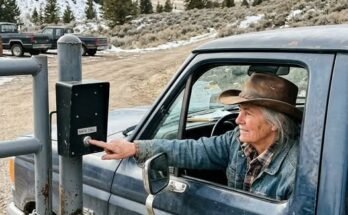
I had never seen my father look so calm.
Not when his business nearly failed.
Not when Mom was diagnosed with cancer.
Not even when a drunk driver crashed into his truck twenty years earlier.
This was different.
He wasn’t angry in the way people expected.
He was focused.
I stood.
“Dad, we need to call your attorney first.”
He looked at me.
Then nodded.
“You’re right.”
That surprised me.
My father had never been particularly fond of being told to wait.
But something about Serena’s phone call had changed him.
He was no longer treating this as an unpleasant family disagreement.
He understood that his home, finances, and independence might be at risk.
We called his attorney, Margaret Ellis.
She had handled his legal affairs for more than fifteen years.
When Dad explained what had happened, her voice became serious.
“Mr. Vance, do not confront them alone.”
He nodded.
“I wasn’t planning to.”
She continued.
“I’m going to contact the appropriate authorities and meet you at the property.”
I looked at Dad.
He squeezed my hand.
Margaret asked him to bring identification, proof of ownership, and the documents he’d removed from the house.
She also asked us to preserve the security footage without altering it.
Dad nodded.
“Understood.”
Then he looked at me.
“Clara, get your coat.”
Forty minutes later, we turned onto the familiar street where I’d grown up.
The neighborhood looked almost exactly as I remembered.
Tall oak trees.
Brick houses.
Snow piled along the sidewalks.
And at the end of the block stood Dad’s white colonial home with dark green shutters.
The same house where Mom had planted roses every spring.
The same house where Serena and I had learned to ride bicycles.
The same house where Dad had spent thirty-eight years building a life.
Now a locksmith’s van sat in the driveway.
Julian stood near the front porch.
Serena was beside him, speaking sharply into her phone.
Dad looked at them through the windshield.
For a moment, his expression softened.
Then he opened the car door.
I followed him.
The cold air struck my face.
Serena looked up.
And froze.
Her phone slipped from her hand.
It hit the porch with a sharp crack.
“Dad?”
My father stopped at the bottom of the steps.
“Good morning, Serena.”
She stared.
Julian’s face went pale.
Dad looked toward the locksmith.
“Sir, I’m the owner of this property.”
The man glanced between them.
Dad continued.
“I have not authorized anyone to change these locks.”
The locksmith immediately stopped working.
Julian stepped forward.
“Mr. Vance, we can explain.”
Dad looked at him.
“I’d appreciate that.”
Serena began crying.
“Daddy, we thought something had happened to you!”
Dad stared at her.
“Then why didn’t you call me?”
She opened her mouth.
Closed it.
He continued.
“Why didn’t you call Clara?”
Serena looked away.
“And why did you tell her I was dead?”
Silence.
Julian cleared his throat.
“There was a misunderstanding.”
Dad nodded slowly.
“That’s the second time you’ve used that word today.”
Julian’s jaw tightened.
Dad continued.
“I’d like to hear what was misunderstood.”
Before Julian could answer, another car pulled into the driveway.
Margaret Ellis stepped out carrying a leather briefcase.
Behind her came a uniformed officer who had been asked to attend because of the disputed entry and lock change.
Margaret approached us.
“Mr. Vance.”
Dad nodded.
“Margaret.”
She looked toward Serena and Julian.
Then at the locksmith.
“Has any work been completed?”
The locksmith shook his head.
“I’ve removed one cylinder, but I haven’t installed the replacement.”
Margaret nodded.
“Thank you. Please don’t proceed until ownership and authorization have been clarified.”
The man stepped aside.
Serena looked horrified.
“Dad, you called the police?”
Dad looked at her.
“Serena, you told people I was dead and tried to change the locks on my house.”
She began crying harder.
“I was trying to protect you!”
Dad’s voice remained calm.
“From what?”
She stared.
He continued.
“From being alive?”
Julian stepped forward.
“This is getting ridiculous.”
Margaret turned toward him.
“Mr. Mercer, do you have written authorization from Mr. Vance to change the locks?”
Julian hesitated.
“We’re family.”
Margaret nodded.
“That wasn’t the question.”
Silence.
She continued.
“Do you have authorization?”
Julian looked away.
“No.”
Dad slowly shook his head.
Margaret asked the locksmith to provide the work order and the name of the person who requested the service.
Then she turned toward my father.
“Would you like to enter your home?”
Dad nodded.
“Yes.”
The officer remained nearby while the situation was documented.
We entered through the front door.
The familiar smell of cedar polish and old books filled the hallway.
For a moment, I felt like a child again.
I remembered running down those stairs on Christmas morning.
Mom laughing in the kitchen.
Dad pretending he couldn’t find the presents.
Then I looked toward his office.
The door was open.
Drawers had been pulled out.
Papers lay scattered across the desk.
Dad stopped walking.
His face changed.
Not anger.
Grief.
He stared at the room.
Then whispered, “They went through everything.”
I stepped beside him.
“Dad…”
He shook his head.
“Your mother kept her letters in that drawer.”
I looked.
The drawer was empty.
My chest tightened.
Serena appeared behind us.
“Dad, we were organizing things.”
He turned slowly.
“Where are your mother’s letters?”
She blinked.
“What?”
“The letters she wrote me when we were engaged.”
Serena looked away.
“I don’t know.”
Dad’s voice trembled.
“They were tied with a blue ribbon.”
Silence.
He continued.
“Your mother wrote those letters before we were married.”
His eyes filled.
“They’re the only handwritten letters I have left from her.”
Serena swallowed.
“I didn’t know.”
Dad looked at her.
“That’s the problem.”
He took a breath.
“You didn’t know what mattered to me.”
For a long moment, nobody spoke.
Then Margaret stepped forward.
“Mr. Vance, we should document the condition of the office before anything is moved.”
Dad nodded.
We took photographs.
Recorded what appeared to be missing.
And preserved the information needed for the investigation.
Then Margaret asked Serena and Julian to explain the documents they had claimed to find.
Julian immediately became defensive.
“We were trying to handle the estate.”
Margaret looked at him.
“Mr. Vance is alive.”
Julian’s face reddened.
She continued.
“And no estate administration arising from his death can properly proceed while he is alive.”
Serena began crying again.
Margaret asked whether they had contacted any financial institutions.
Julian hesitated.
Then admitted they had.
My stomach tightened.
“Which ones?” I asked.
He looked at me.
“Stay out of this, Clara.”
Dad’s head snapped toward him.
“Do not speak to my daughter that way.”
Julian froze.
Dad continued.
“She’s the only reason I’m standing here with my documents intact.”
Serena looked at me with open resentment.
“You’ve been turning him against us.”
I stared at her.
“Serena, you told me he was dead while he was eating breakfast in my kitchen.”
She looked away.
I continued.
“You didn’t even ask where he was.”
Silence.
“You didn’t ask whether he was safe.”
My voice trembled.
“You just told me I was excluded.”
Dad closed his eyes.
Margaret asked Serena and Julian to provide copies of any documents they had used or submitted.
They refused at first.
Then, after further discussion, Julian admitted that they had contacted a bank and a property agent.
They had also spoken with a residential care facility about Dad’s supposed inability to manage his affairs.
My father stared.
“You contacted a care facility?”
Serena swallowed.
“Daddy, we were worried.”
He looked at her.
“Worried about what?”
She began crying.
“About you getting older.”
Dad nodded slowly.
“I’m seventy-eight, Serena.”
He took a breath.
“That doesn’t mean I’ve stopped being a person.”
Her face crumpled.
He continued.
“And it certainly doesn’t mean you get to announce my death because I refuse to sign your paperwork.”
The room fell silent.
Then Margaret opened her briefcase.
“Mr. Vance, I think it’s time we reviewed the documents you brought.”
Dad nodded.
She placed the original estate papers on the desk.
His will.
His property records.
His financial authorizations.
And the recent documents he’d refused to sign.
Then she looked at Serena.
“You told Clara that Mr. Vance left everything to you and Julian.”
Serena looked down.
Margaret continued.
“Where did that information come from?”
Julian stepped forward.
“We found a will.”
Margaret held out her hand.
“May I see it?”
Julian hesitated.
Then removed a folded document from his jacket.
Margaret examined it.
Her expression changed.
She looked at Dad.
“Mr. Vance, have you seen this before?”
He shook his head.
“No.”
She studied the signature.
Then the date.
Then the witness section.
Finally, she looked up.
“This document raises serious questions.”
Serena’s face went pale.
Margaret continued.
“The signature does not appear consistent with the samples I’ve reviewed, and the witness information requires verification.”
Julian shifted.
Dad stared at the paper.
Then whispered, “I never signed that.”
Margaret nodded.
“We’ll have it examined.”
The investigation that followed was not quick.
There were interviews.
Financial records.
Questions about the disputed documents.
And an examination of the security footage Samuel had helped Dad preserve.
The footage showed Serena and Julian entering the office and removing papers.
The audio captured parts of their conversation.
It did not answer every question.
But it provided important evidence about their intentions and actions.
The financial institutions were notified that Dad was alive and that any purported authority based on his supposed death or incapacity was disputed.
His accounts were protected.
His property records were reviewed.
And the questionable documents were referred to the appropriate authorities.
Serena and Julian faced legal consequences connected to the conduct supported by the investigation.
I won’t pretend that watching it happen felt satisfying.
It didn’t.
Because Serena was still my sister.
The girl who used to braid my hair.
The teenager who taught me how to drive.
The woman who held my hand at Mom’s funeral.
But she was also the person who had told me our father was dead while he sat alive in my kitchen.
Both truths existed.
And I had to accept them.
Dad made changes too.
He updated his estate plan.
He reviewed his financial authorizations.
He arranged for independent oversight of certain financial matters if he ever genuinely needed assistance.
And he made it clear that no one would make decisions about his life simply because they expected to inherit his property.
He didn’t cut Serena out of his heart.
But he did remove the opportunities she’d used to try to control him.
When she eventually asked to speak with him, he agreed to meet in a neutral place.
I went with him.
Not because he needed me to speak for him.
Because he asked me to be there.
Serena arrived looking exhausted.
Her eyes were red.
She sat across from Dad and stared at her hands.
For a long moment, nobody spoke.
Then she whispered, “Daddy, I’m sorry.”
Dad looked at her.
He didn’t answer immediately.
She began crying.
“I don’t know how things got so bad.”
Dad took a slow breath.
“Serena, you told your sister I was dead.”
She covered her face.
“I know.”
He continued.
“You tried to take control of my house.”
She nodded.
“And you used documents I never authorized.”
Her shoulders shook.
“I know.”
Dad looked down.
Then whispered, “Why?”
Serena cried harder.
For several seconds, she couldn’t answer.
Finally, she said, “Julian and I were in debt.”
Dad closed his eyes.
She continued.
“More debt than we told anyone.”
My stomach tightened.
She swallowed.
“We thought if we could sell the house…”
Her voice broke.
“We could fix everything.”
Dad stared at her.
“And you thought the solution was to pretend I was dead?”
Serena began sobbing.
“I wasn’t thinking.”
Dad shook his head.
“No.”
His voice trembled.
“You were thinking.”
He looked at her.
“You were thinking about the house.”
Tears filled his eyes.
“The truck.”
His voice cracked.
“The money.”
Serena looked down.
Dad continued.
“But you weren’t thinking about me.”
For a long moment, the room was silent.
Then Serena whispered, “Can you ever forgive me?”
Dad looked at her.
I watched his face.
The grief.
The anger.
The love.
All of it.
Finally, he said quietly, “I don’t know.”
Serena began crying again.
He continued.
“I love you because you’re my daughter.”
His voice trembled.
“But I can’t trust you simply because you’re sorry.”
She nodded.
“I understand.”
Dad looked toward the window.
Then said, “If you want a relationship with me, it has to be one where I’m alive in more ways than one.”
Serena looked up.
He continued.
“Not just breathing.”
His eyes filled.
“But respected.”
She nodded through tears.
“I understand.”
Dad took a breath.
“Then show me.”
We left the meeting without promises.
No dramatic embrace.
No instant forgiveness.
Just the possibility that something different might grow if Serena was willing to change.
Over the following months, Dad settled back into his life.
He returned to his garden.
Started attending his weekly card games again.
And resumed his Saturday breakfasts with Samuel.
He also began spending more time with me.
Not because he was afraid to be alone.
Because we enjoyed each other’s company.
Every Thursday morning, he came over for breakfast.
He wore his navy flannel robe when he stayed the night.
He complained about my coffee.
Criticized the weather.
And stole bacon from my plate.
Some things never changed.
One Thursday, almost a year after Serena’s phone call, I was standing at the stove when Dad walked into the kitchen.
He looked cheerful.
His silver hair was freshly combed.
He sat at the table.
Then reached for the newspaper.
I placed two plates in front of us.
Eggs.
Toast.
Bacon.
He looked at my plate.
Then at his.
I narrowed my eyes.
“Don’t even think about it.”
He smiled innocently.
“Think about what?”
“Dad.”
He reached across the table.
Stole a strip of bacon.
And laughed.
I shook my head.
“You’re impossible.”
He grinned.
“Apparently, I’m also immortal.”
I burst out laughing.
He laughed too.
And for a moment, the past year disappeared.
There was no forged paperwork.
No locksmith.
No phone call announcing his death.
Just my father.
Alive.
Happy.
And stealing my breakfast.
Then he became quiet.
I looked up.
“Dad?”
He stared at his coffee.
Then whispered, “Clara, thank you.”
I frowned.
“For what?”
He looked at me.
“For believing me.”
My heart tightened.
I reached across the table.
He took my hand.
“Dad, you never had to prove anything to me.”
His eyes filled.
“I know.”
He smiled faintly.
“But it’s nice to know.”
We sat quietly for a while.
Then he looked toward the window.
The morning sun was rising.
The frost was melting from the grass.
And somewhere outside, a bird began singing.
Dad took a slow breath.
“You know, Clara, getting older is a strange thing.”
I smiled.
“How so?”
He looked at me.
“People start talking about you as though you’re not in the room.”
My throat tightened.
He continued.
“They discuss your house.”
He looked down.
“Your money.”
Then he smiled sadly.
“Your future.”
I squeezed his hand.
He looked at me.
“And sometimes they forget you’re still here.”
My eyes filled.
I nodded.
“Yes.”
He smiled.
“Well, I’m still here.”
I laughed through tears.
“Yes, Dad.”
He reached for another piece of bacon.
“Unfortunately for you.”
I burst out laughing.
And as I watched him eat, I realized something.
Serena and Julian had made a terrible mistake.
They believed my father’s life was something they could close like a bank account.
They thought his value existed in the property he owned.
The money he’d saved.
The things they expected to inherit.
But my father was more than an estate.
He was the man who taught me to ride a bicycle.
Who sat beside my bed when I was sick.
Who drove through a snowstorm to attend my college graduation.
Who called every Sunday just to hear my voice.
Who still remembered how I liked my eggs.
And who stole bacon from my plate because he’d been doing it since I was a little girl.
He wasn’t a collection of assets.
He was my father.
And he was alive.
That morning, after breakfast, Dad stood beside the kitchen window.
The sunlight fell across his face.
He looked peaceful.
Then he turned toward me.
“Clara?”
“Yes?”
He smiled.
“Next Thursday, make extra bacon.”
I laughed.
“Why?”
He grinned.
“Because I plan on being alive for breakfast.”
And I smiled.
Because after everything we’d been through, that was the only inheritance I cared about.
More mornings.
More laughter.
More ordinary moments with the people I loved.
The house could wait.
The truck could wait.
The money could wait.
But time couldn’t.
And I wasn’t going to waste another minute treating my father like someone who was already gone.
If your sister falsely announced your father’s death to take control of his property, would you ever trust her again? And do you think a parent should forgive a child who tried to exploit them financially? Share your thoughts in the comments.