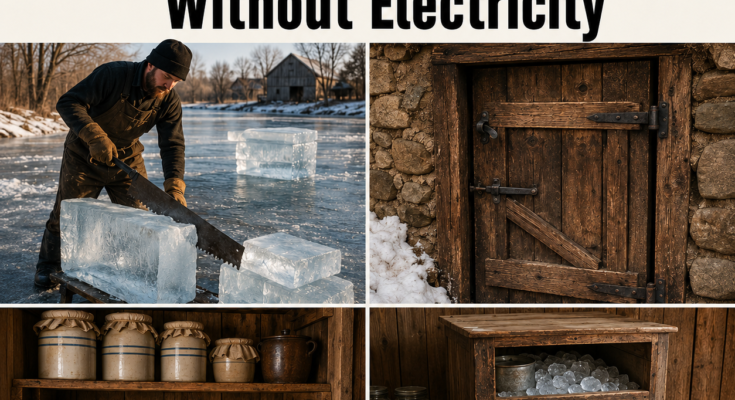
Picture this: it’s the dead of winter, the pond has frozen solid, and instead of complaining about the cold, a man in wool overalls is sawing giant blocks of ice right out of the water. No power grid. No compressor humming in the background. Just muscle, a saw, and centuries of know-how.
This is how Amish communities have kept food cold for generations — and it still works today.
The Ice Harvest
Every winter, once the ice on a pond or river reaches a safe thickness, families head out with hand saws and ice tongs to cut it into thick, uniform blocks. It’s hard, cold, physical work, but it’s also a tradition — often a whole community effort, passed down from father to son the same way barn raising is.
Those blocks aren’t just for looks. They’re fuel for an entire season of cold storage.
The Icehouse: Nature’s Refrigerator
The harvested ice gets hauled to an icehouse — a small, thick-walled stone or wood structure built specifically to keep things cold. The blocks are packed tightly together and insulated with sawdust, straw, or wood shavings. Done right, ice packed this way can last well into summer, sometimes even longer.
No compressors. No refrigerant. No electric bill. Just smart insulation and the cold Mother Nature already provided for free.
The Icebox: Cold Storage in the Kitchen
Inside the home, the icebox does the daily work a modern fridge would do. A block of ice sits in a top compartment, and as it slowly melts, cold air sinks down to chill the food stored below — milk, butter, eggs, and leftovers all kept fresh the old-fashioned way. Swap in a fresh block every few days, and the cycle continues straight through the coldest months.
Beyond the Ice: A Whole System of Preserving
Ice is only part of the picture. Walk into an Amish cellar or pantry and you’ll find:
- Root cellars — cool, dark, underground spaces that naturally hold a steady temperature for potatoes, carrots, cabbage, and squash
- Canning — rows of glass jars packed with pickles, preserves, and vegetables, shelf-stable for months without any refrigeration at all
- Cheese and butter making — turning excess milk into foods that naturally keep longer
- Smoking and curing — preserving meat the way it’s been done for hundreds of years
It’s not one trick — it’s a whole low-tech ecosystem designed so nothing goes to waste, no matter the season.
Why It Still Matters Today
You don’t have to give up electricity to appreciate this. There’s something genuinely useful in understanding how food was preserved before refrigeration existed — especially if you’re into homesteading, off-grid living, emergency preparedness, or you just want a backup plan for when the power goes out.
The Amish never stopped using these methods because, quite simply, they never stopped working.
Cold doesn’t need a cord. Sometimes all it needs is a saw, a pond, and a little know-how.