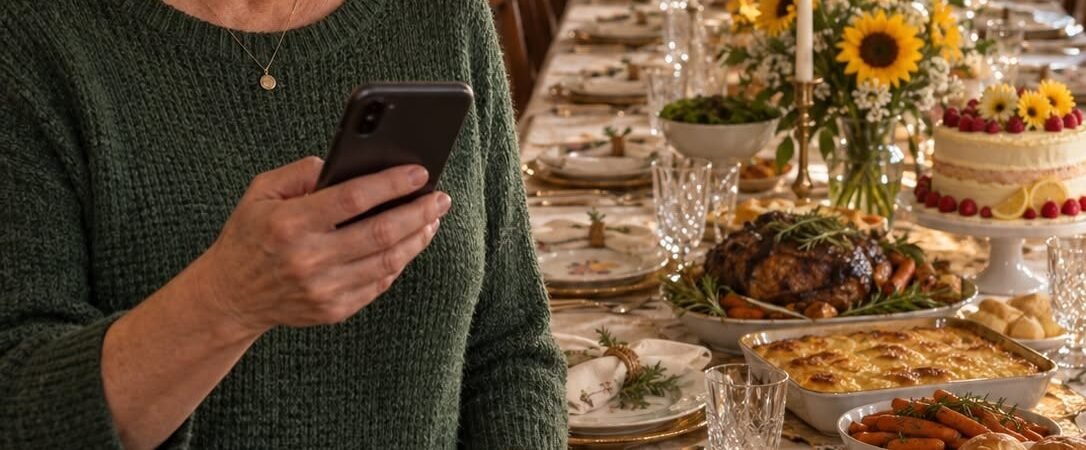
By nine o’clock Sunday morning, my son had called me twenty-six times.
The day before, he’d abandoned the $280 birthday dinner I’d spent ten hours preparing for his wife, but now he was furious because I’d taken away something he’d expected to have forever. A yellow legal pad beside my coffee held the explanation, and for the first time in years, I wasn’t rushing to make my son happy.
My name is Judith Bennett. I’m sixty-four years old, and I live in Knoxville, Tennessee.
My husband, Walter, and I raised our two children in this house, but after he passed away, the rooms became painfully quiet. Our daughter, Abby, called regularly, but our son, Derek, always seemed to have something more important going on. I missed him, his wife Gina, and especially my grandchildren, Jake and Lily, more than I wanted to admit. That’s why I was so happy when Derek called that Wednesday afternoon with a suggestion.
He wanted to celebrate Gina’s thirty-sixth birthday at my house, with family and a few friends.
“Everybody loves your cooking, Mom,” he said, and I felt that familiar warmth of being needed again. When he mentioned that fourteen people would be attending, I hesitated only briefly before agreeing. Fourteen people meant a tremendous amount of work for a woman my age. But I pictured nine-year-old Jake telling me about dinosaurs and six-year-old Lily running into my arms, and suddenly the effort seemed worthwhile.
I imagined the dining room filled with laughter instead of silence, and I could almost hear Walter saying how wonderful it was to have everyone together. I had no idea that the very people I was working so hard to please were already considering another plan.
The following morning, Gina sent me a message containing her birthday menu. She wanted herb-crusted pot roast, creamy potato gratin, glazed carrots, fresh homemade rolls, and a three-layer lemon-raspberry cake decorated with flowers. There were photographs showing exactly how the dishes should look, almost like instructions from a professional catering company.
Beneath them, she’d written, “This is the look I’m going for.”
I studied the pictures for several minutes, wondering whether Gina understood how much time and money that meal would require. She didn’t ask about my budget, didn’t offer to buy ingredients, and didn’t mention anyone coming early to help. Instead, she added that presentation was especially important because she wanted everything to look beautiful. I convinced myself that she was simply excited about her birthday and that I shouldn’t take her instructions personally.
The truth was, money was already tight for me. After paying my regular bills, I had only $340 left until my next retirement payment, and I’d been carefully stretching every dollar. Walter and I had never been wealthy, but we’d always worked hard and tried to save enough to remain independent. I knew I should ask Derek to contribute toward the groceries, but I was afraid of making him feel unwelcome.
At the supermarket, I watched the total rise with every item the cashier scanned. The roast, cream, butter, fresh raspberries, and other ingredients cost more than I’d expected, and the flowers were another expense I probably should have skipped. When the cashier announced that my total was $280, my stomach tightened. I paid anyway, thanked her, and pushed my cart toward the parking lot with sixty dollars remaining in my account.
I sat inside my car for several minutes, holding the receipt against the steering wheel. Part of me wanted to return the expensive berries and flowers, but another part imagined Gina looking disappointed when the cake didn’t match her photograph. I remembered how Derek had praised my cooking and how much I wanted my family to enjoy being in my home. Finally, I folded the receipt and drove away, telling myself that making everyone happy would be worth the sacrifice.
Saturday morning, my alarm rang at 5:30, and I was working in the kitchen before six. I seasoned the roast, peeled mountains of potatoes, prepared the cake layers, and started the dough for the homemade rolls. Soon the kitchen smelled of butter, herbs, lemon, and baking bread, scents that reminded me of the family dinners Walter used to love. For a little while, I felt almost like the woman I’d been before grief and loneliness had settled into my everyday life.
By noon, my wrists were aching and my lower back felt as though someone had tied a knot across it. I was reaching for another bowl when my phone buzzed with a message from Gina.
“Make sure the carrots are glossy. People notice presentation,” she wrote. I stared at those words, looked at the mountain of dirty dishes, and realized she hadn’t once asked whether I needed assistance. I wanted to tell her that I was exhausted, but I sent a thumbs-up instead. I had spent years smoothing things over for my family, and speaking up about something as small as carrots felt strangely difficult.
I told myself there was no point creating tension before the guests arrived. Besides, once everybody sat down together, surely they’d appreciate what I’d done.
Around lunchtime, Abby called to see how the preparations were going. When she learned I was cooking for fourteen people without help, she sounded concerned, but her real alarm came when I admitted how much I’d spent.
“Mom, you only had $340 after your bills,” she reminded me, and I reluctantly confirmed that sixty dollars was all I had left. The silence on the phone lasted long enough to make me uncomfortable. Then Abby said something I didn’t want to hear.
“Mom, you don’t have to buy a place in your own family.”
I insisted everything was fine, but her words followed me back to the stove, where I continued working on dishes that nobody had offered to help prepare. I loved my daughter, but I wasn’t ready to admit that my generosity might have become something people simply expected.
By late afternoon, the dining room looked beautiful. Fourteen plates rested on my mother’s cream-colored tablecloth, with polished silverware, neatly folded napkins, and fresh sunflowers at the center. I had placed dinosaur napkins beside Jake’s seat and butterfly napkins beside Lily’s because I wanted each child to feel special. The roast was tender, the potatoes were golden, and the three-layer cake looked almost exactly like the photograph Gina had sent.
I stepped back and admired the table, even though my feet were swollen and my back was burning. Upstairs, I changed into the green sweater Walter had always loved, brushed my hair, and smiled at my reflection for the first time in weeks. The guests were due at five, and I imagined the sound of cars arriving and children calling for me from the front porch. I was so focused on that happy picture that I never considered how quickly it could disappear.
At 4:20, exactly forty minutes before everyone was supposed to arrive, my phone buzzed again. I thought Gina might be asking about the cake or reminding me of some small detail she’d forgotten.
Instead, her message began, “Change of plans! Enjoy what you made.”
I stared at the words, unable to understand why someone would send such a cheerful message after I’d spent the entire day cooking for them. Below those words was an explanation involving an upscale restaurant called Harlo’s. Apparently, a reservation had suddenly become available, and Gina wanted the birthday celebration moved there instead. I looked at the fourteen chairs, the untouched cake, and the little napkins I’d chosen for my grandchildren.
Then I noticed one detail in her message that made me reach immediately for Derek’s number. The reservation hadn’t simply appeared out of nowhere. Someone had been trying to arrange it. And I needed to know how long my family had been keeping that possibility from me.
Derek answered on the fourth ring.
“Hey, Mom. You saw Gina’s message?”
Behind him, a car door slammed. I heard Lily asking for her bracelet.
“How long?”
“What?”
“How long have you been trying to get that reservation?”
There was a pause. Not confusion. Calculation.
“We put our names down Tuesday. Nothing was guaranteed.”
Tuesday. The day before he called me. I lowered myself into a dining chair. The napkin beneath my hand was folded into a little fan.
“You asked me Wednesday.”
“Because we needed a backup. Harlo’s is impossible to get into.”
“A backup.”
“Don’t say it like that.”
I looked toward the kitchen. Steam clouded the oven window. For ten hours, I had mistaken being available for being wanted.
“Did Gina know?”
“Of course she knew. It’s her birthday.”
“And neither of you thought I should know?”
“We didn’t want you worrying about something that might not happen.”
His explanation was almost gentle. That made it worse.
“Are you inviting me?”
Another pause.
“Mom, the reservation is for twelve.”
“You told me fourteen.”
“Abby and Ben weren’t coming if we got the restaurant. They knew that.”
I closed my eyes.
“Did they?”
“Well, Gina handled the messages.”
“Then ask them yourself.”
He exhaled impatiently.
“Can we talk about this later? We’re trying to get everyone ready.”
“I spent two hundred eighty dollars.”
“I know groceries are expensive.”
“No, Derek. I spent two hundred eighty dollars on the meal you requested. I have sixty dollars left.”
For a moment, he said nothing. Then his voice softened into something I recognized too well.
“Why didn’t you tell me?”
I stared at the empty chairs.
“Would it have changed anything?”
“That’s unfair.”
“Would it?”
He didn’t answer.
Instead, he said, “Just freeze some of it. You won’t have to cook for a month.”
A small sound escaped me. He mistook it for agreement.
“See? There’s a bright side.”
Then Gina called his name.
“I have to go, Mom. Don’t make tonight a whole thing.”
The call ended. I remained there with the phone against my ear until the screen went dark. The kitchen timer began ringing. I let it ring twice before I stood. I turned off the oven, moved the carrots from the heat, and set the rolls on a rack.
These were ordinary motions. My hands knew them. The rest of me seemed to have gone somewhere distant. I cut the cake. Not neatly. One slice tilted onto the plate, leaving a crooked gap in three layers of careful work.
I carried it to the table. Then I sat down and took one bite. Lemon. Butter. Raspberries. It was good. That was when I began crying. Not because the cake was ruined. Because it wasn’t. Because I had done everything they asked me to do, and somehow I was still the person left apologizing.
At 4:47, Abby called.
“Mom, we’re running ten minutes late. Ben had to finish a repair.”
“You’re coming?”
“Of course we’re coming.”
I tried to answer, but my throat closed.
“Mom?”
Her voice changed. I told her enough. Not everything.
Enough to make her say, “We’re on our way.”
They arrived carrying a bottle of sparkling cider and a bunch of grocery-store daisies. Abby saw the slice of cake, the untouched serving dishes, and my face. She set the flowers down carefully. Then she wrapped her arms around me.
I held on harder than I intended. Ben stood beside the doorway, his expression tightening as he understood.
Finally, he asked, “Should I put the kettle on?”
Such a small question. No demand. No instructions. Just an offer to do something I wouldn’t have to do myself.
“Yes,” I whispered.
“Please.”
Abby didn’t call her brother. She didn’t reach for my phone. She sat beside me while I told her about Tuesday. When I finished, she looked toward the fourteen settings.
“He told us five o’clock. Nobody mentioned another plan.”
“I thought so.”
Ben brought tea. Then he brought three dinner plates.
“Your roast smells incredible, Judith. May we eat while it’s hot?”
I almost protested. The table was wrong. The evening was wrong. But my stomach hurt from emptiness, and two people were there who hadn’t come to collect anything. So we ate. Abby praised the potatoes. Ben asked for another roll.
Nobody photographed the carrots. For several minutes, that almost made me laugh. Then I looked at the extra food.
“What am I going to do with all this?”
“Do you want company?” Abby asked. I thought about it. Really thought. Across the street, Mrs. Alvarez was recovering from hip surgery. My neighbor, Ruth, had lost her sister that winter. And Mr. Patel next door had been bringing in my bins since Walter died.
“I think I do.”
We made calls. We didn’t pretend there had been no hurt.
I told Ruth simply, “Some plans changed. I have a good dinner and would like to share it.”
She arrived twenty minutes later with her reading glasses still hanging from her sweater. Mr. Patel brought his wife, Nisha. Ben carried covered plates across the street to Mrs. Alvarez and her daughter. The table never reached fourteen. It reached seven.
Seven was enough to make the room sound lived in. Ruth told a story about Walter fixing her porch light and accidentally ringing her doorbell for almost half an hour. I laughed. Then cried again. Nobody asked me to stop.
After dinner, Nisha washed dishes. Ben dried. Abby packed leftovers into containers. Ruth sat beside me, her knee touching mine beneath the table.
“People can love you,” she said, “and still learn terrible habits about what you’ll tolerate.”
I watched my daughter scrape a pan.
“How do you make them unlearn?”
“First you stop helping them practice.”
After everyone left, Abby stayed. We sat at the kitchen table beneath the little yellow light Walter always meant to replace.
“I need to tell you something,” I said. She waited.
“There’s another bill.”
Her eyes moved to mine.
“What kind?”
“Derek’s home equity payment.”
She didn’t speak. I wished she would. Silence made it harder to keep pretending it was small.
“How much?” she finally asked.
“Four hundred eighty-six dollars a month.”
“For how long?”
“Almost four years.”
Abby leaned back.
“Mom.”
“It was supposed to be temporary.”
I had said that so often the words had lost their meaning. When Derek’s hours were reduced, he and Gina had fallen behind. He had shown me a statement and told me they might lose the house. I had set up payments directly to the lender.
Three months, he promised. Maybe six. Then Lily needed something. Then the car needed work. Then there was always another reason not to stop.
“His hours came back,” Abby said.
“Yes.”
“He got promoted last year.”
“Yes.”
She pressed her lips together.
“Does he know how tight things are?”
“He knows my retirement income. He knows what I have.”
“But have you told him what this costs you?”
I looked down.
“The money comes out before I decide what I need.”
Abby took a slow breath. I could see her wanting to say something fierce.
Instead, she asked, “What have you gone without?”
I tried to make a joke about being accustomed to old shoes. She didn’t smile. So I told her about the crown I kept postponing. The tires. The winter thermostat. The trip to visit her that I’d canceled over a supposed cold.
Abby turned her face away.
“I would have paid your fare.”
“I know.”
“Then why didn’t you tell me?”
“Because I didn’t want you supporting me while I supported your brother.”
We sat quietly after that. The refrigerator hummed. Somewhere outside, a dog barked. Finally, Abby reached across the table.
“You can stop.”
“I promised I’d help them.”
“You did help them.”
“What about the children?”
“His children need responsible parents. They don’t need a grandmother skipping dental work.”
I thought about Derek’s voice. Just freeze some of it. I thought about Gina’s carrots, the empty driveway, the phone call I hadn’t mattered enough to receive. And beneath all that, something older. Walter at our kitchen table, carefully writing down numbers.
Me saying we could manage. Both of us calling it love when sometimes it was fear. I found the yellow legal pad in the drawer beside the stove. At the top, I wrote: What I can afford. Below that, after a long hesitation: What I can no longer afford.
The second list filled faster. Money I needed. Promises made on my behalf. Days of work treated as disposable. The fear that saying no would cost me my grandchildren. I stared at that last sentence. Then I circled it.
“I don’t know how to do this,”
I admitted. Abby squeezed my hand.
“You don’t have to know everything tonight.”
But I knew one thing. I brought my laptop to the table. The bank website looked exactly as it had the previous month. Same blue banner. Same little box of scheduled payments. Such an ordinary place for a life to change.
I opened the recurring transfer to Derek’s lender. The next payment was scheduled Monday. My finger hovered over the trackpad. Then I canceled it. I saved the confirmation. Afterward, I wrote Derek a message. I read it aloud to Abby.
“I canceled the recurring payment of four hundred eighty-six dollars to your lender. The next payment is your responsibility. Please contact them directly about your payment arrangements. I will not resume these payments. We also need to discuss the cost of today’s dinner. I am unavailable tonight.”
Abby nodded.
“That’s clear.”
I wanted to add that I still loved him. I wanted to apologize. I wanted to soften every sentence until there was nothing left for him to object to. Instead, I pressed send. Then I put my phone in the kitchen drawer.
That night, I slept badly. Courage hadn’t made me peaceful. It had made me frightened in a new direction. But when I woke Sunday, the first feeling wasn’t regret. It was relief.
By nine, there were twenty-six missed calls. There were messages, too. First confusion. Then urgency. Then anger. You can’t just do this. The payment is tomorrow. Call me right now. Gina sent one. Using money to punish your family is a very ugly look.
I read that message twice. Then I looked at the legal pad.
At 9:18, Derek knocked. He wasn’t gentle. I left the chain fastened when I opened the door. His eyes went straight to it.
“Seriously?”
“Good morning, Derek.”
“Take that off.”
“Lower your voice.”
He glanced toward the street. Then back at me.
“Mom, we need to talk.”
“We can talk. You need to stop giving orders.”
His jaw moved. For a moment, I saw the little boy who used to arrive at my bedside holding a broken toy.
Then he said, “What the hell were you thinking?”
And the little boy vanished. I closed the door. Not slammed. Closed. Through it, I heard him exhale. A moment passed. Then another.
“Mom.”
I waited.
“I’m sorry I raised my voice.”
I opened it again. This time, I removed the chain. He entered with the restless energy of someone inconvenienced by an emergency he hadn’t chosen to understand.
“The bank payment is tomorrow.”
“I know.”
“We budget around that.”
“I did, too.”
He stopped beside the table. The legal pad lay between us.
“You can’t make a decision like this because you’re upset about dinner.”
“The dinner made me look at a decision I should have made years ago.”
He pulled out a chair. I sat opposite him. For once, I didn’t offer coffee.
“We were going to pay you back.”
“You said you would take over after three months.”
“Things got complicated.”
“For almost four years?”
He rubbed his forehead.
“You don’t know every expense we have.”
“No. But I know mine.”
I slid the legal pad toward him. Not a dramatic accounting of every sacrifice I’d ever made. Just the monthly numbers. Income. Utilities. Insurance. Groceries. His payment. What remained. He looked down. His eyes lingered near the bottom.
“You could have told me it was this bad.”
“I told you yesterday I had sixty dollars left. You suggested freezing the roast.”
Color rose into his face.
“I didn’t mean—”
“I know what you meant. You wanted the conversation to end without requiring anything from you.”
He looked toward the window. A squirrel moved along the fence. Somewhere, a mower started. Our ordinary neighborhood kept going.
Finally, Derek said, “I thought you had savings.”
“I do. For emergencies. For repairs. For the years ahead of me.”
“Dad left you money.”
“Dad left me enough to remain in my home if I was careful.”
“I’m not asking for everything.”
“No. You’ve been taking a little until everything became smaller.”
He pushed the pad back.
“This isn’t fair.”
I folded my hands to keep them from trembling.
“You’re right. It hasn’t been.”
His phone buzzed. He glanced at the screen, then turned it facedown.
“Gina thinks you’re trying to make her apologize.”
“Gina owes me an apology. Whether she gives one will not change the bank payment.”
He stared. I could almost see him looking for the old arrangement. The right tone. The right worry. The mention of a child.
“Jake’s school trip is coming up.”
“I hope he enjoys it.”
“If we have to cover this, something else has to go.”
“That is a decision you and Gina will make.”
“You’re really okay with that?”
“No, Derek. I’m uncomfortable. I’m sad. I’m frightened you might keep the children away from me. But discomfort doesn’t mean I’m doing something wrong.”
His expression changed at that. Not softened. Caught.
“I wouldn’t do that.”
“Then don’t mention them as a reason I should pay.”
He looked at his hands. The kitchen clock ticked five times.
Then he said, “You’ve always helped.”
“Yes.”
“We counted on it.”
“Yes.”
“I thought you wanted to.”
“I wanted to help you recover. I didn’t agree to become part of your income.”
He had no answer. For several seconds, I thought we might reach each other. Then his phone buzzed again. He stood.
“I need to get home.”
“All right.”
At the door, he turned.
“So that’s it?”
“About the payment, yes.”
“And the dinner?”
“I expect reimbursement for the groceries.”
He gave a short, incredulous laugh.
“You’re invoicing your son?”
“No. I’m asking the adult who requested an expensive dinner to pay for the groceries after canceling it.”
“You ate the food.”
“I didn’t buy it for myself.”
He looked away first. Then he left. I locked the door and leaned against it. My whole body shook. I wanted to call him back. Not because he had persuaded me. Because the silence after a boundary can sound terribly like abandonment.
Instead, I called Ruth.
“Can you sit with me?”
“Put the kettle on,” she said. When she arrived, I told her everything. She listened without interrupting. Then she pointed at my cooling tea.
“Drink that before you apologize for owning your own money.”
I laughed so suddenly I spilled some on the saucer. Monday morning, I called the bank. I confirmed that the transfer had been canceled. Then I reviewed my accounts, my beneficiaries, and the emergency contact information. There was no secret fortune.
No hidden property. No enormous inheritance to withdraw with one magnificent gesture. There was just my pension, my modest savings, and the house Walter and I had worked to pay off. It was enough if I stopped pretending it belonged to everybody else first.
I booked the dental appointment. When the receptionist offered Thursday, I almost said I should wait. Then I looked at the pad.
“Thursday is fine.”
That afternoon, Gina called. I answered because avoiding her forever would become another kind of fear.
“I think this has gotten completely out of hand,” she began.
“Then let’s be clear.”
She went quiet.
“I won’t fund the loan anymore. I won’t host elaborate meals without shared costs and shared work. And I won’t accept being spoken to the way you spoke to me.”
“I sent a birthday menu.”
“You sent instructions. Then you checked on the carrots while knowing you might not come.”
“The restaurant hadn’t confirmed.”
“That was information I deserved.”
She inhaled sharply.
“You could have said no.”
“Yes,” I said.
“I could have. I’m learning.”
The silence afterward was longer than either of us expected.
Then she said, “I didn’t know about the money.”
“What money?”
“The loan. I knew you helped when Derek’s hours were cut. I thought that ended.”
I sat down.
“He never told you?”
“He handles that account.”
I stared at Walter’s old mug beside the sink. For the first time, I heard uncertainty beneath her anger.
“Ask him to show you the statements,” I said.
“I will.”
“And Gina?”
“Yes?”
“Not knowing about the loan doesn’t explain Saturday.”
Her voice tightened again.
“I know.”
It wasn’t an apology. But it was the first thing she had said that didn’t try to erase what had happened.
Three days passed. Derek didn’t call. The quiet was different now. Before, I had filled it with things I might do to bring him closer. Now I had to live inside it without reaching for my checkbook. I cried in the grocery aisle over a bag of oranges.
I missed Lily’s voice. I missed Jake’s serious explanations. I even missed Derek, which felt disloyal to myself until Abby reminded me that love wasn’t evidence I should surrender.
“You’re allowed to miss him,” she said.
“You’re also allowed to be angry.”
On Thursday, the dentist took new images. The crown would cost money. I paid the deposit without explaining my son to anyone. Afterward, I sat in the car with my numb cheek and cried a little harder. This time, some of it was relief.
Friday afternoon, a message arrived from Derek. Could we come Sunday? Just Gina and me. I wrote back: At two. The children can visit separately. I wanted the conversation to happen without two small people trying to measure adult weather.
They arrived exactly on time. Gina carried an envelope. Derek carried nothing. For some reason, that made me hopeful. They sat where I indicated. Gina placed the envelope on the table.
“Two hundred eighty dollars.”
I didn’t touch it yet.
“Thank you.”
“I also need to apologize.”
Her eyes were red, but she didn’t cry.
“I wanted the restaurant. When the opening came through, I was excited. I sent a message like I was canceling a delivery. I didn’t think about you standing here waiting.”
“You knew I was cooking.”
“Yes.”
The word landed plainly. No softening around its edges.
“I knew.”
I looked at Derek. He was studying his wedding ring.
“Is there something you want to say?”
He raised his head.
“I told Gina you’d offered to keep helping with the loan.”
My chest tightened.
“She thought you had extra money. Because I said you did.”
Gina looked at him. Not with surprise. With the weary anger of something already discussed at home.
“Why?” I asked. He swallowed.
“At first, I was embarrassed. Then it was easier to let it keep happening.”
“What did you spend instead?”
He looked down again.
“Everything. Trips. The patio. Payments on the newer car. Things we thought we could manage because that bill was covered.”
No single extravagant purchase. Nothing I could point to and declare the whole explanation. Just two adults building a life around a sacrifice they had stopped seeing.
“You told me things were tight.”
“They were.”
“Because you spent what you had.”
He nodded. The admission should have felt satisfying. It didn’t. It felt like standing in front of a repaired wall and discovering how much damage had been hidden behind it.
“You let me think I was keeping you safe,” I said.
“I know.”
“And I liked being needed enough that I didn’t ask questions.”
His eyes lifted quickly.
“That doesn’t make it your fault.”
“No. But it’s something I need to understand about myself.”
For a while, nobody spoke.
Then Gina said, “We made a budget. A real one. Together.”
She told me about expenses they had canceled. The car they planned to sell. The lender they had contacted to discuss payment arrangements. I listened. I didn’t offer solutions. When she finished, Derek leaned forward.
“I was angry Sunday because you frightened me. I saw a payment I couldn’t keep ignoring.”
He rubbed his palms together.
“And I blamed you for making me look at it.”
I watched him struggle to keep his eyes on mine.
“I’m sorry, Mom. For the money. For Tuesday. For knowing you would say yes and using that.”
That last sentence hurt more than the others. It also sounded true.
“I need time,” I said. He nodded.
“I understand.”
“I don’t think you do yet. But you can give it to me.”
“I will.”
I opened the envelope. The bills were new, creased once down the middle. I counted them because I wanted no more assumptions between us. Then I put them away. Gina wiped beneath one eye.
“Can the kids still come?”
“Yes. They can.”
“I don’t want them thinking you didn’t want to see them.”
“Then please don’t tell them that.”
Her face crumpled slightly.
“We won’t.”
Derek stood when I did. Near the door, he looked toward the dining room.
“I never asked what happened to the food.”
“People came.”
“Who?”
I told him. For a moment, he smiled. Then something in his face seemed to fold inward.
“You had a nice evening?”
“Parts of it.”
He nodded slowly. I knew what he was hearing. Life had happened here without his permission. Joy had found another doorway. At the car, Gina turned back.
“Your cake was beautiful. Abby sent me a picture.”
“It tasted good, too.”
“I believe you.”
I didn’t offer to make another. The following Saturday, Jake and Lily arrived carrying an overnight bag and a cardboard box. Gina crouched beside Lily to zip her jacket properly. Derek asked when to collect them.
“Tomorrow at eleven.”
“Eleven,”
he repeated. Not noon. Not whenever lunch was ready. Eleven. After they left, Lily opened the cardboard box. Inside was a lopsided cake covered in yellow icing. There were fingerprints along one edge.
“We helped,”
she announced. Jake gave her a look.
“Mom helped more.”
“It’s for you,” Lily said. My throat tightened.
“What are we celebrating?”
She considered this carefully.
“Grandma.”
Jake rolled his eyes, but he was smiling. We ate tiny slices before dinner. The cake was too sweet. One side had sunk. I loved it. Later, while Lily colored, Jake followed me into the kitchen.
“Are you mad at Dad?”
I set down the dish towel.
“Your dad and I had something difficult to discuss.”
“About the restaurant?”
“Partly.”
He picked at a loose thread on his sleeve.
“I asked if you were coming. Dad said you wanted to stay home.”
I closed my eyes briefly. When I opened them, Jake was watching me.
“I wanted to see you,” I said.
“I always want to see you. The grown-ups made some choices that hurt my feelings. We’re working on that.”
He nodded, but didn’t move.
“Did we do something?”
I knelt, careful of my back.
“No. Not one thing.”
“Because Lily said maybe we didn’t say thank you enough.”
I drew him into my arms.
“Oh, sweetheart. None of this belongs to you.”
He stood stiffly for a second. Then his shoulders relaxed. That evening, I called Derek from the hallway. I kept my voice low.
“Jake thinks you told him I wanted to stay home.”
A pause.
“I did.”
“You need to correct that.”
“I know.”
“Not by making Gina responsible. Not by explaining our finances. Tell him you made a mistake.”
“I will.”
When he arrived Sunday, he sat with both children on the porch steps. I could hear some of it through the screen.
“Grandma wanted us there. I told you something different because I didn’t want to admit I hurt her feelings.” Lily asked, “Did you say sorry?”
“Yes.”
“Then do better.”
Her answer was so simple I had to turn away, pressing my lips together. Derek didn’t laugh.
“I will,”
he told her. In the weeks that followed, there were no grand gestures. No sudden transformation. Derek still reached for excuses when he felt ashamed. Gina still sometimes sent messages that sounded like assignments. I learned to answer before resentment could gather.
Can you watch them Friday overnight? No, I have plans. Could you do Saturday instead? Saturday afternoon works. Would you make the cake for the school fundraiser? I can contribute twelve cookies. Sometimes they were disappointed. Sometimes I was. Nobody disappeared.
The first month without the payment, I replaced my tires. The second, I paid for the crown.
In the third, I bought a train ticket to visit Abby. At her house, I slept in a room with pale blue curtains and a stack of library books beside the bed. On Saturday morning, Ben made pancakes. Abby asked what I wanted to do.
I almost said, “Whatever is easiest for everyone.”
Then I stopped.
“The botanical garden.”
She smiled.
“Then that’s where we’ll go.”
We walked beneath trees I couldn’t name. For the first hour, I talked about Derek. Then, slowly, I talked about other things. A woman from the library had invited me to a book group. Ruth wanted a walking companion. I was thinking of painting the small upstairs bedroom.
Abby listened with a look I couldn’t place.
“What?” I asked.
“Nothing.”
“Abby.”
She slipped her arm through mine.
“I’ve missed hearing you want things.”
That evening, we sat outside beneath her porch light. Ben went inside to make tea. Abby watched him leave, then looked at me.
“Can I tell you something hard?”
My stomach tightened.
“Yes.”
“When you canceled visits, I told myself you were tired. But sometimes it felt like you only had energy when Derek needed something.”
I stared at the dark lawn. There it was. A hurt I hadn’t meant to create, which hadn’t prevented its existence.
“I thought you were okay.”
“I was. Mostly.”
“You never asked for much.”
“I didn’t want to become one more person taking from you.”
I reached for her hand.
“I made competence look like a reason to need less love.”
Her eyes filled. I shook my head.
“I’m sorry.”
She leaned against me. For years, I had imagined fairness as answering the loudest emergency and trusting everyone else to understand. I hadn’t considered what understanding had cost my daughter.
“I won’t make you manage your brother,” I told her.
“Or manage me.”
“Good.”
“But I would like to visit more.”
She laughed through her tears.
“That part you can do.”
When I returned to Knoxville, I began clearing Walter’s workroom. I had avoided it for years. His pencils remained in a mug. A jacket hung behind the door. The room smelled faintly of cedar and old paper. I didn’t empty it in one afternoon.
I sorted one drawer. Then another. Sometimes I stopped and sat in his chair. Behind a stack of manuals, I found the ledger he used before we banked online. Our handwriting shared the pages. His square. Mine slanted. Near the back, between an appliance warranty and a receipt for roofing nails, was an envelope.
On the front, he had written my name. I recognized it immediately. The shape of the J. The way he crowded the final letters together. Inside was the itinerary for a trip to the coast. A trip we had canceled when Derek first needed help.
I remembered the argument. Not loud. Our arguments rarely were. Walter had stood by the sink, saying we could help without giving up everything. I’d told him we could travel another year. Another year had become a diagnosis. Then appointments.
Then a hospital room where the windows didn’t open. Tucked into the itinerary was a sheet of notebook paper. Not a farewell letter. Nothing written with knowledge of what was coming. Just a note from a husband who had gone to work before his wife woke.
Jude,
I put the brochures away. I know you’re worried about Derek. We’ll work it out. But keep one thing you want for yourself. Even if it’s small. We get to have a life, too.
Love,
W.
I sat on the floor.
The note trembled in my hands. For years, I had believed protecting his memory meant preserving everything he left exactly where he left it. His chair. His tools. Our role in the family. Even the habits that had worn us down.
But here was Walter, in blue ink, asking something else of me. I cried until my face hurt. Then I called Abby. I read her the note. She was quiet a long time.
Finally, she asked, “Do you still want to go?”
“Yes,” I said. The answer came before fear could dress it up.
“Yes, I do.”
I didn’t book something extravagant. Three nights near the water. A room with a small balcony. Enough savings to do it carefully, because I was no longer sending part of my life away each month. I asked Ruth if she wanted to come.
She said yes so quickly we both laughed.
When I told Derek, his first response was, “What about the weekend we talked about?”
“We hadn’t made plans.”
“I thought you could keep the kids.”
“Ask me about another weekend.”
There was a pause.
Then he said, “Right. Of course. Where are you staying?”
I told him. He listened. Then asked a question so unfamiliar I almost missed it.
“Are you excited?”
“Yes.”
“Good, Mom.”
He sounded sad. He sounded glad, too. Perhaps grown children had to grieve a little when their mothers stopped existing as places they could always return without knocking.
The week before the trip, Derek asked to come over alone. I expected another financial problem. That expectation embarrassed me, but I let it remain instead of pretending otherwise. He arrived carrying a folder.
“I added it up.”
I looked at him.
“The payments. All of them.”
He put the folder down.
“Twenty-two thousand, three hundred fifty-six dollars.”
Hearing the amount aloud made the room feel smaller. I had known the monthly number. I hadn’t let myself hold the whole weight. He slid a page toward me.
“I can’t give it back at once.”
“I didn’t ask you to.”
“I know.”
There was a proposed schedule. A modest monthly amount. A beginning. Not a miracle. I read it carefully.
“Can you afford this?”
“We sold the car. The payment stopped. We can afford this if we keep making changes.”
“Does Gina know?”
“She helped work it out.”
I set the paper down.
“What I gave you then was help. I won’t rewrite every gift into a debt because I finally became angry.”
He opened his mouth. I raised a hand gently.
“But if you’re offering to return some of that money, and you can do it honestly, I’ll accept.”
He nodded. We chose an amount that didn’t require another fantasy. We wrote down what we agreed. He kept a copy. So did I. No one promised the arrangement would heal everything. It was simply something he could do. As he stood to leave, he noticed the itinerary.
“Was that Dad’s?” I told him about the envelope. His eyes moved to the note.
“Can I read it?”
I handed it over. He read it once. Then again. His face changed.
“He said that to me, too.”
“What?”
“Not those exact words. He told me I was getting too comfortable with how much you did.”
I remained still.
“When?”
“Before he got sick.”
“Why didn’t you tell me?”
Derek gave a sad little smile.
“Because I didn’t like hearing it.”
He placed the note down carefully.
“I told myself you needed us after he died. That helping made you happy.”
“Sometimes it did.”
“I used that.”
“Yes.”
He nodded, accepting the word without asking me to soften it.
“I miss him,” he said.
“So do I.”
Then my son began crying. Quietly at first. With one hand pressed against his eyes. I had seen him cry at the funeral. I hadn’t seen him let himself finish.
“I stopped coming here,” he said, “because every time I did, I expected to hear him.”
The admission entered the room without excusing anything. It belonged there anyway.
“I kept thinking if I stayed busy, it would feel normal.”
“It didn’t feel normal here,” I said.
“I know.”
“No. I don’t think you knew.”
He looked at me.
“I would hear a car and look through the curtain. Sometimes I put on the kettle before I checked who it was.”
His face crumpled.
“Mom.”
“I needed your company. You kept offering me jobs.”
He sat again. For a long time, neither of us spoke.
Then he asked, “What can I do now?”
I looked toward the window. The afternoon light lay across Walter’s empty chair.
“Come sometimes when you don’t need anything.”
He nodded.
“And when you’re grieving,” I added, “you can say that.”
“I didn’t want to make you sadder.”
“I’m already sad, Derek. You don’t have to leave me alone to protect me from it.”
That was the day I began believing something between us could survive. Not return unchanged. Survive changed.
At the coast, Ruth slept late. I woke before sunrise and carried coffee onto the balcony. The ocean was still dark, its edges barely visible. I had brought Walter’s note inside my paperback. I didn’t hold it up to the sky.
I didn’t ask for a sign. I read it once, then watched morning arrive without needing to earn it. Later, Ruth and I walked along the beach. We ate fried shrimp from paper baskets. We bought ridiculous sun hats. One afternoon, I did nothing for almost three hours.
No cooking. No planning. No waiting for the phone. At first, I felt restless. Then foolish. Then, finally, rested. I sent the grandchildren a picture of the water. Lily replied through Gina’s phone with fourteen heart symbols. Jake wanted to know whether I’d seen a shark.
Derek sent a separate message. Hope you’re having a good time. No request followed. I kept looking at the screen as though another line might appear. None did.
By autumn, Thursday afternoons belonged to the library. Every other Tuesday, Ruth and I walked as far as our knees allowed. The upstairs room became a pale, cheerful yellow. I kept Walter’s workbench. I gave Ben some tools he would actually use.
I gave Derek the ledger after copying the pages I wanted.
“Keep the numbers,” I told him.
“Remember the work behind them.”
He held it against his chest like something heavier than paper. Gina began bringing groceries when the children stayed.
The first time, she put the bags away herself. The second time, she asked which shelves to use. That question mattered more. Once, she stayed for tea. No Derek. No children. Just the two of us, a little awkward across the kitchen table.
“My mother never hosted anything,” she said.
“She hated the work. I think I assumed because you enjoyed cooking, it didn’t feel like work.”
“I enjoyed parts of it.”
“I understand that now.”
I stirred my tea.
“You can enjoy doing something and still need help.”
She nodded.
“I also liked having everything look perfect. It made me feel like I was doing life properly.”
“At my expense.”
Her eyes lifted.
“Yes. At your expense.”
We didn’t become best friends over one pot of tea. We became two women who could finish a difficult sentence without turning it into a battle. That was plenty for one afternoon.
For Thanksgiving, I made the roast vegetables and one pie. Derek cooked the turkey at his own house. Gina sent a message asking whether I wanted to bring anything else. I answered no. She wrote: Then come hungry. I read those three words more than once.
At dinner, the turkey was slightly dry. The potatoes had lumps. A serving spoon went missing, and Lily solved the problem with a soup ladle. Nobody suffered. When Gina began apologizing, I asked her to sit.
“It’s a good dinner.”
“But the turkey—”
“Gina. Sit down and eat while your plate is hot.”
She looked at me, then laughed. A real laugh, without sharpness. Afterward, Derek and Ben washed dishes. Abby took the children outside to collect bright leaves. Gina leaned back in her chair and closed her eyes.
“Tired?” I asked.
“Very.”
I waited. Then she opened one eye.
“I owe you about twenty more apologies.”
“One sincere one followed by different behavior will do.”
She nodded slowly. From the kitchen, Derek called for a towel. She started to rise. Then stopped.
“They know where those are.”
“Yes,” I said.
“They do.”
Winter came quietly. There were setbacks. A forgotten call. A request made too late. One afternoon, Derek became defensive when I declined an overnight visit. I felt the old fear reach for my hand. Then he stopped himself.
“Sorry. You already answered.”
We ended the call without an argument. For several minutes afterward, I sat smiling at nothing. Some victories arrive with no audience at all.
The next spring, I invited everyone to dinner. Six adults. Two children. Eight places. I chose the number before anyone chose the menu. Abby brought salad. Ben brought bread. Derek carried a casserole dish with both hands, careful not to tilt it.
Gina arrived with strawberries and a small carton of cream.
“No cake?” I asked.
“Only if you want one.”
“I don’t.”
“Then no cake.”
Jake had grown taller. Lily was missing a front tooth. They rushed past their parents to show me things I didn’t entirely understand. A fossil. A ribbon. A complicated story about a classroom hamster. I listened to all of it.
The table wore my mother’s cream-colored cloth. The sunflowers were mine. I had bought them because I wanted flowers. Not to match a picture. Not to prevent disappointment. Just because the kitchen window looked beautiful with yellow beside it. Before we ate, Derek stood awkwardly.
“I wanted to say something.”
My shoulders tightened automatically. He saw. His expression softened.
“Nothing bad.”
He looked around the table, then at me.
“We got used to Mom being the person who made everything happen.”
I glanced toward Abby. She was watching him carefully.
“And I got used to thinking that meant it didn’t cost her anything.”
He swallowed.
“I know better now.”
Nobody clapped. I was grateful. He sat. I reached across and touched his hand. Then Lily asked for bread, and life moved kindly onward.
After dinner, I carried my plate toward the kitchen. Derek intercepted it.
“I’ve got that.”
“I can carry a plate.”
“I know. Let me.”
So I did. Abby joined me on the porch. The evening smelled of damp earth and something sweet blooming nearby. Inside, we heard dishes clinking. A burst of laughter. Gina telling Ben he was drying a serving spoon she hadn’t washed yet.
Abby leaned against the railing.
“Happy?”
I considered the question. Not the answer that would make her comfortable. The real one.
“Yes.”
“Good.”
“Still learning.”
“Me, too.”
We watched Jake teach Lily how to balance a maple seed on the tip of her finger. It fell immediately. They tried again. Later, after the cars had gone, I walked through the house turning off lights. The dining room held eight empty chairs and the peaceful disorder of people who had been there.
No abandoned feast. No trembling phone. No desperate calculation of what I might offer next. On the counter, beside a container of leftover potatoes, lay the yellow legal pad. I still used it for appointments and grocery lists. The old pages remained underneath.
I turned back to the first one. What I can afford. What I can no longer afford. I read the circled sentence about losing my grandchildren. Then I looked toward the refrigerator. Lily’s drawing hung there. A house. A crooked sun.
Eight figures holding enormous hands. Jake had labeled everyone in careful block letters. Mine said Grandma Judith. Not cook. Not bank. Not backup. My name. I closed the pad. Outside, the porch light glowed across the steps. I made myself a cup of tea and carried it to the chair beside the open window.
The house was quiet. I missed Walter. I probably always would. But the quiet no longer meant that nobody wanted me. Sometimes it meant everyone had gone home after a good evening. Sometimes it meant I could hear myself think.
And sometimes, as the curtains moved gently and the tea warmed my hands, it meant there was nothing I needed to do to deserve the life I was already living. I sat until the sky darkened. Then I went to bed in the home that was mine, with enough money for tomorrow, people I loved finding their way, and no apology waiting on my tongue.