“Please. I only need one.”
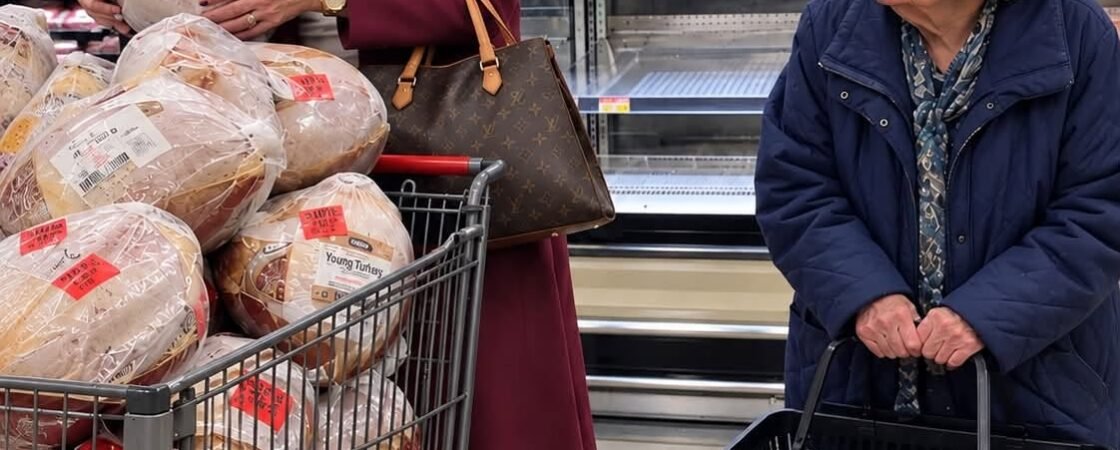
I was reaching for milk when I heard the elderly woman say it from the end of the refrigerated aisle. A woman in heels and a camel coat was loading discounted turkeys into her cart. Red clearance stickers covered the packages. She had taken every one of them, and now the older woman was asking for the last turkey left in the case.
I recognized the woman in the camel coat. Her name was Beatrice. Her family owned apartment buildings, car dealerships and one of the biggest houses in town. I knew that much about her, though I didn’t know her personally. She looked as if she had come to the store for an ordinary errand. The little woman beside her held an almost empty basket and wore a worn blue coat.
“My grandson has the flu,” the older woman said. “I raise him alone. I wanted to make soup, but the regular turkeys are almost forty dollars.”
Beatrice picked up another package and put it in the cart.
“Then buy chicken.”
“The chicken isn’t on sale either.”
The older woman reached toward the final turkey. Beatrice took it first.
“Ma’am, please,” the woman said. “You already have twelve.”
“And?”
“Could you leave me just one?”
Beatrice dropped the turkey on top of the others. “I got here first.”
I had not planned to get involved. I was standing there with milk in mind, listening to a conversation that was getting harder to pretend I hadn’t heard.
The older woman’s voice had gone quiet, but she was still trying to make a case for something she needed. Beatrice had already made it clear she wasn’t interested.
“You’re seriously taking all of them?” I said.
Beatrice turned toward me. “Absolutely. And no, I’m not giving one up.”
The older woman’s cheeks reddened. She looked from Beatrice to the turkeys, then seemed to decide she had to try once more.
“I can give you the ten dollars. Cash. Please.”
Beatrice laughed. “If ten dollars is this difficult for you, maybe turkey soup isn’t what you should be spending money on.”
No one answered her. People nearby had stopped shopping. I could hear someone shift a cart behind me, but nobody stepped into the conversation. I wish I could say I was surprised by the silence. I wasn’t. I know what it feels like to wait for somebody else to speak first.
“My grandson hasn’t eaten properly in two days,” the woman whispered.
Beatrice pushed her cart past her. “That’s not my problem.”
Then she glanced back at the people watching.
“And before anyone makes a scene, remember who my family is.”
That was when I spoke. I didn’t have a clever answer, and I wasn’t thinking about what her family might do. I was thinking about the woman in the blue coat, who had asked for one turkey and offered to pay for it.
Beatrice had nearly reached the end of the aisle. Her cart was overflowing, and she was struggling to push it. Then the store speakers crackled.
“Attention, shoppers…”
Beatrice kept going.
A man’s voice came through the speakers.
“Beatrice.”
She stopped so suddenly that her cart bumped a display. The people around us turned toward her.
“Oh, no,” she whispered.
There was a short pause. Then the man said, “You just told everyone in aisle six to remember who your family is.”
Beatrice tightened her grip on the cart.
“That’s actually a very good idea,” he said.
Her face changed. People started looking toward the front of the store.
“Stay exactly where you are, Beatrice.”
“Why?” she shouted.
“Because I’d hate for you to miss what’s coming.”
She turned toward the front. Her mouth fell open.
“No,” she whispered.
The voice belonged to the store manager. I didn’t know him, but I recognized him when he came into view near the front registers, moving quickly toward the aisle with an employee beside him. The employee had heard the exchange and gone to get him. There was no dramatic arrival, no crowd waiting for Beatrice. Just a manager who had been told what was happening, and shoppers who had heard enough to know why he was coming.
Beatrice stared at him as he approached.
“You called me over the speakers?” she said.
“I did,” he replied. “I heard what happened.”
“You don’t know what happened.”
“I know she asked you for one turkey.”
Beatrice looked toward the older woman. “I got here first.”
The manager glanced at the cart. “You haven’t paid for them.”
“That doesn’t mean you can tell me what to buy.”
He paused. He didn’t raise his voice. “I’m asking you to leave one for her.”
Beatrice gave a short, disbelieving laugh. “You’re asking me?”
“Yes.”
The older woman stood beside her basket, not saying anything now. I noticed she had lowered her hand.
A minute earlier she had been reaching for the turkey. Now it was in Beatrice’s cart, and the manager was the only person speaking directly to her.
Beatrice looked around at the shoppers who had stopped. “This is ridiculous.”
The manager didn’t argue about whether it was ridiculous. He repeated that he was asking her to leave one turkey for the woman who had asked for it. Beatrice said she had the money to buy the whole cart. He answered that she could buy what she wanted, but she didn’t need to take the last one from someone who had asked for it.
“That’s not a rule,” she said.
“I didn’t say it was.”
Her eyes flicked toward the older woman. “She can buy something else.”
“I can’t,” the woman said. Her voice was still low, but she didn’t look away this time. “I told you why.”
Beatrice turned back to the manager. “You’re making a scene.”
“You made one,” I said.
I hadn’t meant to speak again. The words came out before I could make them more polite. Beatrice looked at me, and for a second I thought she might say something about my place in the conversation. Instead she looked past me to the people standing in the aisle.
Nobody stepped forward to defend her. Nobody cheered either. They just watched, which was enough to make it clear that the exchange had not happened privately.
The manager asked her to take one turkey out of the cart.
Beatrice said, “No.”
He didn’t threaten her or claim he could make her do anything. He said he was responsible for the store and wanted the older woman to have the chance to buy one. Then he asked Beatrice again.
For a moment she kept both hands on the cart. The older woman stood still. I remember the plainness of it: twelve turkeys piled together, one woman holding on to the cart, another waiting with an empty basket.
“You can afford the regular ones,” Beatrice said to her.
“I can’t,” the woman answered.
“You said you had ten
Beatrice had twelve discounted turkeys in her cart and still took the last one from an older woman asking for just one. Then a man called her by name over the store intercom. What happened next stayed in the aisle, in front of everyone who had heard her.
She Took Every Discounted Turkey Until the Store Manager Called Her Name
The grandmother asked for one turkey, offered the exact cash she had, and was told to buy something else. The manager’s announcement made the whole aisle listen. Would you have spoken up, or would you have waited for someone who worked there?
A woman asked for one turkey and was mocked for needing it. The manager’s response turned a private humiliation into a public confrontation.
A vertical scene in a clean, upscale American grocery store’s refrigerated aisle, framed at the moment a wealthy shopper takes the last discounted turkey while an older woman pleads for one. In the foreground, large and sharply focused, an elderly woman in a worn blue coat grips an almost empty shopping basket, her face turned in three-quarter view, eyes brimming and lips pressed together as she reaches toward the refrigerator. In the middle ground, a well-groomed woman in her middle years wears heels, a tailored camel coat and polished makeup; she places the turkey onto a cart already piled with packages, wearing a cold, dismissive half-smile. A few shoppers behind them have stopped, watching with concern and visible surprise. The open refrigerated case and the cart full of turkeys make the conflict clear; no readable package labels. Bright warm store lighting, rich natural colors, glossy prestige-TV family drama, photorealistic, natural skin texture, crisp detail. 40mm lens at eye level, portrait orientation, 3:4 aspect ratio, deep focus, no distortion. No text, captions, logo or watermark. No one looking at the camera. No posed group photo. No plastic or airbrushed skin, no extra fingers, no duplicated people, no cartoon, CGI or illustration look.
“Please. I only need one.”
I was reaching for milk when I heard the elderly woman say it from the end of the refrigerated aisle. A woman in heels and a camel coat was loading discounted turkeys into her cart. Red clearance stickers covered the packages. She had taken every one of them, and now the older woman was asking for the last turkey left in the case.
I recognized the woman in the camel coat. Her name was Beatrice. Her family owned apartment buildings, car dealerships and one of the biggest houses in town. I knew that much about her, though I didn’t know her personally. She looked as if she had come to the store for an ordinary errand. The little woman beside her held an almost empty basket and wore a worn blue coat.
“My grandson has the flu,” the older woman said. “I raise him alone. I wanted to make soup, but the regular turkeys are almost forty dollars.”
Beatrice picked up another package and put it in the cart.
“Then buy chicken.”
“The chicken isn’t on sale either.”
The older woman reached toward the final turkey. Beatrice took it first.
“Ma’am, please,” the woman said. “You already have twelve.”
“And?”
“Could you leave me just one?”
Beatrice dropped the turkey on top of the others. “I got here first.”
I had not planned to get involved. I was standing there with milk in mind, listening to a conversation that was getting harder to pretend I hadn’t heard. The older woman’s voice had gone quiet, but she was still trying to make a case for something she needed. Beatrice had already made it clear she wasn’t interested.
“You’re seriously taking all of them?” I said.
Beatrice turned toward me. “Absolutely. And no, I’m not giving one up.”
The older woman’s cheeks reddened. She looked from Beatrice to the turkeys, then seemed to decide she had to try once more.
“I can give you the ten dollars. Cash. Please.”
Beatrice laughed. “If ten dollars is this difficult for you, maybe turkey soup isn’t what you should be spending money on.”
No one answered her. People nearby had stopped shopping. I could hear someone shift a cart behind me, but nobody stepped into the conversation. I wish I could say I was surprised by the silence. I wasn’t. I know what it feels like to wait for somebody else to speak first.
“My grandson hasn’t eaten properly in two days,” the woman whispered.
Beatrice pushed her cart past her. “That’s not my problem.”
Then she glanced back at the people watching.
“And before anyone makes a scene, remember who my family is.”
That was when I spoke. I didn’t have a clever answer, and I wasn’t thinking about what her family might do. I was thinking about the woman in the blue coat, who had asked for one turkey and offered to pay for it.
Beatrice had nearly reached the end of the aisle. Her cart was overflowing, and she was struggling to push it. Then the store speakers crackled.
“Attention, shoppers…”
Beatrice kept going.
A man’s voice came through the speakers.
“Beatrice.”
She stopped so suddenly that her cart bumped a display. The people around us turned toward her.
“Oh, no,” she whispered.
There was a short pause. Then the man said, “You just told everyone in aisle six to remember who your family is.”
Beatrice tightened her grip on the cart.
“That’s actually a very good idea,” he said.
Her face changed. People started looking toward the front of the store.
“Stay exactly where you are, Beatrice.”
“Why?” she shouted.
“Because I’d hate for you to miss what’s coming.”
She turned toward the front. Her mouth fell open.
“No,” she whispered.
The voice belonged to the store manager. I didn’t know him, but I recognized him when he came into view near the front registers, moving quickly toward the aisle with an employee beside him. The employee had heard the exchange and gone to get him. There was no dramatic arrival, no crowd waiting for Beatrice. Just a manager who had been told what was happening, and shoppers who had heard enough to know why he was coming.
Beatrice stared at him as he approached.
“You called me over the speakers?” she said.
“I did,” he replied. “I heard what happened.”
“You don’t know what happened.”
“I know she asked you for one turkey.”
Beatrice looked toward the older woman. “I got here first.”
The manager glanced at the cart. “You haven’t paid for them.”
“That doesn’t mean you can tell me what to buy.”
He paused. He didn’t raise his voice. “I’m asking you to leave one for her.”
Beatrice gave a short, disbelieving laugh. “You’re asking me?”
“Yes.”
The older woman stood beside her basket, not saying anything now. I noticed she had lowered her hand. A minute earlier she had been reaching for the turkey. Now it was in Beatrice’s cart, and the manager was the only person speaking directly to her.
Beatrice looked around at the shoppers who had stopped. “This is ridiculous.”
The manager didn’t argue about whether it was ridiculous. He repeated that he was asking her to leave one turkey for the woman who had asked for it. Beatrice said she had the money to buy the whole cart. He answered that she could buy what she wanted, but she didn’t need to take the last one from someone who had asked for it.
“That’s not a rule,” she said.
“I didn’t say it was.”
Her eyes flicked toward the older woman. “She can buy something else.”
“I can’t,” the woman said. Her voice was still low, but she didn’t look away this time. “I told you why.”
Beatrice turned back to the manager. “You’re making a scene.”
“You made one,” I said.
I hadn’t meant to speak again. The words came out before I could make them more polite. Beatrice looked at me, and for a second I thought she might say something about my place in the conversation. Instead she looked past me to the people standing in the aisle.
Nobody stepped forward to defend her. Nobody cheered either. They just watched, which was enough to make it clear that the exchange had not happened privately.
The manager asked her to take one turkey out of the cart.
Beatrice said, “No.”
He didn’t threaten her or claim he could make her do anything. He said he was responsible for the store and wanted the older woman to have the chance to buy one. Then he asked Beatrice again.
For a moment she kept both hands on the cart. The older woman stood still. I remember the plainness of it: twelve turkeys piled together, one woman holding on to the cart, another waiting with an empty basket.
“You can afford the regular ones,” Beatrice said to her.
“I can’t,” the woman answered.
“You said you had ten dollars.”
“I do.”
The manager moved beside the cart, leaving Beatrice room to make the choice herself. He didn’t reach for anything. He just waited.
Beatrice looked at him, then at the shoppers, then down at the turkeys. She muttered something I couldn’t make out. After a few seconds, she lifted the last turkey she had taken and set it on the edge of the cart.
The manager picked it up and offered it to the older woman.
The woman hesitated before taking it. “Thank you.”
Beatrice said nothing.
The older woman glanced at the turkey, then at the manager. “It’s still nine ninety-nine?”
“Yes,” he said.
“I have ten dollars.”
“We can ring it up at the register.”
The woman held the package close to her basket. She didn’t look triumphant. She looked as if she were trying to get the errand back to where it had started: one turkey, one purchase, something she could take home and cook for the child she was raising.
I went with her toward the registers. I didn’t want her to have to walk there alone after what had just happened. She kept the turkey in her arms, and I stayed beside her. Behind us, Beatrice remained with her cart while the manager spoke to her. I didn’t hear every word.
At the register, the older woman set down the turkey and took out the ten dollars she had offered. The cashier rang it up for $9.99. She paid, received her penny in change, and put the turkey back in her basket.
“You didn’t have to come with me,” she said.
“I know.”
She nodded once. I didn’t ask her name or ask about the grandson. She had already told us what mattered, and she didn’t owe the rest of us an account of her life.
When I looked back, Beatrice’s cart was no longer moving toward the registers. The manager was still beside her. I couldn’t tell what they said after I left, and I didn’t need to. She had been asked to leave one turkey, and she had done it in front of the people who heard her refuse.
I had spoken up, but not at the first chance. I let her finish the insult before I found my voice. I’m not proud of that. I was afraid of making trouble with someone whose family could make trouble for other people. That fear was there, even though I barely knew her.
The older woman left with the turkey she had asked for. Beatrice kept the rest. The manager stayed with her, and I walked away knowing the one thing the woman had come for was no longer in Beatrice’s cart.