Part Two — The Money I Never Asked For
Dad looked at the brown folder beside my chair.
“What’s in there?”
For a moment, I considered telling him it didn’t matter.
Because suddenly, the $39 million mattered less than the pages sitting in front of him.
Still, I opened the folder.
I took out the closing statement and slid it across the table.
Dad put on his reading glasses.
Mom leaned toward him.
Ranata didn’t move.
Dad’s eyes traveled down the page.
Then stopped.
He looked at me.
Then back at the document.
“Thirty-nine million dollars?”
Desmond turned from the sink.
“What?”
Mom whispered:
“Fay…”
“The farm sold three days ago.”
Nobody spoke.
Ranata finally looked up.
Her face was completely blank.
Dad kept staring at the closing statement.
“You sold the farm?”
“Yes.”
“For thirty-nine million?”
“Yes.”
“But Ranata said—”
He stopped himself.
I looked at my sister.
“What exactly did Ranata say?”
Ranata’s mouth tightened.
“Don’t.”
Dad ignored her.
“She told us you were struggling.”
“How long?”
Nobody answered.
I looked at Mom.
“How long?”
Her eyes filled.
“Years.”
Something inside me sank.
Not because they believed I had less money than I did.
I had never cared what anyone thought about my truck or my clothes.
It hurt because my parents had apparently believed their daughter was drowning for years and had never once asked her directly if she needed help.
Dad pushed the financial records toward me.
“We’ve been giving money to Ranata for you.”
“How much?”
He looked down.
“Two hundred eighty-six thousand dollars.”
The room tilted.
I stared at him.
“Say that again.”
“Over fifteen years.”
I looked at Ranata.
She crossed her arms.
“It wasn’t all at once.”
I almost laughed.
“That is your defense?”
“I didn’t say it was a defense.”
Dad slammed his palm against the table.
“Then explain it.”
Mom flinched.
Dad rarely raised his voice.
Ranata looked toward Desmond.
He wouldn’t meet her eyes.
Finally she said:
“It started small.”
Of course it did.
Everything like this starts small.
The first time had been fifteen years earlier.
I had just bought the farm.
Ranata told Mom and Dad I was short on property taxes.
They gave her $4,000 to pass along.
She kept it.
A few months later, she told them my tractor needed a transmission repair.
Another $6,500.
Then came fertilizer.
A hospital bill that never existed.
A broken irrigation pump.
A winter when I was supposedly choosing between heating my house and buying feed.
Whenever Mom wanted to call me, Ranata stopped her.
Fay is embarrassed.
She made me promise not to tell you.
You know how proud she is.
And because those lies sounded enough like the person they thought I was, they believed her.
I looked at Dad.
“You never asked me?”
His face crumpled.
“I thought I was respecting your dignity.”
That hurt more than anger would have.
“By discussing my finances with Ranata instead of me?”
He lowered his eyes.
“No.”
Mom started crying.
“We should have asked.”
“Yes.”
Ranata shifted in her chair.
“This is getting ridiculous. They wanted to help family. I used the money for family.”
I stared at her.
“Whose family?”
She said nothing.
Dad pushed another page toward me.
The transfers hadn’t gone directly into Ranata’s everyday checking account.
She had created a separate account years earlier.
The memo line on multiple transfers contained my name.
FAY FARM
FAY EMERGENCY
FAY EQUIPMENT
My stomach turned.
“So where did it go?”
Desmond finally spoke.
“I didn’t know all of it.”
Ranata spun toward him.
“Desmond.”
“No.”
His voice shook.
“I’m not doing this.”
He looked at me.
“I knew your parents helped sometimes.”
“Helped who?”
He swallowed.
“Us.”
Ranata stood.
“Shut up.”
Dad pointed toward her chair.
“Sit down.”
She did.
Desmond continued.
He thought some of the money had originally been given because Mom and Dad wanted to help both daughters.
Ranata told him the account was a family assistance account.
He knew they had used it toward their first house.
Their children’s private-school tuition.
A kitchen renovation.
Credit-card debt.
He claimed he did not know the money had been requested specifically in my name until months earlier, when he saw a message from Mom asking whether my “new irrigation system” was working.
There had been no new irrigation system.
“What did you do when you found out?” I asked.
His face told me before he answered.
“Nothing.”
I nodded.
At least he didn’t pretend that silence made him innocent.
Ranata suddenly laughed.
A strange, exhausted laugh.
“So what now? Fay has thirty-nine million dollars. She obviously didn’t need the money.”
The room went silent.
I looked at her for a long time.
Then I said:
“You still think this is about whether I needed it?”
She crossed her arms.
“They weren’t deprived of anything.”
Dad’s face changed.
“Actually,” he said quietly, “we were.”
Ranata turned.
Dad reached beneath the stack of records and pulled out another statement.
A home-equity line.
Mom stared down at her hands.
Dad said:
“Eight years ago, when you told us Fay was about to lose the farm, we borrowed against the house.”
I stopped breathing.
Ranata’s face finally changed.
Dad continued.
“We took sixty thousand dollars.”
I remembered that year.
A dry summer.
Bad hay yield.
But I hadn’t been close to losing anything.
I had cash reserves.
Insurance.
A profitable side lease.
While I was working outside thinking everything was fine, my seventy-year-old parents had borrowed against the home they had spent decades paying off because my sister told them I was desperate.
Dad looked at Ranata.
“Do you remember what you told us?”
She looked away.
Mom answered.
“You said Fay was ashamed.”
Dad’s voice broke.
“You said if we didn’t help immediately, the bank would take her land.”
Nobody spoke.
Then I realized what the largest entry on the records was.
$60,000.
Transferred to Ranata.
The same month she and Desmond had put a down payment on a vacation property near the lake.
I closed the folder.
The $39 million sitting in my account suddenly felt almost irrelevant.
The biggest surprise wasn’t that I had become wealthy.
It was discovering how expensive a lie could become when everyone found it easier to believe than to ask one honest question.
━━━━━━━━━━━━━━━━━━━━
Part Three — What the Farm Was Really Worth
I did not leave that kitchen with a check for $286,000.
I did not call the police from the driveway.
And Dad did not magically take Ranata’s house away from her.
Real life took longer.
The next morning, I met with my attorney.
Dad and Mom got their own.
That mattered.
The money had belonged to them.
They were the people who had been deceived.
I refused to turn their hurt into my revenge.
The records were reviewed.
Bank statements.
Texts.
Emails.
Transfers.
Old messages Mom had saved because she never deleted anything.
One message from Ranata read:
Don’t mention the money to Fay. She’s already embarrassed enough.
Another:
Send it to me and I’ll handle it. She won’t take it directly from you.
Those messages mattered far more than my word against hers.
Over time, the truth became difficult for Ranata to deny.
She eventually admitted that the first lie had felt temporary.
She had credit-card debt.
She told herself she’d replace the $4,000 before anyone noticed.
She didn’t.
Then asking again became easier.
Every time she needed money, she attached my name to the need.
Why me?
I asked her that once.
Months later.
In a lawyer’s conference room.
She looked exhausted.
“Because they always worried about you.”
I almost laughed.
“They worried about me?”
“You were the one living alone on a farm. Driving that awful truck. Doing everything the hard way.”
“So you made me poor in their minds.”
She looked down.
Then came the truth underneath the truth.
“And because Dad admired you.”
I sat still.
“What?”
“He always talked about how independent you were.”
Her voice cracked.
“You bought the farm yourself. Fixed everything yourself. Never asked anyone for anything.”
I stared at her.
“So you stole money using my name because Dad respected me?”
“It wasn’t like that at first.”
“But eventually?”
She cried.
I didn’t comfort her.
She continued.
“Eventually I liked being the person they needed.”
That finally made sense.
For years, Ranata had created a version of me that was secretly helpless.
Then she positioned herself between me and our parents as the capable sister managing the crisis.
She wasn’t merely taking money.
She was manufacturing a role.
The responsible daughter.
The trusted messenger.
The one keeping fragile Fay afloat.
Except Fay had never been fragile.
And Ranata had needed her to be.
The financial consequences were serious.
Some money could be traced to assets Ranata and Desmond still owned.
Other money was gone.
My parents chose to pursue repayment.
Not every dollar came back immediately.
A settlement was eventually reached involving the sale of the lake property, repayment over time, and other assets.
There were also legal consequences tied to the deception.
I won’t pretend I felt triumphant.
Watching my sister lose things did not return fifteen years to my parents.
It did not erase Dad’s face when he realized the daughter he trusted had been using the other daughter’s name.
And it certainly did not make my family feel whole.
For a while, Mom blamed herself constantly.
“I should have called you.”
“Yes.”
“I should have known.”
“No.”
She looked at me.
“But—”
“You should have asked. That’s different from saying you should have magically known someone you loved was lying.”
Dad struggled even more.
He kept repeating:
“I thought I was helping you.”
One afternoon, months later, he drove out to my remaining property.
I had kept twelve acres around the farmhouse when I sold the development portion.
Dad sat beside me on the porch.
My old pickup was still parked by the barn.
He looked at it and smiled sadly.
“You really have thirty-nine million dollars and you’re still driving that thing.”
“It still runs.”
For the first time in years, the joke felt different.
Then he became quiet.
“I owe you an apology.”
“For believing Ranata?”
“For never asking you who you were.”
That caught me.
He looked toward the fields.
“I saw the truck. The clothes. The old equipment. I let those things support a story someone else was telling me.”
I said nothing.
“You were right in front of me for fifteen years, and I let someone else narrate your life.”
That sentence hurt because it was true.
I touched his hand.
“I could’ve told you more too.”
Dad shook his head.
“You weren’t required to submit financial statements to earn our respect.”
That sounded like the father I remembered.
We sat quietly.
Then he asked:
“What are you going to do with all that money?”
I smiled.
“I haven’t decided.”
“Good.”
That surprised me.
“Good?”
He nodded.
“Take your time before everybody else decides for you.”
I laughed.
He had learned something too.
I did eventually replace my truck.
Not immediately.
The transmission finally failed eleven months after the sale.
My mechanic called and said:
“Fay, I’m begging you. Let this truck die with dignity.”
So I bought another pickup.
Used.
Dad nearly had a stroke when he learned I could afford almost any vehicle on earth and still bought one three years old.
Some things don’t need fixing.
I also paid off my parents’ home-equity loan.
That took a long conversation.
Dad initially refused.
“That debt exists because we made a bad decision.”
“It exists because you believed you were saving me.”
“That doesn’t make it yours.”
“No.”
I looked at him.
“But this is my choice.”
That mattered.
Not repayment.
Not obligation.
Choice.
They accepted.
But I did not replace the other money Ranata had taken.
That surprised Mom.
“You could.”
“I know.”
“Why won’t you?”
“Because if I erase every consequence with money, then money becomes another way this family avoids the truth.”
She understood.
The settlement remained Ranata’s responsibility.
My wealth did not turn her theft into something harmless.
And my parents’ love did not require me to pretend otherwise.
Ranata and I did not speak for nearly three years.
Then one Christmas, a card arrived.
No excuses.
No request to come home.
Inside she wrote:
I spent fifteen years telling everyone you needed rescuing because I couldn’t stand how little you needed me.
I read that sentence several times.
Then:
I stole from Mom and Dad, but I also stole something from you. I stole the right to tell your own story.
That was the first apology that reached me.
I did not invite her over.
Not then.
But I wrote back.
Three words.
I read this.
That was enough.
Eventually, we began speaking again.
Slowly.
Our relationship is smaller now.
Perhaps more honest.
She has never asked me for money.
I have never offered.
My parents are older.
Dad no longer drives at night.
Mom forgets where she leaves her glasses even though they’re usually on her head.
I stop by every Saturday.
Sometimes with groceries.
The same things.
Milk.
Bread.
Coffee.
Mom’s cinnamon creamer.
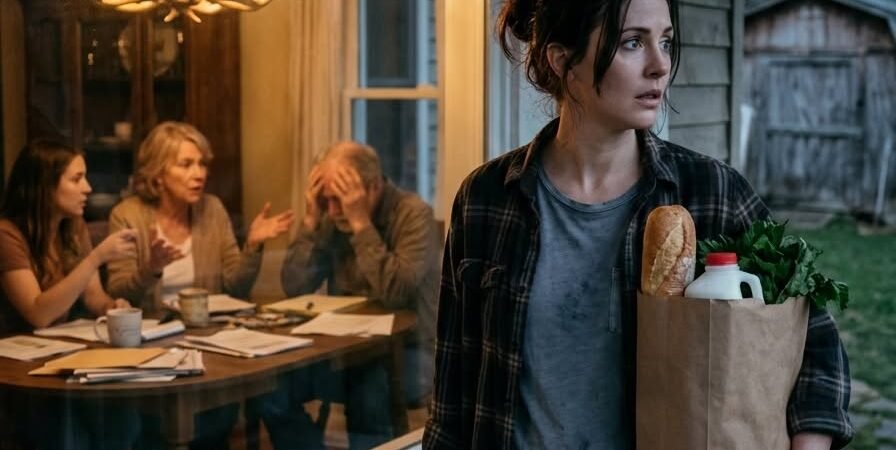
One afternoon, years after everything happened, I walked onto their porch with two bags.
The blinds were open.
Through the window I could see Mom and Dad at the kitchen table.
For a second, memory brought me back to that first Saturday.
Closed blinds.
Ranata’s voice.
My name being used inside a story I didn’t recognize.
Dad asking how much they had given “for Fay.”
I stood there longer than I needed to.
Then Dad looked up and saw me.
He waved.
No secrets.
No whispered rescue.
No intermediary.
Just my father seeing his daughter standing at his door.
I went inside.
Dad looked at the grocery bags.
“How much do we owe you?”
I laughed.
“Thirty-nine million.”
Mom nearly spilled her coffee.
Dad rolled his eyes.
“You’re never letting that go, are you?”
“Absolutely not.”
We laughed.
And somehow that small joke told me more about how far we’d come than any settlement ever could.
The farm sale changed my bank account.
It gave me choices I had never imagined.
But $39 million did not fix my family.
Money couldn’t do that.
What changed us was something much less dramatic.
We stopped speaking for one another.
Dad asked instead of assuming.
Mom called me directly.
I stopped letting silence pass for peace.
Even Ranata eventually learned that loving someone does not give you the right to invent a weaker version of them just so you can feel stronger.
I still own the old brown folder from the sale.
The closing statement is inside.
$39,000,000.
For a while I thought it represented the biggest surprise of my life.
It doesn’t.
The page I think about most is one from my parents’ records.
At the top, beside a transfer I never knew existed, Ranata had written:
TEMPORARY SUPPORT FOR FAY.
I keep a copy.
Not because I enjoy remembering what she did.
Because those four words remind me how easily people can turn another person’s life into a story that serves them.
The farm taught me something different.
For fifteen years, I worked land nobody in my family thought was worth much.
I didn’t argue.
I didn’t explain.
I simply knew what I had built.
Then one day, other people finally saw its value too.
Maybe people aren’t so different.
You shouldn’t have to become worth $39 million before your own family stops assuming your worn clothes mean you’re failing.
You shouldn’t have to prove you’re strong before somebody asks whether you need help.
And you shouldn’t have to become rich before your version of your own life carries more weight than someone else’s.
The money was never the biggest surprise.
The biggest surprise was learning how many years my family had been talking about me instead of talking to me.
The most meaningful thing we did afterward was very simple.
We stopped.
And we finally started asking.