When I got married, my parents transferred their old farmhouse to me for just $1. Over the next twenty years, my husband and I invested more than $60,000 fixing it up. Then they asked me to give it back for the same dollar so my newly divorced brother and his three children could live there. I thanked them for being honest with me. But instead of surrendering my home, I moved my brother and his kids into our empty upstairs rooms.
It was a Tuesday evening in March when Mom brought it up at my kitchen table.
She hadn’t even removed her coat.
Dad sat beside her, nervously twisting his farming cap between his hands.
“Tammy, your brother Jeff needs somewhere to stay.”
“The children can’t go on sleeping on inflatable mattresses in our basement.”
Then Mom finally made her request.
“We want to buy the farmhouse back from you for one dollar.”
One dollar.
Exactly what I’d paid my father when we signed the paperwork in 2006.
I was twenty-six at the time, newly married, and my parents had recently decided to move into town.
They wanted me living nearby.
But the farmhouse they transferred to me had been built in 1912 and was falling apart.
During our first winter, Dale and I slept wearing wool hats because the bedrooms were so cold.
We eventually replaced the roof, spending $14,000.
A new propane heating system cost another $7,800.
We removed every bit of the dangerous old electrical wiring and installed a modern system.
I documented every repair in a spiral-bound notebook that I kept inside the dining room hutch.
The total was $60,340.
Every dollar had come from our own pockets.
Dale was seated at the far end of the table, still wearing the socks he used around the barn.
Without speaking, he reached beneath the table and gently squeezed my knee.
I understood what he meant.
These were my parents, and he would support whatever decision I made.
I turned toward Mom.
Dad continued staring at the cap in his hands.
“Well, thank you for coming directly to me with this,” I replied.
Mom looked surprised.
She’d clearly expected either an argument or an immediate agreement.
A polite thank-you hadn’t occurred to her.
“I’ll let you know my decision on Saturday.”
Later that night, after we climbed into bed, Dale finally shared his thoughts.
“Tam, this place belongs to both of us. But I trust you, and whatever you decide, I’ll stand with you.”
I couldn’t fall asleep.
I watched the clock until nearly two in the morning.
There was a reason I couldn’t simply refuse my parents.
My brother’s three children were sleeping in a basement beside a large freezer.
Those kids deserved better.
But I also refused to hand over the house my husband and I had spent twenty years rebuilding.
Sometime around three, I realized the solution had been sitting right above us the entire time.
Saturday morning arrived cold and sunny.
We got straight to work clearing the second floor.
There were two bedrooms we hadn’t used in years because we’d kept them closed to reduce heating costs.
Our sixteen-year-old daughter, Hannah, helped clean.
She vacuumed the windowsills, removing what seemed like two decades’ worth of dead flies.
By noon, we had the rooms ready.
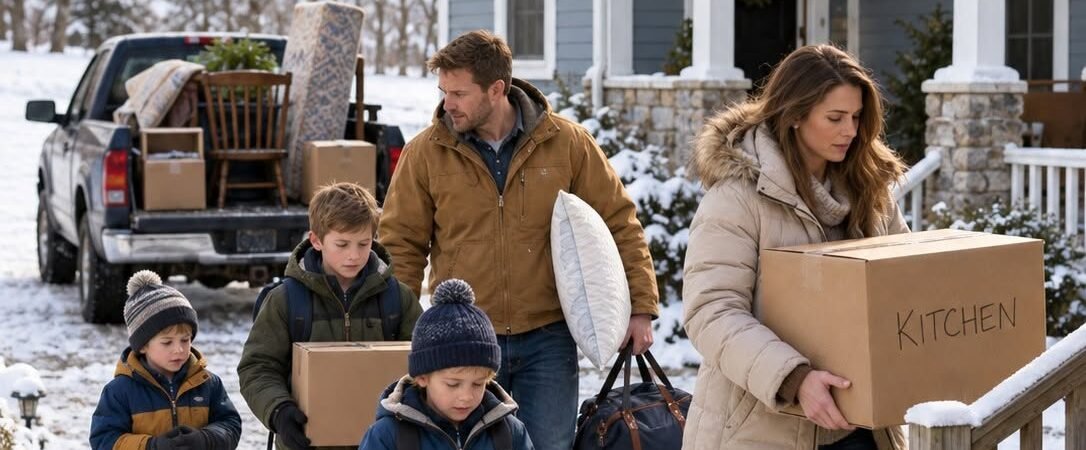
Then Jeff’s pickup appeared on the gravel driveway.
A mattress lay in the truck bed.
I was carrying a cardboard box onto the porch when he climbed out holding a pillow and a duffel bag.
My brother was forty-three.
His wife had left him in January.
He couldn’t bring himself to meet my eyes.
His twelve-year-old son, Brody, followed him up the steps.
Nine-year-old Kenzie came next, carrying her school backpack.
And little Cole, who was six, carefully held a goldfish bowl with both hands.
He carried it as seriously as though he were bringing an offering to church.
“This is Pickles,” he announced.
I smiled and opened the door wider.
By four that afternoon, Mom was calling.
“Tammy, what exactly do you think you’re doing?”
“Making room for my brother and his children,” I answered.
Then I added, “Why don’t you and Dad come over for Sunday dinner?”
She ended the call without another word.
In my entire life, I couldn’t remember her ever hanging up on me like that.
That evening, our kitchen was noisier than it had been in years.
There were children talking over one another, dishes clattering, and laughter filling every corner.
Halfway through supper, Hannah moved closer to Kenzie and began gently braiding her hair.
Kenzie immediately became very quiet.
“My daddy tries to braid it,” she whispered. “But he doesn’t really know how.”
I felt tears rising in my eyes.
So I excused myself and went into the pantry to fetch extra napkins.
I stayed there a moment until I could compose myself.
By ten o’clock, everyone had settled into bed.
I sat alone at the kitchen table, looking through the notebook containing all our renovation expenses.
Then I heard footsteps on the stairs.
Jeff was coming down slowly, gripping the banister with one hand.
With the other, he held a flat object pressed against his chest.
His expression was one I hadn’t seen since we were children.
He stopped at the bottom step and looked at me.
“Tam,” he said quietly, “were you aware this was still upstairs?”
I set down my pen and looked at the object in his hands.
It was an old wooden picture frame, its corners chipped and its glass cloudy with age.
Inside was a photograph of four people standing in front of the farmhouse.
Dad looked barely thirty.
Mom wore a yellow sundress, and Jeff and I stood between them, holding hands.
I remembered the day the photograph had been taken.
I was eight, and Jeff was five.
Dad had promised us ice cream if we could stand still long enough for Mom to take one decent picture.
But something about the frame bothered me.
“Where did you find that?” I asked.
“In the back of the closet in Cole’s room.”
Jeff turned it over.
The cardboard backing had been removed, exposing a folded sheet of yellowed paper tucked behind the photograph.
“I thought it was just an old picture,” he said.
“Then I saw this.”
He handed me the paper.
It was a letter.
And the handwriting belonged to my grandmother.
My father’s mother, Ruth.
She had died in 2004, two years before my parents transferred the farmhouse to me.
I unfolded it carefully.
The paper was brittle at the creases.
At the top, she’d written my father’s name.
Robert,
If you’re reading this, then I’ve either gone on to meet the Lord or you’ve finally decided to clean out that upstairs closet.
That sounded exactly like Grandma.
Even twenty-two years after her death, I could hear her voice.
I smiled.
Then I continued reading.
I know you believe this farm belongs to you because your father left it in your hands.
But you should remember who kept it standing when times were hard.
Your daughter spent every summer beside me in the garden.
She helped me carry firewood when your back was hurting.
She sat up with me when I was sick.
And when that terrible storm took half the barn roof, she was the little girl who held the flashlight while we worked.
My smile faded.
I remembered that storm.
I’d been eleven.
The wind had sounded like a freight train passing through the fields.
Grandma continued.
Tammy loves this place in a way you and I both understand.
Jeff is a good boy, and I love him just as dearly.
But he has never wanted the responsibility of this farm.
Don’t confuse loving your children equally with giving them the same things.
Sometimes fairness means knowing what each child truly needs.
The final paragraph made my fingers tremble.
If Tammy ever becomes the keeper of this house, let her keep it.
Don’t ask her to surrender the life she builds here simply because someone else has fallen on difficult times.
Help your son when he needs help.
But don’t take from your daughter to do it.
Love, Mom.
I read the final sentence three times.
Jeff pulled out the chair opposite me.
“She knew,” he whispered.
I looked up.
“Knew what?”
“That someday Mom and Dad might do something like this.”
I carefully refolded the letter.
“Grandma didn’t know what would happen.”
“No,” Jeff said.
“But she knew our family.”
For several minutes, neither of us spoke.
The refrigerator hummed.
Upstairs, the old pipes knocked softly as someone turned on the bathroom faucet.
Then Jeff said something that surprised me.
“Tam, I never asked them to take the house away from you.”
I looked at him.
He was staring at his hands.
“I know.”
“No, I need you to understand.”
His voice grew strained.
“When Lisa left, I couldn’t afford our apartment anymore. Between the attorney and trying to keep things normal for the kids, I fell behind.”
He rubbed his forehead.
“I told Dad I needed a couple of months to get myself together.”
“And?”
“He told me not to worry. He said he and Mom would find a permanent solution.”
I felt a cold heaviness settle in my stomach.
“Did they tell you what they meant?”
Jeff shook his head.
“Not until Thursday.”
That was two days after my parents had come to my kitchen.
“What happened Thursday?”
“Dad said they were going to buy the farmhouse back.”
He swallowed.
“I asked him how they could possibly do that. He told me they’d given it to you for a dollar, so you ought to be willing to sell it back for the same amount.”
I looked toward the dining room hutch.
Twenty years of receipts were lying open beside my coffee cup.
“And what did you say?”
Jeff finally met my eyes.
“I told him he was out of his mind.”
For the first time that week, I laughed.
Not because anything was particularly funny.
But because I hadn’t realized how badly I needed to hear those words.
Jeff didn’t laugh.
“I mean it, Tam. I told them I wouldn’t do it.”
“Then why did Mom sound so angry when she called?”
His expression changed.
“Because I told her I was coming here.”
I leaned back.
“She knew?”
“She knew you offered me the rooms. She told me not to accept.”
I stared at him.
“Why?”
Jeff looked almost embarrassed.
“She said you’d make me feel like a charity case.”
The words stung.
Not because I believed them.
Because I recognized them.
Our mother had always been skilled at assigning feelings to other people before they had a chance to speak for themselves.
If I declined an invitation, I was ashamed of the family.
If I disagreed with her, I was trying to embarrass her.
And if I offered my brother a place to live without surrendering my house, apparently I was humiliating him.
“Do you feel like a charity case?” I asked.
Jeff shook his head immediately.
“I feel like a man whose sister saved his kids from sleeping beside a freezer.”
His voice broke on the final word.
I reached across the table and took his hand.
“Then that’s settled.”
But it wasn’t settled.
Not nearly.
Because the next morning, my parents arrived carrying something I hadn’t expected.
A real estate contract.
Mom placed it on my kitchen counter before I’d even poured the coffee.
“We might as well get the paperwork started,” she announced.
Dad stood beside the refrigerator, looking uncomfortable.
I glanced at the document.
At the top, in large letters, were the words Residential Purchase Agreement.
Below that, someone had typed my name as the seller.
The purchase price was listed as one dollar.
I looked from the paper to my mother.
“What’s this?”
“The agreement we discussed.”
“We didn’t agree to anything.”
Mom frowned.
“Tammy, don’t start playing games.”
Dale came into the kitchen carrying a basket of firewood.
He stopped when he saw the papers.
“What agreement?”
Mom turned toward him.
“Robert and I are buying the farmhouse back.”
Dale set the basket down.
“No, you’re not.”
His voice wasn’t loud.
That was what made it so effective.
Mom blinked.
“Excuse me?”
“You asked Tammy to sell it. She hasn’t agreed.”
Dad cleared his throat.
“We just thought we’d have everything ready.”
I turned back to the counter.
“Who prepared this?”
Mom straightened.
“A friend of ours knows someone who handles property paperwork.”
I inspected the document more closely.
It had spaces for my signature and Dale’s.
That detail caught my attention.
“Why is Dale listed?”
Mom waved one hand.
“Because you’re married. It’s just a formality.”
Dale stepped beside me.
“Then you won’t mind if we have our attorney review it.”
Mom’s expression hardened.
“An attorney? For a family matter?”
“Especially for a family matter,” Dale replied.
The kitchen went silent.
From the doorway, I heard a small voice.
“Are we moving again?”
Cole stood there in his pajamas.
He held an empty plastic bag containing fish food.
His eyes moved from one adult to another.
Nobody answered immediately.
Then Jeff appeared behind him.
“No, buddy.”
He placed a hand on his son’s shoulder.
“You’re staying right here.”
Mom looked at Jeff sharply.
“We haven’t decided that.”
Jeff’s face changed.
It wasn’t anger at first.
It was disbelief.
“Mom.”
She folded her arms.
“What?”
“You don’t get to decide where my children sleep.”
Dad looked down at the floor.
Mom opened her mouth, but Jeff continued.
“Tammy offered us a place to stay. We accepted. The kids are happy. That’s the end of it.”
Mom’s cheeks flushed.
“Your sister is making this unnecessarily complicated.”
And that was when I understood something important.
Mom wasn’t upset because Jeff lacked a home.
He had one now.
She was upset because the solution hadn’t followed her plan.
I took the contract, folded it once, and pushed it back across the counter.
“I’m not selling.”
Mom stared at the paper.
“Tammy.”
“I’m not selling my home for one dollar, and I’m not selling it for sixty thousand dollars, either.”
Dad finally looked up.
“Nobody said sixty thousand.”
“No,” I replied.
“That’s part of the problem.”
I retrieved my notebook from the hutch.
The cover was faded green.
One corner had been chewed by the dog we had lost eight years earlier.
I opened it to the first page.
“Roof replacement. Fourteen thousand dollars.”
I turned another page.
“Propane heating system. Seven thousand eight hundred.”
Another.
“Electrical upgrades. Nine thousand six hundred and twenty.”
I continued.
Plumbing.
Insulation.
Replacement windows.
Foundation drainage.
Repairs to the porch.
The total stood at $60,340.
Mom watched me in silence.
Then she said something I would remember for the rest of my life.
“Well, Tammy, nobody asked you to spend all that money.”
I stared at her.
Dale went very still beside me.
For a moment, I couldn’t find my voice.
Finally, I closed the notebook.
“You’re right.”
Mom seemed relieved.
“Exactly.”
“Nobody asked us to save this house.”
I placed my palm flat against the cover.
“We did it because we loved it. Because we wanted to raise our daughter here. Because this place was worth saving.”
I looked at Dad.
“And because we thought you were giving us a home.”
Dad’s face tightened.
He had always been a quiet man.
Growing up, I’d seen him work through illness, blizzards, and harvest seasons so long he barely slept.
But confrontation with my mother was something he avoided whenever possible.
This time, avoidance wasn’t going to be enough.
“Did you know she brought this contract?” I asked him.
Dad hesitated.
“Yes.”
“Did you approve it?”
He glanced at Mom.
Then back at me.
“Yes.”
I nodded slowly.
“Then I need you both to understand something.”
My throat tightened, but I forced myself to continue.
“When you signed that deed twenty years ago, you told Dale and me the farmhouse was ours.”
“It is yours,” Dad said quietly.
“Then why are you trying to take it back?”
He didn’t answer.
Mom did.
“Because family helps family.”
I looked toward Jeff.
He was standing with Cole beside the doorway.
Brody and Kenzie had appeared behind them.
Three children were watching adults argue about the roof over their heads.
I lowered my voice.
“That’s exactly what we’re doing.”
Mom’s mouth tightened.
“That’s not the same thing.”
“No,” I said.
“It’s better.”
She grabbed her purse.
“Robert, we’re leaving.”
Dad remained where he was.
“Robert.”
He looked at me.
Something passed across his face that I couldn’t identify.
Then he followed her out.
The door closed with a sharp click.
For several seconds, none of us moved.
Then Cole tugged on Jeff’s sleeve.
“Daddy?”
“Yeah, buddy?”
“Can Pickles still stay?”
Jeff crouched until they were eye to eye.
“Yes.”
Cole thought about that.
“Even if Grandma’s mad?”
I knelt beside him.
“Even if Grandma’s mad.”
He nodded seriously.
“Okay.”
Then he went upstairs to feed his fish.
I wish I could say the argument ended there.
It didn’t.
By Wednesday, Mom had called three of our relatives.
By Thursday, two cousins I hadn’t spoken to in months were sending me messages about respecting my parents.
And by Friday, my Aunt Linda called to ask why I was refusing to help my homeless brother.
I nearly dropped the laundry basket.
“Homeless?”
“That’s what your mother said.”
I sat down on the stairs.
“Aunt Linda, Jeff and the children have been living upstairs since Saturday.”
There was a long pause.
“What?”
“They have two bedrooms, a bathroom, and meals with us every night.”
Another pause.
“Then why did your mother say you wouldn’t let them have the farmhouse?”
I closed my eyes.
“Because I wouldn’t give away the deed.”
Aunt Linda inhaled slowly.
“Well.”
It was the kind of well that carried a lifetime of family history.
“That explains a few things.”
I thought the conversation was over.
But then she asked a question that changed everything.
“Tammy, have your parents told Jeff about the money?”
I sat upright.
“What money?”
She went silent.
“Aunt Linda?”
“Oh, dear.”
My heart began pounding.
“What money?”
She lowered her voice.
“Your father sold the north pasture three years ago.”
“I know.”
The pasture had been a separate parcel, part of the land Dad retained when the farmhouse was transferred.
A developer had purchased it for a small subdivision.
I’d never asked the price.
“Your parents received a considerable amount from that sale,” Aunt Linda said.
“How considerable?”
“I don’t know the exact number. I only know your father told your uncle it was more than two hundred thousand dollars.”
I stared at the wall.
Dad had sold the pasture in 2023.
He and Mom had since taken several vacations, replaced their car, and remodeled their house in town.
I’d assumed they’d finally reached a comfortable stage of retirement.
And I was happy for them.
They’d worked hard.
They deserved it.
But now I couldn’t understand why they were demanding my home as the only possible solution to Jeff’s problem.
“Are they having financial trouble?” I asked.
“Not that I’ve heard.”
I thanked her and ended the call.
For the next hour, I debated whether to tell Jeff.
I didn’t want to create more resentment between him and our parents.
He was already carrying enough.
But I couldn’t ignore the possibility that Mom and Dad had resources they were refusing to use while asking Dale and me to sacrifice everything.
That evening, after the kids went upstairs, I told him.
Jeff listened without interrupting.
Then he sighed.
“I know about the land sale.”
I blinked.
“You do?”
He nodded.
“Dad told me after the divorce.”
“What did he say?”
“That they had money set aside for emergencies.”
My stomach tightened.
“Then why didn’t they help you with an apartment?”
Jeff gave a tired smile.
“Because Mom said renting was throwing money away.”
“And taking my house wasn’t?”
He looked down at his hands.
“I think they wanted me back on the family property.”
I stared at him.
“What?”
Jeff leaned back.
“When Lisa and I moved to Indianapolis, Mom hated it. She said we were taking the grandchildren too far away.”
I remembered.
The arguments had lasted months.
“Then when we moved back closer, she wanted us to buy a place near them.”
He rubbed his face.
“When the divorce happened, she said this was an opportunity for a fresh start.”
“A fresh start where?”
Jeff looked around my kitchen.
“Here.”
I felt a sickening realization settle over me.
My parents hadn’t simply reacted to Jeff’s housing problem.
They had selected my farmhouse as the answer before asking what anyone else wanted.
And they had assumed I would cooperate.
“Jeff, did Mom ever tell you this would become your house permanently?”
He hesitated.
“She said Dad had always imagined the farm staying in the family through a son.”
I stared at him.
The words seemed to knock the air from my chest.
“A son?”
Jeff looked miserable.
“Tam, I told her that was ridiculous.”
I stood and walked toward the window.
Outside, the yard lay dark beneath the last patches of melting snow.
The porch light illuminated the railing Dale had rebuilt himself.
I remembered sanding those boards while eight months pregnant with Hannah.
I’d insisted on helping.
Dale had insisted I sit down every fifteen minutes.
Twenty years of our lives lived inside these walls.
And somehow, in my mother’s mind, all of it could be erased because my brother was a man.
Jeff approached quietly.
“Tammy.”
I turned.
“I don’t want this house.”
“I know.”
“I don’t deserve it more than you.”
“I know that, too.”
His eyes filled.
“Then why does it feel like I’m the reason everyone’s fighting?”
I crossed the kitchen and hugged him.
“Because Mom and Dad have made you the reason.”
That night, I opened the old letter again.
I read Grandma’s words slowly.
Don’t confuse loving your children equally with giving them the same things.
Then I made a decision.
I wasn’t going to spend the next twenty years arguing with my mother about what I owed my brother.
I was going to put our arrangements in writing and protect everyone involved.
The following Monday, Dale and I met with a local attorney named Rebecca Ellis.
She had handled the closing when our neighbor sold his property, and she understood rural real estate.
We brought the deed, our renovation records, the proposed purchase agreement, and Grandma’s letter.
Rebecca examined the deed first.
Then she smiled.
“Tammy, your parents conveyed this property to you in 2006. The deed was recorded. There isn’t a provision here requiring you to sell it back.”
I exhaled.
I hadn’t realized how tightly I’d been holding my breath.
“Can they challenge it?”
“Anyone can threaten a lawsuit,” she replied.
“But from what you’ve shown me, they don’t have a basis to reclaim the property simply because they’ve changed their minds.”
Dale took my hand.
Rebecca continued.
“Now, about your brother.”
I explained the situation.
The children.
The upstairs rooms.
The divorce.
The concern that my parents might try to interfere.
Rebecca listened carefully.
Then she recommended a written family occupancy agreement.
It would make clear that Jeff and the children were permitted to live with us temporarily, that the arrangement didn’t transfer ownership, and that we would review it after six months.
“Even good family arrangements benefit from clear expectations,” she said.
I nodded.
“That’s what I want.”
We also asked her to review the ownership records and explain how Dale’s interests in the home could be protected.
I didn’t want him spending another twenty years improving property that might become a legal problem if something happened to me.
By the time we left, I felt something I hadn’t experienced since Mom first came to our kitchen.
Relief.
But I also felt sad.
I had never imagined needing an attorney to explain to my parents that a gift was not a loan.
Two weeks passed.
Spring began creeping across the fields.
The snow retreated into the shady corners beside the barn.
The children settled into routines.
Brody rode the school bus with Hannah and began helping Dale feed the chickens.
Kenzie joined Hannah in the kitchen most evenings.
They baked cookies, argued about music, and occasionally left flour on every surface.
Cole discovered that the farmhouse had three separate places where the floor creaked.
He treated each one like a secret alarm.
Pickles lived on a dresser beside his bed, although we eventually persuaded Cole to move him into a properly filtered aquarium.
Jeff found work at a nearby equipment dealership.
It wasn’t the salary he’d earned before the divorce.
But it was steady.
And after months of looking defeated, he began standing straighter.
One evening, I found him in the backyard helping Dale repair a section of fence.
They were laughing.
I watched them through the kitchen window.
For a moment, I remembered us as children.
Jeff following me everywhere.
Jeff falling out of the apple tree.
Jeff crying when Grandma’s old dog died.
Somewhere along the way, life had turned us into adults with mortgages and responsibilities and broken marriages.
But he was still my little brother.
And I was glad he was home.
Then Mom sent a letter.
Not a phone call.
Not a text.
An actual letter.
It arrived in a cream-colored envelope with my name written neatly across the front.
Inside were three pages.
The first was an account of everything my parents believed they’d done for me.
They had raised me.
Fed me.
Paid for school supplies.
Helped with my wedding.
And given me a farmhouse worth considerably more than one dollar.
The second page explained how disappointed they were in my selfishness.
The third contained an ultimatum.
If I wouldn’t return the farmhouse to them by the end of April, they would reconsider their relationship with me.
At the bottom, Mom had added a handwritten sentence.
Your father is heartbroken.
I sat at the kitchen table with the letter in my lap.
Dale was washing dishes.
He turned when he noticed I’d gone quiet.
“What is it?”
I handed him the pages.
He read them.
Then he placed them on the table.
“Tammy.”
I looked up.
“You don’t owe someone your home because they raised you.”
I began crying.
Not loudly.
Not dramatically.
Just tears that wouldn’t stop.
Because there was something particularly painful about being reminded that the people who were supposed to love you had kept a list of what that love had cost them.
Dale knelt beside my chair.
He wrapped his arms around me.
“You’re allowed to love your parents and still say no.”
I buried my face against his shoulder.
For a while, that was all I could do.
The next morning, I wrote my own letter.
It was much shorter.
Mom and Dad,
I love you both.
I appreciate the home you gave me in 2006, and I appreciate the childhood I had here.
But the farmhouse is my home now.
Dale and I have invested twenty years of our lives in it, and we will not transfer ownership.
Jeff and the children are welcome here while they get back on their feet.
You are welcome to visit them, and you are welcome to visit us.
But we will not discuss selling the farmhouse again.
If you choose to distance yourselves from me over this decision, I will be very sad.
I will not change my answer.
Love, Tammy.
I mailed it before I could reconsider.
Mom didn’t respond.
Dad didn’t call.
Easter came and went without an invitation.
For the first time in forty-six years, I didn’t spend Easter Sunday with my parents.
Instead, we hosted dinner at the farmhouse.
Aunt Linda brought a ham.
Dale grilled vegetables.
Hannah and Kenzie decorated eggs.
Cole announced that Pickles had laid an egg, which turned out to be a pebble he’d dropped into the aquarium.
And Jeff made homemade rolls using Grandma’s old recipe.
They came out slightly burned.
Everyone ate them anyway.
After dinner, Brody asked whether he could go fishing at the creek.
Dale said yes, provided he helped clean up first.
The kids protested.
Jeff laughed.
And I realized that for the first time in weeks, I hadn’t checked my phone to see whether Mom had called.
It was a good day.
Not a perfect one.
But good.
The following Tuesday, Dad appeared alone.
I saw his truck pull into the driveway just after breakfast.
He sat inside for several minutes before opening the door.
When he finally came toward the porch, he looked older than I’d remembered.
He carried no paperwork.
No contract.
Only his farming cap.
I stepped outside.
“Morning, Dad.”
“Morning, honey.”
He looked toward the barn.
Then the porch.
Then the roof.
“You and Dale did a good job with this place.”
I folded my arms.
“Thank you.”
He nodded.
The silence stretched.
Finally, he asked, “Could we sit?”
I moved aside.
We settled into the porch chairs Dale had built from reclaimed lumber.
Dad stared across the yard.
“Your mother’s upset.”
“I know.”
“She’s been upset for weeks.”
“I know that, too.”
He rubbed the brim of his cap.
Then he said, “I was wrong.”
I turned toward him.
He swallowed.
“I told myself we were helping Jeff. That you already had a good marriage and a daughter nearly grown. That you could buy another place.”
I waited.
“But I didn’t think about what I was asking you to give up.”
His eyes moved toward the house.
“I remembered the place the way it was when your mother and I left it. I forgot how much you and Dale put into keeping it standing.”
I looked down at my hands.
“That wasn’t the only thing.”
Dad nodded.
“I know.”
“Jeff told me what Mom said about the farm going to a son.”
Dad closed his eyes.
For a long moment, he didn’t speak.
Then he said, “Your grandfather used to say that.”
I felt my chest tighten.
“He believed land should pass through the men in the family. He said daughters married into other families.”
Dad looked ashamed.
“I grew up hearing it.”
“And you believed him?”
“For too long.”
I stared across the yard.
“Grandma didn’t.”
Dad looked at me sharply.
“What?”
I stood.
“There’s something you need to see.”
I went inside and retrieved the letter from the hutch.
When I returned, Dad was still sitting with his cap in his hands.
I gave him the paper.
“Jeff found this upstairs.”
He unfolded it.
At first, his expression was merely curious.
Then he recognized the handwriting.
His shoulders stiffened.
He read slowly.
By the second paragraph, his eyes were wet.
By the last, tears were running down his cheeks.
I had seen my father cry only twice.
Once when Grandma died.
And once when his oldest dog had to be put down.
Now he sat on my porch holding a twenty-two-year-old letter and crying so quietly I almost couldn’t bear it.
“She wrote this for me,” he whispered.
I nodded.
He read the final paragraph again.
Then he pressed his fingers against his eyes.
“I remember that storm.”
“So do I.”
“You were such a little thing.”
I smiled faintly.
“Eleven isn’t that little.”
“It is when you’re the father.”
He laughed through his tears.
Then he folded the letter carefully.
“I never found this.”
“It was behind an old photograph.”
Dad looked toward the upstairs window.
“Your grandmother used to hide notes everywhere.”
I nodded.
“She did.”
He held the letter for another moment.
Then he handed it back.
“She was right.”
Those three words meant more to me than an elaborate apology.
Because my father rarely admitted mistakes.
Especially mistakes that had lasted decades.
“I should never have asked you to give this house back,” he said.
“No.”
“And I should have told your mother so.”
“Yes.”
He nodded.
“I’ll talk to her.”
I looked at him.
“Dad, I don’t need you to convince Mom that I’m a good daughter.”
His face tightened.
“I know.”
“I need you to stop helping her treat me like a bad one.”
He looked down.
Then he said, “That’s fair.”
Before leaving, he asked whether he could see the upstairs rooms.
I hesitated.
Then I led him inside.
Jeff was at work.
Brody and Kenzie were at school.
Cole was in kindergarten.
The rooms were quiet.
Dad stood in the doorway of the first bedroom.
Two beds sat against opposite walls.
Kenzie had taped drawings above hers.
Brody’s baseball glove rested on his dresser.
Across the hall, Cole’s room contained a twin bed, a wooden toy chest, and Pickles’s aquarium.
Dad walked slowly between the rooms.
“You did all this?”
“Dale and Hannah helped.”
He ran his hand across the freshly painted doorframe.
Then he looked at me.
“Your mother said you were making Jeff live like a boarder.”
I gave a short laugh.
“Does this look like a boardinghouse?”
Dad shook his head.
“No.”
He stood beside Cole’s aquarium.
Pickles swam toward the glass.
Dad smiled.
“Funny-looking fish.”
“He has a personality.”
Dad chuckled.
Then his expression grew serious.
“Tammy, I want to help.”
I waited.
“Not with the house.”
He shook his head.
“I mean with Jeff and the kids.”
I leaned against the doorframe.
“What are you thinking?”
“Your mother and I have some money put away.”
I said nothing.
He looked embarrassed.
“I imagine you’ve heard about the pasture sale.”
“I have.”
He nodded.
“We’re not wealthy. But we’re comfortable.”
“Then why didn’t you help Jeff rent a place?”
Dad sighed.
“Your mother thought he should own something. She thought the farmhouse made sense.”
“For whom?”
He didn’t answer.
He didn’t need to.
Finally, he said, “I’d like to help him save for a down payment.”
I considered that.
“Have you asked Jeff what he wants?”
Dad looked surprised.
“No.”
“Then start there.”
He nodded slowly.
“You’re right.”
After he left, I sat on Cole’s bed for a long time.
For the first time, I believed our family might find a way forward.
But I underestimated my mother.
Three days later, she arrived while I was outside planting early lettuce.
She parked at the end of the driveway and walked toward the garden.
Her expression was stiff.
“Your father told me about the letter.”
I stood, brushing soil from my gloves.
“Good morning, Mom.”
She ignored the greeting.
“He said you showed him something your grandmother wrote.”
“Yes.”
“I’d like to see it.”
I hesitated.
Then I went inside, washed my hands, and brought the letter out.
Mom read it while standing beside the garden fence.
Her face remained expressionless.
When she finished, she folded the paper.
“Your grandmother always had favorites.”
I stared at her.
“Mom.”
“What?”
“That’s what you took from this?”
She handed back the letter.
“Ruth adored you.”
“She adored Jeff, too.”
Mom looked toward the house.
“Well, apparently she didn’t want him to have the farm.”
“She wanted Dad to respect the home he’d given me.”
Mom’s jaw tightened.
I could see the argument coming.
The familiar phrases.
The accusations.
The claim that I was misunderstanding everything.
But this time, I wasn’t going to participate.
“Mom, the house isn’t for sale.”
“I know what you’ve said.”
“Then why are we still talking about it?”
She looked at me for a long moment.
Then she asked, “Do you have any idea how embarrassed I was?”
I blinked.
“Embarrassed?”
“Your brother living upstairs in his sister’s house.”
I couldn’t believe what I was hearing.
“He’s safe. The children are happy.”
“People talk.”
“About what?”
“About a forty-three-year-old man who can’t provide for his children.”
I felt anger rise in my chest.
“Jeff is working. He’s raising three kids through a divorce. There’s nothing shameful about accepting help.”
Mom looked away.
I suddenly understood.
It wasn’t only about the property.
It was about appearances.
The farmhouse had represented a neat answer to a messy family problem.
My brother would become the man of the house.
My parents could say they’d given him a fresh start.
And nobody would need to know he’d struggled.
But my solution was different.
It required admitting that sometimes adults needed help.
That divorce was painful.
That families weren’t always tidy.
And that a man could accept kindness from his sister without losing his dignity.
“Mom,” I said quietly, “is this about Jeff having a home, or about what people will think of you?”
She turned sharply.
“How dare you?”
I didn’t raise my voice.
“I’m asking.”
She looked at the garden.
At the house.
At the barn.
Then she said, “I wanted to fix things.”
For the first time, her voice sounded tired.
I waited.
“When Lisa left, Jeff looked so broken. The children were crying. Your father didn’t know what to do.”
Her eyes filled.
“I thought if we could give him the farmhouse, he’d have something solid again.”
I softened slightly.
“I understand wanting that.”
“Do you?”
“Yes.”
I stepped closer.
“But you tried to fix his life by taking apart mine.”
Mom flinched.
The words hung between us.
Then she looked down at her hands.
“I didn’t think of it that way.”
“I know.”
That was what hurt most.
She hadn’t thought about what it would cost me.
Not the money.
Not even the house itself.
She hadn’t considered that I had a life worth protecting.
Mom wiped her eyes.
“I thought you’d understand.”
“I do understand.”
I took a breath.
“I understand why Jeff needs help. That’s why he’s living here.”
She looked toward the upstairs windows.
“He’s happy?”
“He’s getting there.”
“And the children?”
“They’re doing well.”
Mom nodded slowly.
I could see her struggling.
Part of her wanted to apologize.
Another part wanted to defend herself.
After a long silence, she said, “I should have asked you what you thought before we made plans.”
It wasn’t everything.
But it was something.
“Yes,” I replied.
“You should have.”
She looked at me.
“Can I see the rooms?”
I considered the question.
Then I nodded.
“Of course.”
We went inside.
Mom walked through the upstairs bedrooms slowly.
She paused over Kenzie’s drawings.
She smiled at Brody’s baseball trophies.
She laughed when Pickles swam toward the glass, apparently expecting food.
Then she stood beside Cole’s bed and touched the patchwork quilt.
It had belonged to Grandma Ruth.
I’d found it folded in the linen closet and washed it before placing it on his bed.
Mom recognized it immediately.
“That was Ruth’s.”
“Yes.”
She ran her fingers across the stitching.
“She made this when Jeff was born.”
I nodded.
Mom sat on the edge of the bed.
Her eyes filled again.
“I remember.”
For several minutes, we said nothing.
Then she looked up.
“I was wrong about something.”
I waited.
“I thought you were keeping the house from your brother.”
Her voice shook.
“But you’ve opened it to him.”
I felt my throat tighten.
“That’s what family is supposed to do.”
She nodded.
And for the first time since March, she reached for my hand.
I took it.
But I didn’t pretend everything had been repaired.
Forgiveness wasn’t a switch someone could flip after weeks of hurt.
Trust needed time.
And apologies needed actions behind them.
Mom seemed to understand that.
Because before she left, she said, “I’d like to invite everyone to dinner next Sunday. At our house. If Jeff wants to come.”
“I’ll ask him.”
She nodded.
“And Tammy?”
“Yes?”
“I’m sorry I tried to make you choose between your home and your brother.”
I looked at her for a long moment.
“Thank you for saying that.”
She swallowed.
“I mean it.”
“I hope so.”
She didn’t ask me to forget what had happened.
And I didn’t promise I would.
That was the beginning of something better.
Not perfect.
But honest.
Sunday dinner was awkward at first.
Jeff arrived with the children in his pickup.
Dale and I followed in our car with Hannah.
Mom had made pot roast.
Dad had set out the old blue plates Grandma used for holidays.
Cole immediately asked whether there would be ice cream.
Mom laughed.
“After dinner.”
He accepted this arrangement reluctantly.
We sat around the table.
For the first twenty minutes, everyone talked about school, weather, and the coming planting season.
Then Dad cleared his throat.
“Jeff, your mother and I wanted to ask you something.”
Jeff set down his fork.
“Okay.”
Dad glanced at Mom.
She nodded.
“We’ve been talking about your situation.”
Jeff stiffened.
I saw it immediately.
So did Dale.
Dad continued.
“We’d like to help you get back on your feet.”
Jeff looked uncomfortable.
“Dad, Tammy and Dale have already done more than enough.”
“I know.”
Dad looked toward me.
“And we owe them an apology for how we handled things.”
Mom lowered her eyes.
Then she spoke.
“Jeff, we shouldn’t have tried to arrange your future without asking you what you wanted.”
Jeff stared at her.
Mom took a breath.
“And Tammy, we shouldn’t have asked you to give up your home.”
I felt Dale’s hand touch mine beneath the table.
Dad nodded.
“We’re sorry.”
There was a long silence.
Then Jeff said, “Thank you.”
Mom turned toward him.
“We’d like to help you save for a place of your own.”
Jeff hesitated.
“How?”
Dad explained that they could contribute toward a down payment when he was financially ready.
They weren’t offering to buy him a house outright.
They weren’t attaching conditions about where he had to live.
They simply wanted to help.
Jeff’s eyes filled.
“I don’t know what to say.”
Dad smiled sadly.
“Maybe just tell us what you need instead of letting us decide.”
Jeff laughed.
It was a small laugh.
But a genuine one.
“I think I need a little time.”
Dad nodded.
“Then take it.”
Mom reached across the table and touched Jeff’s arm.
“We’re proud of you.”
Jeff looked startled.
“For what?”
“For showing up every day for those children.”
His mouth tightened.
He looked down.
Kenzie leaned against his shoulder.
“Daddy makes good pancakes,” she announced.
Cole shook his head.
“They’re shaped funny.”
Everyone laughed.
Even Jeff.
Especially Jeff.
The conversation moved on.
For the first time in months, the family sat together without anyone trying to control the outcome.
But the most meaningful moment happened after dinner.
Mom was clearing plates when she stopped beside me.
“Tammy.”
I looked up.
“Yes?”
“I was thinking about what you said.”
“Which part?”
She smiled faintly.
“That we should ask people what they need.”
I waited.
She looked toward Jeff, who was helping Cole put on his jacket.
“I’ve spent my whole life thinking being a good mother meant fixing everything.”
Her voice softened.
“I didn’t realize sometimes fixing things can hurt people.”
I felt tears rise.
“Sometimes people just need someone to listen.”
Mom nodded.
“I’ll try.”
It wasn’t a grand declaration.
It wasn’t a promise that she’d never interfere again.
It was simply the beginning of a different conversation.
And for our family, that mattered.
The next few months were not without difficulties.
Jeff’s divorce remained complicated.
There were meetings with attorneys, disagreements over schedules, and weeks when the children missed their mother so much that nothing seemed to comfort them.
Kenzie cried one night because she’d forgotten what her old bedroom smelled like.
Brody became withdrawn after a classmate made a comment about his parents.
And Cole started asking whether everyone who moved into a house eventually had to leave it.
Those were the moments when I understood that providing bedrooms had been the easy part.
Helping the children feel secure would take much longer.
One evening, I found Cole sitting on the stairs.
He was holding a small toy tractor.
“What’s wrong, sweetheart?”
He shrugged.
“Nothing.”
I sat beside him.
We watched the light from the hallway stretch across the floor.
Finally, he asked, “Aunt Tammy, how long can we stay?”
“As long as we all agree it’s working, honey. Your daddy and I are making plans together.”
He frowned.
“But what if your mommy wants the house again?”
My chest tightened.
I turned toward him.
“She can’t take it away, Cole.”
He looked skeptical.
“Why?”
“Because it’s my home.”
He thought about that.
“Like Pickles is my fish?”
I smiled.
“Something like that.”
He nodded seriously.
“Then you should keep it.”
I laughed softly.
“I intend to.”
He leaned against my shoulder.
After a moment, he whispered, “I like it here.”
I kissed the top of his head.
“So do I.”
By August, Jeff had been working steadily for five months.
He had paid down some debt and started saving.
He was also learning something he’d never been particularly good at.
Asking for help without feeling ashamed.
One Saturday afternoon, he came into the kitchen carrying a folder.
“Tam, can we talk?”
I looked up from the vegetables I was chopping.
“Of course.”
He sat down.
“I’ve been looking at houses.”
I smiled.
“Really?”
“Nothing fancy. Just something with three bedrooms and a yard.”
He opened the folder.
Inside were printed listings.
One was a small ranch house fifteen minutes away.
Another was an older two-story home near the elementary school.
The third was a modest place with a fenced backyard and a detached garage.
“I like this one,” he said, pointing.
I studied the photograph.
It had pale yellow siding and a red front door.
“Looks nice.”
“It’s close to the kids’ school.”
“That’s good.”
“And it’s only about twenty minutes from here.”
I looked at him.
“You’ve thought this through.”
He nodded.
“Dad offered to help with the down payment once I’m ready.”
I smiled.
“He told me.”
Jeff looked toward the window.
“Tammy, I don’t know how to thank you.”
“You don’t need to.”
“Yes, I do.”
His voice grew serious.
“When I moved in, I thought I’d lost everything.”
I set down the knife.
“You hadn’t.”
“I know that now.”
He looked toward the backyard, where Brody and Dale were working on an old bicycle.
“I still had my kids. I still had a job to find. I still had people who loved me.”
He paused.
“But I couldn’t see any of that.”
I reached across the table.
“Sometimes you need someone else to see it for you.”
Jeff smiled.
“That’s what you did.”
I shook my head.
“You would have found your footing.”
“Maybe.”
He looked at me.
“But you gave me a place to stand while I did.”
I didn’t know what to say.
So I hugged him.
That September, Jeff made an offer on the yellow house.
The seller accepted after a little negotiation.
There were inspections, paperwork, and several anxious weeks while the financing was finalized.
Mom and Dad contributed toward the down payment as promised.
But this time, there were no secret plans.
No assumptions.
No conditions about family property.
Jeff chose the house himself.
He decided what he could afford.
And he signed the papers in his own name.
The closing took place on a Thursday morning.
Afterward, he drove straight to the farmhouse.
He walked into the kitchen holding a set of keys.
I was standing at the sink.
He didn’t say anything at first.
He simply placed the keys on the counter.
I looked at them.
Then at him.
“You did it?”
He nodded.
“I did it.”
I started crying.
Jeff laughed.
“Don’t do that, Tam. You’ll get me going.”
Too late.
We hugged in the middle of the kitchen while Dale stood nearby pretending he had something in his eye.
That weekend, everyone helped with the move.
Dad brought his truck.
Aunt Linda brought sandwiches.
Hannah and Kenzie packed boxes.
Brody carefully carried his baseball trophies to the new house.
And Cole insisted on transporting Pickles himself.
This time, we made sure the aquarium was properly prepared for the trip.
The last thing Jeff carried out of the farmhouse was the old duffel bag he’d brought in March.
He stopped on the porch.
I stood beside him.
For a moment, neither of us spoke.
Then he looked at the upstairs windows.
“Funny.”
“What?”
“When I arrived, I was embarrassed to be here.”
I leaned against the railing.
“And now?”
He smiled.
“Now I’m embarrassed I ever felt that way.”
I laughed.
He turned toward me.
“Tam, I want you to know something.”
I waited.
“If Mom and Dad ever ask you for this place again, I’ll be the first person telling them no.”
I smiled.
“I think they’ve learned.”
“Maybe.”
He looked toward the yard.
“But just in case.”
I squeezed his arm.
“Thank you.”
Then he climbed into his pickup and drove away.
I watched until his truck disappeared around the bend.
Dale came out and stood beside me.
“Quiet house again,” he said.
I nodded.
“Very quiet.”
He slipped an arm around my waist.
“You okay?”
I looked toward the second-floor windows.
The rooms were empty.
The beds had been stripped.
The toys were gone.
For a moment, I felt a strange sadness.
Then I smiled.
“Yeah.”
I leaned against him.
“I’m okay.”
But the story didn’t end with Jeff moving out.
Because two weeks later, Dad came over carrying a small wooden box.
He found me in the garden.
“Got something for you.”
I brushed my hands on my jeans.
“What is it?”
He handed me the box.
It was made from dark walnut.
The lid had been carved with a simple pattern of wheat stalks.
I recognized the workmanship immediately.
Dad had made things like that when I was little.
I opened it.
Inside lay an old brass key.
It was heavy and worn smooth.
I looked up.
“What’s this?”
Dad smiled.
“The original front-door key.”
I stared at it.
He continued.
“Your grandmother carried that key for most of her life.”
I lifted it carefully.
“I thought it was lost.”
“Nope.”
Dad sat on the garden bench.
“I found it in my desk years ago. Kept meaning to give it to you.”
I turned the key in my hand.
It was beautiful in its simplicity.
A piece of metal worn by generations of hands.
Dad cleared his throat.
“Tammy, there’s something else.”
I looked at him.
“When your mother and I transferred the house to you, we did it because we believed you’d take care of it.”
I nodded.
“And you did.”
He looked toward the porch.
“Better than we ever could have imagined.”
My eyes filled.
Dad continued.
“I got confused about what family responsibility meant.”
He paused.
“I thought helping Jeff meant giving him something that belonged to you.”
He shook his head.
“But you showed me another way.”
I sat beside him.
He took my hand.
“Your grandmother would have been proud.”
A tear slipped down my cheek.
“I hope so.”
He smiled.
“I know so.”
We sat quietly for a while.
Then Dad reached into his pocket and pulled out a small photograph.
It was the same family picture Jeff had found behind the old frame.
But this was a second copy.
On the back, Grandma had written something in her familiar handwriting.
Home is where we make room for one another.
I stared at the words.
Dad watched my face.
“She wrote that when you were little.”
I smiled through my tears.
“She really did hide notes everywhere.”
He laughed.
“She sure did.”
That Christmas, we gathered at the farmhouse.
Not because anyone demanded it.
Not because tradition required it.
Because everyone wanted to be there.
Jeff arrived with the children just before noon.
Brody was nearly as tall as Hannah.
Kenzie had become obsessed with baking.
Cole had lost two front teeth and insisted everyone inspect the gaps.
Pickles remained very much alive, although he had grown considerably larger than any of us expected.
Mom brought a pie.
Dad brought firewood.
Aunt Linda arrived with enough cookies to feed a small army.
And Dale spent the morning pretending he didn’t enjoy the chaos.
After dinner, we exchanged gifts beside the fireplace.
Cole gave me a drawing.
It showed the farmhouse beneath a bright yellow sun.
There were seven people standing outside.
At first, I couldn’t identify everyone.
Then Cole climbed into my lap and pointed.
“That’s Daddy.”
He indicated a tall figure with brown hair.
“That’s Brody. That’s Kenzie. That’s me.”
Then he pointed toward two figures near the porch.
“That’s you and Uncle Dale.”
I smiled.
“And who’s this?”
I pointed toward the last person.
“Hannah.”
He nodded.
I studied the drawing.
“Where are Grandma and Grandpa?”
Cole looked surprised.
“At their house.”
Everyone laughed.
Then he touched the picture.
“But this is our other home.”
I felt my throat tighten.
“Our other home?”
He nodded.
“Yeah.”
He looked at me as though the answer were obvious.
“Because we lived here when we needed to.”
I hugged him tightly.
Across the room, Jeff was watching.
His eyes were wet.
Mom looked down at her hands.
Dad smiled.
And for a moment, nobody spoke.
Later that evening, after everyone had gone home, Dale and I sat beside the fireplace.
Hannah had gone upstairs.
The house was quiet again.
The Christmas tree lights reflected softly against the windows.
I held Cole’s drawing in my lap.
Dale leaned back in his chair.
“Remember when your parents came over asking for the house?”
I laughed softly.
“How could I forget?”
He shook his head.
“Hard to believe it’s been that kind of year.”
I looked around the room.
The floors we’d refinished.
The windows we’d replaced.
The fireplace Dale had rebuilt.
The family photographs lining the mantel.
Twenty years of work.
Twenty years of memories.
I thought about the one-dollar deed.
The notebook containing $60,340 in renovation expenses.
The contract my mother had placed on my counter.
The old letter Grandma had hidden behind a photograph.
And the three children who had arrived on a snowy Saturday carrying boxes, backpacks, and a goldfish.
I looked at Dale.
“You know what I finally figured out?”
“What?”
“When Mom and Dad gave us this place, I thought the greatest gift was the house itself.”
Dale smiled.
“And now?”
I looked at Cole’s drawing.
“Now I think the greatest gift was getting to decide what kind of home it would become.”
Dale reached for my hand.
We sat together as the fire settled into glowing embers.
Outside, snow began falling across the fields.
The same fields where I’d played as a child.
The same yard where Hannah had learned to ride her bicycle.
The same driveway where Jeff had arrived believing his life had fallen apart.
I thought about Grandma’s letter.
Don’t take from your daughter to help your son.
She’d been right.
But there was another truth our family had learned that year.
Helping someone didn’t always mean handing them everything you owned.
Sometimes it meant opening a door.
Making a bed.
Putting another plate on the table.
And reminding a person who had lost his way that he still had somewhere to belong.
I placed Cole’s drawing inside the walnut box beside Grandma’s old brass key.
Then I closed the lid and set it on the mantel.
My parents had once asked me to return a house for the same dollar they’d accepted twenty years earlier.
I never gave them that dollar.
I never signed their contract.
And I never surrendered the home Dale and I had spent two decades rebuilding.
Instead, I gave my brother something he needed far more than ownership of a farmhouse.
I gave him time to recover without losing his dignity.
I gave his children a safe place to sleep until their father could give them a home of their own.
And, in the process, I gave my parents the chance to understand that loving their children equally didn’t mean deciding that one child’s happiness mattered more than another’s.
The farmhouse was still mine.
The family was still ours.
And as I turned off the Christmas lights that night, I realized Grandma had left us a lesson more valuable than the land itself.
A family home isn’t measured by how little someone paid for it, or even by how much money it took to repair it.
It’s measured by the people who find shelter there, the love that holds them together, and the doors that remain open when life becomes difficult.
Twenty years earlier, my parents had sold me a house for one dollar.
That winter, I finally understood what it was worth.
THE END.