PART 2
“Ma’am, did you notice the man standing behind you?”
The deputy’s question made my stomach tighten.
“What man?”
There was a brief silence.
“Ma’am, I need you to think carefully. When the bus pulled up, was there a gray SUV parked anywhere near the intersection?”
I closed my eyes.
A gray SUV.
There had been one.
I remembered hearing its engine while I waved at Ellie. I hadn’t paid attention because cars often waited near the stop while the bus unloaded children.
“I think so,” I whispered.
“Did you see anyone get out?”
“No.”
“Did anyone approach you?”
I tried to remember.
The bus doors opening. Ellie’s smile. Frank suddenly getting out of his seat. The way he’d looked past me instead of directly at me.
Then another memory surfaced.
Footsteps.
Quick footsteps on the sidewalk behind me.
I had heard them.
I was certain now.
But I hadn’t turned around.
“Deputy,” I whispered, “what’s happening?”
His answer made my blood run cold.
“The man behind you was holding a photograph of your daughter. And according to the bus driver, he was moving toward her before she could get off.”
I gripped my phone.
“What?”
“Mr. Lawson reported that someone appeared to be approaching the bus with the intention of taking Ellie.”
I could barely breathe.
“But I was standing right there!”
“I understand.”
“He couldn’t have taken her. I was right there!”
The deputy’s voice remained steady.
“Ma’am, Frank Lawson noticed something you didn’t. We believe he closed those doors because he recognized a potential threat.”
My knees weakened.
I leaned against a telephone pole.
Then I asked the only question that mattered.
“Where is my daughter?”
“She’s safe with the driver and school transportation personnel. We’re arranging to bring her back to you.”
I covered my mouth.
Tears filled my eyes.
For the past several minutes, I’d believed a man I trusted had taken my child away.
Now I was beginning to understand that he’d been protecting her from something far worse.
But I still didn’t know who the stranger was.
And when the deputy finally told me what the man had been doing earlier that afternoon, everything became even more frightening.
The deputy’s name was Aaron Mitchell.
He arrived at my house twelve minutes after the telephone call, accompanied by another officer.
I had never been so relieved to see a police vehicle pull into my driveway.
Deputy Mitchell was in his forties, with a calm voice and tired eyes. He asked whether we could speak inside, away from the street.
I stepped aside.
“Please,” I said. “Just tell me Ellie is okay.”
He nodded.
“Your daughter is at the school district’s transportation facility. Mr. Lawson radioed dispatch immediately after leaving the stop. A supervisor and an officer are with them.”
My eyes filled.
“Can I talk to her?”
“We’re arranging that. First, I need to ask you something.”
I sat on the sofa.
He opened a small notebook.
“Do you know anyone named Grant Mercer?”
The name hit me so hard that I stopped breathing.
For a moment, I thought I’d misunderstood.
“What did you say?”
“Grant Mercer.”
I stared at him.
Then whispered, “That’s my ex-husband.”
Deputy Mitchell looked toward his partner.
“When did you last see him?”
“Almost four years ago.”
“Has he contacted you recently?”
“No.”
Then I hesitated.
Not because I was lying.
Because I’d remembered something.
Three weeks earlier, I’d received an envelope without a return address.
Inside was an old photograph.
Ellie at two years old.
She was sitting on a swing, laughing.
On the back, someone had written:
Some things can’t stay hidden forever.
I’d assumed it was a photograph I’d misplaced or something an old relative had sent.
There had been no explanation.
I put it in a drawer and forgot about it.
Now I felt sick.
“Deputy, I received something in the mail.”
He leaned forward.
“What was it?”
I told him.
His expression changed.
“Do you still have it?”
“Yes.”
“Can you show me?”
I went into the kitchen, opened the drawer beside the refrigerator, and took out the envelope.
My hands were shaking when I returned.
Deputy Mitchell examined it carefully.
Then asked whether he could preserve it as possible evidence.
I nodded.
“Of course.”
He glanced toward the photograph.
Then said, “Mrs. Bennett, we have reason to believe the man at the bus stop was Grant Mercer.”
I pressed both hands against my mouth.
“No.”
The deputy watched me.
“Why do you say that?”
I shook my head.
“He doesn’t know where we live.”
My voice broke.
“He isn’t supposed to.”
Grant and I had been married for six years.
When we met, he was charming.
The kind of man who remembered little things.
How I liked my coffee.
Which flowers made me smile.
The name of my childhood dog.
He could make an entire room laugh without trying.
For a while, I believed I had found someone who would always make me feel safe.
Then Ellie was born.
And slowly, everything changed.
Grant lost his job when she was eighteen months old.
At first, he was embarrassed.
Then angry.
He began drinking more.
He blamed his former employer.
Then his friends.
Eventually, he blamed me.
If I worked late, I was neglecting him.
If I came home early, I was checking up on him.
If I spent money on groceries, I was irresponsible.
If I tried to save money, I was treating him like a child.
I learned to measure my words before speaking.
Some evenings, I would sit in the driveway for several minutes before going inside, trying to decide what kind of mood he might be in.
The hardest part was watching Ellie become frightened of his anger.
She was only three.
She couldn’t understand why Daddy sometimes shouted and slammed doors.
She only knew that whenever his voice grew loud, she needed to find me.
The night I finally left, Grant had been drinking.
An argument over money escalated.
He blocked the doorway when I tried to take Ellie upstairs.
Then he grabbed my arm hard enough to leave bruises.
I called for help.
That night changed everything.
With assistance from family, an attorney, and local services, I began separating from him.
There were custody proceedings.
Court orders.
And several incidents in which he ignored boundaries and attempted to approach us without permission.
Eventually, the court established that Ellie would live primarily with me and that any contact from Grant had to follow specific conditions.
When he repeatedly failed to comply, the arrangements were reviewed.
He later moved out of state.
For years, I heard almost nothing from him.
I worked.
Raised Ellie.
Moved to our little house near Willow Lane.
And gradually built a life that felt ordinary again.
I thought the worst was behind us.
Then a man I hadn’t seen in four years appeared behind me at my daughter’s school bus stop.
And everything I had tried so hard to forget came rushing back.
Deputy Mitchell listened while I explained the history.
He didn’t interrupt.
When I finished, he asked whether I had copies of the relevant court orders.
I nodded.
“They’re in a folder in my office.”
He asked me to retrieve them.
While I searched, I heard him speaking quietly to the other officer.
Something about a vehicle description.
A license plate.
And the school transportation supervisor.
I returned with the documents.
He reviewed the information.
Then looked up.
“Mrs. Bennett, the school reported an attempted unauthorized pickup earlier this afternoon.”
I felt cold.
“What?”
“A man went to Maple Ridge Elementary shortly before dismissal. He identified himself as Ellie’s father and asked for her to be released into his care.”
My heart stopped.
“He went to her school?”
“Yes.”
“But nobody called me!”
The deputy looked serious.
“The staff checked her records and did not release her. The school notified transportation and requested police assistance. We’re reviewing the timing of those communications.”
I stared at him.
“Grant was at her school?”
“Yes.”
I pressed my hands against my face.
I imagined Ellie sitting in class.
Writing spelling words.
Talking to her friends.
Completely unaware that the man who frightened her when she was little had come looking for her.
Deputy Mitchell continued.
“The school office refused his request. The man left before an officer could speak with him.”
I looked up.
“Then he followed the bus?”
“That’s what we’re investigating.”
I closed my eyes.
The gray SUV.
The footsteps.
Frank’s expression.
Suddenly, those disconnected details fit together.
The deputy leaned forward.
“Mr. Lawson told dispatch that a gray vehicle appeared to follow his route after leaving the school.”
I stared at him.
“He noticed it?”
“Yes.”
“He reported seeing it behind the bus at multiple turns. When he reached your stop, he saw a man approaching from behind you while Ellie was moving toward the steps.”
My eyes filled.
“Grant.”
The deputy nodded.
“Mr. Lawson believed the man matched the description provided by school staff.”
I began shaking.
“He was right behind me.”
“Yes.”
I covered my mouth.
For a moment, I couldn’t speak.
Then I whispered, “What would have happened if Frank opened those doors?”
Deputy Mitchell didn’t speculate.
He simply said, “Mr. Lawson decided it was safer to keep Ellie aboard until the situation could be checked.”
I began crying.
Because I finally understood.
The silver-haired driver hadn’t been refusing to return my daughter.
He had seen a danger approaching her.
A danger I was too distracted to notice.
And in a matter of seconds, he’d made a decision that might have saved her from being taken.
At 4:06 that afternoon, my phone rang.
An unfamiliar number appeared.
I answered immediately.
“Hello?”
“Mrs. Bennett? This is Karen Willis, the transportation supervisor at Maple Ridge.”
My heart pounded.
“Where is Ellie?”
“She’s here with me. She’s safe.”
I covered my mouth.
“Can I speak to her?”
“Of course.”
There was a pause.
Then I heard a small voice.
“Mommy?”
I started crying.
“Ellie!”
“Mommy, are you okay?”
I pressed my hand against my chest.
“Oh, sweetheart. Are you hurt?”
“No.”
“Are you scared?”
She hesitated.
“A little.”
I closed my eyes.
“I’m so sorry, baby.”
She sniffled.
“Mr. Frank said I had to stay on the bus.”
“I know.”
“He said somebody wasn’t supposed to be there.”
My throat tightened.
“He was trying to keep you safe.”
She became quiet.
Then whispered, “Mommy, did I do something wrong?”
I nearly broke.
“No, sweetheart.”
I wiped my cheeks.
“You didn’t do anything wrong.”
She took a shaky breath.
“Then why were you yelling?”
I closed my eyes.
Because I had been terrified.
Because I thought I was losing her.
Because I didn’t understand what Frank had seen.
“I was frightened, Ellie. I didn’t know what was happening.”
She sniffled.
“I was scared too.”
I nodded, though she couldn’t see me.
“I know, baby.”
Then she said something that made my stomach tighten.
“Mommy, that man was watching me before we got to our street.”
I sat upright.
“What?”
“From his car.”
My heart pounded.
She continued.
“I saw him at the traffic light.”
I glanced toward Deputy Mitchell.
He leaned closer.
“Can I speak with her?” he asked quietly.
I nodded.
The deputy introduced himself to Ellie and asked a few careful questions, keeping them brief so she wouldn’t have to repeatedly relive the experience.
Ellie explained that she’d noticed a gray SUV behind the bus at two traffic lights.
She hadn’t thought much of it.
Then, when the bus approached our stop, she saw the same man getting out.
He was holding something in his hand.
She couldn’t tell what it was.
But she remembered one detail.
“He was smiling at me.”
I felt sick.
The deputy thanked her for speaking with him.
Then handed the phone back.
I swallowed.
“Ellie, I’m coming to get you.”
“Okay, Mommy.”
“I love you.”
“I love you too.”
Then she whispered something I’ll never forget.
“Mommy, Mr. Frank stayed with me the whole time.”
I closed my eyes.
“He did?”
“Yes.”
Her voice softened.
“He told me not to worry. He said he wouldn’t leave me alone.”
I began crying again.
Because the man I’d been shouting at beside the school bus had apparently been comforting my daughter while making sure she remained safe.
I looked toward the window.
And silently thanked him.
By five o’clock, Ellie was back in my arms.
A deputy accompanied the school transportation vehicle when it brought her to my street.
I had been waiting inside, watching through the window.
The moment I saw her purple backpack, I opened the front door.
“Ellie!”
She ran toward me.
“Mommy!”
I fell to my knees and wrapped my arms around her.
I held her so tightly that she laughed.
“Mom, you’re squeezing me!”
I loosened my grip.
Then kissed her forehead.
Her cheeks.
Her hair.
I couldn’t stop.
I had spent nearly two hours imagining every terrible thing that might have happened.
Now my daughter was standing in front of me.
Alive.
Unharmed.
Her sneakers untied.
Her backpack dragging along the sidewalk.
The most ordinary sight in the world.
And the most beautiful thing I’d ever seen.
I brought her inside.
Made her a snack.
And sat beside her while she told me what had happened.
She explained that Frank had moved her into a seat near the front after leaving the stop.
He’d radioed the transportation office.
Then he drove to the district facility instead of continuing the route.
Karen had met them there.
Ellie was given water and crackers.
And Frank stayed nearby until officers arrived.
I listened carefully.
Then asked, “Were you angry with him?”
Ellie shook her head.
“At first.”
I smiled sadly.
“Me too.”
She looked at me.
“Then he explained.”
My throat tightened.
“What did he say?”
She thought for a moment.
“He said sometimes grown-ups have to make fast decisions when something doesn’t look right.”
I nodded.
“He’s right.”
She looked down.
Then whispered, “Mommy, who was that man?”
I took a slow breath.
I had hoped I would have more time before this conversation.
More time to decide how much Ellie needed to know.
More time to find the right words.
But she had seen him.
She had been frightened by him.
And she deserved an honest explanation appropriate for her age.
I took her hands.
“Sweetheart, do you remember me telling you that your biological father lives somewhere else?”
She nodded.
“Yes.”
“The man you saw may have been him.”
Ellie’s eyes widened.
For several seconds, she didn’t speak.
Then she asked, “My dad?”
I nodded.
“Yes.”
She looked confused.
“But why didn’t he come talk to us?”
My throat tightened.
“That’s a difficult question.”
She frowned.
“Did he want me to go with him?”
I took a breath.
“That’s something the police are still investigating.”
Ellie looked down at her hands.
Then asked something that nearly broke me.
“If he wanted to see me, why did everybody get scared?”
I moved closer.
“Because there are important rules about who can pick you up from school, Ellie. Those rules help keep children safe.”
She nodded slowly.
“And he wasn’t allowed?”
“Not without the proper permission and arrangements.”
She thought about that.
Then whispered, “Was Mr. Frank protecting me from my own dad?”
I felt tears filling my eyes.
I didn’t want my daughter to believe she was responsible for adult problems.
I didn’t want her frightened of every unfamiliar person.
And I didn’t want to give her details she was too young to process.
So I chose my words carefully.
“Mr. Frank was making sure nobody took you somewhere without permission. He was protecting you because that’s his responsibility.”
Ellie looked at me.
Then nodded.
“Okay.”
She leaned against my shoulder.
For a while, neither of us spoke.
Then she whispered, “I’m glad he was there.”
I kissed her forehead.
“So am I, sweetheart.”
That evening, after Ellie fell asleep, Deputy Mitchell called.
He told me officers had located the gray SUV.
The vehicle had been identified through information gathered from the school and witnesses near the intersection.
Grant had been contacted by law enforcement.
The investigation was continuing, and the relevant court orders were being reviewed.
I asked whether he could come back.
The deputy explained the safety precautions we should take and that my attorney could help address any necessary changes to custody and protective arrangements.
I listened carefully.
Then asked something I had been afraid to say aloud.
“Was Grant actually trying to take Ellie?”
The deputy paused.
“We’re investigating his actions and intent. We have evidence that he attempted to collect her from school without authorization and then approached her bus stop. We need to establish exactly what he intended and whether any criminal offenses occurred.”
I understood.
But the uncertainty frightened me.
After the call, I went upstairs and stood in Ellie’s doorway.
She was sleeping beneath her purple blanket.
Her stuffed rabbit rested beside her pillow.
One hand was curled near her face.
I watched her breathe.
Then I thought about the afternoon.
At 3:19, she’d been smiling through the bus window.
A few seconds later, I’d been screaming at a driver to open the doors.
And somewhere behind me, a man from our past had been approaching.
I had been so certain Frank was doing something wrong.
So certain that I understood the entire situation.
But I hadn’t looked behind me.
I hadn’t noticed the vehicle.
I hadn’t seen the danger.
Frank had.
And because of that, Ellie was sleeping safely in her own bed.
I sat beside her.
Gently brushed the hair away from her face.
Then whispered, “Thank God for Mr. Frank.”
The following morning, I called the school district.
I wanted answers.
Not guesses.
Not reassurance.
Answers.
Why had nobody called me when Grant arrived at the school?
Why had Frank received a warning about an unauthorized adult while I, Ellie’s mother, remained completely unaware?
And what procedures would prevent the same communication failure from happening again?
The principal, Mrs. Whitaker, agreed to meet with me.
I went to the school that afternoon while Ellie stayed with my sister.
The principal was accompanied by the district transportation supervisor.
Both looked serious.
I sat down.
Then asked my first question.
“Why wasn’t I told that someone tried to take my daughter out of school?”
Mrs. Whitaker folded her hands.
“Mrs. Bennett, I’m very sorry. The staff correctly refused the unauthorized pickup. They also alerted transportation and requested assistance. But the parent notification was not completed before dismissal.”
I stared at her.
“You knew there was a potential problem.”
“Yes.”
“And you let me stand at that bus stop without knowing.”
She looked down.
“Yes.”
I felt anger rise inside me.
But I didn’t shout.
I had spent too much time frightened.
Now I wanted something useful to come from what happened.
“What are you changing?”
The transportation supervisor explained that the district was reviewing its emergency communication process.
The procedures would be clarified to ensure parents and guardians were promptly contacted after unauthorized pickup attempts.
Staff would receive additional training.
And transportation personnel would have clearer instructions about when and where students should be brought if a pickup location became unsafe.
I listened.
Then said, “I want a copy of Ellie’s current transportation and pickup arrangements.”
The principal nodded.
“Of course.”
“And I want to know that every person responsible for her understands the restrictions in her court records.”
“Yes.”
Then I asked about Frank.
“Is he in trouble?”
The transportation supervisor looked surprised.
“Mr. Lawson?”
“Yes.”
He shook his head.
“No. The district is reviewing the incident, but he acted in response to a potential safety risk and reported his decision immediately.”
I felt tears filling my eyes.
“Good.”
Then I added, “Because he was the only person who realized what was happening before it was too late.”
Neither woman argued.
Two days later, I went to the transportation depot.
I had called ahead.
Frank was sitting in a small break room, holding a paper cup of coffee.
When I entered, he stood immediately.
“Mrs. Bennett.”
I stopped in the doorway.
For a moment, I couldn’t speak.
Then I whispered, “Frank.”
He looked uncomfortable.
“How’s Ellie?”
My eyes filled.
“She’s okay.”
He nodded.
“I’m glad.”
I stepped closer.
“Can we talk?”
“Of course.”
We sat across from each other at a small plastic table.
There was a vending machine humming in the corner.
A bulletin board covered with route notices hung beside the door.
Everything was so ordinary that I almost couldn’t believe I was sitting across from the man who had protected my daughter during one of the most frightening afternoons of our lives.
I took a breath.
“Frank, I need to apologize.”
He frowned.
“For what?”
“For shouting at you.”
His expression softened.
“Mrs. Bennett—”
“I thought you were taking my daughter away.”
He nodded slowly.
“I know.”
“I called 911.”
“I understand.”
I looked down.
“And I told them you refused to return my child.”
Frank was quiet.
Then he said gently, “You were frightened.”
I wiped my eyes.
“I was.”
He looked toward his coffee.
“I’ve driven school buses for twenty-six years.”
I nodded.
He continued.
“Most days, the biggest trouble we have is a child losing a mitten or two kids arguing about a seat.”
I laughed softly.
Then his expression became serious.
“But when something doesn’t look right, you have to pay attention.”
I swallowed.
“Can you tell me what you saw?”
He nodded.
“I received an alert about someone attempting to collect Ellie from school without authorization.”
I listened.
“Then I noticed that gray SUV behind us.”
He paused.
“It followed for several turns.”
My stomach tightened.
“At first, I thought it was coincidence. But when we approached your street, the vehicle slowed.”
I nodded.
“Then what?”
Frank looked down.
“I saw you standing at the corner.”
He smiled faintly.
“Same place you always stand.”
My throat tightened.
“I began opening the doors. Ellie got up. Everything looked normal.”
He paused.
“Then I saw the man.”
I became still.
Frank continued.
“He’d parked behind you, far enough away that you wouldn’t necessarily notice.”
My hands began trembling.
“He was walking toward the bus.”
I swallowed.
“Did he say anything?”
Frank shook his head.
“Not where I could hear him.”
He looked at me.
“But he was watching Ellie.”
My stomach tightened.
“He had something in his hand. At first, I thought it was a phone.”
I leaned forward.
“Was it?”
Frank hesitated.
“I couldn’t tell. But his appearance matched the information we’d been given.”
He took a breath.
“And I knew Ellie couldn’t get off until I understood what was happening.”
I wiped my eyes.
“So you told her to wait.”
He nodded.
“Yes.”
“Then you shouted.”
He looked toward the window.
“I was telling the man to stay back.”
My chest tightened.
“I thought you were talking to me.”
“I know.”
He gave a sad little smile.
“You were directly in front of me. And I didn’t have time to explain.”
I began crying.
Frank continued.
“I closed the doors and called dispatch.”
His voice became quieter.
“I knew you’d be frightened.”
I looked up.
He swallowed.
“But I also knew that if something happened after Ellie stepped off that bus, I couldn’t take it back.”
I covered my mouth.
For a moment, I couldn’t speak.
Then Frank said something I’ll remember forever.
“I’d rather have a mother angry with me for one afternoon than have her spend the rest of her life wishing I’d kept those doors closed.”
I started sobbing.
Not quietly.
Not politely.
I cried the way I had after the police helped me leave Grant years earlier.
The way I cried when I finally moved Ellie into a house where we could feel safe.
The way I cried when I realized the frightening afternoon had ended with my daughter coming home.
Frank looked startled.
Then reached for a box of tissues.
“Mrs. Bennett, please don’t cry.”
I shook my head.
“I can’t help it.”
He waited.
Then I whispered, “You saved my little girl.”
Frank’s eyes filled.
“I did my job.”
I shook my head.
“You did more than that.”
He looked down.
I continued.
“You noticed something nobody else saw.”
My voice broke.
“And you kept her safe even when I was begging you to do the opposite.”
For a long time, he didn’t speak.
Then he whispered, “She’s a good kid.”
I smiled through my tears.
“She is.”
He nodded.
“Always thanks me when she gets off the bus.”
I laughed.
“That sounds like Ellie.”
He smiled.
“She also tells me when I’m driving too slowly.”
I burst out laughing.
“That’s definitely Ellie.”
For a moment, we both laughed.
Then I reached into my purse.
I took out a folded piece of paper.
“Ellie made this for you.”
Frank looked surprised.
I handed it to him.
He opened it carefully.
It was a drawing.
A big yellow school bus.
A little girl sitting near the window.
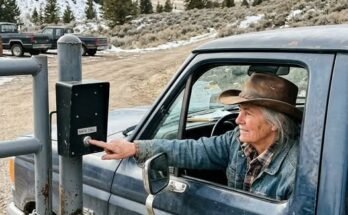
And a man with silver hair standing beside the driver’s seat.
Above them, in Ellie’s uneven handwriting, were the words:
THANK YOU, MR. FRANK. YOU KEPT ME SAFE.
Frank stared at the drawing.
His expression changed.
He took off his glasses.
Wiped his eyes.
Then whispered, “Well, isn’t that something.”
He looked up at me.
“Tell Ellie thank you.”
I smiled through my tears.
“I will.”
He carefully folded the drawing and placed it in his shirt pocket.
Right over his heart.
The weeks that followed were not easy.
The police continued investigating Grant’s conduct.
My attorney reviewed the existing court orders and helped me address the renewed safety concerns.
We worked with the school to make sure Ellie’s pickup arrangements were clear and properly communicated.
I also arranged counseling for Ellie.
I wanted her to have a place where she could ask questions without worrying about upsetting me.
At first, she didn’t want to talk much about the bus.
She said she was fine.
That word sounded painfully familiar.
I used to say the same thing whenever someone asked how I was doing during my marriage.
I’m fine.
Even when I wasn’t.
So I didn’t push.
I simply told Ellie that she could talk whenever she wanted.
Slowly, she began asking questions.
Why couldn’t her father see her?
Why had he come to the school instead of calling?
Would she ever be able to meet him safely?
I answered what I could.
When I didn’t know, I said so.
I didn’t want to fill the gaps with guesses.
And I didn’t want Ellie’s childhood to become a long list of frightening stories about her father.
I wanted her to understand that adults were responsible for their own choices.
And that none of those choices were her fault.
The most difficult conversation came one Sunday evening.
We were baking cookies.
Ellie was standing on a chair beside the kitchen counter, carefully pressing chocolate chips into the dough.
Then she looked up.
“Mommy?”
“Yes, sweetheart?”
“Do you think Daddy loves me?”
My hands stopped moving.
For a moment, I couldn’t speak.
I looked at her.
Her serious brown eyes.
The little crease between her eyebrows when she was thinking.
I took a slow breath.
“Ellie, I can’t tell you exactly what someone else feels.”
She looked down.
I continued.
“But I can tell you something important.”
She nodded.
“Love should never require you to ignore the rules that keep you safe.”
She thought about that.
Then whispered, “Even if it’s your dad?”
I nodded.
“Even then.”
Her eyes filled.
I put down the spoon.
Then pulled her into my arms.
“Sweetheart, you are loved.”
She began crying.
I kissed her forehead.
“By me. By Aunt Sarah. By your teachers, your friends, and so many people who care about you.”
She sniffled.
“And Mr. Frank?”
I laughed through my tears.
“Yes, sweetheart. I think Mr. Frank cares about you very much.”
She smiled.
Then asked, “Can we bring him cookies?”
I kissed her cheek.
“I think he’d like that.”
Three weeks later, Ellie decided she was ready to ride the bus again.
I had been driving her to school since the incident.
I didn’t mind.
Honestly, part of me wanted to keep doing it forever.
But one morning, while I was making breakfast, Ellie walked into the kitchen with her purple backpack already on.
“Mommy, I want to take Route 24 today.”
I looked up.
“Are you sure?”
She nodded.
“Yes.”
“Sweetheart, I can drive you.”
“I know.”
She smiled.
“But I miss my bus friends.”
I hesitated.
Then asked, “Are you nervous?”
“A little.”
My throat tightened.
She continued.
“But Mr. Frank knows what to do.”
I looked at her.
For a moment, I couldn’t answer.
Then I smiled.
“Yes, sweetheart.”
I took a breath.
“He does.”
That afternoon, I stood at Willow Lane and Briar Street again.
The same intersection.
The same sidewalk.
The same place where I’d spent one of the worst afternoons of my life.
Only this time, I paid attention to everything around me.
The cars.
The sidewalk.
The people walking nearby.
And when the yellow bus approached, I felt my heart begin racing.
At 3:19, Route 24 slowed.
The doors opened.
Frank looked down at me.
“Good afternoon, Mrs. Bennett.”
I smiled.
“Good afternoon, Frank.”
Ellie hurried toward the front.
Her purple backpack bounced against her shoulders.
She stopped beside Frank’s seat.
Then turned toward him.
“Thank you, Mr. Frank!”
He smiled.
“See you tomorrow, Ellie.”
She climbed down the steps.
The moment her shoes touched the sidewalk, she ran toward me.
“Mommy!”
I caught her in my arms.
She began talking immediately.
About a science project.
A spelling test.
And something funny that happened at lunch.
I laughed.
For a moment, everything felt wonderfully ordinary.
Then Frank called out.
“Mrs. Bennett?”
I looked up.
“Yes?”
He smiled.
“Have a good afternoon.”
I felt tears filling my eyes.
“You too, Frank.”
He nodded.
Then closed the doors.
The bus pulled away.
Ellie took my hand.
And we walked home together.
Several months later, the school district held a small recognition ceremony for Frank.
It wasn’t an elaborate event.
There were no television crews.
No expensive decorations.
Just a gathering of school employees, parents, and children.
The district superintendent thanked Frank for recognizing a potentially unsafe situation and acting to protect a student.
Frank looked embarrassed.
He wore a white shirt and a tie that appeared to be slightly too tight.
When he was invited to speak, he shook his head.
“I’m not much for speeches.”
Everyone laughed.
Then he looked toward the children.
“I’ve been driving buses a long time,” he said.
He paused.
“Most days, the important things are pretty ordinary.”
He smiled.
“Remembering to check the mirrors. Watching the road. Making sure everybody stays seated.”
Several children laughed.
Frank continued.
“But once in a while, something happens that reminds you why paying attention matters.”
His expression became serious.
“You don’t always have time to explain a decision before you have to make it.”
He glanced toward me.
I felt my throat tighten.
“Sometimes people get frightened.”
He paused.
“Sometimes they even get angry with you.”
A few people laughed softly.
Frank smiled.
“But that’s all right.”
He looked toward Ellie.
“Because the most important thing is getting those children home safely.”
My eyes filled.
Then Ellie stood up.
“Mr. Frank?”
He looked surprised.
“Yes, Ellie?”
She walked toward the front holding a small envelope.
She handed it to him.
Frank opened it.
Inside was a photograph of Ellie standing beside her school’s reading-award certificate.
On the back, she’d written:
Dear Mr. Frank,
Thank you for taking care of me when I was scared.
I’m glad you’re my bus driver.
Love, Ellie.
Frank stared at the photograph.
Then he looked away.
I saw him wipe his eyes.
For several seconds, he couldn’t speak.
Finally, he whispered, “Thank you, sweetheart.”
Ellie hugged him.
And the entire room applauded.
Almost a year has passed since that Tuesday afternoon.
Ellie is ten now.
She still rides Route 24.
She still carries the same purple backpack, though it’s beginning to look worn around the edges.
She loves science.
Hates cleaning her room.
And has developed an extraordinary talent for asking difficult questions precisely when I’m trying to fall asleep.
Our life is peaceful again.
Not exactly the way it was before.
There are still legal arrangements we take seriously.
There are still safety plans in place.
And I still feel a little uneasy when an unfamiliar vehicle slows near our house.
But the fear no longer controls our days.
Ellie goes to school.
Plays with her friends.
Argues about bedtime.
And spends far too much time trying to convince me we need a dog.
She’s a child.
And that is exactly what I want her to be.
As for Grant, the legal proceedings concerning his conduct continued separately from the family-court arrangements. I don’t pretend the process was simple, and I won’t claim that every painful question received a satisfying answer.
But the people responsible for assessing what happened had the evidence they needed.
And Ellie and I had support.
That mattered.
So did something else.
I stopped believing I had to manage every frightening situation alone.
I began accepting help.
From my sister.
From trusted friends.
From school staff who took their responsibilities seriously.
And from people like Frank Lawson.
An ordinary man who drove a yellow school bus.
Who greeted my daughter every afternoon.
And who, on one extraordinary day, noticed something I didn’t.
Last Friday, Ellie came home and asked me a question.
“Mommy, do you think Mr. Frank is a hero?”
I looked up from my laptop.
She was standing in the kitchen holding a half-eaten apple.
I smiled.
“Yes.”
She considered that.
“But he doesn’t wear a cape.”
I laughed.
“No.”
“And he doesn’t have superpowers.”
“Not that I know of.”
She grinned.
Then she became serious.
“But he was brave.”
My throat tightened.
“Yes.”
She took another bite of her apple.
Then asked, “Do you think he was scared too?”
I thought about it.
Frank had been responsible for an entire bus.
He’d seen someone approaching a child under circumstances that concerned him.
He’d had only seconds to decide what to do.
Of course he might have been frightened.
I looked at Ellie.
“I think he probably was.”
She frowned.
“Then how was he brave?”
I smiled.
“Because being brave doesn’t mean you aren’t scared.”
She looked at me.
“It means you do the right thing even when you are.”
Ellie thought about that.
Then nodded slowly.
“Like Mr. Frank.”
I smiled through my tears.
“Exactly.”
She put down the apple.
Then ran upstairs to finish her homework.
I sat in the kitchen for a long time afterward.
Thinking about her question.
Thinking about courage.
And thinking about the afternoon that had changed everything.
I remembered standing at the bus stop.
The sky was bright.
The road was quiet.
Ellie was smiling through the window.
Everything seemed ordinary.
Then Frank stood.
His face changed.
He called out a warning.
And the doors closed.
At the time, I thought he was keeping my daughter from me.
I thought he had lost his mind.
I thought he was doing something terrible.
But I hadn’t seen the man standing behind me.
I hadn’t noticed the gray SUV.
I hadn’t understood why Frank suddenly looked so frightened.
He saw what I couldn’t.
And he acted.
Even though he knew I would be terrified.
Even though he knew I might complain.
Even though he didn’t have time to explain.
He put my daughter’s safety first.
That was the part I would never forget.
A few days ago, I saw Frank at the grocery store.
He was standing in the produce section, examining a bag of oranges.
Without his blue driver’s shirt, he looked different.
Just another older man shopping for groceries.
Ellie noticed him first.
“MR. FRANK!”
He turned.
His face brightened.
“Well, hello, Ellie!”
She ran toward him.
Then stopped and remembered her manners.
“Hi!”
He laughed.
“Hello, young lady.”
She immediately began telling him about her latest science project.
Frank listened patiently.
Then looked toward me.
“How are you doing, Rachel?”
I smiled.
“Good.”
And for the first time in a long while, I meant it.
He nodded.
“Glad to hear it.”
We talked for a few minutes.
Then Frank mentioned that he planned to retire at the end of the next school year.
My heart tightened.
“Retire?”
He smiled.
“Twenty-seven years is a long time behind a steering wheel.”
I laughed.
“I suppose it is.”
He looked toward Ellie.
“My wife says it’s time I started taking her places that don’t involve school parking lots.”
I smiled.
“That sounds wonderful.”
Then Ellie looked horrified.
“But who’s going to drive our bus?”
Frank laughed.
“They’ll find somebody good.”
She frowned.
“But not as good as you.”
His expression softened.
“Well, sweetheart, I appreciate that.”
He looked down at her.
“Maybe you can help the next driver learn where everybody likes to sit.”
Ellie considered that.
Then nodded seriously.
“I can do that.”
We said goodbye near the checkout.
Frank walked away carrying his grocery basket.
I watched him go.
Then Ellie took my hand.
“Mommy?”
“Yes?”
“Are you going to cry again?”
I laughed.
“Maybe a little.”
She sighed.
“Grown-ups cry a lot.”
I smiled.
“Sometimes we do.”
She looked toward Frank.
Then whispered, “I’m glad he saw that man.”
My throat tightened.
I squeezed her hand.
“So am I, sweetheart.”
That night, after Ellie went to bed, I sat at the kitchen table and opened the folder where I keep our important family papers.
Inside was the drawing she’d made for Frank.
He had allowed the transportation office to make a copy for us before taking the original home.
The yellow bus.
The little girl.
The silver-haired driver.
And those simple words.
Thank you for keeping me safe.
I stared at them.
Then I thought about something Deputy Mitchell had said the afternoon it happened.
Did you notice the man standing behind you?
For months, that question haunted me.
I kept thinking about how close Grant had been.
How easily I might have turned around too late.
How quickly an ordinary afternoon could have become something terrible.
But eventually, I realized I didn’t want that question to define the rest of my life.
I wanted to remember something else.
The person who noticed.
The man who didn’t look away.
The driver who refused to open the doors until he knew Ellie would be safe.
That was the memory I wanted to carry forward.
Not only fear.
But gratitude.
Because sometimes the people who protect our children aren’t the ones we expect.
They are the teachers who notice when something is wrong.
The crossing guards who pay attention to unfamiliar vehicles.
The office staff who refuse unauthorized pickups.
The drivers who understand that delivering a child safely involves more than following a route.
And sometimes, one of those people has to make a decision that nobody else understands until much later.
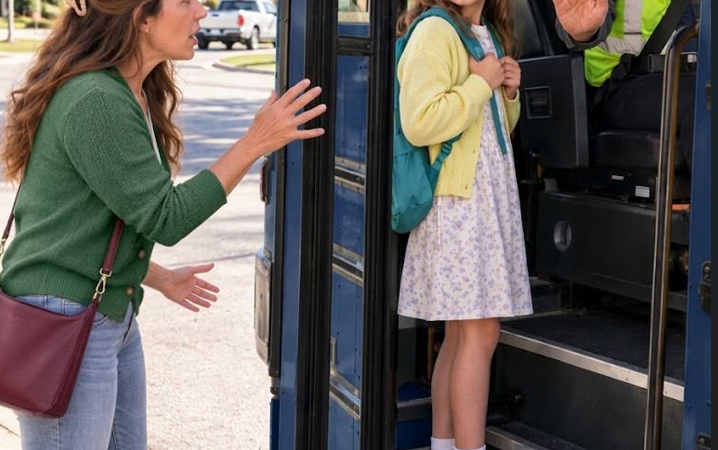
My nine-year-old daughter was about to step off her school bus when Frank Lawson suddenly stood and shouted for someone to stay back.
I thought he was warning me.
I thought he was refusing to return my child.
And when he closed those doors and drove away, I was certain something terrible was happening.
I was right about one thing.
Something terrible had nearly happened.
But not because of Frank.
Because a man I hadn’t seen in years had appeared at my daughter’s school, followed her bus, and approached her stop without authorization.
The sheriff later asked whether I’d noticed him standing behind me.
I hadn’t.
I had been watching my little girl.
Frank had been watching the danger approaching her.
And when those two things came together, he made the choice that mattered most.
He kept her safe.
Last Sunday, Ellie and I were walking home from the park when she stopped beside a yellow school bus parked outside a nearby community center.
She looked at it.
Then smiled.
“Mommy?”
“Yes?”
“Do you know what I think?”
I laughed.
“What?”
She looked up at me.
“I think Mr. Frank has the most important job in the world.”
I smiled.
“Why?”
She thought about it.
Then answered.
“Because he makes sure kids get home to the people who love them.”
I stopped walking.
For a moment, I couldn’t speak.
Then I knelt and hugged her.
She wrapped her arms around my neck.
And I whispered, “I think you’re right, sweetheart.”
We continued home together.
Hand in hand.
Past Willow Lane.
Past Briar Street.
Past the corner where I once stood screaming at a man I mistakenly believed was taking my daughter away.
Now, every time I see Route 24 turn onto our street, I feel something different.
I feel thankful.
Because the day my daughter’s driver refused to open the bus doors was the day I learned that protecting someone doesn’t always look the way we expect.
Sometimes it looks like a calm voice.
A quick decision.
A door closing.
And a yellow bus pulling away while a frightened mother begs it to stop.
I thought Frank Lawson was taking my daughter from me.
The truth was that he was making sure nobody else could.
And because he did, I got to hold my little girl again that evening.
I got to kiss her forehead.
Listen to her stories.
Help with her homework.
And watch her grow another year older.
There is no thank-you large enough for that.
But every afternoon, when Ellie steps off Route 24 and turns to wave at the silver-haired man behind the wheel, I see the smile on his face.
And I hope he knows.
One ordinary afternoon, his courage gave a mother the greatest gift anyone could ever give her.
Her daughter came home safe.