PART 2
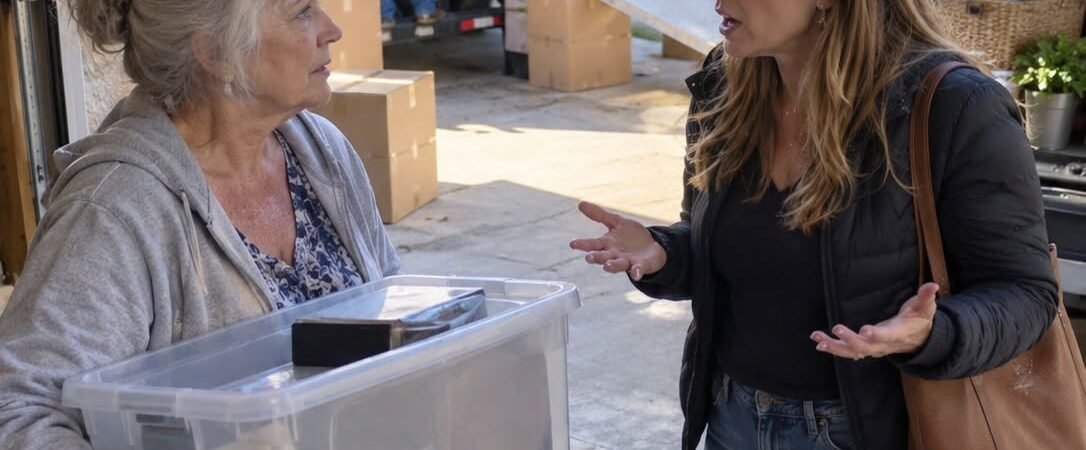
“No, Catherine,” I said calmly. “I’m not putting everything in storage.”
My daughter looked at the moving truck.
Then at the empty windows.
Then back at me.
“Then where’s your furniture going?”
I shifted the cardboard box in my arms.
“To Asheford.”
She blinked.
“The cabin?”
“Yes.”
For a moment, she seemed unable to understand what I’d said.
Then she laughed nervously.
“Mom, that’s not funny.”
“I wasn’t making a joke.”
Her eyes widened.
“But Hal and Connie are supposed to move in there.”
I looked at her.
“According to whom?”
She didn’t answer.
I set the box on the porch and brushed the dust from my hands.
Then I told her something that made her grip the side of her Highlander.
“I sold this house, Catherine. The sale closed this morning. I’m moving permanently into my mountain cabin.”
Her mouth fell open.
Behind her, my two granddaughters were watching through the car windows.
Eight-year-old Lucy pressed her face against the glass.
Her older sister, Emma, looked worried.
Catherine stared at the moving truck.
“You sold the house?”
“Yes.”
“Without telling me?”
I raised an eyebrow.
“You mean the way you arranged for your in-laws to move into my cabin without telling me?”
Her cheeks turned red.
“That’s completely different.”
“Is it?”
She looked toward the movers carrying my dining table.
“Mom, this is insane. You’ve lived here for twenty-eight years!”
I nodded.
“I know.”
“This is our family home!”
I studied her.
There was something revealing about those words.
Our family home.
Catherine was thirty-eight years old. She had a beautiful four-bedroom house with Brendan, two healthy daughters, and a life she’d worked hard to build.
But somehow, she’d begun treating my home as though it belonged to her too.
As though the simple fact that she’d grown up there meant I had no right to make decisions about it.
I looked at her.
“Catherine, I loved raising you here. But your childhood ended a long time ago.”
She stared at me.
“And I have a life I’d still like to live.”
For a moment, neither of us spoke.
Then she said something that made me realize just how little she’d understood.
“But who’s going to pick up the girls?”
I looked toward the Highlander.
Lucy waved at me.
I waved back.
Then I turned toward my daughter.
“That’s something you and Brendan will need to arrange.”
Her expression hardened.
“Mom, you know we both work.”
“Yes.”
“And you know after-school programs are expensive.”
“Yes.”
She threw up her hands.
“So you’re just abandoning your granddaughters?”
My chest tightened.
I took a slow breath.
“No, Catherine. I’m moving into a house I own.”
She shook her head.
“You’re doing this to punish me.”
I looked at her for a long moment.
Then said quietly, “No. I’m doing something for myself.”
She gave a bitter laugh.
“Right. What a coincidence that you suddenly decide to move after we ask for one little favor.”
One little favor.
My mountain cabin.
Thirty-two years of mortgage payments, maintenance, insurance, and memories.
The place Frederick and I had dreamed of retiring to.
Reduced to one little favor.
I looked toward the moving truck.
Then back at my daughter.
“Catherine, do you remember what you said to me on my birthday?”
She crossed her arms.
“I said a lot of things.”
“You told me I wouldn’t be around forever.”
Her expression shifted.
“Mom, I didn’t mean—”
“You said it because you wanted me to feel guilty for keeping something I owned.”
She looked away.
I continued.
“And afterward, you stopped speaking to me because I wouldn’t agree.”
Her face reddened.
“I needed some space.”
I nodded.
“That’s your right.”
Then I said something that surprised even me.
“But while you were taking that space, I had time to think about what I wanted.”
Catherine stared at me.
“And I decided it was time to stop postponing my retirement.”
She looked toward the car.
Then lowered her voice.
“What about Brendan’s parents?”
I glanced toward the cardboard boxes stacked beside the porch.
“That’s a conversation we need to have.”
She swallowed.
And for the first time since she’d arrived, she looked frightened.
Not for me.
For the plans she’d already made.
I had not intended to move quite so quickly.
That part was true.
Frederick and I had talked about retiring to the cabin for years, but after he died, I kept finding reasons to wait.
The garden needed attention.
The roof on my current house needed replacing.
Catherine needed help with the girls.
Emma had soccer.
Lucy had dance lessons.
Then school pickups became part of my routine.
Tuesday and Thursday afternoons.
Sometimes Fridays too.
Before I knew it, five years had passed since Frederick died.
I still visited the cabin.
I still paid the taxes.
I still imagined sitting on the porch with a cup of coffee while the morning fog lifted from the mountains.
But I always returned to the same busy house, the same obligations, and the same feeling that my own plans could wait another year.
Until my sixty-fourth birthday.
That evening, Catherine had looked across the dinner table and suggested giving my cabin to people who were not even my relatives by blood.
And when I refused, she’d called me selfish.
I drove home feeling something I hadn’t felt in years.
Anger.
Not the kind that makes you shout.
The quiet kind that forces you to examine things you’ve avoided for too long.
Two days later, when I discovered Hal and Connie’s moving boxes in the tool shed, that anger became something else.
Clarity.
Someone had entered my property without permission and begun preparing to use it as their own.
It was no longer a theoretical conversation about what might be convenient.
It was happening.
So I photographed everything.
The boxes.
The labels.
The golf clubs.
The shower chair.
Then I called the locksmith.
Brendan’s emergency key had been given to him three years earlier after a storm damaged the cabin’s roof while I was out of town.
I’d trusted him with it.
Apparently, he’d decided that trust came with the authority to let his parents move their belongings onto my property.
I changed the locks.
Then I contacted Brendan.
Not Catherine.
Brendan.
I sent him the photographs.
Please arrange to collect these items. I did not authorize anyone to store belongings at the cabin or move into it.
He called within five minutes.
“Eleanor, I think there’s been a misunderstanding.”
I looked at the photographs.
“Then explain it.”
He sighed.
“Mom and Dad just wanted to get a head start.”
“On what?”
“Moving.”
I closed my eyes.
“Brendan, I told Catherine they could not move into my cabin.”
He was quiet.
Then he said, “We thought you’d come around.”
I stared at the phone.
“Come around?”
He lowered his voice.
“Eleanor, they’re getting older. They need somewhere easier to live.”
“I understand that.”
“And the cabin is sitting there empty most of the time.”
I took a breath.
“Brendan, if you need a one-story house for your parents, you and Catherine can help them find one.”
He didn’t answer.
I continued.
“But you may not make that decision with property that belongs to me.”
He sighed.
“Catherine’s going to be upset.”
I looked toward the mountains beyond the kitchen window.
“She already is.”
He became quiet.
Then I added, “The boxes need to be removed by arrangement with me. And I expect my key back, even though I’ve already changed the locks.”
Brendan swallowed.
“Okay.”
I hung up.
Then I sat at the kitchen table for a long time.
I thought about Frederick.
About the years we’d spent saving for the cabin.
About how carefully he’d planned every repair.
And suddenly, I realized something.
I had been protecting our retirement dream for thirty-two years while slowly forgetting I was allowed to enjoy it.
That was when I called Gloria Chen.
Gloria had helped us purchase the cabin back in 1992.
She’d become a good friend over the years.
We still exchanged Christmas cards.
When she answered, I told her I needed advice.
“About Asheford?” she asked.
“Yes. But I’m not selling it.”
She laughed.
“Good. Frederick would come back and haunt both of us if you did.”
I smiled.
“He probably would.”
Then I told her what had happened.
The birthday dinner.
The moving boxes.
The pressure.
The silence.
Gloria listened without interrupting.
When I finished, she asked one question.
“Eleanor, why are you still living in the other house?”
I stared at the phone.
“What?”
“You’ve been telling me for five years you want to move to the mountains.”
I looked around my kitchen.
“I know.”
“So what’s stopping you?”
I opened my mouth.
Then closed it.
For the first time, I couldn’t think of a good answer.
Gloria continued.
“You’ve got a pension. The cabin is paid off. The place has a bedroom and bathroom on the main floor. You’ve already upgraded the heating and plumbing.”
I nodded.
“Yes.”
“And you’re healthy enough to make the move while you can enjoy it.”
I looked down at my hands.
She paused.
“Eleanor, is the real problem that your daughter needs you nearby?”
My throat tightened.
I didn’t answer.
Gloria didn’t press.
Finally, I whispered, “I think I’ve spent so long being needed that I forgot how to choose something just because I want it.”
She was quiet.
Then said gently, “Well, maybe it’s time you remembered.”
Three days later, Gloria came to my house.
We sat at the dining table with a yellow legal pad.
I explained that I wanted to sell my current home and move permanently into the cabin.
Gloria reviewed recent sales.
We discussed repairs, closing costs, moving expenses, and the financial implications.
She didn’t promise a quick sale.
She didn’t tell me what I wanted to hear.
She helped me understand my options.
Then she looked around the dining room.
“You know, Eleanor, you don’t have to sell anything to prove a point.”
I nodded.
“I know.”
“Are you sure this is what you want?”
I thought about Frederick.
The morning mist at the cabin.
The fireplace.
The little vegetable garden we’d planned behind the house.
Then I smiled.
“Yes.”
And I meant it.
I hired a local handyman to handle several small repairs.
A painter freshened the guest rooms.
I sorted through closets and donated things I no longer needed.
I found boxes of old school projects.
Catherine’s childhood drawings.
Frederick’s fishing equipment.
Photographs from family vacations.
Every room held memories.
Some beautiful.
Some painful.
But for the first time, I allowed myself to understand that leaving a house did not mean leaving those memories behind.
I could take the things that mattered.
And let someone else make a home there.
The house went on the market.
Within two weeks, Gloria had several interested buyers.
A couple in their forties made a strong offer.
They had two children.
They loved the backyard.
The kitchen.
The big windows overlooking the garden.
The woman told Gloria she’d been searching for a home where her children could grow up.
When Gloria repeated that to me, I cried.
Because that’s exactly what Frederick and I had wanted when we bought it.
A place to raise our family.
And perhaps it was time for another family to have that opportunity.
The buyers had already arranged financing and were prepared to close quickly.
After inspections, negotiations, and the required paperwork, we agreed on a closing date.
Forty-seven days after my birthday dinner, the sale was complete.
I signed the final documents that morning.
Then drove home to finish packing.
And that was when Catherine arrived.
I looked at my daughter standing in the driveway.
She was still staring at the moving truck.
“Mom, you should have told me.”
I nodded slowly.
“Perhaps.”
Her expression softened slightly.
Then I added, “But you hadn’t been speaking to me.”
She looked away.
“That doesn’t mean you should make a major decision without consulting your family.”
I studied her.
“Catherine, who consulted me before putting Hal and Connie’s belongings in my shed?”
She closed her eyes.
“Can we please stop talking about the boxes?”
“No.”
My voice was calm.
“Because those boxes are why I finally understood what was happening.”
She looked at me.
“You were preparing to give away something I’d already said no to.”
Catherine rubbed her forehead.
“Mom, you’re making it sound worse than it was.”
I shook my head.
“No. I’m describing what happened.”
For a moment, neither of us spoke.
Then Emma opened the car door.
“Grandma?”
I turned.
My eleven-year-old granddaughter stood beside the Highlander.
Her face was worried.
“Are you moving away?”
My chest tightened.
I walked toward her.
“Yes, sweetheart.”
She looked down.
“Did we do something wrong?”
That question hurt more than anything Catherine had said.
I crouched carefully beside her.
“Oh, Emma. No.”
Lucy climbed out too.
She ran toward me.
“Grandma, are you mad at us?”
I pulled both girls close.
“Never.”
They hugged me.
I kissed their hair.
“I’m moving to the cabin because it’s a place I’ve wanted to live for a long time.”
Emma looked up.
“The one with the fireplace?”
I smiled.
“Yes.”
Lucy gasped.
“The one where we roast marshmallows?”
“The very same.”
She grinned.
“Can we visit?”
I felt tears filling my eyes.
“Of course you can.”
Emma looked toward her mother.
“But it’s far away.”
I nodded.
“A little over two hours.”
Lucy considered that.
“That’s not too far.”
I laughed.
“No, honey. It isn’t.”
Then Emma asked, “Will you still come to our soccer games?”
I took her hand.
“When I can. And I want you to tell me about every game, even the ones I can’t attend.”
She nodded slowly.
I looked toward Catherine.
She was standing beside the car with tears in her eyes.
I hoped she was beginning to understand something.
My moving did not mean I loved the girls less.
It meant my love for them could exist without my entire life being organized around their schedules.
After the girls went back to the car, Catherine followed me onto the porch.
“Mom, what about Hal and Connie?”
I looked at her.
“That’s for you and Brendan to discuss with them.”
She stared at me.
“They already gave notice on their townhouse.”
My stomach tightened.
I hadn’t known that.
“When?”
“Last week.”
I looked at her.
“Catherine, I told you no at my birthday dinner.”
She began crying.
“I thought you’d change your mind.”
I took a slow breath.
“Did you tell them I’d agreed?”
She didn’t answer.
I waited.
Finally, she whispered, “Yes.”
My heart sank.
“Catherine.”
She covered her face.
“I didn’t know what else to do.”
I stared at her.
“You could have told them the truth.”
She shook her head.
“Brendan promised them we’d figure something out.”
“And you figured the easiest solution was to pressure me.”
Her shoulders began shaking.
I felt terribly sad.
Not only for myself.
For Hal and Connie.
They were good people.
Hal was seventy-one.
Connie was sixty-eight.
I’d known them for almost fourteen years.
We’d shared holiday dinners.
Birthday celebrations.
Family photographs.
I’d brought food over when Hal had surgery.
There had never been a reason for us to treat each other like enemies.
And now Catherine had placed all of us in a terrible position.
“Catherine,” I said quietly, “do Hal and Connie know I never agreed?”
She shook her head.
“No.”
I closed my eyes.
Then made a decision.
“Call them.”
She looked up.
“What?”
“Call them now.”
“Mom—”
“Catherine, they deserve to know.”
She stared at me.
Then slowly took out her phone.
A few minutes later, Connie answered.
“Hello, sweetheart.”
Catherine looked at me.
Her lips trembled.
“Connie, there’s something I need to tell you.”
I stood quietly while my daughter finally explained.
Not perfectly.
Not without trying to soften some details.
But she told them.
The cabin wasn’t available.
I had never agreed to let them live there.
And I was moving into it myself.
There was a long silence on the other end.
Then Connie said something I could hear clearly.
“Catherine, why would you tell us it was arranged if Eleanor hadn’t agreed?”
My daughter began crying.
“I thought she would.”
Connie sighed.
“Oh, honey.”
I looked down.
Then heard Hal’s voice in the background.
“Put me on.”
A moment later, he spoke.
“Catherine, does Eleanor know about the boxes we left there?”
She swallowed.
“Yes.”
Hal was quiet.
Then he said firmly, “We need to apologize to her.”
Catherine wiped her eyes.
“Hal—”
“No. We believed we had permission.”
I looked toward the mountains in my imagination.
The tool shed.
The golf clubs.
The shower chair.
All the trouble that had begun with one conversation over my birthday dinner.
Then I stepped closer.
“Hal, this is Eleanor.”
He became quiet.
“Eleanor?”
“Yes.”
He sighed deeply.
“I’m sorry.”
My eyes filled.
“I know.”
He continued.
“Brendan told us you’d offered the cabin. Connie and I would never have started moving things in if we’d known otherwise.”
I believed him.
“I understand.”
He hesitated.
“Catherine says you’re moving up there.”
“Yes.”
There was a pause.
Then Hal said something that surprised me.
“Well, good for you.”
I almost laughed.
“Thank you.”
He continued.
“Frederick talked about retiring there for years. I’m glad you’re finally going.”
My throat tightened.
Nobody had said those words to me since I’d made the decision.
Not Catherine.
Not Brendan.
Not even most of my friends.
Just Hal.
The man whose belongings I’d found in my shed.
I wiped my eyes.
“Thank you, Hal.”
He cleared his throat.
“Connie and I will find somewhere else. We’ll manage.”
Then he added, “And Eleanor?”
“Yes?”
“Happy belated birthday.”
I began crying.
Because it was forty-seven days late.
But he was the first person in that family to say it.
After the call ended, Catherine stood silently beside me.
For a long time, neither of us spoke.
Then she whispered, “I made a mess of everything.”
I looked at her.
“Yes.”
She wiped her cheeks.
“I was only trying to help them.”
I nodded.
“I know.”
She looked confused.
“Then why are you so angry?”
I took a breath.
“Because helping someone doesn’t give you the right to take something from another person.”
She stared at me.
I continued.
“You could have helped Hal and Connie look for an accessible home.”
“You could have offered to help with their moving costs.”
“You could have talked to them about their budget.”
I paused.
“But instead, you decided my property was the answer.”
Her eyes filled.
“And when I said no, you punished me.”
She looked down.
I took her hand.
“Catherine, I’m proud that you want to help your in-laws.”
My voice softened.
“But I need you to understand that I am a person too.”
She started crying again.
I continued.
“I have dreams. Plans. Things I want to do before I get too old to enjoy them.”
I looked toward the moving truck.
“And I have spent enough years waiting for everyone else to finish needing me.”
She covered her mouth.
For the first time, she didn’t argue.
That afternoon, the movers finished loading.
By six o’clock, the house was almost empty.
Catherine had taken the girls home.
I walked through the rooms one final time.
The kitchen where I’d made thousands of meals.
The dining room where Frederick and I celebrated our twenty-fifth anniversary.
The living room where Catherine opened Christmas presents.
The bedroom where I’d spent so many nights missing my husband.
I stopped in the doorway.
Then looked toward the empty space where our bed had stood.
For a moment, I could almost hear Frederick.
Ellie, are you coming to bed?
My throat tightened.
I stood there until the tears came.
Then I whispered, “I’m finally doing it, Fred.”
I smiled through my tears.
“I’m going to the mountains.”
The following morning, I drove to Asheford.
The road climbed slowly through the hills.
Bare trees lined the curves.
Mist hung between the mountains.
And when I finally turned onto the gravel driveway, I saw the little cabin waiting.
Its dark green roof.
The stone chimney.
The wide porch Frederick had built.
The garage he’d insisted was necessary even though we rarely parked inside.
I got out of the car.
The air smelled of pine.
Somewhere in the distance, a bird called.
I walked onto the porch.
Unlocked the door.
And stepped inside.
For a moment, I stood completely still.
Then I began crying.
Not because I was sad.
Because I’d spent five years imagining this moment and almost convinced myself it would never happen.
I set my handbag on the kitchen counter.
Walked toward the living room window.
And looked out at the mountains.
The view was exactly as I remembered.
But this time, I wasn’t staying for the weekend.
I wasn’t checking the plumbing.
I wasn’t coming to dust furniture before driving back down the mountain.
I was home.
That evening, after the movers finished unloading, I made a simple dinner.
Soup.
Toast.
A cup of tea.
I ate at the small kitchen table Frederick had built from reclaimed oak.
For years, whenever we visited, he’d sit across from me and discuss what we would do once we retired here.
A vegetable garden.
A new porch swing.
Maybe a dog.
He wanted to plant apple trees along the driveway.
I wanted a reading nook beside the fireplace.
We made those plans so many times that they became part of our marriage.
Then Frederick died.
And I stopped imagining a future that didn’t include him.
But sitting there that evening, I realized something.
I could still plant the apple trees.
I could still build the reading nook.
I could still enjoy the home we’d dreamed of.
I couldn’t bring Frederick back.
But I didn’t have to abandon everything we planned simply because he wasn’t there to see it.
I looked toward his photograph on the mantel.
Then raised my cup.
“Well, Fred.”
My voice trembled.
“We made it.”
I slept better that night than I had in months.
Not perfectly.
The wind rattled the windows.
An owl called somewhere beyond the trees.
And around three in the morning, I woke up missing Frederick so badly that I had to sit on the edge of the bed for a while.
But when the sun rose, I made coffee and carried it onto the porch.
The mountains were wrapped in pale mist.
The air was cold enough that I needed my thick cardigan.
I sat in Frederick’s favorite chair.
And watched the sunrise.
For the first time in years, nobody needed me to be somewhere at eight o’clock.
Nobody was waiting for a ride.
Nobody expected me to rearrange my day.
I had a list of things to do.
But every item belonged to me.
Unpack the kitchen.
Call the chimney inspector.
Choose where to plant flowers.
Find a good place to put the bird feeder.
Small things.
Wonderful things.
I smiled.
Then I cried.
Because freedom can feel unfamiliar when you’ve spent years mistaking responsibility for purpose.
The next few weeks were busy.
I unpacked.
Found a local doctor.
Transferred my prescriptions.
Met a neighbor named Doris who lived half a mile down the road.
And hired someone to help maintain the driveway during winter storms.
I wasn’t foolish enough to assume living in the mountains would be easy simply because it was beautiful.
I’d discussed the practical issues before moving.
Medical access.
Snow removal.
Emergency services.
Home maintenance.
Transportation.
And my finances.
The sale of my previous house had given me a comfortable cushion.
My pension covered my ordinary expenses.
The cabin was paid off.
And I had no intention of spending my retirement savings supporting somebody else’s lifestyle.
For the first time in a long while, I felt secure.
But I missed my granddaughters.
Terribly.
I missed Lucy’s chatter.
Emma’s soccer stories.
The way both girls always wanted snacks the moment they walked through my kitchen.
I had promised they could visit.
But Catherine remained distant.
She sent occasional messages about their schedules.
Nothing personal.
Nothing about how I was adjusting.
I tried not to take it as punishment.
But some days, it felt exactly like that.
Then one Friday afternoon, my phone rang.
It was Hal.
“Eleanor?”
I smiled.
“Hello, Hal.”
He sounded cheerful.
“Connie wanted me to call and make sure you were settling in.”
I felt a warmth in my chest.
“That’s kind of you.”
“How’s the place?”
“Beautiful.”
He laughed.
“Frederick always said it was.”
I smiled.
Then asked, “How are you two doing?”
He sighed.
“Still looking for somewhere without stairs.”
My heart tightened.
“I hope you find something soon.”
“We will.”
He paused.
“Actually, I called about something else.”
“What?”
“Connie wanted to know whether you’d come to dinner next Sunday. We’re taking the girls out, and she’d like to see you.”
I hesitated.
Catherine hadn’t spoken to me properly in weeks.
I wasn’t sure how I felt about walking into another family gathering.
But Hal continued.
“No pressure. Just dinner. You’re still family, Eleanor.”
My eyes filled.
I smiled.
“Thank you.”
After hanging up, I sat looking at the phone.
Then I did something I hadn’t expected to do.
I called Catherine.
She answered on the fourth ring.
“Mom?”
“Hello, sweetheart.”
She sounded surprised.
“Is everything okay?”
“Yes.”
I took a breath.
“Hal invited me to dinner next Sunday. I’d like to come.”
There was a pause.
Then Catherine said quietly, “Okay.”
I waited.
Then added, “I’d also like to see the girls.”
Her voice softened.
“They miss you.”
My chest tightened.
“I miss them too.”
For a moment, neither of us spoke.
Then Catherine whispered, “Mom, can we talk before Sunday?”
I looked out the window.
The mountains were turning gold in the late afternoon sun.
“Yes.”
She exhaled.
“Could I come up tomorrow?”
I hesitated.
Then said, “You can visit.”
She sounded relieved.
“Thank you.”
I took a breath.
“But Catherine?”
“Yes?”
“This is my home.”
She became quiet.
“I know.”
“And I need you to respect that.”
There was a pause.
Then she whispered, “I will.”
The next morning, Catherine arrived alone.
No Brendan.
No granddaughters.
No moving boxes.
Just my daughter.
She stepped out of her Highlander holding a paper bag.
I met her on the porch.
“Hello, Mom.”
“Hello, Catherine.”
She looked around.
Then smiled faintly.
“It really is beautiful here.”
I nodded.
“Yes.”
She studied the porch.
The flowers.
The new bird feeder.
Then said quietly, “I never understood why you loved this place so much.”
My chest tightened.
“Your father and I dreamed about living here for years.”
She looked down.
“I know.”
We went inside.
She set the paper bag on the kitchen table.
“I brought your favorite cinnamon rolls.”
I almost laughed.
A small peace offering.
Nothing dramatic.
Just cinnamon rolls from the bakery near her house.
I made coffee.
We sat together.
For a while, we talked about the drive.
The weather.
How the girls were doing at school.
Then Catherine put down her cup.
“Mom, I’m sorry.”
I looked at her.
She swallowed.
“Not just for what I said on your birthday.”
I waited.
“For the boxes.”
Her eyes filled.
“For telling Hal and Connie they could move in.”
She wiped her cheeks.
“And for ignoring you when you wouldn’t agree.”
I remained quiet.
Catherine continued.
“I’ve spent weeks trying to convince myself you overreacted.”
My heart tightened.
“But when Hal asked why I thought I could offer your house without asking, I realized I didn’t have an answer.”
She looked down.
“Not a good one.”
I nodded slowly.
Then she said something I hadn’t expected.
“I think I was angry that you were allowed to say no.”
I stared at her.
She continued.
“Brendan and I were trying to help his parents. The girls needed rides. Work was exhausting. Everything felt like it was becoming my responsibility.”
Her voice broke.
“And when you said you wouldn’t give them the cabin, I felt like you were refusing to help me.”
I listened.
She wiped her eyes.
“But you had already been helping.”
My throat tightened.
She continued.
“You picked up the girls twice a week. You kept their sports equipment. You watched them when we had to work late.”
Her voice cracked.
“And you spent three weeks helping Hal after his procedure.”
I nodded.
“Yes.”
Catherine started crying.
“I treated all of that like it was your job.”
I looked toward Frederick’s photograph.
She continued.
“And when you finally chose something for yourself, I called you selfish.”
I felt tears filling my eyes.
For weeks, I’d wanted her to understand.
Not simply apologize because she missed my help.
Understand.
And now, sitting across from me in the cabin, she finally seemed to.
I took a breath.
“Catherine, I love you.”
She nodded through her tears.
“And I love Emma and Lucy more than I can explain.”
She wiped her face.
“But I spent thirty-two years helping your father build this place.”
My voice trembled.
“We planned to grow old here.”
I looked toward the mountains.
“Then he died, and I kept putting my own life on hold because everybody else still needed something.”
Catherine lowered her head.
I continued.
“When you told me I wouldn’t be around forever, you meant it as a reason to give away the cabin.”
She began crying harder.
“But sweetheart, those words reminded me that I might not have forever to enjoy it.”
She covered her mouth.
For a long time, neither of us spoke.
Then Catherine whispered, “I never thought about it that way.”
I nodded.
“I know.”
She looked around the cabin.
“Mom, are you happy here?”
The question surprised me.
It was the first time since my birthday that she’d asked what I wanted.
I smiled.
“Yes.”
My eyes filled.
“I really am.”
She began crying again.
Then she reached across the table.
I took her hand.
We sat that way for a while.
Finally, Catherine whispered, “I’m sorry I made you feel like you had to choose between your family and your dreams.”
I squeezed her fingers.
“Thank you.”
She looked up.
“Can we start over?”
I thought about it.
Then smiled sadly.
“We can start doing things differently.”
She nodded.
“I’d like that.”
We didn’t fix everything in one afternoon.
There were still awkward conversations.
Schedules to rearrange.
Expectations to change.
And moments when Catherine forgot that living two hours away meant I couldn’t simply appear whenever she needed childcare.
But she began asking instead of assuming.
When I said no, she stopped treating it as an insult.
And I stopped feeling guilty for having plans that didn’t involve solving somebody else’s problems.
Several weeks later, Hal and Connie found a small single-story rental near Raleigh.
It wasn’t fancy.
But it was comfortable.
The bathroom had been updated.
There were no interior stairs.
And they were closer to their doctors.
Brendan and Catherine helped them move.
They also helped with the financial and practical arrangements they’d originally hoped to solve using my cabin.
When Hal called to tell me, he sounded relieved.
“Eleanor, we found something that works.”
I smiled.
“I’m glad.”
He hesitated.
“I’m sorry again about all that trouble.”
I shook my head.
“Hal, you didn’t know.”
He nodded.
“Still.”
Then he chuckled.
“Besides, I’ve seen what you’ve done with that cabin. Frederick would’ve been proud.”
My throat tightened.
“Thank you.”
He continued.
“And for what it’s worth, I’m glad you didn’t give it away.”
I almost laughed.
“Really?”
“Really.”
He paused.
“Connie and I needed a solution to our problem. We didn’t need to take away yours.”
I smiled through my tears.
That was exactly right.
They needed somewhere easier to live.
I needed somewhere I could finally enjoy my retirement.
Both things mattered.
And one didn’t have to come at the expense of the other.
That summer, Emma and Lucy spent a long weekend with me.
Catherine drove them up on Friday afternoon.
They arrived carrying sleeping bags, stuffed animals, and enough snacks to feed a small army.
Lucy ran straight toward the porch.
“Grandma!”
I laughed.
“Hello, sweetheart!”
She threw her arms around me.
Emma followed.
Then Catherine stepped out of the car.
She looked around and smiled.
“Mom, you’ve really made this place beautiful.”
I felt something warm settle in my chest.
“Thank you.”
The girls spent the weekend exploring.
We made pancakes.
Collected pinecones.
Played board games.
And roasted marshmallows beside the firepit.
Emma helped me plant flowers near the porch.
Lucy insisted on naming every bird that visited the feeder.
By Sunday afternoon, I was exhausted.
Happily exhausted.
When Catherine arrived to pick them up, Lucy didn’t want to leave.
“Grandma, can we stay forever?”
I laughed.
“No, sweetheart.”
She frowned.
“Why?”
I smiled.
“Because your mother would miss you.”
Lucy considered that.
Then nodded.
“Okay.”
Emma hugged me.
“Can we come back next month?”
I looked toward Catherine.
She smiled.
“If Grandma wants company.”
My eyes filled.
That small sentence meant more than she probably realized.
If Grandma wants company.
Not because Grandma is always available.
Not because Grandma has nothing else to do.
Because Grandma is a person who gets to choose.
I hugged both girls.
“Next month sounds wonderful.”
After they left, I sat on the porch with a cup of tea.
The cabin was quiet.
A little too quiet.
But it was my kind of quiet.
I knew the girls would come again.
I knew Catherine would call.
And I knew I could enjoy the next morning without feeling guilty for resting.
Over the following year, my life changed in ways I hadn’t expected.
I joined a local gardening group.
Made friends with Doris and her husband.
Started taking watercolor classes at the community center.
And finally planted the apple trees Frederick had wanted along the driveway.
I bought three.
Two have done beautifully.
The third seems determined to make me regret the purchase.
Frederick would have laughed.
He used to say that gardening was just a socially acceptable way to argue with nature.
Sometimes I find myself talking to him while I water the trees.
“Fred, this one is being difficult.”
Then I laugh.
Because I can almost hear his answer.
Sounds like somebody else I know.
I still miss him.
Every day.
There are mornings when the view is so beautiful I turn toward the empty chair beside me, ready to tell him to come look.
Then I remember.
And for a moment, the sadness returns.
But now the sadness lives beside something else.
Gratitude.
For the years we shared.
For the home we built.
And for the fact that I finally gave myself permission to live the future we planned.
Last autumn, on what would have been our thirty-sixth wedding anniversary, I found an old photograph tucked inside Frederick’s woodworking notebook.
It showed the cabin shortly after we bought it.
The roof needed repair.
The porch was missing two steps.
There were weeds taller than my knees growing beside the driveway.
Frederick stood in front of it wearing an old flannel shirt.
I was beside him, holding a paintbrush.
We were both laughing.
On the back, in his handwriting, were the words:
“Someday, Ellie, this is where we’ll grow old.”
I sat on the floor holding that photograph and cried.
For the man I’d lost.
For the years we didn’t get.
And for all the time I’d spent postponing the life we wanted because I didn’t know how to begin it without him.
Then I looked around.
The repaired fireplace.
The comfortable furniture.
The flowers on the windowsill.
The mountains beyond the glass.
And I whispered, “I’m here, Fred.”
My voice broke.
“I finally made it.”
Today, I’m sixty-six.
I still live in the mountain cabin.
I still have my school district pension.
I still worry about the cost of groceries and complain when the property tax bill arrives.
But I no longer feel as though I’m waiting for permission to enjoy my own life.
Catherine and I have a better relationship now.
Not because she suddenly agrees with every decision I make.
And not because I give her whatever she wants.
We still disagree sometimes.
She’s my daughter.
I’m her mother.
Neither of us has ever been particularly good at pretending we don’t have opinions.
But she no longer uses silence to punish me.
And I no longer rearrange my entire life every time she needs something.
We call.
We visit.
We make plans.
And most importantly, we ask.
Last month, Catherine drove up for the weekend.
Just the two of us.
No granddaughters.
No Brendan.
No obligations.
She brought ingredients for dinner.
We spent Saturday afternoon cooking and talking.
Later, we sat on the porch watching the sun disappear behind the mountains.
Catherine looked toward the apple trees.
“Mom?”
“Yes?”
“Do you remember my birthday dinner?”
I laughed softly.
“Your birthday?”
She smiled sadly.
“Yours.”
I nodded.
“Of course.”
She looked embarrassed.
“I still think about what I said.”
I didn’t answer.
She continued.
“You won’t be around forever.”
My throat tightened.
She looked toward the mountains.
“I thought I was making a practical argument.”
I smiled sadly.
“I know.”
She wiped her eyes.
“But I was really telling you that my plans mattered more than whatever you wanted to do with the time you had left.”
I looked at her.
She began crying.
“I’m sorry.”
I reached for her hand.
“I know, sweetheart.”
She squeezed my fingers.
Then she said something that brought tears to my eyes.
“I’m glad you moved here.”
I stared at her.
“Really?”
She nodded.
“Yes.”
She looked around the porch.
“You seem happy.”
I smiled.
“I am.”
Her voice broke.
“And I think Dad would’ve wanted that.”
I turned toward the empty chair beside mine.
For a moment, I couldn’t speak.
Then I whispered, “So do I.”
We sat quietly for a while.
The wind moved through the trees.
A bird called somewhere beyond the driveway.
Then Catherine laughed softly.
“You know what I realized?”
“What?”
“You’re busier now than you were when you lived near us.”
I laughed.
“Some days.”
She smiled.
“And somehow, you seem less tired.”
I thought about that.
Then nodded.
“That’s because I’m busy doing things I chose.”
She looked at me.
And for the first time, I think she truly understood.
There is a difference between being needed and being appreciated.
A difference between helping because you want to and helping because everyone assumes you must.
And a difference between loving your family and surrendering every plan you’ve made for yourself.
I had spent years believing that a good mother should always be available.
Always say yes.
Always make room.
But after my birthday dinner, I finally understood something.
My daughter’s needs did not automatically become my obligations simply because I was her mother.
I could care about Hal and Connie without giving them my home.
I could love my granddaughters without being their permanent childcare arrangement.
I could support Catherine without allowing her to decide how I spent my retirement.
And I could honor Frederick’s memory by living in the place we’d built together.
Sometimes people ask whether I regret selling the family house.
I don’t.
It was a beautiful place.
We made wonderful memories there.
But it had served its purpose.
It was where we raised Catherine.
Where we celebrated holidays.
Where Frederick and I built the first part of our life together.
And when that chapter ended, I was allowed to begin another.
The young family who bought it still sends Gloria a Christmas photograph every year.
Two children standing beside the fireplace.
A dog sleeping near the tree.
I always smile when I see it.
Because that house is doing exactly what Frederick and I once hoped it would do.
It’s providing a home.
Just not for us anymore.
As for my mountain cabin, it’s finally being used the way we dreamed.
Not as somebody else’s free retirement property.
Not as a convenience for my daughter.
Not as a vacant building waiting to be claimed.
It’s my home.
And every morning, when I open the curtains and see the mountains, I feel grateful that I didn’t give it away.
Not because I’m selfish.
But because Frederick and I spent thirty-two years building something we wanted to enjoy.
And even though he didn’t live long enough to see our dream fulfilled, I did.
I think that’s worth something.
Last week, Lucy called me.
She’s ten now.
Very serious about school.
And convinced she knows more about birds than I do.
“Grandma?”
“Yes, sweetheart?”
“When I’m old, can I live in the mountains too?”
I laughed.
“Of course, if that’s what you want.”
She thought about it.
“Will I need to build a cabin?”
I smiled.
“Maybe.”
Then she asked, “Can you teach me how?”
I looked toward Frederick’s old toolbox.
The one he’d kept beneath the workbench.
I smiled through my tears.
“I think your grandpa would have liked that.”
Lucy laughed.
“Will you teach me?”
I took a breath.
“I’ll teach you what I know.”
Then I added, “But sweetheart, there’s something more important I want you to remember.”
“What?”
I looked out at the mountains.
“Build a life you enjoy living.”
She was quiet.
Then asked, “Even when other people want you to do something else?”
I smiled.
“Especially then.”
After we hung up, I sat on the porch for a long time.
I thought about the day Catherine told me I wouldn’t be around forever.
At the time, she’d meant those words to make me feel guilty.
She thought reminding me of my age would make me more willing to surrender something I loved.
But she accomplished the opposite.
She reminded me that time was precious.
That dreams don’t stay available forever.
And that there is no guarantee I’ll have another thirty-two years to enjoy this cabin.
So I stopped waiting.
I sold the house.
Packed my belongings.
And moved into the mountains.
Forty-seven days after my daughter called me selfish, she discovered that I hadn’t changed my mind about giving away the cabin.
I’d changed my mind about postponing my own life.
And that decision gave me something I’d almost forgotten I needed.
A future that belonged to me.
Not because I stopped loving my family.
But because I finally understood that I was part of the family too.
My happiness mattered.
My plans mattered.
And the years I had left were not simply empty spaces for other people to fill.
Sometimes, when the sun sets behind the mountains, I sit in Frederick’s old chair and look toward the apple trees.
I imagine him beside me.
His flannel shirt.
His familiar smile.
The way he’d reach for my hand whenever we sat together in silence.
Then I whisper, “We made it, Fred.”
And in the quiet of the mountains, I feel closer to him than I have in years.
My daughter told me I wouldn’t be around forever.
She was right.
That’s exactly why I decided to stop giving away the time I still had.
And after spending thirty-two years protecting our dream, I finally gave myself the one gift nobody else had thought to offer me on my birthday.
The chance to live it.