Part One — The Plant
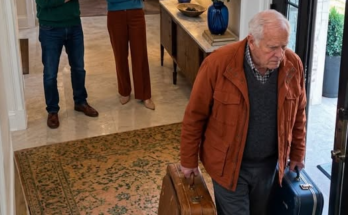
I made my mom, seventy-two, leave her home.
My dad had left it to me anyway, and my three kids were growing up.
They needed space.
That was how I explained it to myself.
The house had four bedrooms.
A finished basement.
A backyard big enough for the kids to actually use.
Mom had been living there alone since Dad died six years earlier.
I had a mortgage on a cramped three-bedroom place across town.
Two of my children were sharing a room.
The oldest was practically living at the kitchen table because there was nowhere else to study.
So I told myself it made sense.
The house was mine legally.
Dad’s will had left it to me.
Mom had the right to stay there for life, but when I started talking about moving my family in, she didn’t fight.
That almost made it worse.
I expected anger.
Instead, she smiled.
“I’ll only take my plant with me.”
She meant the big peace lily she’d kept by the living-room window for more than twenty years.
It had belonged to my grandmother before that.
I asked where she wanted to go.
Mom looked down.
Then said:
“Take me to the least expensive nursing home.”
I stared at her.
“Mom, I don’t earn much, but I can find somewhere decent.”
She shook her head.
“I don’t want you spending all your money on your sick old mother.”
That sentence should have stopped me.
It didn’t.
I told myself she was being practical.
The truth is, I wanted the house.
Forty days later, I got a call.
Mom had died in her sleep.
No dramatic emergency.
No accident.
Her heart simply stopped.
I sat on the edge of my bed after the call and stared at the wall.
My wife, Melissa, touched my shoulder.
“I’m sorry.”
I nodded.
I didn’t cry.
Not then.
At the nursing home, a nurse handed me Mom’s belongings.
One small suitcase.
Her glasses.
Three cardigans.
A Bible.
And the peace lily.
The plant looked terrible.
Leaves yellowing.
Soil dry.
Tied around the pot was an envelope.
My name was written across it.
Inside was a note.
Only six words.
Search inside the soil. Love, Mom.
I nearly laughed.
It sounded like one of the little treasure hunts she used to make for me when I was a child.
I drove home with the plant on the passenger seat.
That night, after everyone went to bed, I carried it to the kitchen.
I spread newspaper across the table.
Then I started digging.
Two inches down, my fingers struck plastic.
I pulled out a sealed bag.
Inside was a small brass key.
And another note.
Your father said you’d know where this belongs.
I didn’t.
Not at first.
Then I remembered Dad’s old workbench in the basement.
The one I’d nearly thrown out when we moved into the house.
There was a narrow drawer on the side.
I had always assumed it was stuck.
The key fit perfectly.
Inside was a metal box.
I opened it.
There were no stacks of cash.
No jewelry.
No hidden fortune.
Just letters.
Dozens of them.
All addressed to me.
And on top was one from Dad.
The first line read:
If you’re reading this, then your mother has finally decided you need to know what this house cost her.
━━━━━━━━━━━━━━━━━━━━
Part Two — What the House Cost
Dad’s letter explained something I had never known.
The house had not simply been his.
Mom had paid for half of it.
More than half, actually.
When I was little, Dad lost his job for nearly a year.
Mom cleaned offices at night, worked cafeteria shifts during the day, and quietly used an inheritance from her mother to keep the mortgage current.
Later, when Dad’s business finally succeeded, he put the house solely in his name because that was how they had handled finances then.
But privately, he never considered it his alone.
His will left legal title to me because Mom insisted on it.
Dad wrote:
Your mother said the house should eventually help you. I told her she should keep ownership. She said, “He’ll need it more than I do someday.”
I stopped reading.
The next letter was from Mom.
Dated three years before Dad died.
You will probably never know how many times I wanted to sell this house and travel. But your father and I kept it because we imagined your children filling the rooms.
Another:
If you ever need the house, I hope you ask me. I also hope I am brave enough to say what I need too.
That one hurt.
Because I had never really asked.
I had presented my need as the obvious next step.
And Mom had done what she had always done.
Moved aside.
━━━━━━━━━━━━━━━━━━━━
Part Three — What I Dug Up
I read every letter that night.
Some were serious.
Some ridiculous.
Mom complained about Dad leaving coffee rings on the table.
Dad wrote about the first time I rode a bicycle without training wheels.
There were letters from years when money was tight.
Years when their marriage was hard.
Years when I thought they were simply Mom and Dad and had no idea they were two tired people making choices I would someday inherit.
Then I found the last envelope.
Mom had written it shortly before moving out.
Daniel,
Please don’t spend your life hating yourself over the house. I could have told you no. I didn’t. That part belongs to me.
I stopped.
Then continued.
But I hope you learn something I learned too late: people who love you will sometimes give up more than you realize if you make your need sound bigger than theirs. Ask anyway. Ask what they want. Don’t assume silence means agreement.
I cried then.
Hard.
Because she had managed, even at the end, not to make herself a saint or me a monster.
She had choices.
So had I.
That was the painful truth.
I had told myself Mom was fine because she didn’t argue.
I had confused compliance with consent.
After the funeral, I couldn’t stand sleeping in the house.
Every room felt like evidence.
The hallway where Mom used to hang Dad’s coat.
The kitchen table where she’d done crossword puzzles.
The living-room window where the peace lily had sat.
My oldest son noticed.
“Dad, are we moving?”
“I don’t know.”
He looked worried.
“Did Grandma not want us here?”
That question mattered.
I sat down beside him.
“She wanted us to have the house someday.”
“Then what’s wrong?”
I thought about the letters.
“She also deserved to be asked what she wanted while she was still here.”
He was quiet.
Then:
“Did you ask?”
“No.”
Children have a way of making confession simple.
I didn’t sell the house immediately.
That would have been another impulsive decision made to relieve my guilt.
Instead, we stayed.
But I changed what the house meant.
I used part of the money I’d been saving for renovations to establish a small fund at the nursing home where Mom had spent those forty days.
Nothing huge.
Enough to help residents pay for transportation, toiletries, little things families sometimes overlook.
I named it after both my parents.
Not as penance.
Penance would have been about me.
I did it because Mom had spent her whole life making small needs disappear.
I wanted some small needs to be noticed.
The peace lily recovered.
I repotted it.
New soil.
Bigger pot.
Placed it by the same living-room window where Mom had kept it.
For years afterward, my kids knew not to touch the letters in Dad’s metal box unless I was there.
Eventually, when they were old enough, I showed them.
Not all at once.
Just enough.
I wanted them to know families are often held together by sacrifices nobody announces.
And that silence is not always generosity.
Sometimes it’s fear.
Sometimes habit.
Sometimes love that has forgotten it is allowed to ask for something too.
My youngest daughter was twelve when she asked:
“Dad, if Grandma wanted to stay here, would you have let her?”
I looked at her.
“I hope I would have.”
She frowned.
“That means you don’t know.”
“No.”
I didn’t.
That was the honest answer.
Years passed.
The kids grew up.
The house became quieter.
Eventually, I understood something almost cruel in its simplicity.
The extra space I had been so desperate for lasted maybe eight years.
Then the children left.
College.
Jobs.
Marriage.
One by one.
Suddenly I was standing in the same four-bedroom house I had once believed my mother was wasting by living in alone.
That irony was not lost on me.
When I turned seventy-two—the age Mom had been when I asked her to leave—my daughter came over one Sunday.
She glanced around the house.
Then joked:
“Dad, this place is huge for one person.”
I laughed.
She froze.
“Oh God. I didn’t mean—”
“I know.”
We both started laughing.
Then she got serious.
“If you ever want to move, you tell me. If you don’t, you stay.”
I looked at her.
That was all I had wanted to hear decades earlier.
Not because I needed permission.
Because being asked matters.
I eventually moved on my own terms.
A smaller place.
Closer to my grandchildren.
The old house went to my three kids jointly.
Before I left, I packed one thing myself.
Mom’s peace lily.
It was enormous by then.
I carried it carefully to the car.
My daughter laughed.
“You’re taking Grandma’s plant?”
“Yes.”
“Why?”
I looked at the leaves.
Because forty years earlier, Mom had hidden a key inside the soil.
But what she really buried there was a lesson.
Not about inheritance.
Not about guilt.
Not even about houses.
About asking.
About listening.
About the danger of assuming the person who loves you most will always say no when giving too much begins to hurt.
I still have the brass key.
It no longer opens anything.
The old workbench is gone.
The metal box belongs to my oldest son now.
But I keep that key beside Mom’s last note.
Search inside the soil.
For years I thought she meant the flowerpot.
She didn’t.
She meant deeper.
Past the thing I wanted to believe.
Past the excuse that the house was legally mine.
Past the comfort of saying she never objected.
Down to the truth I should have understood while she was still alive:
Sometimes the people who love us most do not need us to take less.
They need us to ask before we take at all.