Part One — The Door Emily Didn’t Want Me to Open
My daughter-in-law Emily stopped letting me see my grandson almost immediately after he was born.
At first, I told myself not to take it personally.
New mothers are exhausted.
Newborns are delicate.
Families need time.
Whenever I asked when I could visit, Emily gave me the same answer.
“He’s still sensitive, Carol. Maybe next week.”
One week became two.
Then four.
Then nearly eight.
My son, Daniel, became just as evasive.
“Mom, we’re okay.”
“Is Oliver sick?”
“He’s fine.”
“Then why can’t I see him?”
“Please don’t make this harder.”
That sentence kept me awake for nights.
Harder?
What was already hard?
I started replaying every interaction I’d ever had with Emily.
Had I criticized her parenting?
Asked too many questions?
Stayed too long at the hospital?
I had held Oliver for less than fifteen minutes the day after he was born.
He had been tiny and sleepy, wrapped so tightly in a white blanket that only his round face showed.
I remember whispering:
“Grandma has been waiting for you.”
Emily smiled then.
Nothing seemed wrong.
So why had I suddenly become someone they needed to keep away?
By the seventh week, hurt had turned into resentment.
I bought a tiny blue outfit, a soft stuffed rabbit, and drove to their house without telling them.
I told myself it wasn’t intrusive.
I told myself grandmothers were allowed to surprise their families.
Looking back, I understand how much entitlement was hidden inside that sentence.
Emily opened the door.
The moment she saw me, every bit of color left her face.
“Carol.”
“I brought something for Oliver.”
“You should have called.”
“I have called.”
She looked behind her.
Then back at me.
“I don’t think today is a good day.”
“Emily, it’s never a good day.”
Her eyes filled.
“Please.”
I should have stopped.
Instead, I said:
“I don’t understand what I’ve done to deserve being treated like a stranger.”
Then I heard a soft mechanical beep from inside.
I looked past her shoulder.
Oliver was in a reclining baby seat near the sofa.
At first I saw only blankets.
Then tubing.
A thin tube ran beneath his nose.
Another disappeared beneath his clothes.
His cheeks looked smaller than I remembered.
And above the neckline of his onesie was the upper edge of a healing scar down the center of his chest.
My anger vanished so quickly it frightened me.
“Oh my God.”
Emily immediately stepped between us.
“Please don’t come closer.”
“What happened?”
She began crying.
“What happened to my grandson?”
Daniel appeared from the hallway.
He looked exhausted.
Older somehow.
“Mom?”
I pointed toward Oliver.
“What happened to him?”
Daniel closed his eyes.
Then said:
“He had heart surgery.”
I stared at him.
“What?”
“They found a congenital defect after we brought him home.”
My knees weakened.
I sat down in the chair beside the entryway.
“You said he was fine.”
“We didn’t know what else to say.”
“How long has this been going on?”
Daniel looked at Emily.
“Almost seven weeks.”
Seven weeks.
While I had been complaining that they were excluding me, my grandson had been in and out of a children’s hospital.
“Why didn’t you tell me?”
Emily looked away.
Daniel answered.
“Because of what happened at the hospital.”
I frowned.
“What happened?”
He was quiet for several seconds.
Then he said:
“You posted his picture.”
I remembered immediately.
The day Oliver was born, I had taken a photograph of him asleep in my arms.
I put it on Facebook.
Welcome to the world, Grandma’s perfect little prince.
Emily had asked me later to remove it.
I did.
I thought that was the end of it.
Daniel continued.
“Before the doctors knew exactly what was wrong, Emily asked everyone not to share anything.”
“I didn’t know he was sick when I posted the picture.”
“I know.”
“Then what does that have to do with this?”
Emily finally looked at me.
“Because two days later, you told Aunt Denise.”
I stopped.
I had.
Daniel had called and said doctors heard a heart murmur.
He specifically said:
“Mom, please don’t tell anybody until we know what it is.”
I told my sister anyway.
Only Denise.
Or so I thought.
Within twenty-four hours, Emily received six messages.
People asking whether the baby had a heart defect.
Offering prayers.
Asking for updates.
One relative even posted:
Please pray for our family’s new baby. He’s having heart problems.
Emily hadn’t even told her own father yet.
I felt my stomach drop.
“I was worried.”
“I know,” Emily said.
Her voice wasn’t angry.
That made it worse.
“But being worried didn’t make it your information to share.”
I looked toward Oliver.
“Is that why you kept me away?”
“Partly.”
“What’s the other part?”
Emily wiped her face.
“The surgery.”
She explained.
Oliver wasn’t just recovering.
He was medically fragile.
His doctors wanted limited exposure to respiratory infections.
No crowds.
No casual visitors.
No kissing.
Careful handwashing.
And no pressure on his exhausted parents to entertain anyone.
Emily had spent nights beside his hospital crib after recovering from childbirth herself.
Daniel had been sleeping in two-hour stretches.
They had stopped telling most people anything because every update created more calls, more questions, more demands.
And they were terrified.
“We couldn’t keep explaining it,” Daniel said. “We didn’t even know if he was going to be okay.”
I looked at my son.
“Is he?”
Daniel swallowed.
“We think so.”
Not yes.
Not a promise.
Just the truth available that day.
Then Emily said something I will never forget.
“When people hear something is wrong with a baby, they want information because they’re scared. But sometimes the parents don’t have enough strength to carry everyone else’s fear too.”
That was when I realized I had been asking the wrong question for two months.
I kept asking:
Why won’t they let me in?
I should have been asking:
What are they carrying that makes opening the door feel impossible?
━━━━━━━━━━━━━━━━━━━━
Part Two — The Thing I Had to Prove
I put the gift bag on the floor.
Then I stepped backward.
“I shouldn’t have come without asking.”
Emily looked surprised.
I continued.
“And when you told us not to share the medical information, I should’ve respected that.”
Nobody spoke.
I wanted to explain myself.
That I loved Oliver.
That I had only told Denise because I was frightened.
That I never meant for the whole family to know.
All of those things were true.
They also did not undo what I had done.
So I didn’t say them.
Instead I asked:
“What do you need from me?”
Emily started crying harder.
“Right now?”
“Yes.”
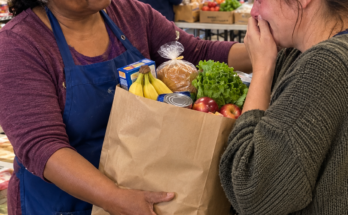
“Groceries.”
I almost laughed because I had expected something complicated.
“What kind?”
She handed me a list from the counter.
“Could you leave them on the porch?”
“Yes.”
“And please don’t tell anyone you’ve seen him.”
I nodded.
“Okay.”
I left without holding my grandson.
That was probably the first moment they began trusting me again.
Not because I apologized.
Because I finally accepted an answer I didn’t like.
For the next month, I helped differently.
Groceries appeared on their porch.
Prescriptions got picked up.
I took their garbage bins to the curb on Tuesdays.
Once Daniel texted:
Could you make that chicken soup?
I delivered it.
I didn’t knock.
I didn’t photograph it.
I didn’t call Denise afterward.
Slowly, the door opened.
━━━━━━━━━━━━━━━━━━━━
Part Three — The First Time He Reached for Me
Oliver was nearly four months old when Emily called.
“His cardiologist says he’s doing really well.”
I sat down.
“Really?”
“Yes.”
She sounded lighter than I had heard her sound in months.
Then she said:
“Do you want to come over Saturday?”
I cried before I answered.
“Yes.”
She laughed softly.
“There are rules.”
“Give me all of them.”
“Wash your hands when you come in. No kissing him. If you’re sick at all, even a little, don’t come. And if he gets tired, visit’s over.”
“Understood.”
Saturday morning, I arrived five minutes late because I was so afraid of appearing overeager that I sat in my car around the corner.
Emily opened the door.
This time she smiled.
“Come in.”
I washed my hands.
Then washed them again because nervousness makes people ridiculous.
Oliver was lying on a blanket.
No oxygen tube anymore.
The scar was still visible above his onesie.
I stared at it.
Emily noticed.
“He’ll probably always have one.”
I nodded.
“It’s beautiful.”
She raised an eyebrow.
“Don’t get sentimental on me.”
“I’m a grandmother. Sentimental is basically the job.”
She laughed.
Then she lifted Oliver and held him toward me.
I froze.
“Can I?”
“That’s why you’re here.”
I sat down before she handed him over because suddenly my legs didn’t feel reliable.
He was heavier.
Warmer.
His eyes were wide open.
For several seconds, he stared at me as if trying to decide whether he remembered my voice.
Then one tiny hand closed around my finger.
I cried immediately.
Daniel walked in carrying bottles.
“Oh, no.”
“What?”
“You’ve activated her.”
Emily laughed.
“She was going to cry no matter what.”
I looked down at Oliver.
For months, I had imagined this moment as something that had been unfairly taken from me.
Now I understood it differently.
Holding him wasn’t a right they had finally returned.
It was trust they had slowly chosen to give back.
That changed everything.
Our relationship did not magically become perfect.
A few months later, I nearly made the same mistake.
Oliver had a cardiology appointment and Daniel texted afterward:
Great checkup. Doctor is happy.
I typed a family-group message:
Wonderful news! Oliver’s heart appointment went perfectly!
My thumb hovered above send.
Then I stopped.
I texted Emily privately.
May I share this, or would you rather keep it private?
She replied:
Please keep it private for now. But thank you for asking.
I deleted the message.
Five seconds.
That was all respecting someone required.
No debate.
No wounded speech about being excluded.
No claiming grandparents had rights.
Just:
Okay.
As Oliver grew older, his scar faded from angry red to pale silver.
He became the most energetic child I had ever met.
At two, he climbed everything.
At three, he became obsessed with dinosaurs.
At four, he asked Emily why he had a line on his chest.
She told him:
“You were born with a heart that needed a little help, so doctors fixed it.”
He considered that.
“Did Grandma fix it?”
Emily laughed.
“No. Grandma brought soup.”
Oliver looked disappointed.
I said:
“Very important soup.”
Years later, Emily and I finally talked honestly about those first months.
She admitted she wished they had communicated more clearly.
“We should’ve told you something was wrong instead of just saying maybe next week.”
I nodded.
“I would have worried.”
“I know.”
“But I was already worrying anyway.”
She smiled.
“We were scared you’d tell everyone.”
“That was reasonable.”
She looked surprised.
“You don’t have to agree with every decision we made.”
“I don’t.”
That was true.
“But I understand why you didn’t trust me with information after I proved I wouldn’t keep it private.”
Emily was quiet.
Then she said:
“You know what hurt most?”
“What?”
“The photo you posted when he was born.”
I frowned.
“You asked me to delete it. I did.”
“I know. But when I asked, you said, ‘I’m just proud of my grandson.’”
I remembered.
She continued.
“It made me feel like your pride mattered more than my no.”
That sentence followed me home.
I had always thought boundary violations required cruelty.
Sometimes they come wrapped in affection.
I only did it because I love you.
I was excited.
I was worried.
Those things explain behavior.
They do not automatically excuse it.
When Oliver was seven, he found the tiny blue outfit I had bought on the morning of my surprise visit.
Emily had saved it.
“Was this mine?”
“Yes.”
“Did I wear it?”
“Once.”
He held it against himself and laughed at how tiny it was.
Then he asked:
“Why did Grandma buy it?”
Emily looked at me.
I said:
“Because Grandma hadn’t learned to wait very well yet.”
He frowned.
“For clothes?”
“For lots of things.”
That satisfied him.
Children don’t always need the entire history.
They need the truth appropriate to their age.
Today, Oliver is ten.
His heart is doing well.
He sees a cardiologist regularly.
He plays soccer badly and enthusiastically.
And if you looked at him running across a field, you would never know how frightened we once were standing around his reclining seat listening to that little machine beep.
I still have one photograph from the day I first held him after surgery.
Emily took it.
Not me.
In the picture, I’m staring at Oliver instead of the camera.
My eyes are swollen from crying.
His fist is wrapped around my finger.
For years, I thought that picture represented finally getting my grandson back.
Now I know better.
He had never been taken from me.
His parents were protecting a sick baby while trying to survive the most frightening weeks of their lives.
The person who needed to change was me.
That surprised visit taught me something I wish I had understood before I ever became a grandmother.
Love does not automatically grant access.
Concern does not automatically grant information.
And being family does not mean someone has to open the door simply because you’re standing on the other side.
Sometimes the most loving thing you can do is stop knocking.
Ask what is needed.
Then prove—quietly, repeatedly—that when they finally open the door, you will respect the home you are being invited into.