Part 2
“You can’t just cancel it! We already told everyone!” Sophia’s voice cracked through the phone, somewhere between fury and disbelief. “Mark’s parents are flying in from Ohio. We picked a date. We picked a *cake*.”
“I picked a date too,” I said. “One day. I never agreed to three months, renovations, or furniture with my address on the delivery slip.”
“It’s for the wedding, Lucas! God, you’re being so paranoid.”
“Then why does the agreement Mark sent me talk about ‘family access’ after the wedding? Why does it mention ‘memorial use’? Weddings don’t need permanent language like that.”
Silence. Just long enough to tell me she knew exactly what I was talking about.
“Mark said that was standard,” she said finally, quieter now.
“It’s not standard. I had someone who actually works in real estate read it. It’s the kind of thing you use to create an ongoing claim to a property — not to plan a party.”
I heard Mark’s voice cut in on speaker, defensive immediately. “We were going to talk to you about the furniture. We figured since we’re going to be up there so much before and after, it made sense to just—”
“After?” I said. “There is no ‘after.’ There was never supposed to be an after. There was one day.”
“Your parents think you’re overreacting,” Sophia snapped.
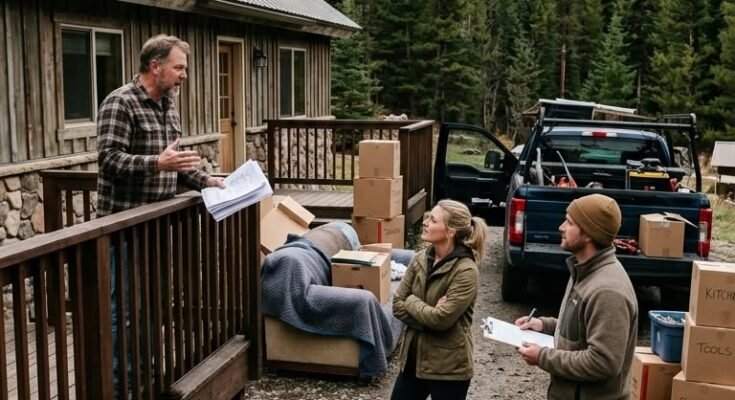
“My parents don’t own the cabin,” I said. “I do. And I’m not interested in debating a decision about my own property with people who already had a bed delivered to it without asking me.”
She hung up on me.
For the next two days, my phone didn’t stop. My mother called to say I was “humiliating the family.” My father sent a long text about how I’d “always found ways to make things difficult.” Sophia posted a vague, tearful story online about people who “claim to love you but won’t help when it matters.”
I didn’t respond to any of it publicly. Instead, I did what Emma told me to do from the start. I called the delivery company and canceled the furniture drop-off under my address — legally, since I was the property owner and hadn’t authorized it. I changed the locks. I had cameras installed at the gate and the front door within a week. I pulled the county records Emma had flagged and found that Mark had also made an inquiry, six weeks earlier, about the cost of filing a homestead-adjacent claim in that county — the kind of thing, Emma explained, that can get complicated fast if someone’s already treating a property as a residence.
He hadn’t filed anything. But he’d been looking into it.
That was the piece that finally made the whole thing make sense to me. This was never just an overeager fiancé wanting a beautiful wedding. It was a plan, dressed up in wildflowers and string lights, to slowly turn my cabin into their home while I was three hours away working sixty-hour weeks that had paid for every board of it.
Three weeks later, my parents invited me to dinner “to smooth things over.” I went. Sophia wasn’t there — she and Mark had, I later learned, booked a much smaller venue two towns over from the cabin, paid for with a loan from his parents.
My mother tried, gently, to suggest I “reconsider” letting them use the cabin for just the ceremony, at least. I told her the offer had expired the day a king-size bed showed up addressed to a house I never invited them to move into.
“You’ve changed,” she said, like it was an accusation.
“I finally stopped letting people decide what’s mine,” I said.
Sophia and I don’t talk much these days. She got married at the smaller venue, without string lights or a mountain view. I heard the pictures turned out nice anyway. I still go up to the cabin most weekends — alone, with a book and a pot of coffee, watching the valley the way I always meant to when I bought the place.
Some things, it turns out, are worth keeping exactly the size they were always supposed to be. One day. One view. One name on the deed.