Part 2
I watched the truck’s beeping reverse alarm through my kitchen blinds and did the only thing Rachel told me to do: nothing. Not yet.
“Call the county,” she said over the phone. “Not the police. The building inspector’s office. Tell them you have reason to believe an active pour is happening on a permit with falsified setback measurements. Say it exactly like that.”
I did. The woman on the line asked three questions, took my file number from Rachel, and said an inspector would be dispatched “as soon as one’s available” — which, in county-speak, could mean an hour or a week.
It meant forty minutes.
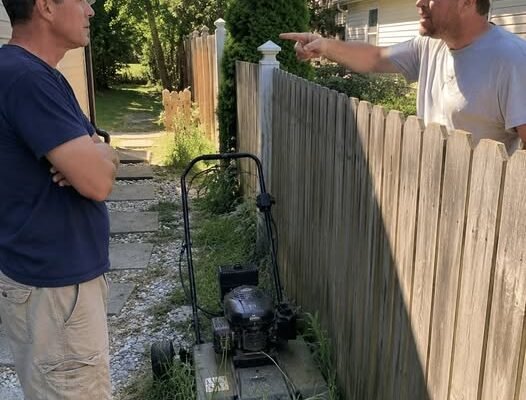
I was standing at my fence line — my actual fence line, the one marked by Carl’s flags — when a white pickup with a county emblem pulled up behind the concrete truck. A man in a polo shirt got out with a clipboard and a laser measuring tool, and Tyler came jogging across his yard looking, for the first time since I’d met him, uncertain.
I didn’t gloat. I didn’t say a word. I just stood on my side of the flags and watched.
The inspector walked the pool excavation, checked it against the approved plan, then checked the approved plan against Carl’s survey stamp — which Rachel had emailed over that morning, along with the falsified fence permit drawing. It took him about fifteen minutes to reach the same conclusion Rachel had reached over the phone.
“This pour doesn’t happen today,” he told the concrete driver. Then he turned to Tyler. “Sir, your setback is off by more than seven feet. This site doesn’t match your submitted plan. I’m issuing a stop-work order, and this is going to Code Enforcement.”
Tyler’s face did something I hadn’t seen it do before — the confidence just drained out of it. “There’s got to be a mix-up—”
“There’s a mix-up,” the inspector said, tapping the fence permit. “This drawing shows the correct line. Your fence doesn’t match it. Neither does your pool.”
The concrete truck idled in the driveway for another twenty minutes before it finally pulled away, still full, at a cost I later learned was over four thousand dollars just for the wasted load — before a single shovel of dirt had been touched for the fix.
What followed wasn’t fast. Code Enforcement opened a file. The county required Tyler to remove the fence, the pergola footings, and the hot tub pad, and to resubmit every permit with a certified survey attached. Rachel filed a civil claim for the value of my land’s use and the cost of my survey and legal fees, which Tyler’s insurance eventually settled rather than fight in front of a judge holding a falsified permit drawing.
Six weeks later, I watched a different crew — one Tyler was paying out of pocket, not through his contractor’s original bid — pull his cedar fence out post by post and reset it exactly on Carl’s orange flags. My eastern strip came back to me looking like a scar: bare dirt where his sod had been, the sad stub of a Japanese maple root ball he hadn’t wanted to move twice.
I reseeded it that fall. By spring, you couldn’t tell where his years of confidence had once stood eight feet onto land that was never his.
Tyler and Ashley didn’t wave anymore. I didn’t need them to. Some neighbors you make peace with over a fence line. Others, you just make sure the fence line is drawn correctly, and let the county do the rest.
The oak tree’s still there. So is Emma’s swing. And every Saturday, I still mow the same straight line I’ve mowed for eleven summers — except now it runs the full length it was always supposed to.