Part One: Forty-Three Dollars
“Sir, you don’t have to put the dog food back.”
The elderly man froze with the bag halfway out of his cart.
Patrice Wynn stood behind him in the checkout line, one hand resting on her own basket and the other tucked inside the pocket of her worn winter coat.
The man looked embarrassed.
“It’s all right,” he said quietly. “He can eat what I eat for a couple days.”
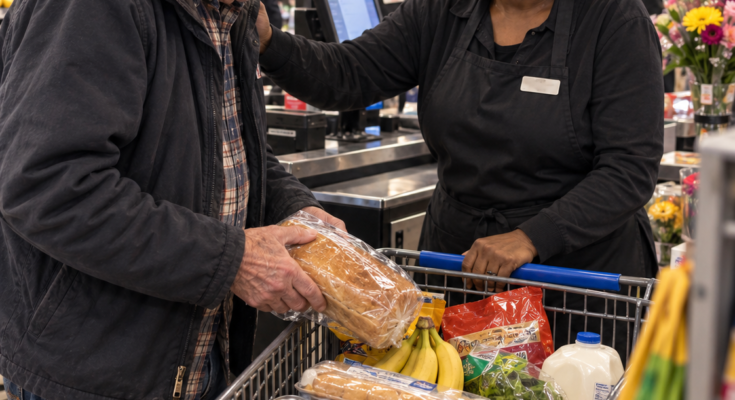
Patrice looked down at his cart.
A loaf of bread.
A small can of coffee.
Eggs.
Soup.
Dog food.
Nothing fancy.
Nothing anyone should have to apologize for buying.
The cashier tried his debit card again.
Declined.
The old man swallowed hard and stared at the little screen like maybe it would change its mind.
“Take the coffee off too,” he said.
Patrice felt something twist inside her chest.
She knew what it was like to count every dollar.
At 62, she had spent more than three decades standing behind a salon chair in a Wisconsin mill town, trimming bangs, curling gray hair, listening to divorces, weddings, babies, funerals, promotions, and every kind of heartbreak people confess while looking at themselves in a mirror.
Her salon had never made her rich.
But it had paid the bills.
Then came the diagnosis.
Breast cancer.
Appointments replaced appointments.
Treatment days replaced workdays.
Some customers stayed loyal.
Others slowly found new salons.
Patrice understood.
People still needed haircuts when she was too sick to stand for six hours.
But understanding something doesn’t make it hurt less.
By that winter, there were afternoons when the phone didn’t ring once.
She had started turning off half the salon lights to save electricity.
That morning, Patrice had checked her bank account before leaving home.
Forty-three dollars and some change.
That had to last until Friday.
She needed groceries herself.
Gas too.
She knew every reason she should keep quiet.
Then the elderly man lifted the bread from his cart.
“Take this off too.”
Patrice stepped forward.
“No.”
He turned.
She smiled.
Not a big smile.
Just the kind that says, *I see you, and I’m not going to embarrass you.*
“Put it back,” she told him.
“Ma’am, I can’t—”
“You’re not.”
Before he could argue again, Patrice handed her card to the cashier.
The man stared at her.
“Please don’t do that.”
Patrice shrugged.
“Everybody deserves to go home with dinner.”
His eyes filled so quickly that he looked away.
The cashier quietly rang everything through.
Thirty-one dollars and change.
Patrice felt the number.
Of course she did.
Kindness doesn’t mean money suddenly stops mattering.
But she paid anyway.
The old man kept shaking his head.
“My name’s Walter,” he finally said. “Walter Hale.”
“Patrice.”
“I’ll pay you back.”
“No, you won’t.”
He almost laughed.
“Then how am I supposed to thank you?”
Patrice pointed toward the dog food.
“Go home and feed your dog.”
That finally made him smile.
Walter told her the dog’s name was Charlie.
His wife had picked Charlie out at an animal shelter eight years earlier.
She had died the previous spring.
“House gets pretty quiet,” he said.
Patrice understood that too.
Loss has different names, but the silence it leaves behind sounds remarkably similar.
They parted near the grocery store doors.
Walter pushed his cart toward an old sedan.
Patrice carried one small bag to her car.
She had quietly removed a few things from her own basket before paying.
No one noticed.
That night, she ate canned soup and crackers.
And she didn’t regret a thing.
—
Part Two: The Bell Rings
The next morning, Patrice unlocked her salon at 8:30.
The place looked exactly as it had the day before.
Two empty styling chairs.
A stack of outdated magazines.
The little coffee maker on the counter.
A photograph of Patrice and her late mother taped beside the mirror.
Her appointment book had three names for the entire day.
Years ago, she sometimes had six people waiting on a Saturday.
Women would laugh so loudly that people walking outside could hear them through the glass.
Patrice missed that sound.
She missed being tired because there was too much work.
Now she was tired from worrying there might not be enough.
A week passed.
Then another.
Patrice had almost forgotten about Walter.
On a Tuesday morning, the little bell over the salon door rang.
A woman in her late 50s stepped inside.
“Are you Patrice?”
“Yes, ma’am.”
The woman smiled.
“My name is Ellen. I need a haircut.”
Ten minutes later, the bell rang again.
Another woman walked in.
“Do you take walk-ins?”
“When I can.”
“Well, can you today?”
Patrice laughed.
“Honey, today I can take everybody.”
Then the door opened a third time.
A younger woman entered carrying coffee for all of them.
Patrice looked from one face to the next.
Something about their expressions made her suspicious.
“All right,” she said. “What’s going on?”
The three women glanced at each other.
Then Ellen pulled out her phone.
On the screen was a photograph of Walter standing beside a shaggy brown dog.
Patrice covered her mouth.
“Oh.”
“He’s our dad,” Ellen said.
Patrice shook her head.
“You girls didn’t have to come here.”
“Yes,” Ellen replied. “We did.”
—
Part Three: The Full Book
Walter had told them about the grocery store.
He had told them about the stranger who paid for his food.
The woman who didn’t make him feel ashamed.
The woman who made sure Charlie got his dinner too.
Then Walter mentioned that Patrice owned a small salon downtown.
His daughters found it.
They also discovered Patrice had been through cancer treatment.
And that business had been slow.
“We asked Dad what you looked like,” one daughter said.
“He said, ‘She looked like somebody who didn’t have much extra either.'”
Patrice looked down.
That part hit her hardest.
Ellen reached across the counter and squeezed her hand.
“He said that’s what made it mean so much.”
That afternoon, Patrice cut three heads of hair.
But it didn’t stop there.
Ellen told a coworker.
Her sister told two neighbors.
Their cousin booked a color appointment.
Someone posted in a small community group that there was a talented longtime hairdresser downtown who could use a little support.
They didn’t tell Patrice’s medical history.
They didn’t ask for donations.
They simply told people:
“If you need a haircut, give this woman a chance.”
By the end of the week, Patrice’s appointment book looked different.
Names filled Thursday.
Friday was fully booked.
Saturday had a waiting list.
The following Monday, Patrice had to turn on all the lights again.
The coffee maker ran all day.
Women laughed so loudly that people walking outside could hear them through the glass.
Patrice stood behind her chair, scissors in hand, and felt something she hadn’t felt in months.
Hope.
At the end of that first busy week, Walter walked through the door.
He wasn’t alone.
Charlie was with him, a shaggy brown dog with a wagging tail and a gray muzzle.
Walter held a small envelope.
“Don’t you dare,” Patrice said.
Walter smiled.
“It’s not money.”
She opened it.
Inside was a photograph of Walter and his late wife, taken years ago. They were standing in front of a little house with a garden. Both were laughing.
On the back, in Walter’s handwriting:
*She would have liked you. Thank you for reminding me that people are still good.*
Patrice taped the photograph beside the mirror, next to the picture of her mother.
Then she knelt down and scratched Charlie behind the ears.
He licked her hand.
“Your dinner’s on me,” she told him.
Walter laughed.
“You already paid for it.”
“I know,” Patrice said. “I’d do it again.”
That night, she closed the salon and counted the day’s earnings.
More than she had made in the past month combined.
She sat down in one of her styling chairs and cried.
Not because she was sad.
Because she had almost given up.
Because she had spent so many months wondering if kindness even mattered anymore.
Because a stranger in a grocery store had reminded her that it did.
And because his daughters had reminded an entire town.
Sometimes kindness comes back.
Not always the way you expect.
Not always from the person you helped.
But it comes back.
Patrice still cuts hair in that little salon.
The appointment book is full more often than not.
And every Tuesday, Walter comes by with Charlie.
He doesn’t need a haircut.
He just brings coffee.
And sits.
And talks.
Because sometimes the best way to say thank you is to keep showing up.
—