Part One: What I Built From Nothing
I scrubbed floors before I ever signed a deed.
I negotiated my first loan sitting on an overturned bucket in a motel lobby that smelled like bleach and burnt coffee, because that was the only quiet room left after midnight. I learned plumbing because I couldn’t afford a plumber. I learned contracts because I couldn’t afford a lawyer. I learned, slowly and the hard way, that nobody was coming to save the business but me.
Daniel was the one constant through all of it. He sketched lobby concepts on napkins during his lunch breaks. He spent his Saturdays with a drywall knife in his hand instead of on a golf course. On the nights I wanted to quit — and there were more of those nights than I ever told anyone — he was the one who reminded me why I’d started in the first place.
My father was not.
He didn’t call when our first property sold out for an entire season. He didn’t call when we expanded to the Oregon coast. He didn’t call when investors who had once laughed me out of rooms started asking for meetings.
I told myself it didn’t matter anymore. Mostly, I believed it.
Then the valuation came back: five hundred eighty million dollars. The office filled with flowers and champagne and reporters, and for one afternoon it actually felt like every scrubbed floor and every sleepless night had been worth it.
That evening, my phone buzzed. Dad.
For a second, some old, stubborn part of me lit up — the girl behind the motel counter, still waiting for her father to notice her. Then I read the message: Family dinner. 7 p.m. Important discussion.
I almost laughed. Then I almost said no.
Daniel told me I didn’t owe my father anything. He was right. But I decided I owed something to that girl who used to wait by the phone — I owed her the chance to walk into that room as someone who was no longer waiting for anyone’s permission to be proud of herself.
So I went. And I brought Daniel with me.
Part Two: The Dinner
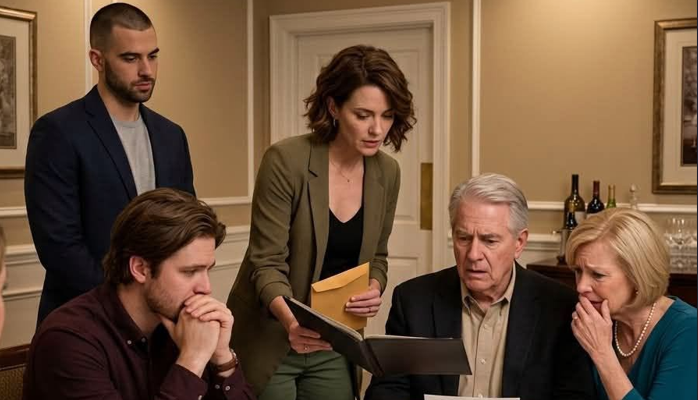
The private room was exactly the kind of place my father loved — white linens, crystal glasses, a bottle of wine that cost more than my first month’s rent had once been. Mom sat with her pearls and her careful, worried smile. Ethan lounged in his chair with the easy confidence of someone who’d never once had to wonder if the lights would stay on.
When Daniel walked in beside me, I watched something flicker across my father’s face. He remembered him — of course he did. Daniel had been the man standing at the altar on the day my father hadn’t shown up.
“Hannah, you’re late,” Dad said.
“No,” I said. “I arrived exactly when I meant to.”
Ethan got straight to it. “Dad’s company has hit a rough patch.”
My father leaned back, already certain of how this would go. “Your success puts you in a position to help your family.”
Not pride. Not I’m proud of you. Just a bill he assumed I’d pay.
“So this dinner is about money,” I said.
“Your father is under a lot of pressure,” Mom said softly.
“He was under a lot of pressure on my wedding day too,” I answered. “That didn’t make the empty chair hurt any less.”
The table went quiet. My father’s jaw tightened, and for a moment I braced for the version of this conversation I’d rehearsed a hundred times in my head — the one where I laid out every unpaid debt and every missed refinancing deadline, folder by folder, and left him with nothing but the wreckage of his own choices.
But when I looked at him — really looked, past the navy suit and the practiced confidence — I saw something I hadn’t expected. He looked tired. Not performing-tired. Actually tired, in a way I recognized, because I’d worn that exact exhaustion myself, plenty of nights, alone with a mop and a stack of bills.
I set the folder on the table anyway. He needed to see it. But I didn’t open it to wound him.
“I know about the loan,” I said quietly. “I know about the bank’s deadline. I know you didn’t invite me here to celebrate with me — you invited me here because you’re scared, and I’m the only person left in this family who might be able to help.” I paused. “I’m not going to pretend that doesn’t sting. But I came anyway. Because underneath everything, you’re still my father, and some part of me has never quite stopped hoping we’d find our way back to each other.”
For the first time in my life, I watched my father’s composure actually crack.
“I don’t know how to ask you for help,” he admitted, so quietly I almost missed it. “I don’t know how to ask anyone for anything. I never learned.”
“I know,” I said. “I think that’s the saddest thing about you.”
Part Three: What Came After
I didn’t hand him a bailout. I wasn’t ready for that, and honestly, neither was he — not yet, not without a real conversation about why the company kept bleeding, and what it would actually take to stop it.
Instead, I opened the second envelope.
Inside was a letter and a check made out to my mother, in her name, in an account only she controlled — enough to give her, for the first time in thirty years, something that was entirely hers. “You’ve spent three decades smoothing things over at dinners exactly like this one,” I told her. “This isn’t about Dad. This is just yours.”
Then I turned to Ethan. “You’re not a bad person. You’re just the son who stayed, and nobody ever taught you what that actually costs. If you want a real job — not a title, an actual job — call me Monday. I’m hiring an operations manager, and you already know this business better than you think you do.”
Finally, I looked back at my father. “I’m not going to fix this for you tonight. But I’ll sit down with you and your accountant next week, and we’ll look at the real numbers together, and I’ll tell you honestly what I think you should do. Not because you’re entitled to my money. Because somewhere under thirty years of silence, you’re still my father, and I’d rather try than spend the rest of my life wondering what would’ve happened if I hadn’t.”
He didn’t say much. I don’t think he had the words yet. But he nodded, and his eyes were wet in a way I’d never once seen in my entire childhood, and for the first time, that felt like enough to start with.
We did sit down that following week. It wasn’t easy — old habits and old silences don’t dissolve over one dinner. But we kept showing up. My mother found a small apartment near the coast that she filled, slowly, with things she’d chosen herself. Ethan started as operations manager at our third property and turned out to have a genuine gift for it, once nobody was comparing him to anyone else at the table. My father sold off two properties he could no longer carry, kept the one his own father had left him, and — six months later — called me on a Tuesday for no reason at all, just to ask how the Oregon property was doing.
It wasn’t a grand reconciliation. There was no single perfect moment where everything was suddenly fixed. It was smaller than that, and slower — a phone call here, a Sunday dinner there, a man learning, late in life, how to simply ask his daughter how she was doing.
Daniel and I closed on our fourth property that spring. I sketched the lobby concept myself, on the back of a napkin, the way he’d taught me all those years ago — not because I needed reminding why I’d started anymore, but because the best habits are the ones worth keeping long after they’ve stopped being necessary for survival, and become, instead, simply how you choose to live.