PART 2
I thought the worst was over when my father’s SUV finally disappeared down the road.
I was wrong.
Twenty-three minutes later, my phone buzzed with a message from my fourteen-year-old nephew, Owen.
“Aunt Claire, where are we supposed to live now?”
I stared at those words.
Live?
Not visit. Not spend the weekend. Not enjoy a summer vacation.
Live.
Before I could respond, another message appeared.
“Grandma said we were moving into your lake house until Mom got back on her feet. She already told us we could stay there until Christmas.”
Christmas.
It was the first Friday in June.
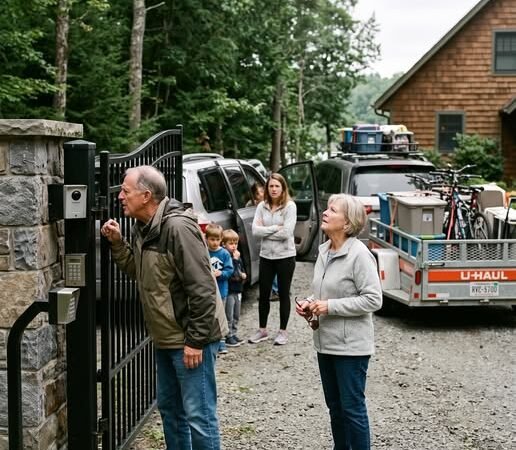
I sat motionless at my desk, suddenly understanding why my family had arrived with a U-Haul trailer, storage bins, and enough furniture to fill a house.
They weren’t planning a reunion.
They weren’t even planning a summer vacation.
They had decided that my $680,000 property would become Melissa’s new home, and somehow everyone had been included in the decision except the woman who owned it.
My phone rang.
Mom.
I ignored it.
Then Dad.
Then Melissa.
I looked back at Owen’s message and felt my anger begin to fade into something heavier.
My nephews had been told they were moving into a beautiful lake house. They’d probably been imagining summer afternoons fishing from the dock, swimming, and choosing bedrooms.
Now they were sitting in a minivan, confused about why their aunt wouldn’t open the gate.
And the adults responsible for that confusion were already preparing to blame me.
I called Owen.
He answered immediately.
“Aunt Claire?”
“Hey, sweetheart. Are you okay?”
“Yeah. We’re at Grandma’s house.”
I closed my eyes in relief. At least the boys had somewhere safe to stay.
Then Owen asked, “Did we do something wrong?”
My chest tightened.
“No, honey. You and Ben didn’t do anything wrong.”
“Then why wouldn’t you let us in?”
I took a slow breath.
“Because nobody told me you were planning to live there.”
There was silence.
Then he whispered, “But Grandma said you knew.”
I looked toward my office window.
“She was mistaken.”
Owen sounded embarrassed. “Mom already packed our bedrooms. She said we might have to change schools.”
My stomach dropped.
“Change schools?”
“Yeah. Grandma said there’s a good one near the lake.”
I closed my eyes.
This wasn’t a misunderstanding anymore.
Someone had been making permanent arrangements behind my back.
“Owen, listen to me. I love you and Ben. Nothing about what happened today changes that. But your mom and Grandma needed to talk to me before promising you a place to live.”
He was quiet.
Then he asked the question I had been afraid of.
“Aunt Claire, are you mad at us because we’re poor?”
I pressed my hand against my mouth.
For a moment, I couldn’t speak.
Then I said, “No, sweetheart. Never. Money has nothing to do with how much I love you.”
He sniffled.
“Okay.”
I could hear his younger brother asking something in the background.
Then Owen whispered, “I just thought we were going to have a home again.”
After we hung up, I sat staring at my phone.
I had expected anger from my parents. I had expected Melissa to accuse me of being selfish.
I hadn’t expected my nephews to become the ones carrying the consequences of a plan nobody had discussed with me.
And I certainly hadn’t expected to discover that my sister was apparently losing her apartment.
That evening, I drove to my parents’ house.
I didn’t call first.
For once, I decided they could experience what it felt like when somebody arrived expecting to be accommodated.
Dad’s SUV was in the driveway. Melissa’s minivan was parked beside it, and the U-Haul trailer sat along the curb, still loaded.
I could see storage bins stacked behind its rear window.
The sight made my stomach tighten.
Mom opened the door.
Her expression changed immediately.
“Claire.”
“Hi, Mom.”
She folded her arms.
“I assume you’re here to apologize.”
I looked at her.
“No. I’m here because Owen thinks he’s homeless.”
Her face fell.
“He isn’t homeless.”
“Then why did he ask me where he’s supposed to live?”
She looked away.
I stepped inside.
“Where’s Melissa?”
“In the kitchen.”
I walked past her.
Dad was sitting at the dining table, staring at his phone. Melissa stood beside the counter, wiping her eyes.
When she saw me, her expression hardened.
“Happy now?”
I stopped.
“What?”
“You made us drive all the way there with everything packed, and then you humiliated us in front of the kids.”
I looked directly at her.
“Melissa, why did Owen think you were moving into my house until Christmas?”
She froze.
Then glanced toward Mom.
That was all the answer I needed.
I turned.
“Mom?”
She sighed. “We were going to tell you.”
“When?”
Nobody answered.
“Before or after Melissa changed her address?”
Dad slammed his phone onto the table.
“That’s enough, Claire.”
I looked at him.
“No, Dad. It isn’t.”
His face reddened.
“We’re trying to help your sister.”
“Then help her. Don’t volunteer my house.”
Mom threw up her hands.
“You hardly use it!”
I felt a familiar anger rising.
“I pay for it. I maintain it. I choose when to use it. None of those things require your approval.”
Melissa began crying again.
“You don’t understand what it’s like.”
I looked toward her.
“Then explain it to me.”
She hesitated.
I waited.
Finally, she whispered, “My lease isn’t being renewed.”
I felt my anger shift.
“When does it end?”
“The thirtieth.”
I looked at the calendar hanging beside the refrigerator.
Twenty-five days.
“And when did you find out?”
Melissa stared at the floor.
“April.”
I looked at her.
“April?”
She nodded.
I couldn’t believe it.
She had known for nearly two months.
And nobody had told me.
“Why didn’t you say something?”
Melissa wiped her cheeks.
“Because Mom said she had an idea.”
I slowly turned toward our mother.
She looked defensive.
“Well, somebody had to come up with a solution.”
I stared at her.
“You decided my lake house was the solution?”
Mom shrugged.
“It made sense.”
“To whom?”
“To the family.”
I almost laughed.
There was that word again.
Family.
Apparently, it meant everybody except me.
Dad stood.
“Claire, your sister has two children.”
“I know that.”
“They need somewhere to live.”
“I know that too.”
“Then what do you expect us to do?”
I looked at him.
“Why does your question begin with what I should do?”
He stopped.
I continued. “Melissa has had nearly two months to look for another apartment. You have a spare bedroom and a finished basement. Her children’s father has financial responsibilities. There are rental listings, housing counselors, and other options.”
Melissa looked up sharply.
“So now you’re telling me how to live?”
“No. I’m asking why everyone decided I should provide your home without even discussing it with me.”
She began crying harder.
Mom immediately moved beside her.
“Oh, honey.”
Then she looked at me.
“See what you’re doing to your sister?”
I stood very still.
I had heard that sentence in one form or another my entire life.
When Melissa borrowed my things.
When she damaged my car.
When she needed money.
When I tried to say no.
Somehow, her distress always became evidence that I had done something wrong.
But not this time.
I looked at Mom.
“Melissa’s situation is serious. Her feelings are real. But neither of those things makes my house hers.”
The room went silent.
Then Dad said something I wasn’t expecting.
“We already told the family.”
I turned toward him.
“What?”
He looked uncomfortable.
“We told everyone the lake house would be our summer gathering place. Uncle Ron scheduled his vacation. Your cousins booked time off. We made plans.”
My stomach tightened.
“Plans for what?”
Mom suddenly looked nervous.
Dad continued.
“We figured once Melissa moved in, there’d be somebody there to keep the place maintained. Your mother and I could come down on weekends, and everybody could enjoy it.”
I stared at him.
For several seconds, I couldn’t speak.
Then I asked quietly, “Who would pay the mortgage?”
Dad frowned.
“You’re already paying it.”
“The utilities?”
He shrugged.
“We’d work something out.”
“Insurance? Repairs? Groceries? Cleaning?”
Nobody answered.
I looked from one face to another.
They had planned to turn my private retreat into a shared family vacation property.
Melissa would occupy it.
My parents would visit whenever they wanted.
The extended family would come for holidays.
And I would remain responsible for the bills.
I took a slow breath.
“So you were planning to enjoy my house while I paid for everybody to use it.”
Mom’s eyes filled.
“That’s such an ugly way to describe helping family.”
I shook my head.
“No, Mom. It’s an accurate way to describe making decisions with somebody else’s property.”
I left twenty minutes later.
Not because we’d reached an agreement.
We hadn’t.
But because I’d realized the conversation was going nowhere.
Every time I mentioned my ownership, my parents mentioned family.
Every time I asked why nobody had consulted me, Melissa began crying.
And every time I tried to establish a boundary, somebody suggested that my financial success had made me selfish.
On the drive home, my phone lit up with a message from Dad.
Your mother is very upset. I hope you’re proud of yourself.
I read it at a red light.
Then put the phone down.
For the first time in my life, I didn’t answer.
I didn’t apologize.
I didn’t offer money to make everyone feel better.
And I didn’t spend the evening trying to repair a situation I hadn’t created.
I went home, made dinner, and sat quietly on my balcony.
It should have felt peaceful.
Instead, I cried.
Because setting a boundary with strangers is easy compared with setting one with people whose love you’ve spent your whole life trying to earn.
The following morning, Wade called.
“Claire, we’ve got another problem.”
I closed my eyes.
“What now?”
“A moving company contacted me about delivering furniture to the lake house.”
I sat upright.
“Furniture?”
“Two mattresses, a sectional, and a dining table.”
I stared at the wall.
“Who ordered it?”
“Melissa.”
Of course.
Wade continued, “The driver said she gave them your property address and told them they’d have gate access.”
I pressed my fingers against my forehead.
“When is the delivery?”
“Today.”
I took a breath.
“Don’t let them in.”
“Already told them the delivery wasn’t authorized.”
“Thank you.”
He hesitated.
“Claire, can I ask you something?”
“Sure.”
“Are your relatives actually trying to move into this place permanently?”
I closed my eyes.
“Yes.”
He let out a low whistle.
“Then I’d speak with your attorney. And I’d keep the security recordings.”
“I will.”
Before hanging up, he added, “For what it’s worth, I manage a lot of vacation properties. Some owners rent theirs out. Some share with relatives. Some keep them entirely private.”
I nodded, listening.
“None of that changes who gets to decide.”
My throat tightened.
“Thanks, Wade.”
After we hung up, I sat at my kitchen table for a long time.
Then I called my attorney.
Not because I wanted to sue my family.
Because I wanted to protect myself from a situation that was becoming increasingly unpredictable.
We reviewed the deed, property access, correspondence, and security records. She advised me to preserve the messages, clarify in writing that nobody had permission to occupy the property, and avoid taking any steps that could create further confusion about access.
That afternoon, I sent one message to my parents and Melissa.
I want to make this completely clear. I have not authorized anyone to move into or occupy my Lake Norman house. It is not available as a permanent or temporary residence. Please do not schedule deliveries, change your address, or make further arrangements involving the property. I’m willing to discuss other ways I can support the boys, but the house is not an option.
I read it twice.
Then sent it.
Mom responded within three minutes.
I never thought I’d raise a daughter who valued property more than family.
For a moment, my hands began shaking.
Then I typed a reply.
I value my family. I also expect my family to respect me.
I put down the phone.
And didn’t respond again.
By Monday, relatives had begun calling.
Uncle Ron accused me of ruining the summer.
One cousin asked whether I’d really left two children stranded outside a locked gate.
Another said, “You have four bedrooms and you’re only one person. What do you need all that space for?”
I was tempted to ask whether he’d like to donate his unused bedroom to Melissa.
Instead, I kept my answers short.
“I didn’t agree to let anybody move in.”
“I offered to discuss a reunion, not provide housing.”
“The property is not available.”
I repeated those sentences until they became easier to say.
Some relatives understood.
Others didn’t.
The most surprising call came from Aunt Carol, my father’s younger sister.
We weren’t especially close.
But I’d always liked her.
She was practical, blunt, and had never been particularly impressed by family drama.
“Claire, I heard what happened,” she said.
I sighed.
“I’m sure you did.”
“Your father says you locked them out.”
I closed my eyes.
“Yes.”
“Good.”
I blinked.
“What?”
She continued.
“I said good.”
I almost laughed.
“Aunt Carol—”
“Sweetheart, I’ve watched your parents spend thirty years rescuing Melissa from things she could’ve handled herself. And I’ve watched them expect you to finance whatever rescue they couldn’t afford.”
My throat tightened.
She went on.
“Don’t misunderstand me. Melissa needs help right now. But your lake house isn’t a family shelter just because you own it.”
For a moment, I couldn’t speak.
Then I whispered, “Thank you.”
Carol paused.
“Have they told you why they’re so determined to use your place instead of having Melissa stay with them?”
I frowned.
“They say their house is too small.”
She laughed.
“Your parents have four bedrooms.”
“I know.”
“And a finished basement.”
“I know.”
She became quiet.
Then said, “Claire, they’re planning to sell their house.”
My stomach dropped.
“What?”
Carol hesitated.
“Your father mentioned it at a birthday lunch last month. He and your mother have been discussing downsizing.”
I stared at the wall.
For several seconds, I couldn’t process what she’d said.
My parents were planning to sell their house.
Melissa needed somewhere to live.
And all three of them had decided my vacation property would solve both problems.
“Did Dad say when they were selling?”
“Nothing’s final. But he said they wanted to put it on the market this summer.”
I closed my eyes.
Suddenly, the entire plan became clear.
Melissa would move into the lake house.
My parents would begin visiting every weekend.
Then, once they sold their home, the lake house would become their convenient place to stay whenever they wanted.
And I would be expected to make room.
I thanked Aunt Carol and ended the call.
Then I sat quietly for several minutes.
The more I learned, the less the situation resembled a misunderstanding.
My family hadn’t simply assumed they could borrow the house.
They had started reorganizing their lives around it.
Without asking me.
That evening, I called Dad.
He answered with a tired sigh.
“Claire.”
“Dad, are you and Mom selling your house?”
Silence.
Then he asked, “Who told you that?”
I felt my stomach tighten.
“So it’s true.”
“We’ve been discussing it.”
“Were you planning to stay at my lake house after the sale?”
He didn’t answer.
“Dad?”
He sighed.
“We thought it might be nice to spend some time there while we decided what to do next.”
I closed my eyes.
For a moment, I couldn’t speak.
Then I asked, “Did you plan on telling me before or after you moved Melissa in?”
His voice hardened.
“You make everything sound so calculated.”
I took a breath.
“Was it?”
Silence.
Finally, he said, “We thought you would be happy to have everyone close.”
I stared at the wall.
“Dad, I live in Charlotte.”
“I know.”
“And you were planning to move everyone into my lake house while I continued paying for it.”
He sighed.
“Claire, we’ve spent our whole lives taking care of you girls.”
I closed my eyes.
There it was.
The argument I’d expected.
The reminder that because he’d raised me, I somehow owed him access to everything I’d earned.
I took a slow breath.
“Dad, I love you. I appreciate everything you and Mom did for us growing up. But being my father doesn’t give you the right to make financial decisions for me.”
He was quiet.
I continued.
“You didn’t ask because you were afraid I’d say no.”
Another silence.
Then he whispered, “We thought you’d understand.”
I looked out the window.
“Dad, I would’ve understood if you’d told me Melissa was losing her apartment. I would’ve understood if you’d asked me to help find a place. I would’ve understood if you’d said you and Mom were thinking about selling your house.”
My voice tightened.
“But you didn’t trust me enough to have those conversations.”
He sighed.
“We didn’t want to bother you.”
I laughed sadly.
“So instead, you arrived with a U-Haul?”
For the first time, he had no answer.
A week later, Melissa asked to meet me.
We chose a small coffee shop near her workplace.
She arrived without makeup, wearing a faded sweatshirt. She looked exhausted.
When she sat down, she didn’t accuse me of anything.
She simply said, “I’m sorry.”
I looked at her.
“For what?”
Her eyes filled.
“For assuming you’d take care of everything.”
I remained quiet.
She wiped her cheeks.
“Mom kept telling me you’d agree. She said you were always generous, and that the lake house was sitting empty.”
I nodded.
“She said that?”
Melissa looked down.
“Yes.”
Then she whispered, “But I knew you might say no.”
My chest tightened.
“Then why didn’t you ask?”
She began crying.
“Because I didn’t want to hear it.”
For a long moment, neither of us spoke.
That was the most honest thing she’d said since the whole situation began.
I reached for my coffee.
“Melissa, I would’ve helped you think through your housing problem.”
She looked up hopefully.
“But I wouldn’t have agreed to let you live at the lake house.”
Her expression fell.
I continued.
“It’s not because I don’t love you or the boys. It’s because I bought that place for myself. And I don’t want to become responsible for your housing indefinitely.”
She wiped her cheeks.
“I know.”
I studied her.
“Do you?”
She nodded.
Then whispered, “I’m starting to.”
We spent the next hour discussing her actual finances.
Not the version Mom liked to present.
The real numbers.
Melissa had a steady job, but several credit-card balances and a car payment that consumed too much of her income. The apartments she’d looked at were all larger and more expensive than she could comfortably afford.
She’d been searching for somewhere that would give Owen and Ben more space.
I understood that.
But the numbers didn’t work.
When I pointed this out, she started crying again.
“I just wanted to give them something nice.”
I softened.
“I know.”
She looked up.
Then I said gently, “Sometimes giving your children stability matters more than giving them a bigger house.”
She stared at me.
I continued.
“An apartment you can afford is better than living somewhere you’re always worried about losing.”
She wiped her eyes.
After a moment, she nodded.
“Okay.”
I offered to help her compare affordable rentals and review her budget. I also offered to watch the boys when she needed to attend apartment viewings.
She accepted.
Then she hesitated.
“Claire?”
“Yes?”
“Can I ask something?”
I waited.
“Are you ever going to forgive me?”
My throat tightened.
I looked at my younger sister.
The girl I’d helped with homework.
The teenager who’d borrowed my clothes.
The mother whose children I loved.
I took a breath.
“I already love you, Melissa.”
Her eyes filled.
“But forgiveness doesn’t mean we’re going back to the way things were.”
She nodded slowly.
“I understand.”
I hoped she did.
Melissa found an apartment two weeks later.
It wasn’t large.
Two bedrooms, a modest kitchen, and a small shared courtyard.
But it was clean, within her budget, and close enough to the boys’ school that they wouldn’t have to transfer.
She paid the required deposit herself, using savings she’d managed to keep and money she’d recovered by returning the furniture she’d ordered for my house.
My parents helped with the move.
I took Owen and Ben to lunch while the adults carried boxes.
Halfway through his hamburger, Ben looked at me.
“Aunt Claire?”
“Yes, sweetheart?”
“Are we ever going to your lake house?”
My heart tightened.
I looked at him.
“Would you like to?”
He nodded enthusiastically.
“There’s a dock!”
I laughed.
“Yes, there is.”
Owen smiled.
“And fishing?”
“Definitely.”
Ben grinned.
“Then can we go?”
I thought about it.
Then smiled.
“Yes. One Saturday, when we plan it together.”
He nodded.
“Okay!”
And that was all.
No argument.
No demand.
No assumption that I owed him an entire summer.
Just a child asking whether he could visit his aunt.
I realized how much easier family could be when everyone understood the difference between an invitation and an entitlement.
My parents took longer.
Mom didn’t speak to me for nearly three weeks.
Dad occasionally sent short messages asking about work.
Neither mentioned the lake house.
Then, one Saturday morning, Mom called.
“Claire, can we talk?”
I hesitated.
“Of course.”
She sounded tired.
“Your father and I have been thinking.”
I waited.
“We handled things badly.”
For a moment, I couldn’t speak.
It wasn’t an apology exactly.
But it was closer than anything I’d heard.
I took a breath.
“Yes, Mom.”
She became quiet.
Then whispered, “We just wanted everyone to be together.”
I closed my eyes.
“Mom, I want that too.”
Her voice softened.
“Then why—”
“Because being together doesn’t require taking over my house.”
Silence.
I continued.
“If you’d called and asked whether we could plan a weekend, I might have said yes.”
She sniffled.
“But you didn’t ask.”
“I know.”
“You made plans for my property, told people they could stay, and expected me to accept it.”
Her voice broke.
“I didn’t think you’d mind.”
I stared out the window.
“Mom, that’s the problem.”
She said nothing.
I continued.
“You didn’t think I’d mind because I’ve spent years trying not to disappoint anybody.”
My throat tightened.
“Every time somebody needed something, I rearranged my life to make it work.”
She began crying softly.
I swallowed.
“But I can’t keep doing that.”
For several seconds, all I could hear was her breathing.
Then she whispered, “I suppose we’ve been unfair to you.”
Tears filled my eyes.
I hadn’t expected those words.
Not from Mom.
Not after thirty-nine years of being told that helping was simply what family did.
I wiped my cheeks.
“Thank you for saying that.”
She sniffled.
Then asked, “Would you come for dinner next Sunday?”
I smiled sadly.
“Yes.”
She paused.
“And Claire?”
“Yes?”
“I’m asking.”
I began crying.
Because she finally understood.
That summer, I spent more time at Lake Norman than I had in the previous two years.
I worked remotely on Fridays when my schedule allowed, drove up Thursday evenings, and spent long weekends enjoying the place I’d worked so hard to buy.
Some mornings, I sat on the dock with coffee and watched the mist rise off the water.
Other days, I took my kayak out before the lake became crowded.
I finished books I’d started years earlier.
Cooked meals without worrying about anybody else’s preferences.
And fell asleep listening to the rain against the cedar roof.
The house was peaceful.
Exactly what I’d wanted.
One evening, Wade stopped by to inspect a repair near the dock.
He found me sitting on the porch.
“Look at that,” he said.
I laughed.
“What?”
“The homeowner is actually using her own vacation property.”
I smiled.
“Imagine that.”
He chuckled.
Then looked toward the water.
“Beautiful place.”
I nodded.
“It is.”
He hesitated.
“Family situation settled?”
“Mostly.”
“Good.”
He began walking toward the dock.
Then turned around.
“Claire?”
“Yes?”
“Don’t feel guilty about enjoying something you paid for.”
My throat tightened.
I smiled.
“I’m working on that.”
In August, I invited Owen and Ben for a Saturday fishing trip.
Melissa dropped them off at ten.
She didn’t bring luggage.
No storage bins.
No extra furniture.
Just two excited boys with fishing rods and a cooler full of snacks.
Before leaving, she smiled.
“Thanks for having them.”
I nodded.
“I’m happy to.”
She hesitated.
“Would it be okay if I picked them up around six?”
I nearly laughed.
Not because the question was funny.
Because she was asking.
“Six works perfectly.”
The boys spent the entire afternoon on the dock.
Owen caught three fish.
Ben caught one so tiny that he insisted it was a baby and needed to be returned immediately.
We ate sandwiches on the porch and played cards when a thunderstorm rolled through.
At five-thirty, Ben curled up beside me on the sofa.
“Aunt Claire?”
“Yes?”
“I like your house.”
I smiled.
“Me too.”
He looked around.
“Can we come again?”
“Of course, sweetheart. When we make plans.”
He nodded seriously.
Then asked, “Because it’s your house?”
My throat tightened.
“Yes.”
He smiled.
“Okay.”
That was it.
No guilt.
No argument.
No suggestion that having extra bedrooms meant I was selfish for keeping them.
Just an ordinary conversation.
And I realized something.
Children often understand boundaries more easily than adults who have spent years benefiting from the absence of them.
Thanksgiving brought another surprise.
Dad called a week before the holiday.
“Claire, your mother and I are hosting dinner.”
I smiled.
“That sounds nice.”
He cleared his throat.
“We’d like you to come.”
My chest tightened.
He paused.
“If you’re available.”
For a moment, I couldn’t speak.
Dad had spent years informing me where I was expected to be.
Now he was inviting me.
I smiled.
“I’d love to.”
Thanksgiving was quieter than usual.
Mom cooked.
Melissa brought dessert.
The boys argued about which football team would win.
Nobody mentioned the lake house until after dinner.
Then Dad asked whether I could step outside.
We stood on the back porch.
The air was cool.
He leaned against the railing.
For a while, neither of us spoke.
Then he said, “I owe you an apology.”
I turned toward him.
He looked uncomfortable.
“I shouldn’t have brought that trailer.”
My eyes filled.
“No, Dad.”
He nodded.
“And I shouldn’t have assumed you’d let us use the property.”
I swallowed.
He continued.
“I thought I was doing something good for the family.”
“I know.”
He looked down.
“But I didn’t think about what it would mean for you.”
For a moment, I couldn’t answer.
Then I whispered, “Thank you.”
Dad stared toward the backyard.
After a while, he said, “You’ve worked hard, Claire.”
My throat tightened.
He continued.
“I know we tease you about your job.”
I smiled faintly.
“Yes.”
“But I’m proud of you.”
Tears rolled down my cheeks.
For years, I’d wanted to hear those words without immediately being asked for something.
Now they were coming when I least expected them.
Dad looked toward me.
“You deserve to enjoy what you’ve built.”
I wiped my cheeks.
“Thank you, Dad.”
He put one arm around my shoulders.
We stood together quietly.
Then he chuckled.
“And if we ever want to visit that lake house again, I suppose we’d better ask.”
I laughed through my tears.
“That would be a good start.”
A year has passed since the Friday my family arrived at Lake Norman with a U-Haul trailer.
The house is still mine.
The locks are still changed.
And Wade still jokes that my relatives are the reason he recommends complicated security codes.
Melissa is doing better.
She’s still working at the clinic, and she’s been more careful about her spending.
She hasn’t asked me for money in months.
The boys are happy in their apartment.
They visit occasionally, but those visits are planned and agreed upon.
My parents eventually decided not to rush the sale of their house. They’re still considering downsizing, but they no longer include my lake property in their plans.
We have family dinners.
Birthdays.
Ordinary Sunday afternoons.
Our relationships aren’t perfect.
Sometimes old habits return.
Mom occasionally starts suggesting how I could help Melissa with something, then catches herself.
Dad still gives unsolicited advice.
And Melissa sometimes struggles to accept that I won’t automatically fix a problem just because I’m able to.
But things are better.
Not because I stopped loving them.
Because I stopped confusing love with unlimited access to my time, money, and property.
Last month, something happened that made me realize how much had changed.
Mom called on a Wednesday evening.
“Claire, your father and I were thinking about visiting the lake next month.”
My stomach tightened automatically.
Old habits die slowly.
Then she continued.
“Would that be okay with you? Just for a weekend. And if you’re busy, we completely understand.”
I sat very still.
She’d asked.
Not assumed.
Not announced.
Asked.
I looked at my calendar.
I actually had that weekend free.
And for the first time, the idea of having my parents at the lake didn’t fill me with dread.
“I’d like that,” I said.
Mom sounded relieved.
“Wonderful.”
Then she added, “We’ll bring groceries.”
I smiled.
“That would be nice.”
“And we’ll help clean up before we leave.”
I laughed softly.
“Even better.”
When the weekend arrived, they came in one car.
No trailer.
No surprise guests.
No extra furniture.
Dad carried in a bag of groceries.
Mom brought flowers for the kitchen table.
We spent Saturday morning sitting beside the water.
Dad helped me fix a loose board on the dock.
Mom made lunch.
That evening, we watched the sunset from the porch.
For a moment, everything felt peaceful.
Then Dad looked toward the lake.
“You know,” he said, “this really is a beautiful place.”
I smiled.
“Thank you.”
He nodded.
“You made a good decision buying it.”
My throat tightened.
I looked at him.
And for the first time, I heard admiration without entitlement.
There was no suggestion that I should share it more often.
No hint that somebody else needed it.
No discussion about which room belonged to whom.
Just my father acknowledging something I’d accomplished.
I smiled.
“Thanks, Dad.”
The next morning, they stripped the guest bed, gathered their towels, and packed their bags.
Mom hugged me by the front door.
“Thank you for inviting us.”
I hugged her back.
“I’m glad you came.”
As Dad loaded the car, Mom turned toward me.
“Claire?”
“Yes?”
“I think I finally understand something.”
I waited.
She looked around the house.
“Having room for people doesn’t mean you have to give them your room.”
My eyes filled.
“No, Mom.”
She smiled sadly.
“It doesn’t.”
Then she kissed my cheek and walked to the car.
I stood on the porch watching them leave.
And for the first time, their departure didn’t feel like the end of an argument.
It felt like the beginning of a healthier relationship.
This morning, I woke before sunrise.
The lake was quiet.
Mist floated above the water, and the sky was turning pale pink.
I carried a cup of coffee down to the dock and sat with my feet resting on the wooden boards.
My phone buzzed.
A message from Melissa.
Hey, Claire. The boys were asking about fishing again. Would you be interested in having us over for a day sometime next month? No pressure.
I smiled.
A year earlier, she had arrived with a U-Haul, expecting to move into my home.
Now she was asking whether we could plan an afternoon.
I checked my calendar.
Then replied.
The second Saturday works. Bring the boys. I’ll make lunch.
She responded with a heart.
I set down my phone.
For a while, I simply watched the water.
Then I thought about that Friday in June.
Dad punching the old gate code into the keypad.
Mom standing beside the SUV.
Melissa unloading her minivan.
The U-Haul trailer filled with possessions they expected to move into my bedrooms.
I remembered the anger.
The guilt.
The messages accusing me of choosing property over family.
And the moment I nearly opened the gate just to stop everybody from being upset.
I’m glad I didn’t.
Because opening that gate wouldn’t have solved Melissa’s housing problem.
It would’ve transferred the problem to me.
And once everybody settled in, asking them to leave would have been even harder.
I would’ve become responsible for the mortgage, maintenance, utilities, and all the uncomfortable conversations that came with having relatives living in my property.
They would’ve called it helping family.
I would’ve called it losing the one peaceful place I’d spent twelve years working to afford.
For a long time, I believed saying no made me selfish.
Now I understand that saying yes when I wanted to say no was making me resent the people I loved.
And that wasn’t good for any of us.
My parents didn’t need ownership of my home to feel loved.
Melissa didn’t need to live in my vacation house to know I cared about her children.
And I didn’t need to give up something valuable to prove I was a good daughter or sister.
We needed honesty.
Respect.
And the ability to hear an answer we didn’t always like.
My family showed up at my $680,000 lake house with a U-Haul because they believed my success belonged to everyone.
They had planned to move my sister in, change her children’s schools, and use my home as the family’s summer gathering place.
The only person they forgot to consult was me.
That day, I closed the gate.
But I didn’t close my heart.
I still love my parents.
I still help my sister when I choose to.
I still make wonderful memories with my nephews.
The difference is that those relationships no longer depend on me surrendering whatever somebody else wants.
And that has made all of us better.
As the sun rose over Lake Norman, I took another sip of coffee and looked toward the house.
Four bedrooms.
Cedar siding.
A stone fireplace.
A private dock.
Every detail paid for through years of work and sacrifice.
For the first time, I didn’t feel guilty about any of it.
I felt proud.
Because loving your family doesn’t mean giving them the keys to everything you’ve built.
Sometimes the healthiest thing you can do is keep the gate closed until the people on the other side learn to knock.