
Part One — The Phone I Wasn’t Supposed to See
For twenty-eight years, I trusted my husband and my sister more than anyone else in the world.
My name is Linda.
Mark was my husband.
Rachel was my younger sister—the little girl I helped raise after our parents died.
When Mom and Dad were gone, Rachel was fourteen and I was twenty-one.
I helped her finish school.
Taught her how to drive.
Sat beside her through heartbreaks.
Helped pay her first apartment deposit.
When she married and later divorced, she spent weeks sleeping in our guest room.
Mark never complained.
“She’s family,” he always said.
That sentence would come back to hurt me.
One evening, Mark left his phone charging on the kitchen counter while he showered.
I wasn’t looking for anything.
A message simply appeared.
I hate waiting another week to see you.
The sender was listed as R.
My first thought was work.
Then another message appeared.
She still has no idea, does she?
My hands went cold.
I opened the conversation.
There are moments when your life divides itself into before and after.
That was mine.
Hotel confirmations.
Photographs.
Messages discussing excuses they’d given me.
Lunches I thought Rachel and I had shared only hours before she met my husband.
Weekend “work trips.”
Nights when Mark kissed me goodnight and told me he was exhausted.
The affair had been going on for nearly a year.
One message from Rachel said:
Sometimes I feel horrible when she talks about how lucky she is to have us both.
Mark had answered:
Then don’t think about it.
I sat at the kitchen table reading that sentence until the letters blurred.
Mark came downstairs twenty minutes later.
I was making tea.
“Everything okay?” he asked.
I looked at the man I’d slept beside for almost three decades.
“Yes.”
My voice sounded completely normal.
That frightened me.
Over the next few days, I gathered evidence.
Not because I wanted revenge.
Because after twenty-eight years of marriage, our finances, property, retirement accounts, insurance, and everything else were tied together.
I met privately with an attorney.
I copied statements.
Changed passwords to accounts that were mine alone.
Made sure important documents were somewhere safe.
And then I waited.
Our twenty-eighth anniversary was four weeks away.
Mark kept asking what I wanted to do.
“Something with family,” I said.
He smiled.
“Perfect.”
I invited everyone.
Our children.
Mark’s brother and his wife.
Rachel’s adult daughter.
Two cousins.
Old family friends.
I told them it was going to be a celebration.
And technically, it was.
Just not of the marriage they thought they were celebrating.
When dessert arrived, I stood beside the television.
Mark smiled at me.
Rachel raised her wineglass.
I picked up the remote.
“I made something for tonight.”
The slideshow began with our wedding photograph.
Then vacations.
Birthdays.
Christmas mornings.
Our children growing up.
Twenty-eight years of memories.
Mark reached for my hand.
I let him hold it.
Then the screen changed.
A hotel receipt appeared.
Then a photograph.
Then a message.
She still has no idea, does she?
Mark’s hand dropped away from mine.
Across the table, Rachel went completely still.
And nobody in the room made a sound.
━━━━━━━━━━━━━━━━━━━━
Part Two — What Happened After the Screen Went Dark
I didn’t play everything.
There was no need.
Three messages were enough.
One hotel confirmation.
One photograph of Mark kissing Rachel outside a restaurant.
Then I turned off the television.
Rachel whispered my name.
“Linda…”
I raised one hand.
“Please don’t.”
Mark stood.
“Can we talk privately?”
“No.”
“Linda.”
“No.”
I wasn’t shouting.
That seemed to disturb him more.
I looked at both of them.
“You didn’t just betray my marriage. You betrayed my trust.”
Rachel started crying.
Mark kept glancing around the table as though there were some version of the room where someone might rescue him.
Nobody did.
Our daughter, Emily, stood up.
“Dad?”
Mark looked at her.
“It’s complicated.”
She shook her head.
“No. It’s not.”
I stopped her gently.
“This is between your father and me.”
Then I looked at Rachel’s daughter, Sophie.
She had gone pale.
I regretted involving the children almost immediately.
That was the first thing I learned that night.
You can prepare every detail of a confrontation and still discover that pain spreads farther than you intended.
Sophie stood.
“Mom, is this true?”
Rachel covered her face.
That was answer enough.
The dinner ended quickly after that.
People left in silence.
Mark tried to stay.
I had already packed a suitcase for him.
“You planned all of this?” he asked.
“I planned for what happened after I learned what you planned.”
His face hardened.
“So this was revenge.”
“No.”
I looked around the dining room.
“This was the last time I was going to sit at a table pretending everything was normal because the two of you were counting on my ignorance.”
He left.
Rachel remained outside on the porch.
I could see her through the window.
Eventually, I opened the door.
She looked destroyed.
“I never wanted this to happen.”
I stared at her.
“Then what did you think would happen?”
“I don’t know.”
“You met my husband secretly for almost a year.”
“I know.”
“You lied to my face.”
“I know.”
“You came to my house. Ate at my table. Asked me how my marriage was.”
She began sobbing.
“Linda, I’m sorry.”
I had imagined that moment for weeks.
I had imagined telling her she was dead to me.
Instead, I heard myself ask:
“Why?”
Rachel looked up.
And for the first time, she gave me an answer that wasn’t an excuse.
“I was lonely.”
I said nothing.
“After the divorce, I felt like everybody had somebody except me. Mark started checking on me. Then we started talking.”
“And that made you entitled to him?”
“No.”
Her voice broke.
“It just made it easier to tell myself something ugly wasn’t ugly yet.”
That sentence stayed with me.
Not because it forgave anything.
Because it was honest.
Most betrayals don’t begin with people announcing that they’re about to destroy someone.
They begin with little permissions.
One conversation.
One secret.
One boundary moved an inch.
Then another.
Rachel wiped her face.
“Do you hate me?”
“Yes.”
She nodded.
I continued.
“And I love you.”
That made her cry harder.
“I don’t know what to do with both of those things.”
Neither did I.
So I closed the door.
For the first time since our parents died, my sister and I went months without speaking.
━━━━━━━━━━━━━━━━━━━━
Part Three — What I Got Back
Mark and I divorced.
It took nearly a year.
There were arguments about the house, retirement accounts, and things accumulated across nearly three decades.
But the hardest parts weren’t financial.
They were small.
The first morning I woke alone.
The first Christmas without him.
The first time someone casually asked, “How’s Mark?” and I had to decide how much truth to give.
People often imagine betrayal as one terrible moment.
It isn’t.
Discovery is the explosion.
Then come thousands of smaller aftershocks.
I questioned memories.
Had he loved me when we went to Italy?
Was he already thinking about Rachel at Emily’s birthday?
Had my sister been laughing with me while carrying something she knew could destroy me?
Eventually, my therapist said something useful.
“Don’t let what they did rewrite years they weren’t doing it.”
That helped.
Mark had betrayed me.
That was true.
It was also true that we had raised children together.
Cared for sick parents.
Built a life.
Laughed.
Loved each other.
One terrible ending didn’t make every earlier chapter false.
But it did end the marriage.
Mark asked twice if we could reconcile.
I said no.
Not because people can never survive affairs.
Some do.
But I no longer wanted the relationship we would have needed to rebuild.
I didn’t want to spend my remaining years wondering whether I was learning to trust him again or simply learning to monitor him better.
Rachel was harder.
For almost a year, we communicated only when absolutely necessary.
Then our aunt died.
At the funeral, Rachel stood alone near the back.
She looked older.
So did I.
Afterward, she approached me.
“I won’t ask you to forgive me.”
“Good.”
She nodded.
“I’ve wanted to call you every day.”
“Why didn’t you?”
“Because wanting relief from what I did isn’t the same thing as deserving access to you.”
That surprised me.
Rachel had been seeing a therapist.
She had ended all contact with Mark immediately after the dinner.
Not because I asked.
Because, according to her, once the secrecy ended, whatever fantasy she’d constructed around the affair collapsed.
“I thought I loved him,” she told me.
“And?”
“I think I loved being chosen.”
I understood that more than I wanted to.
We began having coffee.
Not weekly.
Not even monthly at first.
Just occasionally.
I didn’t promise that we’d ever be sisters the way we’d been before.
We couldn’t be.
There are versions of relationships you cannot return to after certain truths arrive.
But something else can sometimes grow.
More cautious.
Less innocent.
Possibly more honest.
One afternoon, Rachel handed me a photograph.
It was the two of us as girls.
I was holding her hand.
Our mother had written on the back:
Linda never lets Rachel cross the street alone.
I stared at it.
Rachel said:
“You spent your whole life protecting me.”
I didn’t answer.
“And then I became someone you needed protection from.”
Her eyes filled.
“I’m going to regret that for the rest of my life.”
For years, I had wanted her to understand exactly how badly she’d hurt me.
When she finally did, I discovered I didn’t enjoy it.
Pain doesn’t become sweeter because the person who caused it finally tastes some too.
I put the photograph down.
“I don’t want to punish you forever.”
She looked at me.
“That doesn’t mean we’re okay.”
“I know.”
“It doesn’t mean I trust you.”
“I know.”
“But I don’t want this to be the only thing we are until one of us dies.”
Rachel cried quietly.
That was how our relationship started again.
Not forgiveness all at once.
Not forgetting.
Just two sisters agreeing that one terrible year would not automatically get ownership of every year afterward.
It has been seven years now.
Mark remarried.
Not Rachel.
Someone else.
We are polite when family events require us to be in the same room.
That’s enough.
Rachel and I are closer than I once thought possible.
Different.
But real.
She knows there are parts of my life she no longer has automatic access to.
She accepts that.
Trust, once broken, doesn’t grow back because somebody says sorry.
It grows from repeated evidence.
Small truth after small truth.
And sometimes it never returns completely.
That is allowed too.
As for the anniversary dinner, people occasionally tell me it was brave.
I’m not sure.
Part of me wishes I had confronted Mark and Rachel privately.
Our children did not deserve to watch adults they loved implode in front of them.
I was hurt and wanted the truth visible.
I understand that woman.
But I have enough distance now to admit she didn’t handle every part perfectly.
Dignity isn’t perfection.
Sometimes dignity is simply refusing to continue participating in your own humiliation.
The night I found those messages, I thought I had lost everything.
My husband.
My sister.
Twenty-eight years.
My ability to trust my own judgment.
I hadn’t.
I lost my marriage.
For a while, I lost my sister.
But the years weren’t erased.
My instincts weren’t worthless because two people deceived me.
And my dignity had never actually belonged to Mark or Rachel in the first place.
They couldn’t take it.
They could only put me in a position where I had to remember I still had it.
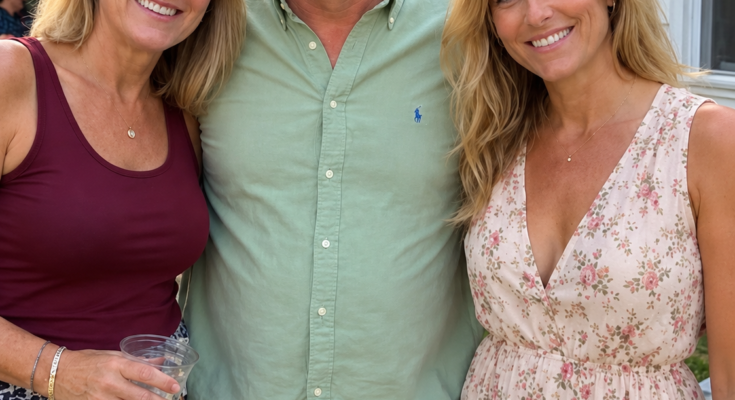
Today, there is one photograph from that anniversary dinner that I kept.
It was taken before the slideshow.
Mark is smiling.
Rachel is smiling.
I am standing between them.
For years, I hated that picture.
Now I see something different.
I see a woman who did not yet know what was about to happen.
But who was going to survive it.
And if I could speak to her now, I wouldn’t warn her.
I wouldn’t tell her to check the phone sooner.
I would simply say:
What they do next will break your heart.
But it will not get to decide who you become afterward.