
Part One — Mom’s Emergency Fund
My mom is seventy years old. She has never had much money, but over the years she managed to put aside about $5,000 for emergencies.
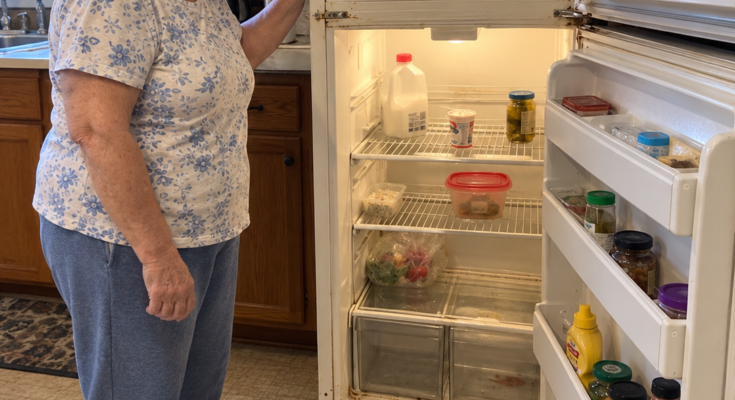
One Saturday, I stopped by her house and noticed towels spread across the kitchen floor.
Her refrigerator had finally died.
The light didn’t work, water was leaking underneath it, and the milk inside was barely cold.
“Mom, you need a new refrigerator.”
She looked embarrassed.
“I know.”
“I’ll take you shopping.”
She stared at the floor.
“Honey, I don’t have the money right now.”
That confused me.
“What happened to your emergency savings?”
After a long silence, she said, “I lent it to Lauren.”
Lauren was my brother Daniel’s wife.
Apparently, six months earlier, she’d come to Mom crying because she’d damaged her SUV and didn’t have enough insurance coverage to repair it.
She promised to repay every dollar.
She hadn’t returned a cent.
I called her immediately.
“Lauren, when are you paying Mom back?”
She laughed.
“Oh, please. I needed that money more than she did.”
I couldn’t believe what I was hearing.
“Her refrigerator just died.”
Lauren sighed.
“Why does your mother even need five thousand dollars? She’s retired. She sits home all day. What does she spend money on? Socks?”
Something inside me went very still.
Mom’s seventy years of life had apparently become worthless to Lauren because she no longer had a job.
I didn’t argue.
Instead, I smiled.
“You know what? You’re right.”
Lauren went quiet.
“What?”
“I’m hosting dinner tomorrow. You and Daniel should come.”
She sounded pleased.
“Sure.”
After hanging up, I made another phone call.
The person on the other end listened to everything.
Then he became very quiet.
Finally he said, “I’ll be there.”
The next evening, Lauren walked into my dining room wearing a new designer handbag.
She was smiling until she saw the man already sitting beside her chair.
Her face went completely white.
“Dad?”
Her father folded his hands on the table.
“Hello, Lauren.”
Then he placed a bank receipt in front of her.
And said, “Would you like to explain where the other $5,000 went?”
━━━━━━━━━━━━━━━━━━━━
Part Two — The Money She Borrowed Twice
Lauren stared at the receipt.
Daniel looked between them.
“What other five thousand?”
Lauren’s father, Frank, didn’t answer him immediately.
He kept looking at his daughter.
“Go ahead,” he said. “Tell them.”
Lauren swallowed.
“Dad, this isn’t—”
“Tell them.”
I’d spoken to Frank the previous afternoon because I knew Lauren sometimes borrowed money from her parents too.
I expected him to be surprised.
Instead, he had said something that stunned me.
“I already gave her the money to repay your mother.”
Two months earlier, Lauren had called him crying.
She told him she was ashamed because she still owed my seventy-year-old mother $5,000.
Frank had transferred exactly $5,000 into her account.
He even wrote REPAY HELEN in the transfer memo.
Daniel picked up the receipt.
His face changed.
“You told me your dad gave you money for your credit card.”
Lauren said nothing.
Frank leaned back.
“So Helen gave you $5,000 for the car. Then I gave you $5,000 to repay Helen.”
He pointed toward her.
“That’s ten thousand dollars you’ve received.”
My brother stared at his wife.
“Where is it?”
Lauren’s eyes filled with tears.
“I had expenses.”
“What expenses?”
She looked toward me as if I were the one betraying her.
I didn’t say anything.
Frank did.
“Is that one of them?”
He pointed at the handbag hanging from the back of her chair.
Lauren grabbed it immediately.
“It was on sale.”
Daniel actually laughed.
Not because anything was funny.
Because sometimes disbelief comes out sounding like laughter.
“How much?”
Lauren didn’t answer.
“Lauren. How much was the bag?”
“Twenty-eight hundred.”
Mom, who had been sitting quietly beside me, looked up.
“You spent almost three thousand dollars on a purse while my refrigerator was leaking onto the floor?”
Lauren’s cheeks turned red.
Then she made the mistake that changed the entire evening.
“It’s my money. I can buy whatever I want.”
Frank stared at her.
“No, sweetheart.”
His voice was calm.
“That was exactly the problem.”
“It wasn’t your money.”
━━━━━━━━━━━━━━━━━━━━
Part Three — What Mom Finally Learned to Say
For the first time since dinner began, Mom spoke firmly.
“I’d like my money back.”
Lauren looked at her.
Mom had always been soft-spoken.
She was the person who apologized when someone bumped into her grocery cart.
The person who sent birthday cards to relatives who hadn’t called her in years.
The person who would insist she wasn’t hungry if there wasn’t enough food for everyone.
Lauren had mistaken kindness for weakness.
Apparently, so had the rest of us.
Lauren folded her arms.
“I don’t have five thousand dollars.”
Frank nodded toward the handbag.
“You have $2,800 hanging on that chair.”
“It’s used now. I can’t return it.”
“Then sell it.”
Her mouth fell open.
“Dad!”
“I’m not giving you another dollar.”
She looked at Daniel.
He didn’t rescue her either.
Instead, my brother asked a question I could tell he was afraid to hear answered.
“How much debt do you actually have?”
Lauren looked down.
“That’s not relevant.”
“It became relevant when you borrowed from my seventy-year-old mother and lied about paying her back.”
Lauren started crying.
Normally, Mom’s instinct would have been to comfort her.
That night, she didn’t move.
Eventually, the truth came out.
Lauren had nearly $19,000 in credit card debt.
The damaged SUV wasn’t the reason she was broke.
It was only the emergency that exposed how broke she already was.
Clothes.
Handbags.
Weekend trips.
Restaurant bills.
Online shopping.
Small purchases that became large balances.
Large balances she hid from Daniel.
When money became tight, she borrowed from family rather than change how she lived.
And Mom had been the easiest person to ask because Lauren knew she wouldn’t chase her for repayment.
Daniel pushed his chair away from the table.
“You laughed at my mother when she asked for her own money?”
Lauren wiped her face.
“I didn’t mean it like that.”
I finally spoke.
“You asked what a retired woman could possibly need money for.”
Lauren looked at me.
“She needed a refrigerator.”
Nobody said anything for several seconds.
Then Mom surprised all of us.
“I could’ve needed nothing.”
We turned toward her.
She continued.
“I could have had a perfectly good refrigerator and five thousand dollars sitting in the bank for the next ten years.”
Her voice trembled, but she kept going.
“It would still have been mine.”
Frank nodded slowly.
“Exactly.”
Mom looked directly at Lauren.
“I worked forty-three years. Your father-in-law and my husband are both gone. I don’t know how long I’ll live. I don’t know what medical bills I’ll have. I don’t know what will break next.”
Then she said the sentence I think Lauren finally understood.
“Being old doesn’t mean I’ve finished needing security.”
Lauren started crying harder.
This time, I didn’t enjoy seeing it.
I’d imagined this dinner as a lesson.
Maybe even a little revenge.
But sitting there watching my sister-in-law crumble, I realized something important.
Lauren wasn’t some cartoon villain.
She was irresponsible.
Entitled.
And she’d treated my mother terribly.
But underneath all of that was a woman who had spent years pretending she could afford a life she couldn’t.
Humiliating her wouldn’t give Mom her money back.
Changing something might.
Frank pushed a sheet of paper toward Lauren.
It wasn’t a lawsuit.
It wasn’t some dramatic legal document.
It was a budget.
He had printed it before coming.
“I’ll help you fix this,” he said. “But I’m never financing it again.”
Lauren looked at him.
“What does that mean?”
“It means you sell what you don’t need. You stop using the credit cards. You and Daniel make a real budget.”
Then he pointed toward Mom.
“And Helen gets paid first.”
Daniel nodded.
“Agreed.”
Lauren looked at my mother.
For the first time all evening, there was no defensiveness in her face.
“I’m sorry.”
Mom didn’t immediately say it was okay.
I was proud of her for that.
Instead, she said, “I hope someday I believe you.”
That was fair.
The next morning, I took Mom refrigerator shopping.
I paid for the refrigerator.
She protested.
“I don’t want you fixing Lauren’s mistake.”
“I’m not.”
I smiled.
“This is your birthday present six months early.”
She narrowed her eyes.
“My birthday isn’t for eight months.”
“Then I’m extremely organized.”
She laughed.
It was the first time she’d laughed about any of it.
We found a simple refrigerator she liked.
Nothing fancy.
When the delivery men installed it, Mom opened the door and stood admiring the bright interior light as though we’d bought her a new car.
“Look at all that space,” she said.
I laughed.
“Mom, it’s a refrigerator.”
“It’s a very nice refrigerator.”
Lauren sold the handbag.
Then several pairs of designer shoes.
Then clothes she had barely worn.
Her first repayment to Mom was $1,500.
After that, she transferred $350 every month.
Sometimes $400.
Once only $200 when the car needed another repair.
But she always called Mom beforehand.
No excuses.
No disappearing.
Eleven months after our dinner, Lauren came to Mom’s house with an envelope.
Inside was the final $300.
Mom counted it and put it inside a small lockbox.
Lauren smiled awkwardly.
“Are we okay?”
Mom thought about it.
“We’re getting there.”
I loved that answer.
Not cruel.
Not fake.
Honest.
Then Mom surprised her.
“Would you like some coffee?”
Lauren nodded.
They sat at the kitchen table for almost two hours.
I don’t know everything they discussed.
I didn’t need to.
Their relationship never became especially close, but it became respectful.
And Lauren changed.
Not overnight.
Real change rarely works that way.
She and Daniel met with a financial counselor.
They paid down the credit cards.
She stopped hiding purchases.
Two years later, she even called me laughing because her favorite handbag had become one she’d found at a thrift shop for $18.
“Character development,” I told her.
“Shut up,” she said, laughing.
But the person who changed the most was Mom.
A few months after everything happened, one of her cousins called asking to borrow $700.
I happened to be sitting beside her.
Mom listened politely.
Then she said:
“I’m sorry, but I don’t lend from my emergency savings anymore.”
I nearly fell out of my chair.
After she hung up, she looked at me.
“What?”
I grinned.
“Nothing.”
“You look ridiculous.”
“I’m proud of you.”
She smiled.
“So am I.”
That $5,000 taught all of us something.
Lauren learned that borrowing money doesn’t make it yours.
Daniel learned that avoiding difficult conversations about money doesn’t protect a marriage.
I learned that defending someone you love doesn’t always mean fighting their battles for them.
And Mom learned perhaps the most important lesson of all:
Being generous does not require making yourself vulnerable.
You can be kind and still say no.
You can love someone and still expect them to keep their promises.
You can help people without becoming the place they dump the consequences of their choices.
Mom’s emergency fund is back above $5,000 now.
The refrigerator still works beautifully.
And taped inside one of her kitchen cabinets is a little note she wrote herself.
I saw it one afternoon while putting away a mug.
It says:
“My kindness is a gift, not a debt I owe everyone else.”
I didn’t tell her I’d seen it.
I simply closed the cabinet and smiled.
Because Lauren wasn’t the only person who learned a lesson she’d never forget.