Part 1: The Layoff
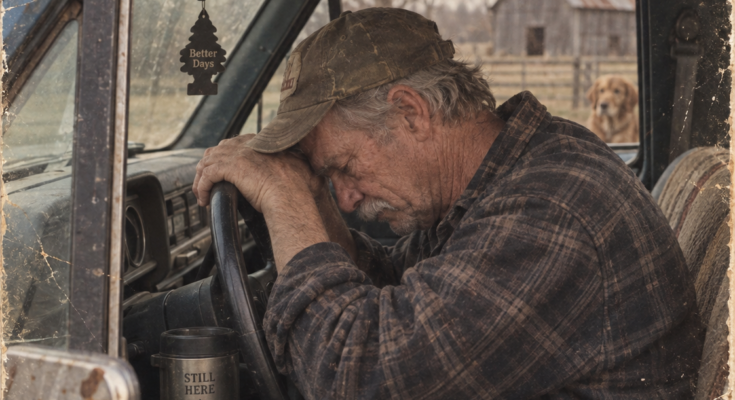
When the Oregon sawmill where he worked for 32 years finally shut its doors, Earl Jenkins handed over his hard hat, walked out to his rusted Ford F-150, and sat in the steering wheel silence for nearly an hour because he was too ashamed to go home and tell his family he was finished.
The morning the pink slips came down, Earl didn’t yell. He didn’t kick a tire or curse the management. He just folded his yellowed layoff notice, slipped it into his chest pocket next to his reading glasses, and drove straight past his house to the edge of the tree line.
At 59 years old, Earl was a man built out of sawdust, diesel smoke, and four decades of hard labor. He knew how to read the grain of a Douglas fir like a pastor reads scripture. He could tell you within a quarter-inch where a log would split before the blade even touched the bark, and he had spent thirty-two years keeping younger men from losing their fingers to the headrig.
But none of that mattered to a spreadsheet. The mill was gone, the local economy was cratering, and Earl felt like an old piece of scrap iron left out in the rain to rust.
For three weeks, he barely left the porch. He sat in his green vinyl recliner, staring at his calloused, grease-stained hands. When his wife, Martha, gently suggested he look into the county retraining program, Earl just shook his head. “Martha, nobody wants a fifty-nine-year-old sawyer,” he whispered, his voice cracking. “My hands only know how to do one thing, and the world doesn’t need it anymore.”
Then his niece, Sarah, showed up on a Tuesday afternoon. Sarah was a counselor at the county vocational school, and she didn’t take no for an answer. “Uncle Earl, I need you to come speak to my trade class tomorrow,” she said, leaning against the kitchen counter. “They’re sixteen and seventeen years old. Half of them think success is clicking buttons on a phone. They need to see a real craftsman.”
Earl looked down at his boots. “I ain’t no public speaker, Sarah. And besides, I’m unemployed. What am I gonna tell a bunch of kids? How to lose a job?” “Just tell them what you know,” she said quietly. “Please.”
Out of pure family obligation, Earl put on his cleanest flannel shirt the next morning, greased his work boots, and drove to the vocational center. When he walked into the classroom, twenty pairs of teenage eyes stared back at him. They looked bored, restless, and utterly indifferent to the gray-haired man standing by the chalkboard.
Earl stood there for a long, heavy moment. His mouth was dry. He felt small, out of place, and deeply embarrassed.
Then, he reached into his pocket and pulled out a small, worn piece of oak timber he’d kept in his truck for a decade. He set it hard on the front table. The heavy thud cut through the classroom chatter.
“This here is white oak,” Earl began, his voice raspy but steady. “Most folks look at a piece of wood and just see something to burn or build a fence with. But if you don’t respect the grain, it’ll kick back on the saw and take your arm off before you can scream.”
The room went dead silent.
What happened next would change Earl’s life forever. Keep reading to find out what happens next. 👇
I know you’re curious to see what happens next, so please be patient and continue reading in the comments below. Thank you for understanding the inconvenience. Please leave a “YES” below and give us a Like to get the full story. 👇to part 2.
—
Part 2: The Lesson
Earl didn’t read from notes. He just started talking about the life he had lived. He explained how to listen to the whine of an industrial saw blade to know when the motor was overheating. He taught them how to spot hidden rot inside a sixty-foot log before it ruined a load. He spoke about the danger, the precision, and the silent trust that exists between men who handle dangerous machinery together every single day.
For forty minutes, Earl wasn’t a laid-off worker. He was a master of his craft. He walked down the aisles, showing them his hands—showing them the faint white scar across his thumb where a stray splinter had caught him in 1994, and the thick, flattened knuckles that came from three decades of heavy rigging.
He told them about the dozens of young men he had trained over the years, boys who arrived at the mill reckless and left as honest, steady providers for their families. He explained that a good sawyer doesn’t just cut wood—he knows which timber is strong enough to become the load-bearing beams of a home, and which timber is destined for the waste pile.
“You respect the wood,” Earl said, leaning his heavy hands on the front podium. “And you respect the man standing next to you. That’s the only way everybody goes home to their family at five o’clock.”
Near the back of the room, a young boy in a faded denim jacket raised his hand. He looked up at Earl with a mixture of awe and genuine confusion. “Mr. Jenkins,” the boy asked softly, “if you were so good at what you did… why do you look so sad?”
The question hit Earl right in the chest. The room was so quiet you could hear the hum of the fluorescent lights. Earl looked down at his boots, taking a deep, shaky breath. He swallowed hard, trying to keep his composure in front of twenty strangers.
“Because son,” Earl said, his voice dropping to a near whisper, “sometimes the job disappears before your skills do. And when that happens, you start to wonder if you were ever really worth anything at all.”
Nobody spoke. A girl in the second row wiped a tear from her cheek. The boy in the denim jacket just nodded, looking at Earl with deep, quiet respect.
When the bell rang, the students didn’t rush out like they usually did. One by one, they lined up at the front table. They didn’t ask for advice on resumes or job applications. They just shook Earl’s heavy, calloused hand, looked him in the eye, and said, “Thank you, sir.”
After the last student left, Earl stood alone in the empty classroom, packing his piece of oak back into his pocket. His hands were trembling slightly.
The door opened, and a tall man with graying hair and a grease-stained apron walked in.
What happened next would change everything. Keep reading to find out what happens next. 👇
I know you’re curious to see what happens next, so please be patient and continue reading in the comments below. Thank you for understanding the inconvenience. Please leave a “YES” below and give us a Like to get the full story. 👇to part 3.
—
Part 3: The Reckoning
It was Jim, the lead industrial equipment instructor for the vocational program. “Earl,” Jim said, walking over and offering a hand. “I sat in the back for the last twenty minutes.”
Earl lowered his head, feeling a sudden wave of self-consciousness. “Sorry if I rambled on, Jim. I ain’t used to talking that much.”
“Earl, I’ve been trying to teach these kids equipment safety and work ethic for five years,” Jim said, looking him straight in the eye. “I can teach them how to pass a written test, but I can’t teach them what thirty-two years of pride looks like. I can’t teach them what you just gave them.”
Jim pulled an official application folder from under his arm and laid it on the desk. “Our head safety instructor retired last month,” Jim said softly. “It’s thirty hours a week. Paid by the county. I need somebody who knows what a machine can do to a man if he doesn’t respect it. I need somebody who knows how to turn these kids into men.”
Earl stared at the paperwork. He looked at the bold print at the top of the page: *Instructor Application.* “You want me?” Earl asked, his voice barely audible. “Jim… I don’t have a college degree.”
“You’ve got thirty-two years of keeping men alive and doing honest work,” Jim replied with a warm, steady smile. “That’s better than any degree on earth. What do you say?”
Earl didn’t answer right away. He thought about Martha, who had been worried about him for weeks. He thought about the mill, now silent and empty. He thought about the twenty students who had shaken his hand. And he thought about the boy in the denim jacket, who had asked the question that broke his heart.
“I say yes,” Earl whispered.
He started the following Monday. The first few weeks were hard. He wasn’t used to standing in front of a classroom. He wasn’t used to lesson plans or attendance sheets or the constant hum of fluorescent lights. But he was used to teaching. He had been teaching his whole life—showing young men how to hold a saw, how to read a grain, how to stay safe. This was just a different classroom.
The students loved him. They loved his stories. They loved his hands. They loved the way he never talked down to them, never made them feel stupid, never gave up on them. He treated them like the men they were becoming, not the boys they had been.
Darius, the boy in the denim jacket, became his star student. He stayed after class every day, asking questions, practicing techniques, soaking up everything Earl had to teach. “You remind me of my dad,” Darius said one afternoon. “He was a mechanic. He died last year. I miss him.”
Earl put his hand on Darius’s shoulder. “I’m sorry, son. But you’re going to be okay. You’ve got good hands. You’ve got a good head. And you’ve got a future.”
Darius smiled. It was the first real smile Earl had seen from him.
The program grew. More students enrolled. More instructors were hired. Earl became the heart of the vocational school, the man everyone went to for advice, the man who never stopped believing in second chances.
He worked there for ten more years. He retired at sixty-nine, surrounded by students who had become like sons to him. He kept the piece of white oak in his pocket until the day he died. And he never forgot the question that had changed his life: *If you were so good at what you did, why do you look so sad?*
Because the answer had set him free. He wasn’t sad because he was worthless. He was sad because he had forgotten his worth. But the students reminded him. The classroom reminded him. And the sawdust trail he had walked for thirty-two years led him exactly where he was meant to be.
The End. ❤️