Part Three: What Caleb Shouted
The next morning at 7:12, my phone rang from an unknown number. Something made me answer.
“Mr. Williams? This is Marisol from Greenridge Community Bank. Your father and your brother came in right when we opened.” Her voice dropped. “They’re demanding access to your daughter’s medical fund.”
My spine went cold.
“Your father is claiming the money was promised to the family. Your brother is very upset. He said something about the surgery being a waste because Emma is only—”
She stopped. But Caleb didn’t. I heard him in the background, loud enough to slice through the phone.
“Tell him to stop acting holy! She’s not even his real daughter, and everybody but him has known it for six years!”
I sat down hard on my kitchen floor.
My father’s voice snapped at Caleb to shut up. My mother’s trembled somewhere behind them. Marisol, mortified, apologized and said she’d need to end the call, that bank policy prohibited releasing any information without my authorization regardless of what my family claimed.
I called my mother back myself an hour later, my hands steadier than I expected. She cried before I even asked the question, which told me everything before her actual answer did.
“Emma’s mother told me before she left,” my mother admitted. “A paternity mix-up, years ago, before Emma was even born. She wasn’t certain, but she suspected. I told your father. We decided it wasn’t our place to say anything, that it would only hurt you.”
“You decided that six years ago,” I said, “and then let it sit there, apparently as leverage, the moment my brother needed money more than he needed to keep a secret.”
I did what any responsible parent would do once a claim like that surfaces — I quietly arranged a paternity test through Emma’s pediatrician, not because it would change anything about how I felt about her, but because I needed the truth settled cleanly, on my terms, away from Caleb’s shouting and my parents’ decades of managed silence.
The results came back three weeks later. Emma was, unquestionably, my biological daughter. Whatever her mother had once suspected, whatever my parents had chosen to believe and hide for six years rather than simply asking me directly, had been wrong from the start — and even if it hadn’t been, I understood, sitting with those results in my hand, that it wouldn’t have changed a single thing about the six years of braids and fever nights and grocery math that had actually made me her father.
I sent my parents one final message after that, calm and complete. I told them the results, told them I knew exactly what kind of family they’d chosen to be the day they hid that rumor for six years rather than simply loving their granddaughter unconditionally regardless of a rumor’s outcome. I told them the accounts stayed closed, the doors stayed locked, and that Emma would grow up with grandparents who showed up or with none at all — I wasn’t interested in teaching her that love was something people performed only when convenient.
Caleb’s wedding happened without our attendance. My parents reached out sporadically over the following year, each attempt a little more desperate, a little less convincing. I kept the door closed.
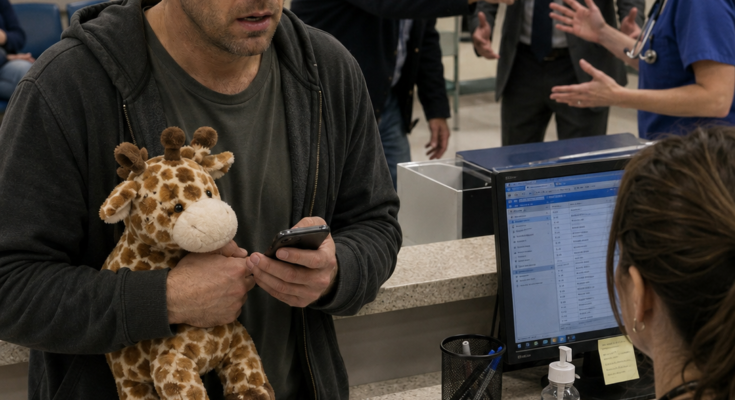
Emma is seven now. Her arm healed fully, exactly the way the surgeon promised it would. She still sleeps with that stuffed giraffe some nights, though these days it’s more out of habit than necessity. She’s never once asked about her grandmother’s balloon again.
Some families teach you that love is unconditional through eleven years of quiet proof. Others teach you, in one devastating phone call, exactly how conditional it was the whole time — and the bravest thing you can do, once you finally hear it clearly, is close every door they thought they still had a key to.
— The End —