PART 3 — My Son-in-Law Expected a Promotion. Instead, He Found Me in the Chairman’s Chair.
At 8:47 Thursday morning, I walked into the headquarters of Bennett Freight Holdings for the first time in nearly six years.
The receptionist looked up from her desk.
For a moment, she simply stared.
Then she stood so quickly that her chair rolled backward.
“Mr. Bennett?”
I smiled.
“Good morning, Patricia.”
Her eyes widened.
“Sir, we weren’t told you were coming.”
“I thought I’d surprise a few people.”
She looked toward the elevators.
Then back at me.
A small smile appeared.
“Well, I imagine you will.”
I had known Patricia for twenty-two years.
She started working for us when her youngest son was still in kindergarten. Eleanor used to bring Christmas cookies for the entire office, and Patricia always saved the chocolate ones for him.
Now that little boy was a married man with children of his own.
Time had moved forward.
But apparently, some people had forgotten who built the place.
Richard Mercer stepped out of the elevator carrying a leather briefcase.
He wore a charcoal suit and the same serious expression he’d worn through almost three decades of legal meetings.
“Harold.”
“Richard.”
He looked me over.
“Ready?”
I glanced toward the boardroom upstairs.
“As ready as I’ll ever be.”
We rode the elevator in silence.
On the fifth floor, the doors opened onto a hallway lined with photographs.
Our first delivery truck.
Our original warehouse.
A ribbon-cutting ceremony from 1994.
And near the conference room, a framed photograph of Eleanor and me standing beside the first two trucks we’d bought with borrowed money.
I stopped.
In the photograph, Eleanor was thirty-four.
Her hair was tied back with a red scarf.
She had grease on one cheek because she’d spent the afternoon helping me repair a hydraulic line.
I remembered that day.
We were exhausted.
Nearly broke.
And happier than two people with an overdue electricity bill had any right to be.
Eleanor had looked at those trucks and said, “One day, Harold, we’re going to build something our children can be proud of.”
I touched the edge of the frame.
Richard waited quietly.
Then I straightened my jacket.
“Let’s go.”
Inside the boardroom, five independent directors were already seated.
Our chief executive officer, Helen Park, stood when I entered.
“Harold.”
Her eyes filled.
Helen had joined the company as a dispatcher thirty-one years earlier. I’d watched her work her way through operations, regional management, and eventually into the chief executive role.
She had earned every promotion.
I shook her hand.
“Good to see you, Helen.”
She looked at Richard.
“Are the auditors ready?”
“Yes.”
“Security?”
“Standing by, discreetly.”
I nodded.
I wasn’t there to create a spectacle.
I was there to protect a company that employed more than three hundred people.
People with mortgages.
Children.
College tuition.
Medical bills.
Families depending on their paychecks.
Derek seemed to have forgotten that.
But I hadn’t.
I took my place at the head of the table.
A small brass plaque stood in front of me.
HAROLD BENNETT — CHAIRMAN.
I ran my thumb over the edge.
Eleanor had given it to me on my sixtieth birthday.
“Just in case you forget who you are,” she’d joked.
I almost laughed at the memory.
Then the conference room door opened.
And my son-in-law walked in.
Derek wore a navy suit that probably cost more than my first truck.
His hair was perfectly styled.
He carried a leather portfolio and smiled like a man about to receive the biggest promotion of his career.
Vanessa followed him.
She wore a cream-colored dress and the diamond earrings Eleanor had given her on her wedding day.
My stomach tightened when I saw them.
Derek was talking before he even reached the table.
“Morning, everyone. I know this meeting was called on short notice, but I’m pleased we’re finally having a serious discussion about leadership succession.”
Then he looked toward the chairman’s seat.
His smile disappeared.
He stopped walking.
“Harold?”
I folded my hands on the table.
“Good morning, Derek.”
He stared at me.
For several seconds, he didn’t move.
Then he looked at Richard.
“What is this?”
Richard gestured toward the available chairs.
“Please sit down.”
Derek remained standing.
“Why is he here?”
I looked at him calmly.
“Because this is my company.”
His face reddened.
“Your company?”
“Yes.”
He gave a nervous laugh.
“Harold, with respect, you’ve been retired for years.”
“From daily operations.”
I glanced toward the directors.
“Not from my responsibilities as controlling shareholder and chairman.”
The room went quiet.
Vanessa stepped forward.
“Daddy?”
I turned toward her.
She looked confused.
Almost frightened.
“What’s going on?”
I studied my daughter’s face.
For forty-three years, Eleanor and I had done everything we could to give Vanessa a good life.
We hadn’t always made the right choices.
I knew that.
But I never imagined she’d become someone who could leave her seventy-one-year-old father at a cemetery nearly two hundred miles from home.
“Sit down, Vanessa.”
She looked at Derek.
He didn’t move.
Instead, he placed his portfolio on the table.
“Harold, I think there’s been some misunderstanding.”
I almost smiled.
“Has there?”
“Yes.”
He cleared his throat.
“The board called this meeting to discuss the company’s future.”
“That’s correct.”
“And my role in that future.”
I nodded.
“That too.”
His confidence returned slightly.
“Well, good.”
He pulled out a chair.
“Then let’s discuss the succession plan.”
I looked at Richard.
“Before we begin, would you confirm the current ownership structure?”
Richard opened his folder.
“Bennett Freight Holdings is controlled through the Bennett family trust. Mr. Bennett retains voting authority over the trust’s seventy-eight percent ownership interest under the governing documents.”
Derek’s expression changed.
Richard continued.
“Mr. Bennett also remains chairman of the board. No resolution appointing a successor chairman or promising Mr. Callahan a future presidency has been adopted.”
Vanessa stared at me.
“Dad, I thought—”
I looked at her.
“What?”
She swallowed.
“Derek said the company was going to be ours someday.”
I felt something cold settle in my chest.
Ours.
Not even hers.
Theirs.
I turned toward Derek.
“Did you tell my daughter that?”
He looked irritated.
“Harold, let’s not get distracted by semantics.”
“Did you tell her?”
He sighed.
“I told her we were preparing for the next generation.”
I nodded slowly.
“The next generation of what?”
He stared at me.
Then I continued.
“Leadership is earned, Derek. It isn’t something you receive because you married the founder’s daughter.”
His jaw tightened.
“You hired me because you believed in my abilities.”
“Yes.”
I took a breath.
“And I now have serious questions about how you’ve used the responsibility we gave you.”
The room became very still.
Helen opened a folder.
Richard placed another in front of Derek.
My son-in-law glanced down.
Then frowned.
“What is this?”
“An independent review of certain company transactions,” Richard answered.
Derek gave a dismissive laugh.
“Accounting problems?”
Helen looked at him.
“No, Derek. Questions about payments authorized by your department.”
He leaned back.
“Fine. Send them to my controller.”
“We already did,” Helen said.
“And?”
“He couldn’t identify the services supposedly provided.”
Derek’s smile vanished.
I watched him carefully.
This was the man who had told me to walk home from Eleanor’s grave.
The man who had suggested putting me in a care facility.
The man who had called himself the future president of a company I spent thirty-eight years building.
Now he looked down at the financial records and began turning the pages faster.
Richard spoke.
“Over eighteen months, Bennett Freight Holdings made payments totaling approximately four hundred sixteen thousand dollars to a consulting company controlled by you.”
Derek looked up.
“That’s ridiculous.”
Richard slid another document across the table.
“Is this your company?”
Derek hesitated.
Then nodded.
“Yes, but—”
“And did you disclose your ownership interest to the board when those payments began?”
No answer.
Helen leaned forward.
“Our outside auditors also found invoices for services they could not verify. Several approvals appear to have been made using credentials or signatures that were not authorized for those transactions.”
Derek’s face began turning red.
“This is a witch hunt.”
I said nothing.
Richard continued.
“One recent transfer was for eighty-seven thousand dollars.”
He placed the transaction record on the table.
“That payment carried what appeared to be Mr. Bennett’s authorization.”
Derek nodded immediately.
“Exactly.”
I looked at him.
“I didn’t authorize it.”
He waved one hand.
“Harold, you’ve signed hundreds of documents over the years. You can’t possibly remember every approval.”
I reached into my jacket pocket.
Then placed a small folded document on the table.
My independent capacity evaluation.
“I’m seventy-one, Derek.”
He stared at it.
“I know.”
“I have arthritis in my hands. I sometimes forget where I leave my reading glasses. I occasionally walk into a room and can’t remember why.”
Several directors smiled faintly.
I continued.
“But according to the qualified physician who evaluated me yesterday, I remain capable of understanding and making my own financial and personal decisions.”
Derek’s expression darkened.
“What does that have to do with anything?”
I looked directly at him.
“It means you don’t get to explain away a questioned signature by telling everyone I’m old.”
Vanessa shifted in her chair.
“Daddy, nobody said—”
I turned toward her.
“You did.”
She froze.
I reached for my phone.
Then read the message she’d sent Wednesday afternoon.
Dad, Derek says we should sell your house and move you somewhere smaller. You’ve obviously become confused.
I placed the phone on the table.
“That’s what you wrote.”
Vanessa stared at her lap.
Then Richard spoke.
“We also have evidence that your husband contacted a private care facility before the cemetery trip, indicating he expected to assume control of my client’s affairs.”
Derek stood abruptly.
“This is absurd!”
Helen remained calm.
“Derek, please sit down.”
He looked around the table.
“What does any of this have to do with my promotion?”
For a moment, nobody spoke.
Then one of the independent directors, a man named Philip Warren, leaned forward.
“Mr. Callahan, we are not discussing a promotion.”
Derek stared at him.
Philip continued.
“We are discussing serious financial-control concerns involving your department.”
My son-in-law’s face drained of color.
He looked toward me.
“Harold, you can’t be serious.”
I thought about the cemetery.
The gray sky.
The white roses resting against Eleanor’s headstone.
The sound of their SUV disappearing beyond the gates.
Then I remembered the text.
You’re a burden. Walk home.
I looked at him.
“Derek, four days ago you left me at a cemetery a hundred ninety miles from home.”
Vanessa covered her mouth.
He started shaking his head.
“That’s a personal matter.”
“Yes.”
My voice remained steady.
“And you seem to believe personal matters have no consequences.”
I leaned forward.
“The company is not a family allowance. The employees are not here to finance your lifestyle. And being married to my daughter does not entitle you to use corporate money as though it belongs to you.”
Derek’s face hardened.
“You’re doing all this because we left you at the cemetery?”
“No.”
I shook my head.
“That was the moment I stopped making excuses for you.”
I glanced toward the accounting records.
“This investigation concerns financial conduct that began long before Sunday.”
Helen took over.
“Pending completion of the independent review, you are being placed on administrative suspension, effective immediately, with company access restricted.”
Derek stared at her.
“You can’t do that.”
Helen’s expression didn’t change.
“I can take that employment action within my authority as chief executive, and the board has been informed.”
He looked toward me.
“Harold!”
I said nothing.
Richard continued.
“Company devices, records, and relevant communications will need to be preserved. You will receive written instructions through counsel.”
Derek’s hands began trembling.
“This is my career.”
Helen looked at him.
“And three hundred employees depend on us addressing these issues properly.”
For the first time, Derek had no answer.
Then he turned toward Vanessa.
“Say something.”
My daughter looked at him.
Then at me.
Her eyes were full of tears.
“Dad, please.”
I felt my heart tighten.
There it was again.
Please.
The word she used whenever she wanted something.
When she was sixteen and wanted a car.
When she was twenty-four and needed help paying a deposit.
When she married Derek and asked me to give him an opportunity at the company.
I had said yes so many times.
I had mistaken agreement for love.
And perhaps, somewhere along the way, I’d taught her to do the same.
“Vanessa,” I said quietly, “this isn’t something I can fix by making another exception.”
She started crying.
“Daddy, you’re destroying our lives.”
I looked at her for a long moment.
Then I asked something I’d been wanting to ask since Sunday.
“When you left me at your mother’s grave, did you think about whether I’d get home?”
She stared at me.
Derek immediately interrupted.
“Oh, for God’s sake. He was perfectly capable of calling a car.”
I turned toward him.
“Then why did you text me to walk home?”
He froze.
I held up my phone.
The message was still there.
You’re a burden. Walk home.
Derek’s face turned crimson.
Vanessa began crying harder.
I turned toward her.
“And thirty seconds later, you wrote, ‘Don’t wait, Dad.’”
She covered her face.
I waited.
“Did you mean it?”
She shook her head.
“Daddy—”
“Did you mean it?”
Finally, she whispered, “We were angry.”
I nodded slowly.
“So was I.”
My voice trembled.
“But I would never have left you stranded on a freezing road to teach you a lesson.”
She began sobbing.
Richard gently cleared his throat.
“Mr. Bennett, we should return to the corporate matters.”
He was right.
The meeting was not the place to settle forty-three years of family history.
So I looked toward Helen.
“Please proceed.”
The board reviewed the audit findings.
Questions were asked.
Records were preserved.
Derek was given instructions concerning the investigation and an opportunity to respond through the appropriate process.
And when the meeting ended, he was no longer exercising authority over company funds, contracts, or personnel.
There was no dramatic police raid.
No handcuffs.
No judge suddenly appearing to declare him guilty.
Real accountability rarely happens that quickly.
But Derek walked out of that boardroom knowing the financial decisions he’d made were finally being examined by people he could not intimidate.
And the promotion he’d been expecting?
It was never discussed again.
As security accompanied him to collect his personal belongings under supervision, he turned toward me.
“This isn’t over, Harold.”
I looked at him.
“No, Derek.”
I folded my hands.
“I’m afraid it isn’t.”
Then he left.
Vanessa stayed.
For several minutes, she sat at the table staring at the empty doorway.
The directors had gone.
Helen had returned to her office.
Richard stood near the window, giving us privacy without leaving the room entirely.
Finally, Vanessa whispered, “Dad, how could you do that to him?”
I looked at her.
“How could I protect the company?”
She shook her head.
“He’s my husband.”
“I know.”
“You’ve destroyed his career.”
I took a slow breath.
“Vanessa, I didn’t authorize those transfers.”
She looked away.
“I didn’t create those invoices.”
Silence.
“And I didn’t tell him to use company funds without proper disclosure.”
Her shoulders began shaking.
Then she said something that chilled me.
“He said you’d never notice.”
I stared at her.
“What?”
She covered her mouth.
Too late.
I’d heard her.
“Vanessa.”
She began crying.
“Daddy, I didn’t mean—”
“What did Derek tell you?”
She shook her head.
“I don’t know.”
I leaned forward.
“Look at me.”
She raised her eyes.
My daughter looked frightened.
For a moment, I saw the little girl who used to climb into my lap when thunderstorms shook the house.
But I couldn’t let that memory answer for the woman sitting in front of me.
“Did you know he was taking money from the company?”
She swallowed.
“I knew he had a consulting business.”
“That isn’t what I asked.”
She looked down.
“He said it was all legitimate.”
I waited.
“He told me the board didn’t need to know about every business arrangement.”
My stomach tightened.
“And you believed him?”
She wiped her eyes.
“I wanted to.”
I sat back.
It was such a small sentence.
But it explained so much.
She wanted to believe him.
So she stopped asking questions.
Just as she had wanted to believe I was confused.
Just as she’d wanted to believe I was becoming a burden.
Because believing those things made it easier to accept whatever Derek promised her.
Then I asked the question I was most afraid to hear answered.
“Vanessa, did you help him obtain my signature?”
She became very still.
I watched the color leave her face.
Finally, she whispered, “I sent him a copy.”
My chest tightened.
“A copy of what?”
“One of your old signed letters.”
I closed my eyes.
It had been a letter I’d written to Eleanor on our fortieth anniversary.
I’d signed it in blue ink.
Vanessa had found it while helping sort some of her mother’s belongings.
I remembered her taking a photograph because she said the letter was beautiful.
My own daughter had given Derek an image of my signature.
“Why?” I asked.
She started crying.
“He said he needed a sample for company paperwork.”
I looked at her.
“And you didn’t ask why he couldn’t obtain the necessary authorization directly?”
She shook her head.
“I didn’t think.”
I stared at her.
For a long time, neither of us spoke.
Then I said, “Vanessa, you need your own attorney.”
Her head lifted.
“What?”
“You need independent legal advice. And you need to tell the investigators the truth.”
She looked terrified.
“Are you going to have me arrested?”
My heart broke.
Not because I wanted her shielded from consequences.
Because she had finally realized that what she’d done might have serious consequences.
“Vanessa, I don’t control who gets charged with a crime.”
She began crying harder.
“And I won’t use my position to protect you from an investigation.”
She looked down.
I continued.
“But I also won’t allow anyone to frighten you into lying.”
She wiped her face.
“Derek says you’ll turn on me if I tell anyone what happened.”
I stared at her.
“He told you that?”
She nodded.
I felt a terrible sadness settle inside me.
Derek had spent years convincing my daughter that loyalty meant protecting him.
And somehow, in the process, she’d begun treating her own father as an enemy.
I looked toward Richard.
Then back at Vanessa.
“You are my daughter.”
Her face crumpled.
“I will always love you.”
She reached toward me.
But I continued.
“That doesn’t mean I can pretend you didn’t hurt me.”
She slowly lowered her hand.
“And it doesn’t mean I can ignore what happened at the company.”
She nodded through her tears.
For the first time that morning, she wasn’t arguing.
She was listening.
Then she whispered, “Are you going to take the house away from me?”
I stared at her.
“My house?”
She nodded.
“Derek said you were going to leave everything to us eventually.”
I closed my eyes.
There it was.
The expectation.
The assumption that everything I’d built already belonged to someone else.
“Vanessa, your mother and I spent thirty-eight years building a company and forty-three years building a marriage.”
My voice trembled.
“We didn’t do those things simply to create an inheritance.”
I looked directly into her eyes.
“We did them because we wanted a meaningful life.”
She began crying again.
“And I would have been delighted to leave you something someday.”
I paused.
“But I am still alive.”
Those words seemed to surprise her.
I continued.
“I have a home I love. Friends. Work I still care about. Years I hope to enjoy.”
My eyes filled.
“And I’m not going to surrender any of that because you and Derek have decided my life should be over.”
She covered her face.
For several minutes, neither of us spoke.
Then Richard approached quietly.
“Harold, the car is ready.”
I nodded.
I stood slowly.
Vanessa looked up.
“Daddy, please don’t leave.”
The words struck me.
Four days earlier, I’d stood beside Eleanor’s grave asking for ten more minutes.
And Vanessa had left.
Now she was the one asking me to stay.
I looked at her.
“We have a lot to discuss, Vanessa.”
She nodded desperately.
“I know.”
“But not today.”
Her face fell.
“I need time.”
She began crying again.
Then I said something I wished I’d understood years earlier.
“Loving you doesn’t mean I have to make every painful consequence disappear.”
I picked up my coat.
“And being your father doesn’t mean you get to decide when I’m finished hurting.”
I walked out.
Richard followed.
Neither of us spoke until we reached the elevator.
Then he looked at me.
“Are you all right?”
I stared at the closing doors.
“No.”
He nodded.
“Fair enough.”
We rode down in silence.
At the lobby, Patricia stood beside the reception desk.
She smiled gently.
“Mr. Bennett, it was good seeing you again.”
I stopped.
“Thank you, Patricia.”
She hesitated.
Then said, “Mrs. Bennett would have been proud of you today.”
My eyes filled immediately.
I looked toward the old photograph on the wall.
Eleanor in her red scarf.
Me beside her.
Two borrowed trucks.
A dream we’d barely known how to begin.
I swallowed.
“I hope so.”
Patricia smiled.
“I’m certain.”
I walked outside.
And for the first time since Eleanor died, I felt both terribly lonely and strangely free.
The investigation continued for more than a year.
Derek hired attorneys.
He disputed some of the findings.
Claimed the consulting work had been legitimate.
Insisted the authorization records were misunderstood.
But the independent auditors continued reviewing the evidence.
They identified payments to companies he controlled, inconsistent approval records, and invoices that could not be supported by actual services.
Eventually, Bennett Freight pursued recovery through civil proceedings and referred evidence of suspected criminal conduct to the appropriate authorities.
Derek’s employment was terminated after the company’s formal review.
Later, prosecutors brought charges involving the diversion of company funds and falsified records.
I attended only the court proceedings my attorneys advised were necessary.
I didn’t want to turn the process into a personal campaign.
The truth mattered.
But I didn’t need to watch every moment of Derek’s downfall.
When he eventually entered a guilty plea to theft-related charges and became subject to restitution and sentencing, I felt no triumph.
Only exhaustion.
Part of the money was recovered through financial settlements and asset recovery.
The rest became subject to repayment obligations.
The company survived.
Our employees continued receiving their paychecks.
And Helen led Bennett Freight through a difficult year with the kind of steady judgment that made me proud I’d entrusted her with daily operations.
One afternoon, she called.
“Harold, the board approved the updated financial controls.”
I smiled.
“Good.”
She hesitated.
“There’s something else.”
“What?”
“We’re naming the new employee emergency-assistance fund after Eleanor.”
My throat tightened.
I sat down.
“Eleanor?”
“Yes.”
Helen’s voice softened.
“She helped so many employees over the years. We thought it was time we made that part of her legacy official.”
I closed my eyes.
Eleanor used to keep grocery gift cards in her desk.
Whenever an employee had a sick child, a broken-down car, or an unexpected expense, she’d quietly find a way to help.
She never made speeches about it.
Never asked for recognition.
She simply believed that people who worked hard shouldn’t have to face every crisis alone.
I wiped my eyes.
“She would’ve loved that.”
Helen smiled through the phone.
“I thought so.”
That evening, I went into Eleanor’s old study.
I opened the drawer where she’d kept her letters.
And reread the one she’d left me.
Harold, if Vanessa ever makes you feel like you have to buy her love, remember this: you already gave her everything a father should. Don’t give her your dignity, too.
I sat with those words for a long time.
Then I did something I’d been putting off.
I updated my estate plan.
With Richard and independent advisers, I reviewed the family trust, succession arrangements, and my own future care.
I made sure no one could quietly assume authority over my personal affairs without the legal process and protections required.
I established clear instructions about my home.
My medical decisions.
The people I trusted.
And what would happen to my company when I was no longer able to oversee my ownership interests.
I didn’t disinherit Vanessa out of anger.
But I removed assumptions that had never belonged in the plan.
She would not automatically control a business simply because she was my daughter.
And Derek would never again have an opportunity to manage company assets on the strength of a family connection.
Much of the future estate would support charitable programs Eleanor had cared about, including scholarships for children of our employees.
The rest would be distributed according to a carefully considered plan.
For the first time, I wasn’t making decisions to keep someone from being upset.
I was making them because they were right for the life Eleanor and I had built.
Vanessa contacted me repeatedly.
At first, her messages sounded familiar.
Dad, please stop punishing us.
You’re making everything worse.
Mom would never have wanted this.
Those hurt.
Especially the last one.
Because Eleanor had been gone two years, and Vanessa was still trying to use her mother’s memory to make me surrender.
I didn’t answer those messages.
Then, about three months after the board meeting, the tone changed.
Dad, I met with my own attorney today.
A week later:
I’ve told the investigators everything I know about the signature and the emails.
Then:
I started counseling. I’m beginning to understand things I didn’t want to see.
I read every message.
But I didn’t rush to respond.
A week of honesty couldn’t erase years of entitlement.
And I needed to learn something too.
For most of Vanessa’s life, I’d mistaken rescuing her for loving her.
When she forgot assignments, Eleanor and I helped finish them.
When she damaged her first car, I paid for the repairs.
When she struggled financially, I wrote checks.
And when Derek asked for a position at Bennett Freight, I gave him one despite the concerns of several experienced managers.
I had made it so easy for my daughter to avoid consequences that I’d never taught her how to face them.
That was my mistake.
Not the theft.
Not the abandonment.
Not the campaign to portray me as incapable.
Those were choices Vanessa and Derek made.
But I had helped build a family dynamic where saying no was treated like betrayal.
And now I was finally changing it.
Six months after the board meeting, Vanessa wrote me a letter.
Not a text.
Not a voicemail.
A handwritten letter.
It arrived in a plain white envelope.
I recognized her handwriting immediately.
Dear Dad,
I don’t expect you to forgive me because I’ve finally found the courage to apologize.
I’ve spent months trying to understand how I became the kind of daughter who could leave her father at a cemetery and then blame him for being upset.
The truth is, I was angry that you wouldn’t give us your house. I was angry that you wouldn’t promise Derek the company. I told myself you were being stubborn and unfair.
And when Derek said you needed a lesson, I agreed.
I stopped reading.
My hands were shaking.
Then I continued.
I knew you couldn’t walk a hundred ninety miles. I knew your car was in the shop. I knew it was cold.
I convinced myself you’d find a ride because admitting what we were doing was cruel would have meant facing something ugly about myself.
Tears filled my eyes.
When I wrote “Don’t wait, Dad,” I wanted you to feel rejected.
I wanted you to be frightened enough to come back and give us what we wanted.
I closed my eyes.
There it was.
The truth I’d been waiting for.
Not an excuse.
Not a misunderstanding.
An admission.
I continued.
I’ve spent my life believing you would always fix everything.
And when you finally refused, I treated you like an enemy.
I don’t know whether you can forgive me.
I don’t know whether I’ll ever forgive myself.
But I want you to know that I understand what I did.
You deserved to stand at Mom’s grave for as long as you needed.
You deserved a ride home.
You deserved a daughter who cared more about your grief than her dinner plans.
I’m sorry.
Vanessa.
I folded the letter.
Then sat in Eleanor’s chair and cried.
Not because the apology fixed everything.
It didn’t.
But because, for the first time since that Sunday, my daughter seemed to understand that she’d hurt a person.
Not a bank account.
Not a shareholder.
Not an elderly man standing between her and an inheritance.
Her father.
A man who had loved her from the moment she was born.
I placed the letter beside Eleanor’s photograph.
And waited.
Two more months passed.
Vanessa separated from Derek.
She found a small apartment.
Got a job outside the family business.
And began paying her own bills without asking me for help.
She continued cooperating with the investigations through her own attorney and accepted scrutiny of her role in providing my signature sample.
I watched from a distance.
Not because I wanted her to suffer.
Because I needed to see whether her changes existed when nobody was rewarding her for them.
One Sunday afternoon, she called.
I answered.
“Hello, Vanessa.”
For a moment, she didn’t speak.
Then she began crying.
“Hi, Dad.”
I closed my eyes.
“Hello, sweetheart.”
She cried harder.
It had been months since I’d called her that.
Finally, she whispered, “Can I ask you something?”
“Yes.”
“Could we have coffee sometime?”
I looked toward the garden.
The roses Eleanor planted were beginning to bloom again.
I thought about the cemetery.
The boardroom.
The letter.
The years before any of it happened.
Then I said, “We can try.”
Vanessa began crying again.
“Thank you.”
I took a breath.
“But we’re going to take this slowly.”
“I know.”
“And I’m not discussing money, property, or the company.”
“I understand.”
“Then we can have coffee.”
We met the following Wednesday.
At a little diner Eleanor used to love.
Vanessa arrived early.
She was already sitting in a booth when I walked in.
No designer handbag.
No expensive coat.
Just jeans, a simple blouse, and a nervous smile.
She stood when she saw me.
“Dad.”
I looked at her.
“Vanessa.”
For a moment, neither of us moved.
Then she asked, “Can I hug you?”
The question nearly broke me.
She was forty-two years old.
And for the first time in longer than I could remember, she was asking rather than assuming.
I nodded.
She hugged me.
Carefully.
And I held her.
Not as tightly as I once would have.
But enough.
We sat down.
Ordered coffee.
And talked.
Not about the company.
Not about Derek.
Not about inheritance.
We talked about her job.
The books she was reading.
The little apartment she’d rented.
And how she’d started cooking because she couldn’t afford restaurant meals every night.
I told her about the garden.
My old friend Arthur’s terrible golf game.
The employees’ scholarship program.
And how Patricia was retiring next spring.
Sometimes the conversation felt awkward.
Sometimes it felt surprisingly natural.
At one point, Vanessa looked down at her coffee.
“Dad?”
“Yes?”
“Do you think Mom would be disappointed in me?”
The question hurt.
I thought about Eleanor.
Her kindness.
Her stubbornness.
The way she loved Vanessa fiercely while still expecting her to tell the truth.
I took a breath.
“I think your mother would have been deeply hurt by what happened.”
Vanessa’s eyes filled.
I continued.
“But I also think she’d want you to become someone who never treats another person that way again.”
She nodded.
“I want that too.”
I looked at her.
“Then keep working toward it.”
She wiped her cheeks.
“I will.”
We finished our coffee.
Then said goodbye.
No grand reconciliation.
No promise that everything would return to normal.
Just one father and daughter beginning a conversation they’d avoided for far too long.
Over the following year, we met occasionally.
Sometimes for lunch.
Sometimes for a walk.
Once, Vanessa helped me plant flowers in Eleanor’s garden.
She arrived in old sneakers and spent three hours pulling weeds.
At the end of the afternoon, she looked exhausted.
I smiled.
“Your mother would’ve told you to wear gloves.”
Vanessa laughed.
“She would’ve.”
Then she looked toward the rosebushes.
Her smile faded.
“I miss her.”
I nodded.
“Every day.”
She sat beside me on the garden bench.
For a while, neither of us spoke.
Then she whispered, “I’m sorry I left you with her grave that day.”
My throat tightened.
I looked toward the roses.
“I know.”
She began crying.
“I wish I could take it back.”
I nodded slowly.
“So do I.”
We sat together until the sun began setting.
And for the first time in years, we were simply two people missing the same woman.
Not negotiating.
Not demanding.
Not trying to prove who had been hurt more.
Just grieving.
That was when I realized our relationship might someday become something healthy again.
Not because the past was gone.
But because we were finally able to speak about it without pretending it hadn’t happened.
The next November, on the third anniversary of Eleanor’s death, I drove to the cemetery myself.
My car was repaired.
I had no reason to depend on anyone.
But the night before, Vanessa called.
“Dad?”
“Yes?”
“Would you mind if I came with you tomorrow?”
I was quiet.
She quickly added, “I can drive separately. And if you want to be alone, I understand.”
I looked toward Eleanor’s photograph on the mantel.
For a long moment, I thought about my answer.
Then I said, “You can come.”
Vanessa exhaled.
“Thank you.”
The next morning was cold.
Gray clouds covered the sky.
The same kind of weather we’d had the year before.
I parked near the cemetery gates.
Vanessa arrived five minutes later.
She stepped out carrying white roses.
Eleanor’s favorite.
We walked toward the grave together.
Not quickly.
There was no reason to hurry.
When we reached the headstone, Vanessa knelt down and placed the roses beside it.
“Hi, Mom,” she whispered.
I stood quietly.
She wiped her eyes.
“I’m sorry I haven’t been here enough.”
Then she began crying.
I looked away.
For once, I didn’t feel responsible for rescuing her from her grief.
I let her have it.
After several minutes, she stood.
Then turned toward me.
“Dad, would you like some time alone?”
The question surprised me.
I nodded.
“Yes.”
She smiled through her tears.
“Take as long as you need.”
Then she walked toward a bench near the cemetery path.
And waited.
I knelt beside Eleanor’s grave.
My knees protested.
My hands were cold.
And for a moment, it felt as though no time had passed.
“Hello, sweetheart.”
The words came out quietly.
I brushed a few leaves from the headstone.
Then told her everything.
About the company.
The audit.
Helen’s leadership.
The scholarship fund carrying her name.
Derek’s legal troubles.
And Vanessa.
Especially Vanessa.
I told her our daughter was trying.
That she was finally working.
Paying her bills.
Learning to listen.
Learning that love wasn’t something she could demand in exchange for good behavior.
I told Eleanor I still had difficult days.
That some mornings I woke up angry.
Some evenings I missed her so badly I couldn’t bear to sit at our kitchen table.
And sometimes I wondered whether I’d done enough as a father.
Then I remembered her letter.
Don’t give her your dignity, too.
I smiled through my tears.
“You were right, Ellie.”
The wind moved gently through the cemetery trees.
I stayed beside the grave for almost forty minutes.
Nobody hurried me.
Nobody complained.
Nobody reminded me they had somewhere more important to be.
When I finally stood, Vanessa was still sitting on the bench.
She saw me and rose.
“Ready, Dad?”
I nodded.
“Yes.”
She walked beside me toward the parking lot.
At the gate, she hesitated.
Then asked, “Would you like to get lunch?”
I looked at her.
“Are you sure you have time?”
Her eyes filled immediately.
She understood what I meant.
Last year, she hadn’t been willing to give me ten more minutes.
Now she stood beside me, carrying her mother’s roses, asking whether I wanted to spend the afternoon together.
She swallowed.
“I have all afternoon.”
I smiled faintly.
“Then lunch sounds nice.”
We went to a small restaurant nearby.
We talked about Eleanor.
Her terrible singing.
The way she burned toast but insisted it was supposed to be that dark.
How she kept Christmas decorations up until the end of January because she said January needed the help.
We laughed.
We cried.
And for the first time since she died, speaking about Eleanor with my daughter didn’t leave me feeling completely alone.
Our relationship still isn’t perfect.
I don’t know whether it ever will be.
There are some things you cannot simply erase.
A cruel message.
An abandoned parent.
A scheme to take control of someone’s property.
A husband who stole from the family business.
And a daughter who chose to believe the worst about her father because it made getting what she wanted easier.
Those things happened.
They mattered.
And pretending otherwise would only repeat the mistake we’d spent years trying to correct.
But Vanessa is changing.
Not through grand gestures.
Through small, consistent choices.
She calls when she says she will.
Respects my decisions.
Asks instead of demanding.
And when I say no, she accepts it.
That last part still feels remarkable.
As for me, I remain chairman of Bennett Freight Holdings, though I leave daily operations to Helen and her team.
The company is doing well.
We’ve strengthened financial controls.
Expanded our employee assistance programs.
And returned to the principle Eleanor and I built the business around.
A company isn’t successful simply because its owners become wealthy.
It’s successful when people can depend on it.
I still live in the same house.
I still tend Eleanor’s roses.
I still drink coffee from the chipped blue mug she gave me on our thirtieth anniversary.
And I still miss her more than I know how to explain.
But I’m no longer waiting for my daughter to decide whether I deserve a place in my own life.
I know the answer.
I always should have.
Last week, I found the old photograph of Eleanor and me standing beside our first two trucks.
I took it out of its frame and looked at the back.
In Eleanor’s handwriting were the words:
We started with two trucks, a borrowed toolbox, and a whole lot of nerve.
Underneath, she’d added:
Whatever happens, Harold, don’t forget that we built this together.
I laughed through my tears.
Then I put it back in the frame.
Because that was the truth Derek never understood.
He looked at Bennett Freight and saw a fortune waiting to be inherited.
Vanessa looked at our house and saw property that would eventually belong to her.
But I looked at those things and remembered the years behind them.
The nights Eleanor and I worried about payroll.
The winters our trucks broke down.
The employees who trusted us.
The sacrifices.
The laughter.
The life we’d built.
Those things weren’t simply assets.
They were the work of two people who had spent nearly four decades trying to create something worthwhile.
And I wasn’t going to let anyone take that away from me because I’d grown old.
Sometimes people ask what happened when Derek walked into the boardroom expecting a promotion.
They expect me to smile.
Tell them how frightened he looked.
Describe the moment he realized I was sitting in the chairman’s chair.
And yes, I remember those things.
I remember his expensive suit.
The leather portfolio.
The confidence draining from his face.
The way he suddenly stopped calling the company his future.
But that wasn’t the most important moment.
The most important moment came four days earlier.
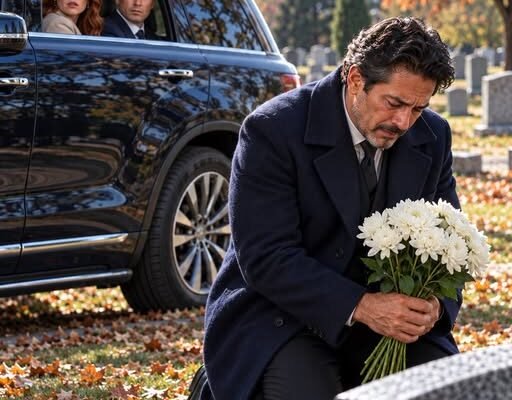
At Eleanor’s grave.
When I read those messages.
You’re a burden. Walk home.
Don’t wait, Dad.
I remember standing there in the cold, feeling something inside me settle.
I had spent years trying to make my daughter happy.
I had given her opportunities.
Money.
Second chances.
And more forgiveness than she probably understood.
But at seventy-one, I finally realized that being a father didn’t mean I had to surrender my dignity to remain loved.
I could love Vanessa and still say no.
I could hope she’d change without pretending she’d done nothing wrong.
I could protect the company without becoming cruel.
And I could grieve my wife without allowing anyone to tell me how long I was permitted to stand beside her grave.
That was what changed my life.
Not the boardroom.
Not the lawyers.
Not the financial investigation.
The simple realization that I was still a person whose wishes mattered.
A person entitled to respect.
A person whose life was not over simply because his children had started making plans for what he would leave behind.
My daughter and son-in-law abandoned me at a cemetery because they thought I had become powerless.
Four days later, they discovered I was still the man responsible for the company they expected to inherit.
But the greatest lesson wasn’t that I had money or authority.
It was that neither of those things determined my worth.
Eleanor had loved me when we had two broken trucks and barely enough money to pay the electric bill.
She loved me when the business grew.
And she loved me when my hair turned gray and I started forgetting where I’d left my glasses.
Her love had never depended on what I could give her.
That’s how I finally understood what I’d been missing with Vanessa.
I didn’t need a daughter who admired my fortune.
I needed a daughter who remembered I was her father.
And when she eventually sat beside me in that little restaurant after visiting Eleanor’s grave, I saw the beginning of that possibility.
Not a perfect ending.
Not a guarantee.
Just an honest beginning.
Sometimes that is enough.
I still keep Derek’s message on my phone.
Not because I enjoy remembering it.
But because it reminds me of the day I stopped confusing sacrifice with love.
“You’re a burden. Walk home.”
He thought those words would frighten me into obedience.
Instead, they reminded me that I still had a life worth protecting.
And in the end, I did walk home.
Not one hundred ninety miles down a highway.
But back to the values Eleanor and I had built our life upon.
Back to the company we’d worked so hard to create.
Back to the quiet dignity I’d almost allowed other people to take from me.
And most importantly, back to the understanding that growing older does not mean becoming less deserving of respect.
I was seventy-one.
I was a widower.
I was grieving.
But I was not helpless.
And the greatest thing I reclaimed that week wasn’t my company.
It was the right to live the rest of my life on my own terms.