My Husband Finished His Dinner While I Begged Him to Save My Life. Three Days Later, the Police Discovered the Secret His Family Had Been Hiding for Years.
The first time I begged my husband to save my life, he looked directly into my eyes and told me I deserved what was happening.
Then he returned to the dinner table.
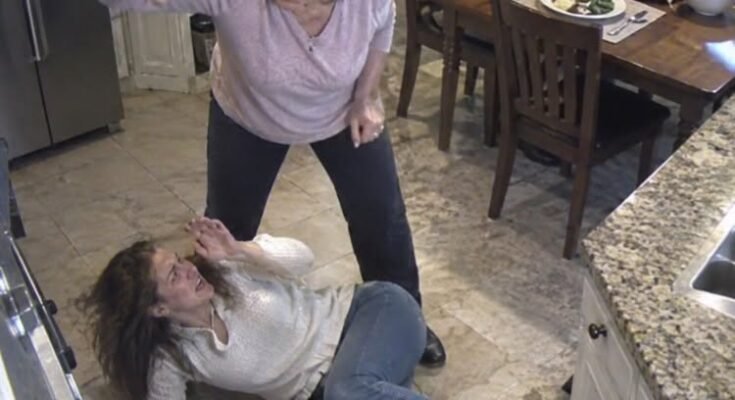
I was lying on the kitchen floor, struggling to breathe, while his mother calmly reached for another serving of mashed potatoes.
His father turned up the television.
And my husband, the man who had promised to love and protect me, picked up his fork.
I remember thinking something strangely ordinary.
*He’s going to finish the pot roast.*
Even if I die here, he’s going to finish his dinner.
Three days later, that same husband stood in a hospital hallway demanding to see me.
His mother was beside him, screaming that she had every right to enter my room.
But when hospital security finally checked the room where they’d expected to find me, the bed was empty.
By then, I had already told the police what happened.
What I didn’t know was that they had uncovered something much worse.
**The attack hadn’t begun with a pot roast. It had begun months earlier, with a secret plan involving my savings, my identity, and a life-insurance policy I had never signed.**
And the person behind it wasn’t who I initially suspected.
My name is Claire. I’m thirty-two years old, and until recently, I believed the worst thing about my marriage was that my husband loved his mother more than he loved me.
I was wrong.
The worst thing was that his family had been using me for years.
When I married Michael, I was twenty-eight.
He was thirty-one, handsome in an ordinary, approachable way, with sandy-brown hair, gentle blue eyes, and a smile that made strangers trust him.
He remembered little things.
How I liked my coffee.
Which side of the bed I preferred.
The fact that I couldn’t fall asleep without a fan running.
On our wedding night, he held my face between his hands and promised me we’d build a beautiful life together.
“We’re going to have our own house, Claire. A backyard, a big kitchen, maybe a couple of kids running around someday.”
I believed him.
When he suggested living with his parents temporarily to save money, it sounded practical.
His parents owned a house outside Columbus, Ohio.
It had four bedrooms, a spacious kitchen, and a backyard that bordered our elderly neighbor’s property.
“We’ll stay six months,” Michael promised. “A year at the absolute most.”
His mother, Diane, welcomed us with a smile that never quite reached her eyes.
She was sixty-two, with a carefully maintained silver-blond bob, perfectly manicured nails, and a habit of examining people as if she were looking for flaws.
His father, Robert, was sixty-five.
He had close-cropped gray hair, thick glasses, and the quiet, watchful manner of someone who noticed everything but rarely volunteered an opinion.
At first, they were pleasant enough.
Diane called me sweetheart.
Robert asked about my job.
Michael seemed delighted to have everyone together.
But the warmth began disappearing almost immediately.
The first argument was about laundry.
I’d accidentally washed one of Diane’s delicate blouses with ordinary clothing.
“You’ve ruined it,” she announced.
The blouse looked perfectly fine.
I apologized anyway.
Then came complaints about cooking, cleaning, electricity, and groceries.
If I bought inexpensive food, I was cheap.
If I bought something nice, I was wasting money.
If I worked late, I neglected my family.
If I came home early, I apparently had too much free time.
Michael always had the same response.
“She’s just set in her ways, Claire. Don’t take everything so personally.”
Eventually, Diane stopped pretending we were equals.
“This is my house,” she’d remind me whenever we disagreed.
And Michael would look away.
I worked full-time as an office administrator for a medical supply company.
The pay wasn’t extraordinary, but it was steady.
Michael convinced me that combining our income would help us save faster.
He took charge of our finances.
“You’re already working hard enough,” he said. “Let me handle the money.”
At first, I found his willingness to manage everything reassuring.
Then it became impossible to see where my salary was going.
Every month, nearly my entire paycheck disappeared into an account Michael controlled.
When I asked for a statement, he said he’d show me later.
When I asked how much we’d saved, he mentioned unexpected expenses.
Whenever I suggested opening a separate account, he acted hurt.
“Don’t you trust your own husband?”
So I stopped asking.
That was how our six-month arrangement became four years.
Four years without a home of our own.
Four years without children.
Four years of wondering why two full-time incomes never seemed to produce any savings.
My parents worried.
My mother called frequently during our first year of marriage.
She asked whether I was happy.
Whether Michael treated me well.
Whether I needed anything.
Michael hated those calls.
“Your mother thinks I’m some kind of failure,” he’d complain afterward.
Eventually, he started telling me she had insulted him behind my back.
Then he claimed my parents wanted us to divorce.
I didn’t believe him at first.
But when every conversation became an argument, I started calling home less often.
The last time I visited my parents, my mother hugged me for an unusually long time.
“Claire, you don’t seem like yourself.”
“I’m just tired, Mom.”
She touched my cheek.
“You know you can always come home, right?”
I smiled.
“Of course.”
But I didn’t believe I’d ever need to.
I thought marriage meant working through difficulties.
I thought being patient made me a good wife.
And I thought if I tried hard enough, Michael would eventually choose me.
By our fourth anniversary, I knew something had to change.
It wasn’t one dramatic event.
It was a thousand small humiliations.
Diane criticizing me in front of visitors.
Robert silently watching while Michael demanded access to my phone.
Michael dismissing my concerns about money.
And the constant feeling that every room in that house belonged to someone else.
One Friday afternoon at work, I searched for apartments.
I found a modest one-bedroom place in Westerville.
It wasn’t fancy.
There was an older kitchen, beige carpeting, and a small balcony overlooking a parking lot.
But when I saw the photographs, I almost cried.
Because I imagined myself standing in that kitchen without anyone shouting at me.
I imagined buying groceries without being interrogated.
I imagined sleeping through the night without wondering who might be angry in the morning.
I scheduled a viewing for Monday.
I also arranged to speak with someone at my credit union.
I wanted to learn what had happened to our savings before deciding how to separate my finances.
I did everything from my work computer.
I didn’t tell Michael.
I didn’t tell Diane.
And I certainly didn’t tell Robert.
**I had finally decided to leave, but I hadn’t told a single person in that house.**
Or so I thought.
That Saturday, I quietly gathered copies of my pay stubs, identification, and employment records.
I put them in a blue folder.
Then I slipped the folder behind some winter sweaters in our bedroom closet.
I wasn’t prepared to leave immediately.
I had only a few hundred dollars Michael didn’t know about.
But for the first time in years, I had a plan.
Sunday morning began strangely.
I was making coffee when Michael walked into the kitchen.
He wore his navy-blue polo shirt and khaki pants.
He seemed unusually relaxed.
“Got any plans tomorrow?” he asked.
I kept my eyes on the coffee maker.
“Just work.”
He leaned against the counter.
“Really?”
“Why?”
He smiled.
“Because you might want to cancel that apartment appointment.”
My hand froze.
I turned around.
“What apartment appointment?”
His expression didn’t change.
“Don’t play games, Claire.”
I felt my heart pounding.
“Michael, what are you talking about?”
He stepped closer.
“You’re not going anywhere. You understand?”
For a moment, I couldn’t speak.
Then he laughed.
“Relax. I’m kidding.”
But there was nothing funny about his eyes.
I spent the rest of the morning wondering whether he’d seen something on my phone.
Maybe an email notification.
Maybe a search history.
I told myself there had to be an innocent explanation.
I had become very good at inventing those.
Around noon, Diane announced that she wanted pot roast for dinner.
“Something decent for once,” she added.
I went grocery shopping.
When I returned, Robert was sitting at the dining table with his laptop open.
He closed it quickly.
I noticed a stack of envelopes beside him.
One had the logo of a financial company printed in the corner.
He turned the envelope facedown.
“Everything all right, Claire?”
“Yes.”
“Good.”
He smiled faintly.
“Best not to worry yourself about things you don’t understand.”
I had heard versions of that sentence throughout my marriage.
From all three of them.
I went into the kitchen and began cooking.
The house smelled of roasting beef, onions, and garlic.
I peeled potatoes.
Washed green beans.
Set the table.
I knew Diane’s doctor had recently advised her to reduce sodium because of her high blood pressure.
So I used less salt than usual.
I thought she might appreciate it.
That evening, I changed into a comfortable gray sweater and jeans and tied my long dark-brown hair into a ponytail.
Then I carried dinner to the table.
Michael sat beside me.
Diane wore her favorite red cardigan.
Robert, in a pale-blue button-down shirt, had the television on in the adjoining living room.
The first few minutes were peaceful.
Then Diane took a bite of roast.
Her fork struck the plate.
“What the hell is this?”
I looked up.
“Is something wrong?”
“This meat tastes like cardboard!”
“I’m sorry. I thought since your doctor said you needed to reduce your salt—”
She stared at me.
“My doctor?”
I immediately regretted speaking.
“I just meant—”
“So now you’re telling me I’m sick?”
“No, Diane.”
“You’re probably hoping I’ll drop dead so you and my son can steal my house!”
My face burned.
“That’s not true.”
She pushed her chair back.
“Don’t call me a liar!”
I looked at Michael.
“Please. Tell her I didn’t mean anything by it.”
He continued cutting his roast.
“Claire, just apologize.”
“But I didn’t—”
“Apologize.”
I lowered my eyes.
“I’m sorry, Diane.”
She stared at me for several seconds.
Then she walked into the kitchen.
I thought she was going to add salt to her food.
Instead, I heard a drawer slam.
When she returned, she was holding our heavy wooden rolling pin.
Something about her expression made my stomach turn.
“Diane?”
She stepped toward me.
“Maybe someone needs to teach you some respect.”
Before I could react, she swung.
The first blow struck my shoulder.
I cried out and stumbled backward.
“Diane! Stop!”
She came toward me again.
I backed into the counter.
A ceramic bowl fell and shattered.
My left leg twisted beneath me as I hit the tile.
The pain was immediate and overwhelming.
I screamed Michael’s name.
“MICHAEL! HELP ME!”
He was sitting less than ten feet away.
He didn’t stand.
He didn’t shout.
He didn’t even put down his fork.
Diane continued screaming about respect, gratitude, and everything she believed I’d done wrong.
I tried to protect myself.
My shoulder burned.
My ribs hurt so badly that I couldn’t take a full breath.
Then I heard the television volume increase.
I turned my head.
Robert had picked up the remote.
He was watching a game show.
As if nothing unusual were happening.
As if his daughter-in-law weren’t lying helpless on the floor.
When Diane finally stepped away, I could barely move.
I looked at Michael.
“Please,” I whispered. “Help me.”
He pushed his chair back.
For one beautiful second, I believed he was coming to rescue me.
He crouched beside me.
Then he grabbed my chin.
His fingers tightened against my cheeks.
“Listen carefully, Claire.”
His blue eyes were completely cold.
**”If you ever disrespect my mother again, you’ll regret it.”**
“Michael… she hurt me.”
“Then maybe you should learn your place.”
He released my face.
Stood up.
And returned to dinner.
I watched him pick up his fork.
I watched Diane sit down.
I heard Robert laugh at something on television.
And I understood that the three people in that room were perfectly willing to leave me there.
For years, I’d confused Michael’s control with love.
I’d confused my own silence with patience.
I’d convinced myself that if I became a better wife, everything would improve.
But lying on that cold kitchen floor, I finally understood.
**My husband wasn’t failing to protect me. He was choosing not to.**
I didn’t know how badly I was injured.
My left leg wouldn’t support any weight.
Every breath sent pain through my ribs.
I wondered whether I was bleeding internally.
I wondered whether I would lose consciousness before anyone noticed.
Then I looked toward the kitchen window.
Months earlier, Michael had installed wooden security panels across its lower section.
He’d said they were necessary because of neighborhood break-ins.
I’d never questioned him.
Now those panels blocked my only possible escape.
My phone was upstairs.
I couldn’t reach the front door without crossing the dining room.
And the three people who should have helped me were still eating.
I waited until their attention returned to the television.
Then I began dragging myself across the tile.
Every movement hurt.
I reached a drawer beneath the counter and found an old metal tool.
My fingers trembled as I worked at the panel fasteners.
One came loose.
Then another.
At one point, I heard Diane laughing.
“Honestly, Robert, some women are so dramatic.”
Michael chuckled.
I pressed my sleeve against my mouth to keep from making a sound.
Eventually, I loosened enough wood to create a narrow opening.
I squeezed through.
The edge scraped against my injured shoulder.
My leg caught briefly.
I nearly screamed.
Then I fell onto the wet grass outside.
The air was cold.
The ground smelled of rain and soil.
For several seconds, I couldn’t move.
Through the window, I could see the warm light of the kitchen.
I could see the table.
The plates.
The ordinary little scene of a family finishing dinner.
Nobody came looking for me.
I began crawling.
Our neighbor, Mrs. Parker, lived on the other side of the backyard.
She was sixty-nine, with short white curls and a habit of leaving homemade cookies on our doorstep around Christmas.
She had always been kind.
I’d never told her about my marriage.
I was too ashamed.
But now her house was my only chance.
I dragged myself across the grass.
One arm.
Then the other.
My injured leg trailing behind me.
By the time I reached her steps, I could barely see.
I lifted my fist and knocked.
Once.
Twice.
The porch light flickered on.
The door opened.
“Claire?”
Mrs. Parker stared at me.
Her expression changed from confusion to horror.
“Oh, my God. Sweetheart, what happened?”
I tried to answer.
All I could say was, “Please.”
She knelt beside me.
“Stay with me, honey. I’m calling 911.”
She wrapped a blanket around my shoulders.
I remember her crying as she spoke to the emergency dispatcher.
I remember sirens approaching.
A paramedic asking me my name.
Then everything disappeared.
When I opened my eyes, I was in a hospital.
Bright lights glowed above my bed.
My left leg was immobilized.
Bandages covered part of my shoulder.
A nurse with kind brown eyes stood beside me.
“Hi, Claire. My name is Hannah.”
Her dark curls were pulled back into a neat bun.
“You’re in the hospital. You’re safe right now.”
I started crying.
Hannah waited patiently.
When I finally calmed down, she explained my injuries.
Two cracked ribs.
Extensive bruising.
A serious injury to my left leg involving damaged ligaments and a small fracture near my knee.
My shoulder would need time to heal.
I listened without speaking.
Then Hannah asked, “Is there someone you trust that we can call?”
I immediately thought of Michael.
And then I remembered him sitting at the dinner table.
I shook my head.
“Not my husband.”
“That’s okay.”
She pulled up a chair.
“Is there anyone else?”
I remembered my mother.
For four years, I’d avoided her calls.
I’d listened when Michael said she wanted to ruin our marriage.
I’d let months pass without visiting.
Now all I wanted was to hear her voice.
“Can I call my mom?”
Hannah handed me a phone.
My fingers trembled as I dialed.
My mother answered on the third ring.
“Hello?”
“Mom?”
Silence.
Then a breath.
“Claire?”
I tried to explain.
Instead, I began sobbing.
“Mom… they almost killed me.”
She gasped.
“Oh, sweetheart. Where are you?”
“I’m in the hospital.”
“What happened?”
“I can’t… I can’t explain everything.”
Her voice broke.
Then it became firm.
“Listen to me carefully. I’m coming. You’re not going back to that house.”
**For the first time in years, someone was protecting me without asking what I’d done to deserve protection.**
My mother arrived that evening.
When she saw my injuries, she covered her mouth.
I expected questions.
Maybe disappointment.
Maybe anger that I’d ignored her warnings.
Instead, she sat beside me and held my hand.
“I’m here now,” she whispered.
That was all.
I cried harder than I had when Diane attacked me.
The next morning, a hospital social worker and a police officer spoke with me.
They explained that I could report the assault, request protection, and prevent Michael and his parents from visiting.
I agreed to cooperate.
The officer photographed my injuries, took my statement, and asked about the house.
I told him everything I could remember.
Including the security camera mounted high near the pantry.
Michael had installed it years earlier, along with other home-security equipment.
He’d told me the kitchen camera hadn’t worked for months.
But I remembered occasionally seeing its tiny indicator light.
The officer wrote something down.
“That’s helpful, Claire.”
At the time, I didn’t understand why.
Over the next two days, Hannah helped make sure nobody disclosed my location.
Michael called the hospital repeatedly.
Diane tried calling the nurses’ station.
Someone sent flowers.
I refused them.
I didn’t want apologies.
I didn’t want explanations.
I wanted peace.
But on the third afternoon, Hannah entered my room and closed the door.
Her expression immediately frightened me.
“Claire, your husband and mother-in-law are downstairs.”
My entire body went cold.
“What?”
“They’re demanding to see you.”
Then I heard Diane’s voice echo from the corridor beyond the nurses’ station.
“SHE’S MY DAUGHTER-IN-LAW! I’M HER FAMILY!”
A moment later, Michael shouted.
“That’s my wife! You can’t keep her from me!”
I stared at Hannah.
Even now, he was defending his mother.
Not me.
Hannah reached for my hand.
“Claire, they have no right to enter without your permission. We’re moving you to a more secure area.”
I nodded.
“Please.”
Within minutes, staff helped me into a wheelchair and quietly transferred me to another room.
The bed I’d occupied was left empty.
Diane and Michael continued arguing with hospital security, unaware that I was already somewhere else.
Then Hannah returned carrying a phone.
“Claire, there’s a detective who needs to speak with you.”
I took it.
“Hello?”
“Claire? This is Detective Ruiz.”
His voice was calm but serious.
“We’ve received some important evidence concerning what happened Sunday night.”
My stomach tightened.
“What evidence?”
Before answering, he asked something unexpected.
“Claire, did anyone in that house know you were planning to leave?”
I froze.
Because I suddenly remembered Michael’s strange comment on Sunday morning.
The apartment.
The appointment.
The way he’d looked directly into my eyes.
“Detective,” I whispered, “there’s something I haven’t told you.”
I explained about the apartment viewing.
How I’d scheduled it from work.
How I hadn’t mentioned it to Michael.
And how he’d somehow known.
Detective Ruiz listened carefully.
“Did you tell anyone else?”
“No.”
“Did you use a shared email account?”
“No. But sometimes I used our home laptop to print documents.”
He paused.
“That may explain part of it.”
“Explain what?”
“Claire, the evidence we received includes footage from the kitchen security camera.”
I felt the room spinning.
“Michael said that camera was broken.”
“It wasn’t.”
My mouth went dry.
“You saw what happened?”
“Yes. We have footage of the assault.”
I closed my eyes.
For days, a small part of me had wondered whether anyone would believe me.
Diane could be charming when she wanted.
Michael knew how to appear reasonable.
Robert rarely spoke at all.
But now there was proof.
“What else did you find?” I asked.
Detective Ruiz hesitated.
“There’s footage from earlier that day. Before dinner.”
I swallowed.
“Of what?”
“A conversation involving all three members of your husband’s family.”
“What kind of conversation?”
“We’re still reviewing the full recording. But they discussed your plans to leave.”
I couldn’t speak.
Then he asked, “Claire, have you ever signed an application for life insurance?”
The question made no sense.
“No.”
“Are you sure?”
“Of course I’m sure.”
He lowered his voice.
“We’ve found paperwork for a substantial policy submitted using your personal information. Your signature appears on the application.”
My hands began shaking.
“I never signed anything like that.”
“That’s what we needed to establish.”
I stared at the wall.
“Was Michael trying to collect money if something happened to me?”
Another pause.
“Claire, your husband isn’t listed as the primary beneficiary.”
My stomach dropped.
“Then who is?”
“Robert.”
For a moment, I couldn’t breathe.
Robert.
The quiet man.
The man who’d turned up the television while I screamed.
The man who never raised his voice.
The man who’d spent four years sitting at the head of the table, watching everything.
**My husband’s father had a financial interest in my death.**
I looked at Hannah.
“His father,” I whispered.
She immediately pulled a chair closer.
Detective Ruiz continued.
“We need you to understand something. The recording suggests this may have been planned.”
I shook my head.
“No. Diane got angry about the food.”
“That may have been the immediate trigger. But the conversation earlier that day concerns us.”
“What did they say?”
He paused.
“Robert told your husband that you couldn’t be allowed to attend your appointments Monday.”
I remembered the credit union.
The blue folder hidden in my closet.
The financial statements I’d planned to request.
“Detective,” I whispered, “I was going to the bank Monday.”
“What for?”
“To find out what happened to our savings.”
The line went quiet.
Then he said, “Claire, I think we need to look into your finances.”
That afternoon, my mother sat beside me while I told her everything.
Not just the attack.
The money.
The constant criticism.
The isolation.
The threats.
The way Michael always insisted on controlling our accounts.
She listened without interrupting.
When I finished, she wiped her eyes.
“I knew something was wrong,” she said.
“I should have listened to you.”
“No, Claire. You should have been able to trust your husband.”
I stared at my hands.
“I loved him.”
“I know.”
“He wasn’t always like this.”
My mother gently squeezed my fingers.
“People can show us kindness and still choose to hurt us.”
That evening, Detective Ruiz visited the hospital.
He brought another investigator and a folder containing several documents.
He explained that officers had obtained and preserved security recordings after learning about the kitchen camera.
Although the family apparently believed the system was no longer recording properly, the provider still had recent footage stored online.
The account had never been fully disconnected.
Someone had continued paying the subscription.
Detective Ruiz slid a printed transaction across the table.
The monthly payment came from an account funded by my salary.
I stared at it.
The family had unknowingly paid for the evidence that might convict them.
Then the detective explained what the camera had recorded.
Sunday afternoon, while I was grocery shopping, Michael, Diane, and Robert had gathered in the kitchen.
Robert had been sitting at the table with his laptop.
Diane stood beside him.
Michael leaned against the counter.
They discussed my apartment viewing.
They discussed the bank appointment.
And then Robert said something that made my skin crawl.
**”If she gets someone looking at those accounts, we’re finished.”**
Michael apparently asked what they were supposed to do.
Robert answered, “Make sure she stays here until I sort it out.”
Diane complained that I was becoming disrespectful and ungrateful.
Robert told her to keep me under control.
Michael asked whether I might call the police.
And Robert said, “She won’t. She’s too afraid of losing this family.”
The detective let me absorb that.
I stared at him.
“All these years… they knew I was afraid?”
He nodded slowly.
“From what we’ve heard, they were relying on it.”
I thought of every time I’d apologized just to keep the peace.
Every time I’d swallowed an insult.
Every time I’d told myself I was being mature.
**They hadn’t mistaken my silence for happiness. They had recognized it as fear and used it against me.**
But there was more.
The investigators had started examining the financial records connected to my name.
Robert had a long history of handling family investments and household finances.
Years earlier, he had suffered substantial business losses.
Instead of telling his family how serious the losses were, he’d borrowed money.
Then borrowed more.
By the time Michael and I married, Robert and Diane were in considerable debt.
Their credit had deteriorated.
The house was heavily encumbered.
And they were running out of ways to keep paying their bills.
Then I moved in.
I had steady employment.
A strong credit history.
And a husband who convinced me to let him manage nearly everything.
Detective Ruiz showed me copies of bank transfers.
Month after month, money from the account Michael controlled had gone toward obligations I didn’t recognize.
Loan payments.
Insurance premiums.
Credit cards.
Accounts connected to Robert.
I stared at the figures.
“These are my paychecks.”
“Much of the money appears to have originated from your income,” the detective confirmed.
I pressed my hands against my mouth.
For four years, I’d believed we were saving for our future.
Instead, I’d been helping support a financial arrangement I knew nothing about.
But the insurance documents were even more disturbing.
The policy had been applied for the previous fall.
My personal details were accurate.
My date of birth.
My employment information.
My address.
Even my signature looked convincing.
But I hadn’t signed it.
Investigators believed someone had forged the application.
The policy listed Robert as the primary beneficiary.
Michael was associated with the application paperwork.
And the premium payments appeared to have come from funds controlled by the family.
The company was now reviewing the application and the status of the coverage.
I looked at Detective Ruiz.
“Why would Robert be the beneficiary?”
He didn’t pretend to know more than the evidence showed.
“We’re investigating the purpose of the policy. But when you combine it with the financial records and the statements on that recording, it’s very concerning.”
I felt sick.
Suddenly, memories I’d dismissed came rushing back.
Robert asking about my annual physical.
Robert wanting to know whether I had medical conditions.
Robert insisting I should always sign household paperwork promptly because it was simpler that way.
Michael bringing me documents and telling me they were routine forms.
I had signed so many things without reading them carefully.
But the insurance signature wasn’t mine.
Of that I was certain.
The next day, Detective Ruiz returned with another development.
The family had apparently learned that police were investigating their finances.
Michael wanted to speak with me.
He claimed there had been a misunderstanding.
Through an attorney, he suggested that Diane had suffered an emotional episode and that the family wanted to make things right.
When I heard that, I almost laughed.
A misunderstanding.
As if I’d accidentally fallen onto the kitchen floor.
As if my cracked ribs were the result of poor communication.
As if my husband’s words had been innocent.
The attorney also suggested that I might have misunderstood the money arrangements.
I looked at Detective Ruiz.
“Can I tell you something?”
“Of course.”
“Michael doesn’t get to call what happened a misunderstanding. He watched his mother hurt me. Then he threatened me.”
My voice shook.
“But I remember every word.”
The detective nodded.
“And now we have evidence to compare with those memories.”
The recordings showed enough of the assault to support my account.
They also showed Robert increasing the television volume as Diane attacked me.
The sound was not perfectly clear during the violence, but the sequence of events was unmistakable.
Michael had approached me.
Crouched beside me.
Held my face.
Then returned to his seat.
The three of them remained at the table while I struggled on the floor.
When the investigators showed me selected still images, I felt as though I were looking at a stranger.
A frightened young woman in a gray sweater.
Curled beside a kitchen counter.
Surrounded by people who refused to help.
I wanted to reach into the picture and pull her out.
Instead, I closed the folder.
“I don’t want to see any more right now.”
“That’s completely fine,” Detective Ruiz said.
My mother put her arm around me.
That afternoon, Hannah helped arrange another visit with the hospital social worker.
We discussed where I could recover, how to preserve my privacy, and what practical steps I needed to take.
My mother offered me my old bedroom in her home.
There was no hesitation.
No demand for rent.
No question about how long I might need.
“You can stay until you feel ready to do something else,” she told me.
The thought of having a choice made me cry.
I had spent so many years being told where I belonged that I’d almost forgotten I was allowed to decide.
Over the following weeks, the investigation expanded.
Police examined the insurance documents, bank accounts, and other financial records.
Investigators also reviewed the complete security footage and interviewed people who had dealt with Robert.
The evidence suggested that the financial deception had begun long before the Sunday attack.
Robert appeared to have directed much of it.
Michael had helped control access to my money and information.
Diane had participated in the intimidation that kept me compliant.
None of them had expected me to seek independent financial advice.
And none of them had expected me to escape through the kitchen window.
That detail became especially disturbing when investigators examined the wooden panels.
Michael had installed them months earlier.
He’d told me they were for security.
But an old message recovered during the investigation showed Robert had specifically encouraged him to reinforce the lower kitchen window.
“Can’t have people climbing through there,” Robert had written.
At the time, it could have sounded like ordinary advice about home security.
Now I wondered whether it had been intended to make leaving harder.
The detective was careful.
He said the message alone couldn’t prove why the panels had been installed.
But it was one more fact investigators wanted to understand.
One afternoon, Mrs. Parker visited me at my mother’s house.
By then, I’d been discharged from the hospital.
I was using crutches and attending physical therapy.
She brought a container of homemade soup.
When she saw me sitting safely on my mother’s couch, she started crying.
“Oh, sweetheart. I was so scared that night.”
I held her hand.
“You saved my life.”
She shook her head.
“You got yourself to my door. All I did was open it.”
I smiled through tears.
For years, I’d been afraid that asking for help would make me a burden.
Mrs. Parker had shown me something different.
Sometimes the smallest act of kindness could mean survival.
I asked whether she’d seen anything unusual before Sunday.
She thought for a moment.
“Your husband and his father were arguing outside a few weeks earlier.”
My stomach tightened.
“About what?”
“I couldn’t hear much. But your husband kept saying, ‘She’ll find out.'”
I stared at her.
“Did Robert answer?”
Mrs. Parker nodded.
“He said something like, ‘Not if you keep your mouth shut.'”
I immediately told Detective Ruiz.
He documented her account.
It didn’t prove exactly what they were discussing.
But by then, investigators had a much clearer understanding of what Michael had been afraid I would discover.
I also began working with an attorney recommended by a victim advocate.
Her name was Rebecca Ellis.
She was practical, patient, and refreshingly unwilling to accept vague answers.
We discussed divorce, financial records, identity theft, and my options for pursuing restitution.
She helped me request an independent review of my credit reports.
What came back was devastating.
Accounts I didn’t recognize.
Debts I had never knowingly agreed to.
Loan inquiries tied to documents I hadn’t signed.
There were transactions extending back years.
I sat in Rebecca’s office staring at the pages.
“I thought Michael was saving for our house.”
Rebecca’s face softened.
“I know.”
“All that money…”
“We’re going to work through the records carefully. Some things may be recoverable. Other things may take time to challenge.”
I looked down.
“I feel so stupid.”
“Claire, someone used your trust and access to your information. That doesn’t make you stupid.”
I didn’t immediately believe her.
But I kept going.
I opened an account in my name alone.
Changed passwords.
Replaced important documents.
Took steps to protect my credit.
And started divorce proceedings.
Every small action felt like reclaiming a piece of myself.
Meanwhile, the criminal investigation moved forward.
Diane faced charges related to the assault.
Michael’s conduct and involvement in the financial activity were examined separately.
Robert became the focus of a broader fraud investigation.
The exact charges and proceedings took time to sort out.
But the family’s attempt to portray Sunday night as a simple domestic disagreement no longer matched the evidence.
Months later, Michael’s attorney contacted Rebecca about a possible negotiated resolution to parts of our financial dispute.
Michael still wanted me to believe he hadn’t understood how far things had gone.
He claimed his father had handled the complicated paperwork.
He claimed Diane’s temper was unpredictable.
He claimed he’d been under enormous pressure.
When Rebecca told me, I felt something unexpected.
Not anger.
Not grief.
Just exhaustion.
I remembered my husband kneeling beside me.
His fingers digging into my chin.
His voice telling me to learn my place.
He’d understood enough to threaten me.
He’d understood enough to ignore my injuries.
And he’d understood enough to keep eating.
I told Rebecca I wouldn’t discuss reconciliation.
There was nothing left to reconcile.
The first time I returned to the house, I went with arrangements made through my attorney so I could retrieve personal belongings safely.
My mother came with me.
I used my crutches carefully as we walked up the path.
Everything looked disturbingly normal.
The front porch.
The flower beds.
The wind chimes Diane had bought one summer.
It was difficult to believe that something so terrible had happened inside such an ordinary-looking home.
The kitchen was almost exactly as I remembered it.
The same wooden table.
The same cabinets.
The same window.
The broken bowl was gone.
The floor had been cleaned.
But I knew where I’d fallen.
I stood there for a long moment.
Then I looked toward the pantry.
The camera remained mounted near the ceiling.
For years, I’d barely noticed it.
Now I understood that it had preserved evidence when everyone in that house had expected silence.
I went upstairs and collected my clothing, identification, photographs, and a few sentimental belongings.
The blue folder was still behind my winter sweaters.
I opened it.
Inside were the pay stubs, apartment listing, and notes I’d prepared before Sunday.
At the bottom was a handwritten sentence.
*I just want a home where I can feel safe.*
I sat on the edge of the bed and cried.
Not because I missed Michael.
Because I’d once believed safety was too much to ask.
My mother waited quietly in the doorway.
When I was ready, she helped me carry the last box downstairs.
Before leaving, I looked at the kitchen one final time.
I expected to feel hatred.
Instead, I felt relief.
I could walk out through the front door.
Nobody could order me to stay.
Nobody could demand an apology.
Nobody could tell me I was ungrateful for wanting a life of my own.
And I thought that was the end of the house’s role in my story.
I was wrong.
Several weeks later, Rebecca called.
“Claire, I need you to come into the office.”
There was something unusual about her voice.
“Is it about the divorce?”
“Partly. But there’s another matter we need to discuss.”
I felt my stomach tighten.
“Did something happen?”
“Nothing that puts you in immediate danger. I’ve received additional property records connected to the fraud investigation.”
“Property records?”
“Yes. I’d rather show you.”
The next morning, my mother drove me to Rebecca’s office.
My leg was improving, but I still walked slowly.
Rebecca greeted us and placed a thick folder on the conference table.
“Claire, we’ve been reviewing how Robert financed the house over the years.”
I frowned.
“His house?”
She looked at me carefully.
“That’s what everyone led you to believe.”
A strange feeling passed through me.
“What do you mean?”
Rebecca opened the folder.
“The financial records show Robert and Diane were in serious trouble before you moved in. They had debts they couldn’t refinance on their own.”
I nodded.
“Detective Ruiz told me.”
“Apparently, they found another way to use the property’s value.”
She slid a copy of a recorded deed across the table.
“Several years ago, the ownership was transferred.”
I stared at the document.
At first, the legal language meant nothing.
There were dates.
Names.
County recording information.
A property description.
Then I saw my name.
Claire.
My full legal name.
Printed where the new owner’s name appeared.
I blinked.
“Why is my name on this?”
Rebecca didn’t answer immediately.
I looked up.
“Rebecca?”
She pointed to the document.
“According to the county records, Robert and Diane transferred the property into your name.”
I felt the room tilt.
“What?”
“You’re listed as the grantee.”
“That’s impossible.”
“The deed was recorded. We’re still examining the surrounding transaction and the associated loan documents.”
I shook my head.
“No. Diane told me every single day that I was living under her roof.”
Rebecca leaned forward.
“Claire, the property record lists you as its owner.”
My mother gasped.
I stared at the page again.
I recognized the address.
The house number.
The street.
The legal description.
There was no mistake about which property it was.
But I had never bought that house.
Never attended a closing.
Never agreed to take out a mortgage on it.
Rebecca explained that the investigators believed the family had transferred title as part of a larger financial arrangement.
Robert and Diane had needed access to credit they could no longer obtain on their own.
I had a steady income and a strong credit history.
The deed had been recorded in my name, while separate loan documents appeared to contain signatures I disputed.
My attorney emphasized that the situation was legally complicated.
The mortgage and any fraudulent obligations would have to be investigated and resolved.
Being listed on the deed didn’t mean I suddenly had a debt-free house.
But it did mean something extraordinary.
**For years, Diane had been screaming that I wanted to steal her home while the public property records listed the home in my name.**
I pressed my hand over my mouth.
All those dinners.
All those humiliations.
Every time she told me to remember whose roof I lived under.
Every time Michael said we were saving for our own place.
Every time Robert quietly insisted I didn’t understand financial matters.
I looked at Rebecca.
“Did they use my income to pay for all of this?”
She nodded.
“Your earnings were used to service obligations connected to the house and other accounts. We’re still tracing the full amount.”
The room went silent.
Then I remembered something.
The Sunday afternoon before the attack.
Robert sitting at his laptop.
The envelopes beside him.
His warning that I shouldn’t worry about things I didn’t understand.
And the conversation the camera recorded.
*If she gets someone looking at those accounts, we’re finished.*
I looked at Rebecca.
“That’s why they didn’t want me going to the bank.”
“It’s a strong possibility,” she said. “Finding out about the loans and property documents could have exposed the whole arrangement.”
I felt a chill.
They hadn’t been protecting a happy family.
They’d been protecting a financial scheme.
My marriage had given them access to my salary.
My trust had given them access to my identity.
And my fear had helped keep me from asking questions.
I thought about Diane standing over me with the rolling pin.
Michael eating his dinner.
Robert turning up the television.
For so long, I’d believed Robert was simply a weak man who refused to challenge his wife.
Now the evidence pointed toward a much darker picture.
**The quietest person in that house had been directing the scheme that gave everyone else a reason to keep me trapped.**
The insurance policy.
The hidden debts.
The suspicious paperwork.
The conversation before dinner.
The pressure to cancel my appointments.
None of those facts erased Diane’s responsibility for attacking me or Michael’s responsibility for his choices.
But they revealed a motive I’d never imagined.
I had thought I was being punished for serving a bland dinner.
In reality, my decision to become financially independent threatened to expose years of deception.
Rebecca gave me time to process everything.
Then she asked whether I wanted to continue pursuing the disputed financial matters as part of the divorce and related proceedings.
“Yes,” I said.
My voice was quiet, but it didn’t shake.
“I want the truth on record.”
The months that followed were difficult.
There were legal meetings.
Financial examinations.
Physical therapy appointments.
Nights when I woke from dreams about the kitchen.
Some days, even the sound of a fork striking a plate made my heart race.
Healing wasn’t as simple as walking out of the house.
But I began building a different life.
I returned to work gradually.
My parents helped me get to appointments.
Mrs. Parker called every week.
Hannah sent a card through the hospital’s approved process wishing me well.
And Rebecca continued untangling the records that had been created without my informed consent.
Eventually, the divorce was finalized.
The criminal and financial cases reached resolutions through their respective legal proceedings, with the camera footage, medical evidence, witness accounts, and financial documents playing important roles.
Diane was held accountable for the assault.
Michael and Robert faced consequences for their involvement in the wrongdoing investigators established.
Not every dollar was recovered.
Not every question had a perfect answer.
But I no longer had to rely on their version of the truth.
The disputed property and loan issues required additional work before they could be settled.
Once the legal complications were addressed, I chose not to keep the house.
I didn’t want to live there.
I didn’t want its kitchen.
I didn’t want its memories.
I wanted something nobody could take away by reminding me whose name was on the front door.
A home that was mine because I chose it.
Not because someone had secretly used my identity.
Almost a year after that terrible Sunday, I moved into a small apartment of my own.
It had a modest kitchen.
A living room with a little too much sunlight in the afternoon.
And a balcony overlooking a row of maple trees.
On my first evening there, my mother helped me unpack.
Mrs. Parker had sent a container of cookies.
I made pasta for dinner.
Nothing elaborate.
Just pasta with tomato sauce and a little grated cheese.
I sat alone at my kitchen table.
For a moment, I listened.
There was no shouting.
No television turned up to drown out my voice.
No footsteps approaching in anger.
No husband waiting for me to apologize.
Only the quiet sound of traffic outside and the hum of my refrigerator.
I picked up my fork.
And I cried.
Then I laughed.
Because for the first time in years, dinner was simply dinner.
Nobody could hurt me over a meal.
Nobody could demand that I earn the right to remain in my own home.
I thought about the woman I’d been on that kitchen floor.
How frightened she’d felt.
How desperately she’d wanted someone to save her.
And I wished I could tell her what I knew now.
That she would survive.
That she would see her mother again.
That kindness still existed.
That the lies would eventually unravel.
And that one day, she would sit at her own table, safe and free.
But the final truth I carried was something even Diane could never have imagined.
**The woman who spent four years telling me I was lucky to live under her roof had unknowingly spent those same years reminding me to be grateful for a house recorded in my own name.**
She’d accused me of trying to steal it.
She’d attacked me after I made dinner.
She’d stood outside my hospital room insisting she was my family.
But when the truth finally came out, I understood that her threats had never been about respect.
They were about control.
I didn’t get the marriage I’d dreamed of.
I didn’t get the family Michael promised.
And I didn’t get those four years back.
But I got something far more important.
I got my life.
And this time, **nobody else gets to decide how I live it.**