The first time my father hit me, I was thirty-eight years old, standing in a living room I had paid for myself.
My twelve-year-old son was upstairs.
My mother was watching.
And on the coffee table between us sat a leather folder containing documents that could have stolen everything I had worked for.
What my father didn’t realize was that **a security camera above the front window had recorded every second.**
What my mother didn’t realize was that she would leave behind the very folder that exposed their plan.
And what none of them understood was that the $860,000 mansion they had just bought my younger sister was only the beginning of the fraud.
Three months later, a judge would hold up a document bearing the signature of a woman who had been dead for two years.
But the dead woman’s signature wasn’t the most disturbing discovery.
Not even close.
My name is Claire Donnelly.
At thirty-eight, I had learned that there are two kinds of family: the people who help you stand when life knocks you down, and the people who wait until you’re standing again so they can demand something from you.
Unfortunately, I was born into the second kind.
My younger sister, Melanie, was thirty-four, blonde, beautiful, and possessed of a remarkable ability to turn every inconvenience into a family emergency.
If Melanie wanted a vacation, my parents called it a necessary break.
If she wanted a new car, they called it an investment in her safety.
When she needed money for fertility treatments, my parents paid without hesitation.
When she and her husband struggled financially, they covered bills and legal expenses until the problem seemed to disappear.
But when my marriage collapsed and I found myself raising Owen alone, my parents had offered me a different kind of support.
Advice.
“You’re an adult, Claire,” my father told me. “You need to learn to handle your own problems.”
I remembered standing in my apartment kitchen, trying not to cry while he said it.
Owen was seven then.
My ex-husband had moved out, and the divorce had consumed nearly everything I had saved.
My mother called once a week, usually to tell me about Melanie.
Melanie’s new furniture.
Melanie’s vacation plans.
Melanie’s latest disappointment.
When I mentioned that I was working sixty-hour weeks and barely sleeping, my mother said, “Well, sweetheart, nobody promised adulthood would be easy.”
So I stopped asking.
I took additional projects at work. I made lunches instead of buying them. I drove an aging Honda until the air conditioner gave out.
Every bonus went into savings.
Every raise went toward paying down debt.
And eventually, after three exhausting years, I bought a modest three-bedroom house in a quiet neighborhood outside Raleigh.
It wasn’t extravagant.
The upstairs bathroom needed remodeling. The kitchen cabinets were older than Owen. The backyard fence leaned slightly after heavy rain.
But the house had one beautiful thing that no luxury property could offer me.
**It was ours.**
Owen chose the upstairs bedroom overlooking the maple tree.
I hung his school photographs along the hallway.
On our first night, we ate takeout pizza sitting on the living room floor because our furniture hadn’t arrived.
Owen lifted his paper cup of soda.
“To never moving again.”
I touched my cup to his.
“To never moving again.”
That promise meant more to me than any deed.
I didn’t know my parents would eventually try to break it.
***
Three days before the confrontation, I opened Facebook during my lunch break.
The first photograph on my feed was of Melanie.
She stood beneath a towering stone archway, crying dramatically while holding a set of oversized house keys.
Behind her stretched an enormous mansion with five bedrooms, imported light fixtures, a circular driveway, and acres of carefully landscaped property.
My mother’s caption read:
**”This is what parents do for children they believe in.”**
I read it twice.
Then I noticed the comments.
“Such amazing parents!”
“Melanie is so blessed!”
“What a beautiful gift!”
Someone asked how much the house cost.
My mother proudly replied, “$860,000. Worth every penny.”
I stared at my phone.
My parents had sold their own home and used the proceeds to help buy Melanie this property.
Nobody had mentioned the sale to me.
Nobody had told me they were moving.
Nobody had even called.
I found out through a photograph that hundreds of strangers had already liked.
I wanted to believe it wouldn’t hurt.
But it did.
Not because I wanted an expensive house.
Not because I begrudged Melanie a beautiful place to live.
It hurt because my mother’s caption finally said what I had suspected my entire life.
They believed in Melanie.
Apparently, believing in me had never been part of the arrangement.
I closed the app and returned to work.
That evening, Owen found me washing dishes.
“Mom, why are you sad?”
“I’m just tired, honey.”
He looked at me with the serious expression he used when he knew I wasn’t telling the whole truth.
“Is it Grandma again?”
I turned off the faucet.
“What makes you say that?”
He shrugged.
“You always get quiet after you talk to them.”
I pulled him into a hug.
He was already getting tall enough that I couldn’t pretend he was still my little boy.
“Sometimes grown-ups disappoint us,” I told him.
He hugged me back.
“Well, you don’t disappoint me.”
I nearly cried right there beside the kitchen sink.
***
Tuesday afternoon, my doorbell rang shortly after four.
I was still wearing the navy sweater and black pants I’d worn to work.
Owen was upstairs doing homework.
Through the glass beside the front door, I saw my father.
Richard Donnelly was sixty-seven, broad-shouldered, silver-haired, and accustomed to entering rooms as though he owned them.
He wore his familiar tan jacket.
A leather folder rested beneath his arm.
My mother, Diane, stood behind him in a cream cardigan, her auburn hair perfectly arranged.
Across the driveway, Melanie leaned against a silver SUV, her blonde hair falling over the collar of a beige coat.
She was looking at her phone.
A woman I didn’t recognize sat in the passenger seat with a black notary bag on her lap.
I remember noticing the bag.
I remember wondering why they had brought a notary.
Then my father pushed through the doorway without waiting for an invitation.
He walked into the living room, looked at the staircase, studied the furniture, and nodded.
“This house makes the most sense.”
I frowned.
“For what?”
My mother sat on the sofa.
“Your sister’s new property is very expensive to maintain, sweetheart.”
“Then why did you buy it?”
She gave me a disappointed look.
“There’s no need for that attitude.”
My father placed the leather folder on the coffee table.
“We’ve come up with a better arrangement.”
“What arrangement?”
“Melanie needs flexibility. Your house would be ideal for her children, and you only have Owen.”
Only.
The word lodged somewhere behind my ribs.
I looked at my mother.
“Are you suggesting Melanie move into my house?”
My father opened the folder.
“We’re not suggesting anything. We’re simplifying matters.”
He turned it toward me.
Inside was a quitclaim deed transferring my house to a company called Donnelly Family Holdings LLC.
My address was correct.
My property’s legal description was correct.
Yellow tabs marked every place where I was expected to sign.
Behind the deed was a notary acknowledgment with a blank date.
My hands went cold.
“You’re asking me to give away my house?”
My father pushed a pen across the table.
“You can rent something smaller. It’s not complicated.”
I almost laughed.
“You just helped Melanie buy an $860,000 mansion.”
My mother sighed.
“Her situation is different.”
“How?”
“She has a family to protect.”
I stared at her.
“So do I.”
My father tapped the pen against the paperwork.
“Claire, don’t make this unpleasant.”
I looked at the deed again.
Then I closed the folder.
**”No.”**
His eyes narrowed.
“Excuse me?”
“I’m not signing this.”
“Watch your tone.”
“This is my home. I bought it. I pay the mortgage. Neither of you has any right to it.”
My mother stood.
“Stop being hysterical. Melanie is under enough pressure.”
“What pressure? Maintaining the mansion you just bought her?”
My father’s jaw tightened.
“After everything this family has done for you, this is how you repay us?”
I shook my head.
I thought about the divorce.
The overdue bills.
The weekends I had spent working while Owen watched cartoons beside my desk.
The birthday parties I couldn’t afford.
The nights I had lain awake terrified that one unexpected expense would send us back to renting.
“You didn’t buy this house,” I said quietly.
My father stepped around the coffee table.
“Don’t disrespect me.”
“Then stop trying to steal from me.”
His face changed.
I had seen that expression before.
When I was younger, it meant everyone in the room needed to become quiet.
But I was no longer a frightened teenager.
I was a grown woman standing in my own home.
“Leave,” I said.
His hand moved.
The slap caught me across the face.
My head snapped sideways, and my shoulder struck the bookcase.
A framed photograph of Owen fell onto the hardwood floor.
For a moment, the room seemed to tilt.
My cheek burned.
My mother gasped.
And my father said, with astonishing calm:
**”You made me do that.”**
I heard movement upstairs.
Owen.
My fear shifted instantly from myself to my son.
I bent down, picked up his photograph, and placed it facedown on the shelf.
Then I looked toward the staircase.
“Owen, honey, lock your bedroom door.”
My father glanced upward.
For one brief second, I saw uncertainty cross his face.
Then he pointed at the folder.
“You have until Friday. After that, we handle this without your cooperation.”
My mother grabbed his arm.
“Richard, we’re leaving.”
Outside, Melanie stepped away from the SUV.
She looked at my face.
She saw what had happened.
And she said absolutely nothing.
The woman in the passenger seat stared through the windshield.
My parents drove away.
But my mother left the folder on the coffee table.
I didn’t realize how important that mistake would become.
***
I stood in the living room for several minutes after they left.
Then I went upstairs.
Owen sat on his bed, hugging a pillow.
“Did Grandpa hit you?”
I couldn’t lie to him.
“Yes.”
His eyes filled.
“Because you wouldn’t give them our house?”
I sat beside him.
“Yes.”
He looked toward the window.
“Are they going to take it?”
I put my arms around him.
“No one gets to take our house just because they want it.”
He swallowed.
“But Grandpa said he would.”
That was when I understood what my father’s threat had really cost us.
Even if they never returned, Owen would remember being frightened inside the one place where he was supposed to feel safe.
I held him until his breathing slowed.
Then I went downstairs.
Above the front window was a small black home-security camera.
My parents had always assumed it monitored only the driveway.
But I had angled it to capture the entryway and most of the living room after a package theft the previous year.
I opened the security app.
The recording loaded.
There was my father entering the house.
There was my mother sitting on the sofa.
There was the folder.
His demands.
My refusal.
His hand striking my face.
And his threat.
**The camera had captured everything.**
I saved the footage to my computer, copied it onto a USB drive, and uploaded another copy to secure cloud storage.
Then I called the police and made a report about the assault and threats.
Afterward, I photographed every page inside the leather folder.
At first, most of the documents looked like ordinary real-estate paperwork.
But one detail caught my attention.
Donnelly Family Holdings LLC had been established just eleven days before my parents visited.
My father was listed as the registered manager.
Another page contained financing figures connected to Melanie’s property.
A substantial payment was due in ninety days.
I turned it over.
At the bottom, in my mother’s unmistakable handwriting, were six words.
**”Claire’s property covers the remaining balance.”**
I read them over and over.
The words weren’t a suggestion.
They weren’t a question.
They were a calculation.
My parents had already included my house in their financial plans.
Whether I agreed or not.
***
The real-estate attorney I called was named Nora Patel.
Her office was in a brick building not far from downtown Raleigh.
She had sharp eyes, dark hair pulled into a neat bun, and the calm manner of someone who had seen people do terrible things over property.
I told her everything.
She watched the security footage without interrupting.
When it ended, she closed her laptop.
“Claire, I’m very sorry that happened to you.”
I tried to smile.
“I just need to make sure they can’t take my house.”
She opened the documents.
Her expression grew more serious as she read.
Then she asked something that made my blood run cold.
“Have your parents ever had access to your identification or financial records?”
I thought back to my divorce.
During the move from my apartment, my father had helped carry boxes to a storage unit.
One folder containing copies of my driver’s license, tax returns, closing papers, and other financial records had gone missing.
Two weeks later, he’d returned it.
“Silly me,” he’d said. “Found it in my trunk.”
I hadn’t thought much about it.
Until that moment.
“Yes,” I told Nora.
She put down her pen.
“Then we need to move quickly.”
By that evening, she had begun emergency steps to protect my property title, contacted the county recorder, preserved the evidence, and arranged for an investigator to examine the documents.
She instructed me not to negotiate with my parents.
“Whatever happens,” she said, “don’t sign anything they send you.”
Friday came.
Nobody showed up.
No phone call.
No angry voicemail.
No letter.
For a few days, I allowed myself to hope my father had been bluffing.
Eleven days later, Nora called while I was at work.
“Claire, are you somewhere private?”
I went into an empty conference room.
“What’s wrong?”
She paused.
“A deed has been recorded against your property.”
I gripped the phone.
“What deed?”
“A document claiming that you transferred your home to Donnelly Family Holdings LLC.”
My knees weakened.
“I didn’t.”
“I know.”
“My signature isn’t on anything.”
“Unfortunately, someone has submitted a document bearing what appears to be your signature.”
I sat down.
**My parents had filed a deed transferring my house without my permission.**
They hadn’t merely threatened to steal it.
They had tried to make the theft official.
Nora assured me that a forged deed did not become valid simply because someone recorded it.
But she also warned me that clearing the public record would require evidence, legal action, and time.
I looked through the conference-room window at my coworkers going about their ordinary afternoon.
None of them knew that a stranger examining county records might now believe my parents’ company owned the home where my son slept.
That night, Owen found me staring at the paperwork.
“Is everything okay?”
I forced myself to breathe.
“We have a problem, honey. But I have a lawyer helping me fix it.”
He looked at the documents.
“Is it Grandpa?”
I nodded.
Owen didn’t ask anything else.
He simply pulled out the chair beside me and sat down.
And somehow that quiet gesture hurt more than all the shouting.
***
For three months, my parents behaved as though nothing had happened.
My mother posted smiling photographs from Melanie’s pool.
My father attended church every Sunday and shook hands with people who had no idea he’d struck his daughter and tried to take her home.
Melanie announced plans for a Christmas fundraiser at her new mansion.
In the photographs, she stood beside an enormous staircase decorated with garlands.
My mother wrote another caption.
“Family is everything.”
I almost commented.
Instead, I took a screenshot and sent it to Nora.
“Does this matter?” I asked.
“Possibly,” she replied. “Keep saving everything.”
The investigation moved slowly.
A document examiner reviewed the signatures.
A title investigator traced the newly created LLC.
Nora requested records connected to the financing of Melanie’s mansion.
What began as a disputed deed was expanding into something far more serious.
And one afternoon, Nora called with news that changed everything.
“The woman in the SUV,” she said. “We found her.”
Her name was Jenna Mercer.
She was a licensed mobile notary who had been hired to accompany my parents to my house.
According to Jenna, she had been told the family was arranging a voluntary property transfer.
She expected a simple appointment.
But when my parents returned to the SUV without a signed deed, my father was furious.
Jenna asked whether I had agreed to sign.
My mother told her, “Claire needs more time.”
Jenna refused to notarize anything without my presence and acknowledgment.
**She had never witnessed me sign a deed.**
Yet the document filed with the county contained an acknowledgment bearing her name and a counterfeit impression of her notary seal.
Nora’s investigator found another problem.
The deed identified a witness named Evelyn Brooks.
Evelyn had been a longtime friend of my mother.
She had also been dead for two years.
I remembered her vaguely as a kind older woman who brought homemade cookies to family gatherings.
I remembered attending her funeral.
And yet, according to the deed, she had somehow witnessed me transfer my house months after her death.
“How could they make such a stupid mistake?” I asked.
“Because they weren’t expecting anyone to examine it closely,” Nora said.
But the discovery troubled her for another reason.
The document examiner had compared Evelyn’s supposed signature to one on an old financial document from my parents’ files.
The signatures weren’t merely similar.
They were identical down to a tiny interruption in one letter.
**Someone had copied a dead woman’s signature onto a new legal document.**
And whoever had done it had access to old family paperwork.
The same kind of paperwork my mother had kept for decades.
***
On the morning of the emergency hearing, I drove to the courthouse with my stomach in knots.
Owen was staying with a friend after school.
I’d told him the truth without burdening him with every detail.
“The judge is going to decide what happens next,” I said.
He looked at me over his cereal.
“Are you scared?”
“A little.”
He thought for a moment.
“Be brave anyway.”
I smiled.
“That’s the plan.”
As I approached the courthouse, my phone rang.
My aunt Ruth was calling.
“Claire,” she whispered, “your parents are in big trouble.”
I stopped beside the steps.
“I know.”
“I don’t think you understand. Your mother called me last night. She wanted me to say I’d seen you agree to the transfer.”
I closed my eyes.
“What did you tell her?”
“I told her I wouldn’t lie.”
Aunt Ruth’s voice trembled.
“Then she said I’d regret choosing you.”
For a moment, I couldn’t speak.
Finally, I said, “Thank you.”
She exhaled.
“Your grandmother would have been proud of you, Claire.”
I ended the call and walked inside.
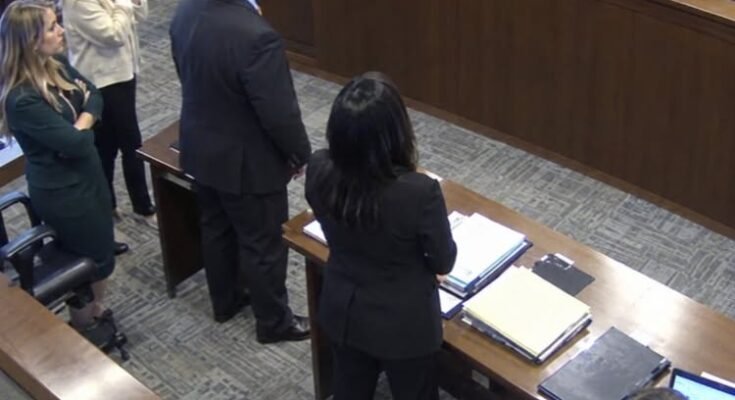
Twenty minutes later, my parents entered the courtroom with Melanie between them.
My father wore a dark suit.
My mother carried a designer handbag and looked as though she were attending an important social event.
Melanie avoided my eyes.
Nora sat beside me.
“Remember,” she whispered, “you don’t have to prove that you’re a good daughter. We’re here to establish the facts.”
The hearing began.
Nora presented the original leather folder, the recorded deed, the security footage, and the documents showing that Donnelly Family Holdings LLC had been created shortly before my parents visited me.
Then she introduced the evidence concerning Evelyn Brooks.
The judge studied the paperwork.
She compared the signatures.
Finally, she looked directly at my father.
**”Mr. Donnelly, would you like to explain why the only witness to your daughter’s signature died two years ago?”**
My father’s confidence disappeared.
“That’s impossible.”
The judge lowered the document.
“Is it?”
His attorney leaned toward him.
My mother looked down.
“It must be a clerical mistake,” my father said.
Nora rose.
“Your Honor, the witness named here died approximately two years before this deed was supposedly executed. We have her death certificate.”
The judge examined it.
Then Nora submitted Jenna Mercer’s sworn statement.
“Ms. Mercer accompanied the defendants to Claire’s house. She confirms that Claire refused to sign and that no notarization occurred.”
My father turned toward my mother.
“Tell them, Diane.”
She didn’t respond.
“Diane!”
The judge raised her hand.
“Mr. Donnelly, you will remain quiet unless asked to speak.”
My father’s attorney urged him to sit.
For the first time in my life, my father obeyed someone without an argument.
Then Nora placed another set of documents before the judge.
“Your Honor, we also have records concerning the financing of the $860,000 residence purchased for Melanie Donnelly.”
My sister sat upright.
“Why are you talking about my house?”
Nora turned a page.
“Because the application contains identifying information belonging to Claire Donnelly.”
I felt something cold settle in my chest.
“What?”
Nora had warned me that the loan records might contain additional fraud, but until that morning, she had not had complete confirmation.
Now she pointed to the copies.
There was my name.
My old address.
My income information.
And a signature that looked remarkably like mine.
**The application identified me as a guarantor on financing connected to Melanie’s mansion.**
I had never applied for the loan.
I had never met the lender.
I had never agreed to guarantee anything.
Melanie’s face drained.
“Mom, why is Claire’s name on my mortgage paperwork?”
My mother began crying.
My father reached beneath the table and gripped her wrist.
Nora continued.
“The identifying documents appear to have been taken from materials belonging to my client. The same documents disappeared during her divorce several years ago.”
I remembered my father’s casual explanation.
Found it in my trunk.
Suddenly, that missing folder felt less like an accident and more like the beginning of a long plan.
My father shook his head.
“We were trying to help our family.”
Nora looked at him.
“By using your daughter’s identity without her permission?”
His attorney intervened.
The judge allowed him to consult privately with counsel before answering any further questions.
Then the judge turned to my mother.
“Mrs. Donnelly, did you prepare these documents?”
My mother dabbed at her eyes.
“I only wanted what was best for my girls.”
Melanie stared at her.
“Both of us?”
My mother said nothing.
And that silence was the first moment I saw my sister begin to question the family she’d always believed would protect her.
***
The judge granted temporary relief protecting my property while the civil action proceeded.
The disputed deed was not allowed to become a shortcut for my parents to sell, borrow against, or otherwise dispose of my home while the court examined the evidence.
The court also directed that the suspected forgery and notarization issues be referred to the appropriate investigators.
Walking out of the courtroom, I should have felt victorious.
Instead, I felt exhausted.
The house was protected for now, but the records connected to Melanie’s mansion had opened another nightmare.
Nora explained it to me in her office two days later.
My parents had contributed money from the sale of their home toward Melanie’s purchase.
But the remaining financing had been more complicated than anyone admitted.
There was a conventional mortgage.
There was short-term private financing.
And there was a ninety-day obligation that my parents couldn’t comfortably satisfy.
My mother had apparently decided that my strong credit and the equity in my home could solve the problem.
First, my identity had been used on the financing application associated with Melanie’s purchase.
Then Donnelly Family Holdings LLC had been created.
Finally, my parents had approached me with the quitclaim deed.
If I signed, my home would become an asset they could attempt to borrow against or dispose of.
When I refused, they tried to forge the transfer instead.
“Your mother’s note explained the entire financial logic,” Nora said.
She showed me the photograph again.
**”Claire’s property covers the remaining balance.”**
I felt sick.
“All those years I thought they just loved Melanie more.”
Nora studied me.
“Claire, this wasn’t about love.”
I looked away.
“No. It was about what they could take.”
But there was still one question.
Why had they involved Melanie so deeply if the financial danger was so severe?
Why buy her a mansion they could barely afford?
And why had my mother insisted that my smaller house would be better for Melanie’s children?
The answer arrived several weeks later.
***
By then, Melanie had called me seventeen times.
I hadn’t answered.
Finally, she left a voicemail.
“Claire, please. I know you don’t want to talk to me. But there’s something Mom told me that doesn’t make sense.”
I played it for Nora.
She suggested that any conversation happen through our attorneys or with clear documentation.
A week later, Melanie agreed to meet in Nora’s conference room with her own attorney present.
She looked different.
Her hair was tied back.
There was no expensive handbag, no carefully practiced smile.
She sat opposite me and twisted a tissue between her fingers.
“I’m sorry about what Dad did,” she said.
I looked at her.
“You were standing outside.”
Her eyes filled.
“I know.”
“You saw my face when they came out.”
She nodded.
“And you didn’t ask if I was okay.”
“I was scared of him.”
“So was Owen.”
That silenced her.
After a moment, she whispered, “I didn’t know they were using your identity for my mortgage. Mom told me Dad had arranged the extra financing.”
I believed that she might not have known about the forged loan documents.
But I wasn’t ready to excuse her for watching my parents demand my house.
“Why did you think they came to see me that day?” I asked.
She looked down.
“Mom said you had more space than you needed.”
I stared at her.
“Three bedrooms?”
“I know.”
“You were moving into five.”
Tears slipped down her cheeks.
“I know how it sounds.”
“It sounds like you were happy to benefit as long as nobody asked you to sacrifice anything.”
Melanie didn’t argue.
For once, she simply sat with the truth.
Then her attorney slid a document across the table.
“We received this from the lender’s file,” she said. “Melanie has never seen it before.”
I looked down.
It was another quitclaim deed.
Not for my house.
For Melanie’s mansion.
The document purported to transfer her $860,000 property to Donnelly Family Holdings LLC.
It bore a signature resembling Melanie’s.
And a witness’s name.
Evelyn Brooks.
The same woman who had been dead for two years.
My eyes widened.
“Melanie, did you sign this?”
She shook her head.
“No.”
Nora leaned closer to inspect the document.
A long silence filled the room.
Then she said quietly, “They prepared a transfer for both properties.”
Melanie covered her mouth.
And suddenly, the entire scheme changed shape.
***
My parents hadn’t simply planned to take my home and give it to Melanie.
They had prepared paperwork to take control of hers, too.
The additional deed had never been recorded, so Melanie remained the legal owner of her property. But the document was sitting inside the financing file, ready to be used if my parents needed it.
The investigator eventually uncovered internal correspondence and draft instructions associated with Donnelly Family Holdings.
The plan involved consolidating control of both properties within the family company, refinancing what could be refinanced, and potentially selling assets to satisfy the mounting obligations.
My mother had sold Melanie the dream of owning a mansion.
She had sold my father the dream of restoring the family’s financial security.
And she had tried to sell me the idea that surrendering my home was a daughter’s duty.
**The shocking truth was that neither daughter was supposed to control her own house if my parents’ plan succeeded.**
Melanie had been given a palace with a hidden escape hatch for our parents.
I had been handed a deed designed to make my home disappear.
Both of us were being used.
But that didn’t mean we were equally innocent.
Melanie had willingly accepted my parents’ favoritism for years.
She had watched them pressure me and said nothing.
And she had been perfectly comfortable with the idea of moving into my house until she discovered that her own mansion was also at risk.
That was something she would have to live with.
***
The following months brought civil proceedings, financial investigations, and criminal inquiries.
Evidence from the camera supported my assault complaint.
The handwriting, forged signatures, loan applications, counterfeit notarization, and recorded deed became part of the broader fraud investigation.
My parents’ attorneys eventually stopped insisting that I had voluntarily transferred my home.
In the civil case, the court ultimately ordered the forged deed canceled and my property’s title cleared.
I received written confirmation that the fraudulent document no longer clouded my ownership.
The unauthorized financing associated with my identity was separately disputed and corrected as the lender and investigators established that I had not authorized it.
My father and mother eventually faced criminal charges connected to the fraudulent documents. My father’s assault was addressed separately.
Their carefully maintained image of the perfect generous family collapsed.
My mother stopped posting photographs.
My father stopped sending messages ordering me to reconsider.
The company they’d created to control our properties became the centerpiece of the evidence against them.
And Melanie’s mansion?
She couldn’t afford to keep it.
Without the financial arrangements my parents had concealed, the house became an impossible burden.
She eventually sold it and moved with her children into a much smaller rental.
The horses never arrived.
Neither did the glamorous Christmas fundraiser.
I didn’t celebrate her loss.
But I didn’t rescue her, either.
One evening, Melanie called me.
“I’m sorry, Claire,” she said. “For everything.”
I sat at my kitchen table, looking through the window toward the backyard.
“I believe you’re sorry now.”
She was quiet.
“Do you think we’ll ever be sisters again?”
I thought about all the birthdays and holidays and family dinners that had taught me to feel like an outsider.
I thought about my father’s slap.
And my sister standing beside the SUV, watching him leave.
“I don’t know,” I answered. “That depends on what we do from here.”
It wasn’t forgiveness.
But it was the truth.
***
Several months after my title was finally cleared, I received one last message from my mother.
It was short.
“I did everything to keep this family together. One day you’ll understand.”
I read it once.
Then I blocked her number.
Because by then, I understood something she never had.
**A family isn’t held together by obedience, property, or fear.**
And love isn’t proven by what parents give one child while demanding that another surrender everything.
That evening, Owen and I ate pizza in the living room.
Just like we had on our first night in the house.
The old bookcase still stood against the wall.
His school photograph was back in its place.
The security camera remained above the front window.
Owen was taller now, almost reaching my shoulder.
He looked around the room.
“So,” he said, “it’s really over?”
I considered the question.
The legal battles were finished.
Our title was clear.
The fraudulent documents had been exposed.
But some things take longer to heal than a court case.
“Yes, honey,” I said. “The house is safe.”
He smiled.
“Then I think we should make another toast.”
I lifted my paper cup.
“To what?”
He raised his soda.
“To nobody ever telling us we have to leave.”
I touched my cup to his.
And as I looked around the modest home I’d fought to protect, I realized something that would have seemed impossible three months earlier.
For years, I’d wanted my parents to believe in me the way they believed in Melanie.
I’d worked harder, stayed quieter, forgiven more, and hoped that someday they would finally see my worth.
But in trying to steal my house, they’d revealed something far more important than their opinion of me.
**Their approval had never been the thing keeping my life standing.**
I was.
And when my father struck me because I refused to sign, he thought he was teaching me one final lesson about obedience.
Instead, he taught me the lesson that finally set me free.
**I could love the family I came from without allowing them to destroy the family I had built.**
For the first time in years, I stopped wondering why my parents believed in my sister more than they believed in me.
I already knew what mattered.
My son believed in me.
I believed in myself.
And the home they tried to take would remain ours.