Part 1: The Papers on My Kitchen Table
The first time my daughter suggested I was losing my memory, we were sitting in my kitchen in Ohio.
I was sixty-eight years old, recently widowed, and still learning how to sleep in a bed that felt twice as large without my husband, Frank.
Melissa placed a hand over mine and gave me the kind of worried smile people use when they have already discussed you behind your back.
“Mom, you asked me the same question twice today.”
“No, I didn’t.”
“You did,” she said softly. “Maybe you just don’t remember.”
Her husband, Brad, stared into his coffee.
That should have been my first warning.
Over the next few weeks, Melissa began noticing things that weren’t there.
She claimed I had left the stove on. I hadn’t.
She said I had forgotten a doctor’s appointment. The appointment had been rescheduled.
She told relatives I had gotten lost driving home from the grocery store. In reality, a bridge was closed, and I took a different route.
Every small misunderstanding became evidence.
At Thanksgiving, she announced her concerns in front of the entire family.
“We think Mom might need someone checking on her finances,” Melissa said.
The room went silent.
My son, Eric, looked up from his plate. “What does that mean?”
“It means she’s vulnerable,” Brad answered. “Scammers target older people.”
I stared at my daughter.
“I pay my own bills.”
Melissa sighed. “That’s not the point.”
“Then what is the point?”
She glanced toward Brad before answering.
“We’re only trying to protect you.”
After dinner, I found Brad standing alone in my husband’s old office.
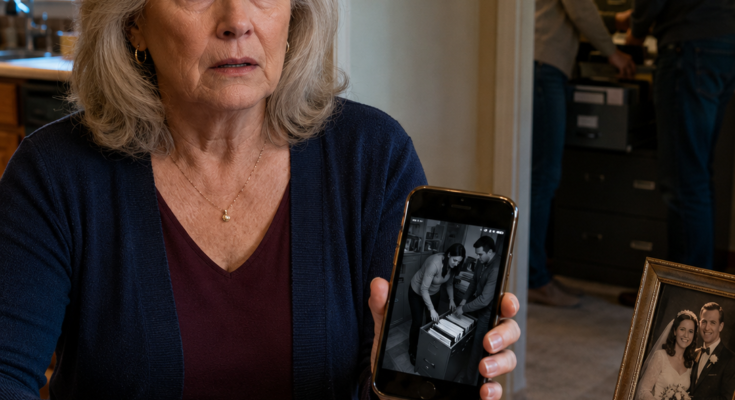
He was looking through the filing cabinet.
“What are you doing?” I asked.
He jumped and quickly shut the drawer.
“Looking for a pen.”
“In a folder labeled PROPERTY TAXES?”
His face tightened.
Before he could answer, Melissa appeared behind me.
“Mom, please don’t turn everything into a confrontation.”
I wanted to tell them both to leave. Instead, I apologized.
Grief had made me uncertain of myself. When you lose the person who confirmed your version of reality for forty-three years, you begin to question your own judgment.
Maybe I was becoming difficult.
Maybe Melissa really was worried.
Two days later, she returned with a folder.
Inside were documents giving her power of attorney over my finances.
“It’s just for emergencies,” she explained. “You don’t have to be afraid.”
“I’m not afraid.”
“Then sign.”
I looked down at the papers.
Brad had already marked each signature line with a yellow tab.
“I want my attorney to read these first.”
Melissa’s expression changed.
It lasted only a second, but I saw it.
Anger.
“Why are you making this so hard?”
“Because your father told me never to sign anything I didn’t understand.”
“Dad isn’t here anymore.”
The words hit harder than she intended.
Or perhaps exactly as hard as she intended.
I closed the folder and slid it back across the table.
“Then I’ll have to protect myself.”
Melissa stood so quickly that her chair scraped the floor.
She called me stubborn. Ungrateful. Paranoid.
Then she and Brad left.
That night, I noticed the small security camera above my back door was disconnected.
The next morning, I called the company.
Someone had logged into my account and changed the password.
The recovery email belonged to Melissa.
I reset everything and reviewed the saved footage.
At 11:43 p.m. the previous Saturday, while I was asleep upstairs, Melissa and Brad had entered my house using the emergency key.
Brad carried a measuring tape.
Melissa held her phone.
They walked from room to room, photographing my furniture and measuring the walls.
Then they entered my husband’s office.
The camera had no sound, but I didn’t need it.
Brad pulled a real estate agent’s business card from his pocket.
Melissa photographed the deed to my house.
And before they left, my daughter stood in my kitchen, looked directly toward the camera she thought was disabled, and smiled.
Part 2: What They Had Already Promised
I didn’t confront them.
That surprised everyone later.
For most of my life, I had been the emotional one in the family. Frank was the patient planner. He read contracts, saved receipts, and never made a decision while angry.
So I asked myself what Frank would have done.
He would have collected proof.
The next morning, I visited our attorney, Samuel Greene.
Sam had handled our wills, the mortgage payoff, and Frank’s estate. He watched the footage twice without speaking.
Then he examined the power-of-attorney documents.
“If you had signed these,” he said, “Melissa could have managed nearly everything. Your accounts, property, investments.”
“Could she sell the house?”
“Potentially.”
My stomach turned.
The house was worth nearly $640,000. Frank and I had bought it in 1988 for less than a quarter of that.
It wasn’t simply property. It contained our entire marriage—the doorway where he carried me after my knee surgery, the wall where we measured the children’s heights, and the porch where he spent his final summer.
Sam advised me to change the locks, secure my accounts, and document every interaction.
Then he asked a question I hadn’t considered.
“Has Melissa mentioned guardianship?”
“No.”
“If she can convince a court that you’re incapacitated, she may not need your signature.”
A week later, a letter arrived from Melissa’s attorney.
My daughter was petitioning for emergency guardianship.
Her filing claimed I was suffering from serious cognitive decline. It included statements from Brad and two of Melissa’s friends. According to them, I was confused, financially reckless, and unable to care for myself.
There was even a photograph of a burned saucepan on my stove.
I recognized it immediately.
Melissa had burned caramel in that saucepan while preparing Thanksgiving dessert.
She was using her own mistake as evidence against me.
But the worst discovery came from Eric.
He called me late one evening.
“Mom, I need to tell you something.”
His voice was shaking.
Months earlier, Melissa and Brad had borrowed money from several people. Brad’s construction business was failing. They owed back taxes, credit-card debt, and nearly $90,000 to a private lender.
They had already told the lender they would repay him after selling “a family property.”
My house.
“You knew?” I asked.
“Not all of it. Melissa told me you wanted to move into assisted living and give her the house to sell.”
“And you believed her?”
“I wanted to.”
That answer hurt because it was honest.
Eric sent me screenshots of messages Melissa had written:
Once Mom is settled, the house will be ours to handle.
She won’t fight it. She can barely keep track of anything now.
And then:
If she refuses to sign, we’ll do it through the court.
I sat alone at my kitchen table, reading those words until the screen blurred.
I kept remembering Melissa at seven years old, asleep against my shoulder during a thunderstorm.
At sixteen, crying in my car after her first breakup.
At thirty-two, placing my first grandchild in my arms.
How did that little girl become someone who could erase me while I was still alive?
The guardianship hearing was set for January.
Melissa arrived wearing a modest navy dress. She looked like a grieving daughter carrying an unbearable responsibility.
She hugged me in the hallway.
“We can still stop this,” she whispered. “Sign the papers, and I’ll withdraw the petition.”
I looked into her eyes.
“You entered my house while I was sleeping.”
Her face went still.
“I don’t know what you’re talking about.”
“Yes, you do.”
She leaned closer.
“No judge is going to believe an angry old widow over her own daughter.”
Then she walked into the courtroom.
What Melissa didn’t know was that Sam had arranged a complete medical evaluation.
What she didn’t know was that Eric had agreed to testify.
And what she absolutely didn’t know was that Frank had left behind one final protection for me.
Part 3: Frank’s Last Gift
The doctor testified first.
After several hours of testing, he found no evidence of dementia or significant cognitive impairment.
“My evaluation indicates that Mrs. Reynolds is capable of managing her personal and financial affairs,” he told the judge.
Melissa’s attorney tried to challenge him.
He failed.
Then Sam presented my bank records.
Every bill had been paid on time. My credit was excellent. My spending was ordinary. There were no mysterious withdrawals, unpaid taxes, or donations to imaginary charities.
Next came the security footage.
The courtroom watched Melissa and Brad enter my home at night, photograph my documents, and measure my rooms.
Brad stared at the floor.
Melissa stared at me.
Then Eric testified about the debt and the promised sale of my house.
He read her messages aloud.
My daughter began crying.
Not quiet tears. Loud, wounded sobs.
“We were desperate,” she said. “I was trying to keep my family together.”
The judge looked at her.
“By taking control of your mother’s life?”
“I thought the house would eventually come to me.”
That was when Sam opened Frank’s sealed estate letter.
My husband had written it six months before he died.
Frank had been an accountant. He trusted people, but he trusted paperwork more.
The letter stated that if either child attempted to pressure me into transferring my home or challenged my mental competence for financial gain, that child would lose their inheritance from his separate trust.
Frank had left $280,000 in that trust.
Melissa’s share disappeared the moment the judge found that her petition had been filed in bad faith.
The court denied the guardianship request.
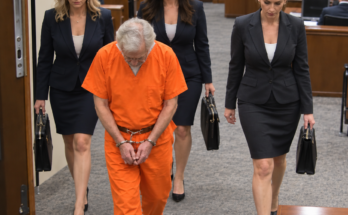
The judge also referred the evidence to the county prosecutor for review because Melissa had accessed private financial records and made false claims in sworn documents.
Outside the courtroom, she grabbed my arm.
“You ruined us.”
I gently removed her hand.
“No, Melissa. You gambled your family on the belief that I was too weak to defend myself.”
“We’re going to lose our house.”
“And you were willing to take mine.”
Brad walked away without saying a word.
Melissa stood there crying, but for the first time in my life, I did not rush to comfort her.
That was the hardest part.
Not winning the case.
Not changing my will.
Not hearing relatives whisper that I had been too harsh.
The hardest part was accepting that loving my daughter did not require me to save her from the consequences of hurting me.
Six months later, Brad filed for bankruptcy. He and Melissa sold their house and moved into a rental.
The prosecutor never charged her with a felony, but she agreed to pay my legal fees and sign a formal order preventing her from accessing my home, finances, or medical information.
Eric and I slowly repaired our relationship. He never asked for forgiveness all at once. He earned it in small ways—weekly phone calls, Sunday lunches, fixing the porch railing without being asked.
As for my house, I did something neither of my children expected.
I placed it in a trust.
When I die, it will not belong to Melissa or Eric.
It will be sold, and the money will fund emergency housing for older women facing financial abuse from relatives.
Melissa called that decision cruel.
Maybe she expected me to argue.
Instead, I told her the truth.
“This house was built from forty-three years of love and sacrifice. It will still help a family someday. It just won’t reward the one who tried to steal it.”
Last Thanksgiving, Eric sat across from me in the same dining room where Melissa first announced that I was losing my mind.
Her chair remained empty.
I won’t pretend that didn’t hurt.
Revenge stories often end with someone smiling as the villain loses everything.
Real family stories are different.
Sometimes you protect yourself, win the battle, and still grieve the person you had to defeat.
But when I locked the front door that night, I felt something I hadn’t felt since Frank died.
I felt safe in my own home.