When a winter storm knocks out electricity, many households suddenly lose the furnace blower, thermostat, electric ignition, and circulation pumps that normally keep the house warm.
For many Old Order Amish families, however, grid failure changes very little about the heating routine.
Many Amish homes are not connected to public utility electricity. Instead, heat may come from a wood stove, coal stove, propane heater, natural-gas heater, or another system permitted by the local church community. The exact arrangement varies considerably from one Amish affiliation and settlement to another.
The Amish do not reject every technology. Each community follows its own Ordnung, or locally understood set of church standards. The Young Center for Anabaptist and Pietist Studies notes that Old Order Amish generally avoid connecting their homes to public electrical lines, although permitted technologies and energy sources differ between communities. Young Center for Anabaptist and Pietist Studies
Their ability to handle a blackout is therefore not based on a single secret heater.
It comes from an entire household system built around:
- A heat source that does not require the grid
- Fuel collected before winter
- A home arranged around the source of heat
- Natural rather than powered air circulation
- Warm clothing and bedding
- Daily fire-maintenance routines
- Cooking, water heating, and heating combined when practical
- Regular maintenance of stoves and chimneys
- Neighbors and relatives who can help during severe weather
The useful preparedness lesson is not that every family should copy Amish life. It is that dependable winter heat requires more than owning an emergency heater.
Independent heat + prepared fuel + a heat-conserving routine = better winter resilience
First, Not Every Amish Household Is the Same
It is easy to speak of “the Amish” as if every household follows identical rules. That is inaccurate.
Amish communities differ in what they permit, including:
- Wood-burning appliances
- Coal stoves
- Propane heaters
- Natural-gas appliances
- Oil-fired equipment
- Battery-powered devices
- Solar panels
- Engine-powered equipment
- Plumbing and water-pumping systems
- Stove fans and other heating accessories
Some families live in old farmhouses with a central stove. Others have newer homes with basement heating systems, floor registers, multiple heaters, or permitted fuel-powered appliances.
Wood and coal stoves are common heating methods, but propane and natural gas are also used in some communities. The arrangement depends on the local Ordnung, available fuel, regional climate, house design, and household preference.
This article therefore describes common principles and examples—not a rulebook followed by every Amish family.
1. Their Primary Heat May Not Depend on Electricity
The greatest advantage during a blackout is straightforward: the normal source of heat may already operate without grid power.
A traditional freestanding wood stove needs:
- Properly dried firewood
- Combustion air
- A sound chimney
- Safe clearances
- Someone to tend the fire
A basic hand-fired coal stove may similarly operate without an electric blower, although it must be specifically designed and approved for the type of coal being burned.
Neither system necessarily requires an electric thermostat, furnace blower, electronic control board, or utility-powered ignition.
That is very different from a conventional central furnace. Even a gas or oil furnace usually needs electricity for controls and air circulation. When the grid fails, the fuel may still be available, but the furnace can no longer distribute the heat.
A naturally drafting stove continues producing heat as long as:
- The chimney drafts correctly
- The fuel is dry and appropriate
- Airflow remains unobstructed
- The stove is operated safely
- Its components are in working condition
This is the foundation of blackout-resistant heating: fewer essential electrical parts between the fuel and the room.
2. Heat Is Concentrated in the Most Important Rooms
Trying to maintain summer-like temperatures in every room wastes fuel.
A stove-heated home often develops temperature zones:
- The stove room is warmest.
- Adjacent living and kitchen areas remain comfortable.
- Upstairs rooms receive some rising heat.
- Bedrooms may remain noticeably cooler.
- Little-used rooms may receive minimal heat.
Family activity naturally shifts toward the warmest part of the house.
Meals, sewing, reading, conversation, and indoor work may take place close to the main heat source. Doors to unused rooms can be closed when doing so does not interfere with plumbing protection, ventilation, fire safety, or necessary exit routes.
This is essentially zone heating without electronic controls.
Instead of demanding the same temperature throughout the building, available heat is directed toward the people and rooms that need it most.
Preparedness lesson
During a prolonged outage, choose one safe “warm room” rather than attempting to heat an entire large house with a small emergency appliance.
The selected room should:
- Contain an approved, properly vented heat source
- Have working smoke and carbon-monoxide alarms
- Be separated from large unused areas when practical
- Remain accessible to every household member
- Have at least two safe exit options when possible
- Contain warm clothing, blankets, lights, water, and communication supplies
- Keep people away from hot stove surfaces
Never move an unvented outdoor heater, grill, or camp stove into the room.
3. The House Is Often Arranged Around the Stove
A wood stove works best when the building helps distribute its heat.
In some Amish houses, a stove is placed on the first floor in a central room. In others, a larger wood or coal appliance may be installed in the basement, with floor registers allowing warm air to rise.
The basic circulation pattern is simple:
- Air near the stove becomes warm.
- Warm air rises through open spaces or approved registers.
- Cooler air moves downward.
- The returning air is warmed again.
- The cycle continues without a furnace blower.
This passive movement is slower and less even than forced-air heating, but it can function without electricity.
The system works best when:
- The heat source is centrally located.
- Interior doors and openings support safe circulation.
- The chimney produces reliable draft.
- The appliance is sized for the building.
- The house is reasonably insulated.
- Air pathways are designed rather than improvised.
Important fire-code warning
Do not cut openings through floors or walls simply to copy this arrangement.
Open floor registers can allow smoke and fire to spread rapidly between levels. Building codes may require fire dampers, specific clearances, protective grilles, or other measures.
Any new stove, chimney, wall penetration, or floor opening should be designed and installed according to:
- The appliance manufacturer’s instructions
- Local building and fire codes
- Insurance requirements
- Professional chimney and stove guidance
A homemade hole in the floor is not a safe heat-distribution system.
4. Firewood Is Prepared Long Before the Storm
A wood stove is only as dependable as its fuel supply.
Families who rely on firewood do not normally wait for the forecast to purchase a few wet bundles. Wood is cut, split, stacked, dried, and protected well before cold weather arrives.
The usual process includes:
- Cutting or purchasing an appropriate wood species
- Splitting large rounds to expose more surface area
- Stacking the pieces off the ground
- Allowing air to move through the pile
- Covering the top against rain and snow
- Leaving the sides open enough for ventilation
- Moving only a limited working supply indoors
- Keeping indoor wood a safe distance from the stove
The EPA recommends burning dry, seasoned wood and reports that wood generally burns best at a moisture content below 20 percent. Its guidance also advises seasoning wood for at least six months, storing it outdoors off the ground, and covering the top without enclosing the sides. EPA Best Wood-Burning Practices
Wet wood:
- Produces less useful heat
- Creates more smoke
- Makes fires harder to start
- Encourages creosote accumulation
- Wastes energy evaporating moisture
- Can increase air pollution
A small moisture meter can provide more dependable information than appearance alone.
A practical three-level fuel supply
Organize firewood into three groups:
1. Seasonal reserve
The main outdoor supply needed for the heating season.
2. Protected near-house supply
Several days of dry wood stored in a properly located covered rack.
3. Indoor working supply
Only enough for a short period, kept in a stable container and well away from the appliance.
Do not stack an entire winter supply against the house. Large woodpiles may contain insects, create moisture problems, and add combustible material beside the building.
5. Kindling and Fire-Starting Materials Are Ready
A cold house is a poor place to begin splitting damp wood into tiny pieces.
A prepared household stores dry fire-starting materials before winter, such as:
- Small split kindling
- Dry untreated wood scraps
- Plain newspaper when permitted by the appliance instructions
- Approved natural fire starters
- Long matches or utility lighters
- A metal ash shovel
- Fire-resistant gloves
- A flashlight or headlamp
- A covered metal ash container
The EPA advises using dry kindling, newspaper, or appropriate natural fire starters. Gasoline, kerosene, charcoal lighter fluid, and similar accelerants should never be poured into a stove. EPA Burn Wise
Never burn:
- Painted lumber
- Pressure-treated wood
- Plywood
- Particleboard
- Plastics
- Household trash
- Foam
- Glossy packaging
- Wood containing glue
- Unknown construction scraps
These materials may release toxic pollutants, damage the appliance, or create dangerous chimney deposits.
6. The Fire Is Run Hot Enough to Burn Cleanly
A common mistake is closing the air control too far in an attempt to make one load of wood last all night.
A heavily smoldering fire may last longer, but it can also produce:
- Less usable heat
- More smoke
- Faster creosote buildup
- Dirtier glass and flue surfaces
- Poorer indoor and outdoor air quality
- A greater risk of chimney fire
Efficient stove operation usually means building a small, hot fire with dry fuel, then adding appropriately sized pieces while maintaining the airflow required by the appliance.
The exact procedure depends on the stove. Always follow its operating manual.
Useful tools include:
- A wood-moisture meter
- A stove-top or flue thermometer approved for the system
- A metal ash bucket with a tight-fitting lid
- A chimney-cleaning schedule
- Written notes about fuel use and burn time
Do not assume that an old cast-iron stove is safe merely because it still holds a fire. Cracked castings, deteriorated firebrick, warped doors, leaking joints, corroded stovepipe, or an unsuitable chimney can make an old appliance dangerous.
7. Cooking and Heating Can Happen Together
In some homes, a wood cookstove performs several jobs:
- Heating the kitchen
- Cooking meals
- Baking bread
- Heating wash water
- Keeping a kettle warm
- Drying damp gloves or clothing at a safe distance
This is a practical example of using the same fuel for multiple household needs.
A large pot of soup or stew can cook while the stove warms the room. A kettle provides hot water without a separate electric appliance.
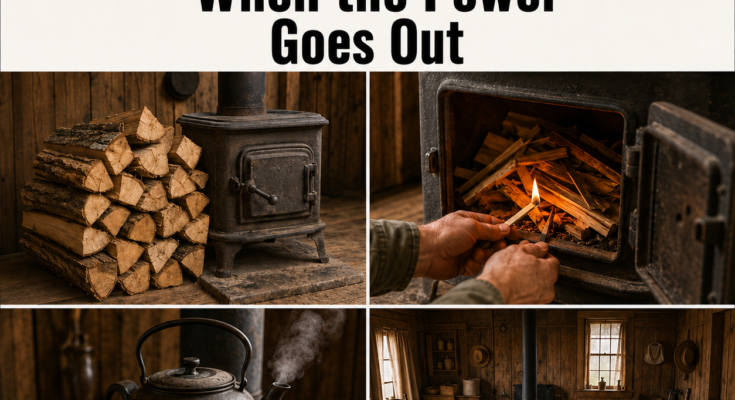
However, the kettle shown in the image should not be misunderstood as a major heat-storage device. Water on the stove can provide hot water and a small amount of humidity, but it does not replace safe ventilation or proper heating equipment.
Kettle safety
- Use a stable, heat-tolerant kettle.
- Keep its handle positioned safely.
- Do not overfill it.
- Prevent children from reaching it.
- Refill it before it boils dry.
- Use dry mitts when handling it.
- Never rely on stove steam to correct severe winter dryness without monitoring humidity.
Excess humidity can condense on cold walls and windows, contributing to mold and building damage.
8. Warm Clothing Reduces the Demand on the Stove
Staying warm does not always require raising the room temperature.
Traditional winter routines rely heavily on insulating the person:
- Wool socks
- Layered shirts
- Sweaters
- Vests
- Long undergarments
- Warm trousers or dresses
- Slippers or indoor shoes
- Quilts
- Heavy blankets
- Flannel sheets
- Bed warmers designed for safe use
This permits bedrooms and distant rooms to remain cooler while occupied spaces stay adequately warm.
The layering principle
A practical indoor cold-weather system includes:
- A dry base layer
- An insulating middle layer
- Warm socks
- Indoor footwear
- An additional sweater or vest
- A blanket when seated
Replace damp clothing promptly. Moist fabric carries heat away from the body much faster than dry insulation.
Pay particular attention to:
- Infants
- Older adults
- People with limited mobility
- Anyone with diabetes or circulation problems
- People taking medications that affect temperature regulation
- Household members who cannot clearly communicate that they are cold
An indoor thermometer is important because comfort alone is not a reliable measure of safety.
9. Drafts Are Controlled Before Winter
A powerful stove cannot compensate efficiently for a house that leaks warm air everywhere.
Traditional cold-weather preparation may include practical measures such as:
- Repairing loose window sashes
- Installing storm windows
- Applying weatherstripping
- Sealing appropriate air leaks
- Using heavy curtains
- Placing rugs on cold floors
- Closing unused rooms
- Adding attic insulation
- Repairing doors that do not seal
- Protecting exposed plumbing
- Maintaining cellar doors and bulkheads
These measures slow heat loss and reduce the amount of fuel required.
Do not seal a stove room airtight
A fuel-burning appliance requires combustion air and dependable chimney draft.
Aggressively sealing every gap without evaluating the appliance can create negative pressure or backdrafting, particularly when exhaust fans or other combustion appliances are operating.
Possible warning signs include:
- Smoke entering the room
- Difficulty starting a fire
- Soot around the stove door
- Unusual odors
- Headache or nausea
- A carbon-monoxide alarm
- Smoke reversing direction when a fan starts
Have a qualified professional evaluate the stove, chimney, combustion-air requirements, and home pressure conditions.
10. Family Life Moves Closer to the Heat
A central stove naturally changes household behavior.
Instead of spreading across many rooms, family members may gather in the warm kitchen or living area. This has several practical effects:
- Fewer rooms require full heating.
- The fire is observed more frequently.
- Children can be supervised around the stove.
- Cooking and household work occur near the heat.
- Problems may be noticed sooner.
- Lighting needs are concentrated in one area.
This is not merely a heating appliance. It is a winter operating routine.
During an outage, a non-Amish household can follow the same general principle by consolidating activities in a safe heated room.
Move useful supplies there before the house becomes dangerously cold:
- Battery lights
- Charging banks
- Blankets
- Medications
- Drinking water
- Shelf-stable food
- A battery radio
- Thermometers
- Fire extinguisher
- First-aid supplies
- Pet bedding
Keep exit routes open and never allow bedding, chairs, curtains, or drying clothes to enter the stove’s required clearance zone.
11. Ashes Are Treated as a Fire Hazard
Ashes can conceal hot embers for days.
Safe removal requires more than dumping them into a cardboard box or plastic bucket.
Use:
- A metal shovel
- A metal container
- A tight-fitting metal lid
- A noncombustible outdoor storage surface
- Ample distance from the house, porch, deck, shed, firewood, and dry vegetation
The EPA recommends placing ashes in a covered metal container and storing the container outdoors on a nonflammable surface. EPA Best Wood-Burning Practices
Never place warm ashes in:
- A plastic trash can
- A paper bag
- A cardboard box
- A wooden bin
- A compost pile
- A bucket on a wooden porch
- A container beside the firewood stack
Treat every recently removed load as if live embers remain inside.
12. Stove and Chimney Maintenance Is Part of Preparedness
A stack of firewood is not a complete heating plan.
The entire system needs to work:
- Stove body
- Door gasket
- Firebrick
- Damper
- Air controls
- Stovepipe
- Chimney connector
- Chimney liner
- Chimney cap
- Roof flashing
- Floor protection
- Wall shielding
- Smoke alarms
- Carbon-monoxide alarms
- Fire extinguisher
The CDC recommends having a chimney or flue inspected annually when a fireplace or wood stove will be used for emergency heat. It also recommends working smoke alarms, battery-operated carbon-monoxide alarms, outside venting for fuel-burning equipment, and a multipurpose dry-chemical fire extinguisher. CDC Winter-Storm Preparation
Schedule inspection and cleaning before heating season—not during the first major ice storm.
Stop using the stove and seek professional help if you discover:
- A cracked chimney liner
- Loose or corroded stovepipe
- Smoke leaking from joints
- A damaged stove body
- Missing firebrick
- A door that will not latch
- Repeated backdrafting
- Heavy creosote buildup
- Scorching around walls or flooring
- A chimney fire
- Any carbon-monoxide alarm
What Happens at Night?
A household that heats with wood must plan for the fire to weaken overnight.
Possible routines include:
- Loading the stove according to its instructions before bed
- Using larger pieces of properly seasoned wood
- Setting the approved air control correctly
- Keeping bedroom doors positioned for safe heat circulation
- Using sufficient bedding
- Wearing warm sleep clothing
- Checking vulnerable household members
- Relighting the fire early in the morning
Do not defeat the stove’s design in an attempt to extend burn time.
Never:
- Overload the firebox
- Leave the loading door open
- Burn an unauthorized fuel
- Block required air vents
- Modify the damper without approval
- Pack combustible material around the stove
- Allow the fire to smolder heavily all night
- Leave children responsible for the appliance
If the fire goes out, the house may become cold—but a cold house is safer than one filled with smoke or carbon monoxide.
Carbon Monoxide: The Invisible Danger
Carbon monoxide is colorless and odorless. A person cannot reliably detect it without an alarm.
Possible symptoms include:
- Headache
- Dizziness
- Weakness
- Nausea
- Vomiting
- Chest pain
- Confusion
- Unusual sleepiness
- Loss of consciousness
If a carbon-monoxide alarm sounds:
- Move everyone, including pets, into fresh air immediately.
- Call emergency services from outside.
- Do not re-enter until authorities say it is safe.
- Do not silence the alarm and return to sleep.
- Have the heating system inspected before using it again.
The CDC advises having chimneys checked or cleaned yearly because blockages can cause carbon monoxide to accumulate inside a house or cabin. CDC Carbon Monoxide Basics
Install alarms according to the manufacturer’s instructions and applicable codes. Battery-powered or battery-backup models are essential during outages.
What Not to Copy From a Photograph
The featured image captures the general idea of a simple stove-heated room, but a decorative image cannot confirm that an installation is safe.
You cannot determine from a photograph whether:
- The chimney is properly lined.
- The hearth has sufficient protection.
- Wall clearances meet requirements.
- The stove is listed and undamaged.
- The fuel is properly seasoned.
- Smoke and carbon-monoxide alarms are present.
- The chimney was inspected.
- The kettle is stable.
- The woodpile is far enough from the stove.
- The floor can support the appliance.
- The installation meets local code.
Do not build or install a stove by copying the spacing shown in an online image.
Clearance requirements depend on the exact appliance, chimney system, shielding, floor construction, and local regulations.
How to Adapt These Principles to Your Own Home
You do not need to live without electricity to benefit from this approach.
Step 1: Identify why your primary heat stops
Determine whether your furnace or boiler depends on:
- A blower
- Electronic ignition
- A thermostat
- Circulation pumps
- Powered valves
- Fuel-delivery equipment
Knowing the actual failure point helps you choose an appropriate backup.
Step 2: Choose a legal backup heat source
Possible options may include:
- A professionally installed wood stove
- A code-compliant fireplace insert
- An approved direct-vent gas heater
- Another appliance specifically rated for indoor emergency heating
Availability and legality vary. Consult local authorities, your insurer, and a qualified installer.
Step 3: Prepare fuel early
Store the correct fuel safely and in a quantity appropriate for likely outage duration.
Never substitute fuels.
Step 4: Improve heat retention
Weatherstrip doors, repair windows, add appropriate insulation, and identify one room that can be safely occupied during an outage.
Step 5: Install independent alarms
Use smoke and carbon-monoxide alarms that continue operating without utility power.
Step 6: Create a warm-room kit
Include:
- Blankets
- Layered clothing
- Indoor thermometer
- Battery lights
- Drinking water
- Shelf-stable food
- Medications
- Phone power bank
- Fire extinguisher
- Emergency contacts
Step 7: Practice before winter
Learn how the heater operates under normal conditions. Do not wait for a nighttime blackout to read the manual, locate fuel, or discover that the chimney does not draft correctly.
Emergency Heating Methods You Should Never Use Indoors
A blackout can tempt people to improvise. Some improvisations are deadly.
Never heat an enclosed living space with:
- A charcoal grill
- A barbecue
- A propane camp stove
- A gasoline camping stove
- A patio heater not rated for indoor use
- A generator
- A vehicle engine
- A gas oven
- An open bucket of burning fuel
- A homemade candle-and-flowerpot heater
- An unvented wood fire
- A stove with a blocked or damaged chimney
The CDC warns that carbon monoxide from generators, grills, lanterns, camp stoves, charcoal, and burning wood can accumulate in enclosed or partially enclosed areas. It also advises against using a gas range or oven to heat a home. CDC Power-Outage Safety
Opening a window does not make a generator, charcoal grill, or outdoor stove safe indoors.
A Practical Pre-Winter Checklist
Heating system
- Primary heating system has been serviced.
- Backup appliance is legal and professionally installed.
- Chimney or flue has been inspected.
- Stove door, gasket, firebrick, and controls are sound.
- Required clearances are free of combustible items.
- Hearth protection is undamaged.
- Appliance manual is available.
Fuel
- Enough approved fuel is stored.
- Firewood is dry and seasoned.
- Outdoor wood is elevated and protected.
- Kindling is ready.
- No painted or treated wood is included.
- Fuel is stored away from flames and ignition sources.
Fire protection
- Smoke alarms work without grid power.
- Carbon-monoxide alarms work without grid power.
- Alarm batteries are fresh.
- Fire extinguisher is accessible.
- Everyone knows how to exit the house.
- Children understand the stove’s safety zone.
- A covered metal ash container is available.
Household warmth
- Warm clothing fits every household member.
- Blankets and sleeping bags are clean and dry.
- An indoor thermometer is available.
- One safe warm room has been selected.
- Water pipes are protected.
- Older adults and medically vulnerable people have a backup location.
- Pets have warm bedding and water.
Outage supplies
- Battery lanterns are working.
- Power banks are charged.
- A battery radio is available.
- Shelf-stable meals are stored.
- Medications are current.
- Emergency contact information is printed.
- A plan exists for leaving if the house becomes unsafe.
When Staying Home Is No Longer Safe
Preparedness does not mean remaining in a dangerously cold house at any cost.
Relocate to a warming center, hotel, relative’s house, or another safe location if:
- The backup heater fails.
- The chimney is damaged.
- Smoke enters the house.
- A carbon-monoxide alarm activates.
- Indoor temperature continues falling.
- Plumbing failure makes the house unsafe.
- Fuel is nearly exhausted.
- Roads may soon become impassable.
- A medically vulnerable person cannot remain adequately warm.
- Emergency authorities order evacuation.
Leave before conditions become desperate.
If someone becomes confused, extremely drowsy, weak, clumsy, or unable to stop shivering, seek urgent medical help. Severe cold exposure and carbon-monoxide poisoning can both impair judgment.
What Amish Winter Heating Can Teach Preppers
The most valuable lesson is not simply “buy a wood stove.”
It is designing a complete system that still works when one dependency disappears.
Many Amish households achieve winter resilience by combining:
- Heating equipment that can operate independently
- Fuel stored before it is urgently needed
- A building arranged to retain and circulate heat
- Practical rather than uniform room temperatures
- Clothing and bedding that reduce heating demand
- Daily experience operating the equipment
- Regular maintenance
- Household cooperation
A wood stove purchased during an emergency does not create that system overnight.
The chimney must be safe. The fuel must be dry. The alarms must work. The household must understand the appliance. Ashes must be handled correctly. Children and pets must be protected. An evacuation option must remain available.
That quiet preparation is what makes the difference.
Final Takeaway
Many Amish families do not suddenly switch into “blackout mode” when utility power fails. Their everyday heating system may already operate independently of the electrical grid.
Wood or coal stoves, stored fuel, natural heat circulation, central living spaces, warm clothing, heavy bedding, and disciplined winter routines allow these households to continue functioning with fewer electrical dependencies.
The practical lesson for any household is clear:
Prepare the heating system before the storm. Store the right fuel. Conserve heat instead of wasting it. Maintain the chimney. Install independent smoke and carbon-monoxide alarms. Never improvise with outdoor combustion equipment indoors.
A warm home during an outage is not created by one clever trick.
It is the result of a safe appliance, a dependable fuel supply, a heat-conscious home, and a practiced household plan.