The new boy in my grandson’s class said he was my grandson’s uncle, and he had my husband’s face. At supper, Bodie asked, “Papaw, are you his daddy?”
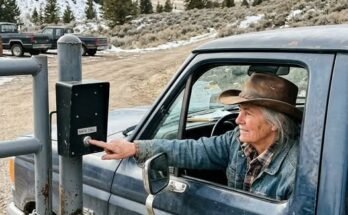
I pick Bodie up from school every day at three. His daddy drives nights, and his mama works twelve-hour shifts, so the school pickup is mine. I made the tag on my dashboard myself: Willene, Bodie’s Grandma. I set type at a newspaper for thirty years. My letters still come out straight.
Last Monday, Bodie got into the car and buckled himself in. Then he asked, “Grandma, why does Maddox say he’s my uncle?”
I laughed as I pulled out of the line. “Who’s Maddox, bud?”
“The new kid. He says his daddy is my Papaw.”
“Well, he’s mixed up,” I told him.
I turned on the radio and let the matter go. That’s the truth. I’d been married to Herman for forty-four years, and I had no reason to think our life had a missing piece in it.
Herman read meters for the gas company most of his working life. Now he drives for an auto-parts store three days a week, mostly to stay out of my hair. Every winter morning, he goes out early and warms up my side of the car. Forty-four winters of that. I took it for granted, which is one of those things you don’t realize until you’re looking back.
On Tuesday, Bodie came out of school holding hands with a little boy. “That’s him,” he said. “That’s Maddox.”
I put on my reading glasses. The boy had a cowlick standing straight up in front, ears that stuck out, and a gap between his two front teeth. I knew that face. There was a third-grade picture of Herman on my refrigerator, in a dime-store frame his mother had given me. Same rooster-tail cowlick. Same ears. Same gap.
A young woman in a parts-store polo shirt came up behind Maddox and took his hand. She looked about thirty. They walked toward a silver car with a dented door.
“He talks about Bodie all the time,” she said.
She looked at me a little too long, like she was waiting for me to say something. I couldn’t find a thing that wouldn’t sound foolish, so I said nothing. Then she helped Maddox into the car and drove away.
That night, Bodie was staying over. At supper, he looked right at Herman and asked, “Papaw, are you his daddy? Maddox says you are.”
Herman’s fork hit his plate.
I watched the color go out of his face. “Kids say the dumbest things,” he said, and got up to pour more tea he didn’t want. His hand shook against the pitcher. I’d never seen that before.
I asked if he was all right. He said he was tired. Bodie went back to his food, but I couldn’t. I’d been trying to explain away the face all day, and my husband’s hand had done more to answer me than his words.
Herman had always handled our money. I never minded. I worked, he worked, and we saved what we could for the day one of us got sick. I set type for thirty years, though, and I’ve always read the fine print.
After he went to bed, I opened the gray file cabinet in the back room. I found a folder marked Truck and, inside it, nine years of bank statements. On the first of every month, $900 went out to Cherie Cofield, in Seminole.
I went back through the statements to make sure I hadn’t misread them. Nine years. Month after month. Herman’s Tuesday and Thursday routes went through Seminole. The transfers added up to more than $97,000.
I sat at the desk with the statements spread out under the lamp. That was money we’d saved in case one of us got sick. I cried until the desk lamp was the only light left in the house.
Lying awake afterward, I started in on myself. They’ll say you’re a jealous old woman, Willene. They’ll say you want his pension. They’ll say a third-grader told a story and you believed it.
Maybe they’d be right. Maybe there was some reason I couldn’t think of. But I kept seeing that rooster tail, and I kept seeing Herman’s hand shake.
On Wednesday, Herman left at two for his VFW fish fry, like he did every Wednesday. I asked Bodie’s other grandma to pick him up from school that day. Then I parked at the end of the pickup line and waited for the silver car.
I followed it across town. I’m sixty-five years old, and I’d never followed anybody in my life.
The silver car pulled into an extended-stay motel by the interstate, the kind with a dumpster right out front.
The young woman carried two grocery sacks into room 118. Maddox ran ahead of her with his backpack bouncing. A white pickup was parked around the side by the ice machine. I didn’t let myself look at it.
I sat in my car for ten minutes with my hands on the wheel. Then I walked up and knocked. I heard the little boy laugh inside. Then footsteps. The chain slid, the door opened, and the man standing there in his sock feet, holding a box of that boy’s Legos, was Herman.
He looked at me and said my name. “Willene.”
The box tilted in his hands. One of the little plastic pieces fell onto the carpet inside the room. Cherie was behind him, holding the grocery sacks. Her face changed when she saw me.
I looked past Herman to her. “Is he Maddox’s father?”
Herman started to answer, but Cherie spoke first. “Yes,” she said. “He is.”
I looked at my husband. I needed to hear him say it, even though I already knew. “Is that true?”
He lowered the Lego box. “Yes.”
For a few seconds, all I could hear was the motel ice machine outside and the small sound of Maddox moving around in the room. I’d followed the car expecting to find an explanation. I had found the one I was afraid of.
Herman stepped out into the walkway and pulled the door mostly shut behind him. “Can we talk somewhere else?”
“You can talk right here,” I said. “You’ve had nine years to talk at home.”
His mouth opened, then closed. Cherie stayed inside the doorway, listening. I could see one grocery sack on the floor by her feet.
“I didn’t know you didn’t know,” she said. “He told me you knew he was helping us.”
I turned to her. “Helping you how?”
She looked at Herman. “He said you knew about Maddox. He said you didn’t want to be involved, but you were all right with him supporting us.”
Herman rubbed his forehead. “I said you knew I was helping. I didn’t say she knew about everything.”
“You told me your wife knew,” Cherie said. “You said you’d worked it out.”
I felt my stomach drop, and then I got angry. He had managed to lie to both of us in ways that kept us apart. “You told her I knew. You told me the boy was mixed up.”
“I didn’t know what to say with Bodie sitting there.”
“You could have said the truth.”
Herman looked down at the Lego box. “I wanted to tell you.”
“When?”
He didn’t answer.
Cherie held the door with one hand. She looked tired, not smug or pleased. “I never wanted him to lie to you. I asked him to be there for Maddox. I didn’t ask him to make me some secret.”
Herman looked at her. “Cherie.”
“No,” she said. “You said you’d tell her when the time was right. You kept saying that.”
I’d been sure, on the drive over, that I’d find a woman who knew she was taking money from a wife who didn’t know she existed. Now I was looking at a woman who’d believed the wife knew. It didn’t make the secret smaller. It changed who had been holding it.
“How old is Maddox?” I asked.
Cherie glanced back into the room. “He’s in third grade.”
I looked at Herman. “You’ve been paying her $900 a month?”
He nodded once. “For Maddox. For rent and things he needs.”
“From our savings?”
“I was going to put it back.”
The words came out so easily that I almost laughed. I didn’t. “You’ve been saying that every month for nine years?”
He stared at the carpet. “I thought I could handle it.”
There was no defense in that answer, just the part he wanted me to accept. I was furious. I was also embarrassed that a lie he’d told me about money had stayed believable because I’d never thought to ask him for the statements.
Cherie said, “I thought the money was coming from him. He told me it was his to give.”
“It was money we saved together,” I said.
Her eyes lowered. “I’m sorry.”
I didn’t tell her it was all right. It wasn’t. But I could see the difference between taking money from me and being told by my husband that I knew about it. I looked at Herman again.
“Did you tell Maddox you were his father?”
“Yes.”
“And you let him call you Papaw in front of Bodie?”
“I didn’t tell him to say anything at school. He’s a kid. He knows who I am.”
Herman’s voice got softer, like that might make the answer easier to hear. I was thinking about Bodie sitting at our table, asking a simple question while the two grown-ups who knew the truth tried to make him doubt his own ears.
“Did you think I’d never find out?”
“I thought I could tell you before it got to this.”
“Before what? Before the boys were in the same class?”
He looked at me, and for once he didn’t try to make his face reassuring. “I didn’t want to lose either of you.”
That was the first honest thing he’d said. It was also the sentence that made me understand he’d known all along what he was choosing. He’d wanted me, Maddox, and the money to stay exactly where he’d put us, with me paying for the secret and nobody asking him to decide.
I looked through the gap in the door. Maddox was sitting cross-legged on the floor, putting Lego pieces together. He looked up when I moved. I raised a hand in a small wave. He waved back.
I wasn’t going to make that child carry what Herman had done. “I’m going home,” I said. “You can come home after the fish fry, but don’t expect me to pretend this didn’t happen.”
Herman shifted the box from one hand to the other. “Willene, please.”
“I’ll talk to you when Bodie isn’t there.”
I walked back to my car. I sat behind the wheel again, but this time I didn’t cry. I felt furious, and I felt foolish, and I felt sorry for Maddox, who’d been brought into a lie he couldn’t have understood.
Herman came home that night. He didn’t try to touch me. I asked him to sit at the kitchen table, and I put the bank statements between us.
He looked at the pages and said, “I can explain.”
“You explained at the motel. You admitted he’s your son. You admitted you took our savings.”
“I didn’t take it for myself.”
“You decided I didn’t get a say in what our money was for.”
He rubbed his hands together. “I was supporting my child.”
“Then you should have told me you had a child.”
“I knew how you’d react.”
That was the sentence I was nervous to write down, even to myself. He’d decided I would be cruel before he gave me the chance to be his wife. And I’d trusted him for so long that I had never asked where the money went.
I sat down across from him. “You don’t get to use my reaction as your excuse. You took money from what we saved for sickness. You made me look at a little boy and wonder if I was losing my mind.”
Herman shook his head. “I’m sorry.”
I had wanted him to say that. Hearing it didn’t fix anything.
He told me he’d met Cherie years ago while he was working his route through Seminole. He said he’d been lonely and stupid, and he’d had no plan for what came after. When she told him she was having Maddox, he decided he would be a father to him. He said he kept sending money because he didn’t want the boy to go without.
I asked why he hadn’t told me once Maddox was born.
“I thought I’d lose you,” he said.
“You thought I’d leave, so you let me pay for your secret.”
He looked down again. “I didn’t think of it like that.”
That answer hurt more than the money. It meant he’d learned to see our savings as his to use, and me as someone who could be kept calm by not being told.
The next day, I called Bodie’s parents over. I told them I wasn’t going to discuss the details in front of him, but they needed to know why I was upset with Herman. I showed them the bank statements. Bodie’s daddy read the transfers twice and put the pages down.
“He’s Maddox’s father?” he asked.
Herman nodded. “Yes.”
Bodie’s mama looked at the statements. “And you were taking it from the money you saved together?”
“Yes,” Herman said.
Bodie’s daddy rubbed his jaw. “You let Bodie ask that at the table without telling him the truth.”
“I didn’t want him involved.”
“He was already involved,” I said. “They’re in the same class.”
Herman said he hadn’t planned for the boys to meet. He said he’d never meant to hurt Bodie. I believed that part. It didn’t undo what he’d done.
Bodie’s mama looked at me. “What do you want us to tell him?”
“Tell him the truth in words he can understand. Maddox is his uncle. Herman is Maddox’s father. The grown-ups are sorting out the rest.”
I didn’t want Bodie carrying our marriage on his shoulders. I also didn’t want him thinking he had imagined what he heard.
Herman asked to speak with me alone. The others stayed in the living room, and we went back to the kitchen. I could hear Bodie asking about his school bag. His ordinary voice made the whole thing feel even harder.
“I can keep helping Maddox,” Herman said. “I’m not going to abandon him.”
“I’m not asking you to.”
“I can stop the transfers from the account.”
“You should have done that before you used the account.”
He pressed his lips together. “I’ll pay it back.”
I looked at the statements again. Nine years of small, regular withdrawals. It was hard to understand how something could be both ordinary and enormous. “I want every transfer accounted for. I want the money between us put in writing, and I want separate accounts from now on.”
He nodded.
“And I want you to move out.”
He looked at me as if he hadn’t heard right. “You’re asking me to leave?”
“Yes.”
“After forty-four years?”
I hated that he said it like the years were a reason I owed him more time. “You had forty-four years to tell me the truth. You chose not to.”
He stood, then sat down again. “Where am I supposed to go?”
“I don’t know. That’s yours to work out.”
He didn’t argue after that. He went to the bedroom and started packing a bag. I stood in the hallway and watched him fold shirts into it. I wanted to ask him to stay. I wanted my old life back, the one where he warmed my side of the car and I never looked at a bank statement. I knew that life had been resting on a lie.
He left that evening. His white pickup pulled away, and I shut the front door behind him.
The next week, I sat with a lawyer and brought the folder marked Truck. I wasn’t looking for a way to erase what happened. I wanted the money documented and our finances separated. Herman agreed in writing that the transfers had come from our shared savings. We worked out repayment from his income, and the transfers for Maddox would no longer come out of the account I’d trusted him to manage.
It didn’t put the whole amount back. I knew that. But the money stopped being something Herman could explain away as his private business. I kept a copy of every page.
I met Cherie again with Herman there. We talked about how the boys would be told, and about keeping them out of arguments between adults. Cherie said she wanted Maddox to know his father and didn’t want him to feel ashamed of being related to Bodie. I told her I wasn’t going to punish Maddox for Herman’s choices.
Herman said he would keep seeing Maddox. I told him that was his responsibility. I would not be the go-between, and I would not have another secret arrangement hidden in my house.
When Bodie asked me later whether Maddox was really his uncle, I said yes. I told him that Herman was Maddox’s father, and that the grown-ups had failed to tell the truth in a timely way. He frowned and asked if he should still be friends with Maddox.
“You can be his friend,” I said. “This isn’t his fault.”
Bodie thought about that, then asked if Maddox could come over sometime. I told him we’d talk to his parents and make a plan. The boys deserved to know each other without having to manage our feelings for us.
Herman and I separated. I started the divorce process, and he kept the repayment agreement. The marriage was over, even though a part of me still missed the man who warmed my side of the car. I was angry at him, and I was angry at myself for not asking sooner. I let myself feel both things without making either one an excuse.
At three the next afternoon, I was back in the school pickup line, my block-letter tag straight on the dashboard.