PART 2
My husband actually laughed when the judge said no.
Not because he thought the ruling was funny, but because he genuinely believed there had been a mistake.
“Your Honor,” Richard interrupted, leaning toward his attorney, “her father owns three properties and a business. She’s his only child. She’s going to inherit all of it.”
The judge looked over his glasses.
“Mr. Collins, is her father deceased?”
Richard hesitated.
“No, Your Honor.”
“Has he transferred these properties into your wife’s name?”
“No.”
“Does your wife currently own the business?”
“No, but eventually—”
The judge raised one hand.
“Then there is no inheritance for this court to divide.”
Richard’s expression changed.
“But we’ve been married eighteen years!”
The judge remained calm.
“That doesn’t give you ownership of property belonging to your wife’s living father.”
My attorney lowered her eyes to hide a smile.
I sat beside her, gripping my hands beneath the table.
Then the judge asked a question that made Richard go completely still.
“Mr. Collins, are you asking this court to award you a portion of money your father-in-law might leave behind when he dies?”
Richard opened his mouth.
Closed it.
Then looked toward his attorney.
And from the back row of the courtroom, my seventy-four-year-old father cleared his throat.
He hadn’t been expected to attend.
Richard hadn’t even noticed him sitting there.
Dad was wearing his ordinary brown jacket, the one with the frayed cuffs, and holding a paper cup of coffee.
He looked very much alive.
And completely unimpressed.
Richard turned around.
The color drained from his face.
For the first time in months, my husband looked genuinely frightened.
Not because he’d lost the argument.
But because he had no idea how much my father already knew.
The first warning had come eight months earlier.
Richard and I were having dinner when he casually mentioned my father’s house.
“Your dad should really think about downsizing,” he said.
I looked up from my plate.
“Why?”
“It’s too much property for someone his age.”
I shrugged.
“Dad likes it there.”
Richard nodded thoughtfully.
“Still, that place must be worth at least nine hundred thousand now.”
I stared at him.
“Probably. What’s your point?”
He smiled.
“Just thinking about the future.”
I didn’t particularly like the way he said it.
My father had spent forty-five years operating a plumbing and heating business. He’d started with one used van and a toolbox purchased on credit. By the time he retired, he’d built a successful company, owned his home outright, and invested carefully.
He was comfortable.
But he’d never been extravagant.
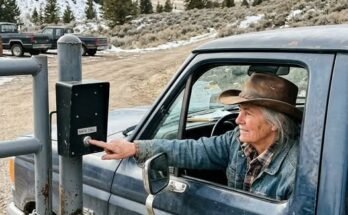
He still drove an old pickup.
Still checked the prices at the grocery store.
And still insisted that paying someone to clean his gutters was a waste of money.
Richard, on the other hand, had always been impressed by wealth.
Especially wealth belonging to somebody else.
When we first married, he was hardworking and ambitious. He worked in commercial real estate, wore inexpensive suits, and talked constantly about building something of our own.
I admired his determination.
We bought a modest house.
Saved for retirement.
And spent our first few years together imagining a future where we could travel without worrying about every dollar.
But somewhere along the way, Richard stopped wanting financial security and started wanting a lifestyle.
The expensive car.
The country club membership.
The restaurants where dinner cost more than our weekly grocery bill.
And whenever I questioned the spending, he’d remind me that my father had money.
“It’s not like you’ll ever have to worry,” he’d say.
At first, I thought he was joking.
Eventually, I realized he wasn’t.
Three months before I filed for divorce, I discovered Richard had been keeping a spreadsheet.
It was open on his laptop when I went into the study to print a document.
I wasn’t looking for anything.
I simply moved the mouse because the screen had gone dark.
And there it was.
A file titled:
FAMILY ASSET PROJECTIONS.
I should have closed it.
But beneath the title, I saw my father’s name.
And a column labeled:
Expected Distribution.
I stared at the screen.
My father’s house.
His retirement investments.
His former business interests.
A small vacation cabin he owned in the mountains.
Everything had been assigned an estimated value.
Beside the total was another column.
Richard’s 50% Marital Share.
I sat down.
For several seconds, I couldn’t breathe.
Richard had calculated an imaginary inheritance from a man who was still alive.
Then he’d assigned himself half of it.
The total he believed he’d receive was approximately $1.7 million.
I read the number three times.
Then I noticed another tab.
Planned Expenditures.
A new luxury SUV.
A condo in Florida.
Debt repayment.
Investment capital.
He’d already decided how to spend money my father hadn’t left to anyone.
And then I found something even worse.
A list of debts.
Credit cards I didn’t recognize.
Two personal loans.
And a business investment I knew nothing about.
Richard had been living beyond our means for years.
Instead of telling me the truth, he’d apparently decided my father’s eventual death would solve his financial problems.
I photographed the screen and closed the laptop.
When Richard came home, I asked him about it.
He didn’t even look embarrassed.
“It’s just planning.”
I stared at him.
“Planning for what?”
“Our future.”
“My father is alive, Richard.”
“I know.”
“Then why are you calculating how much money you’ll receive when he dies?”
He sighed.
“Don’t be dramatic.”
I felt something inside me go cold.
He continued.
“Your dad’s seventy-four. These are things responsible adults think about.”
I stared at him.
Then I said quietly, “My father has a name.”
Richard frowned.
“What?”
“His name is George. He’s a person, not an investment account.”
Richard rolled his eyes.
And that was the moment I realized how differently we saw the man who had raised me.
To me, Dad was the person who taught me to ride a bicycle.
The man who sat beside my bed when I had pneumonia.
The one who called every Sunday to ask whether I’d eaten properly.
To Richard, he was a financial event waiting to happen.
I didn’t file for divorce because of one spreadsheet.
It was the final piece of a much larger problem.
For years, Richard had hidden purchases, dismissed my concerns, and treated my salary as though it existed to support whatever he wanted.
When I tried to establish a budget, he accused me of being controlling.
When I suggested marriage counseling, he said we didn’t need it.
And when I finally told him I couldn’t continue living like that, he seemed less upset about losing our marriage than about losing access to the financial future he’d imagined.
“You’re making a huge mistake,” he told me the night I asked him to move out.
I looked at him.
“Richard, we’ve been unhappy for years.”
He shook his head.
“You’re walking away from eighteen years.”
“I know.”
He stepped closer.
“And you’re forgetting how much I’ve contributed.”
I took a breath.
“We’ll divide what we’ve built together fairly.”
His expression changed.
Then he said something I would never forget.
“Don’t think you’re walking away with your father’s fortune while I get nothing.”
I stared at him.
That was when I knew the divorce would be difficult.
The discovery process proved it.
Richard’s attorney requested financial information about my expected inheritance, even though my father was alive and had not transferred those assets to me.
My attorney objected to attempts to treat Dad’s property as part of our marital estate.
Meanwhile, the financial records revealed that Richard had accumulated more personal debt than I’d realized.
Some of it involved accounts opened during the marriage.
Some related to business decisions he’d made without discussing them with me.
Those issues genuinely needed to be addressed in the divorce.
But Richard kept returning to the same argument.
My father was wealthy.
I was his only child.
Therefore, Richard believed he deserved part of whatever I might inherit someday.
He said it during negotiations.
He said it to our mediator.
He said it in a message to my attorney.
Then, at a hearing concerning our finances, he insisted on making the argument directly to the judge.
That’s how we ended up in that courtroom.
With Richard talking about my father’s money.
And my father sitting quietly in the back row, very much alive.
After the judge made clear that Dad’s assets weren’t currently mine to divide, Richard tried another approach.
“But Your Honor,” he said, “my wife will have significant financial resources in the future.”
The judge looked at him.
“Future events may or may not occur, Mr. Collins.”
Richard frowned.
“But she’s his only child.”
“That does not establish a present ownership interest.”
Richard leaned forward.
“Everyone knows she’s going to inherit the business.”
I almost laughed.
Dad had sold the operating business several years earlier.
Richard knew that.
He simply preferred his imagined version of the estate because it produced a larger number.
The judge continued reviewing the relevant financial issues.
Our actual marital assets.
Our debts.
Retirement accounts.
And the property we legally owned.
Not the fortune Richard hoped to receive someday from my father.
I sat quietly.
I didn’t feel triumphant.
I felt tired.
Because after eighteen years of marriage, I was listening to a man I’d once loved argue that he should be compensated for the possibility of my father’s death.
And I wondered when our relationship had become so empty.
When the hearing ended, Dad was waiting outside.
He stood beside a bench in the courthouse hallway, holding his old jacket over one arm.
Richard came through the courtroom doors first.
The moment he saw Dad, he stopped.
“George.”
Dad nodded.
“Richard.”
For several seconds, neither spoke.
Then Richard tried to smile.
“I didn’t realize you were coming.”
Dad looked at him.
“I gathered that.”
Richard shifted uncomfortably.
“Look, I hope you understand that divorce proceedings can get complicated.”
Dad didn’t answer.
Richard continued.
“My attorney was only trying to protect my financial interests.”
Dad took a slow breath.
Then said something so quietly that I almost missed it.
“Richard, you’ve been discussing my death as though it’s a business opportunity.”
Richard’s smile disappeared.
“That’s not fair.”
Dad raised an eyebrow.
“Isn’t it?”
Richard looked toward me.
I said nothing.
Dad continued.
“You asked about my house. My savings. My company. And now you’ve asked a judge to award you half of something I haven’t given anybody.”
Richard’s face reddened.
“We were family for eighteen years.”
Dad nodded.
“Yes.”
Then he paused.
“And for eighteen years, you were welcome at my table.”
Richard looked away.
Dad’s expression hardened.
“But being welcome at my table never meant you owned what was in my wallet.”
My throat tightened.
Richard stared at him.
Then he said bitterly, “Well, I guess now I know what you really think of me.”
Dad nodded slowly.
“I think you’re a man who should be concentrating on ending his marriage responsibly instead of calculating what he might get when his father-in-law dies.”
Richard opened his mouth.
Then closed it.
For once, he had nothing to say.
He walked away without another word.
Dad watched him disappear around the corner.
Then looked at me.
“You hungry, sweetheart?”
I began crying.
Not because of the hearing.
Not because of Richard.
But because after everything that had happened, my father was still worried about whether I’d eaten lunch.
We went to a little diner near the courthouse.
Dad ordered a turkey sandwich.
I ordered soup I barely touched.
For a while, we sat quietly.
Then he looked at me.
“I have something to tell you.”
My stomach tightened.
“What?”
He folded his hands.
“Richard came to see me last autumn.”
I looked up.
“What?”
Dad nodded.
“He wanted to talk about an investment.”
I felt cold.
“What kind of investment?”
“He said he had a chance to buy into a commercial development. Claimed it was a once-in-a-lifetime opportunity.”
I stared at him.
“He never told me.”
Dad sighed.
“I suspected that.”
I took a breath.
“How much did he ask for?”
Dad hesitated.
Then answered.
“Four hundred thousand dollars.”
I nearly dropped my spoon.
“Four hundred thousand?”
“Yes.”
I stared at him.
“What did you say?”
“I told him no.”
I covered my mouth.
Dad continued.
“Then he asked whether I could consider it an advance against whatever you would inherit.”
I closed my eyes.
Of course.
That explained the spreadsheet.
The projected inheritance.
The debts.
Richard hadn’t simply been fantasizing about a future windfall.
He’d already tried to borrow against it.
My father continued.
“I told him an inheritance isn’t something he can borrow against without my involvement, and I had no intention of making that loan.”
I nodded.
Then whispered, “Why didn’t you tell me?”
Dad looked down.
“Because I didn’t want to interfere in your marriage.”
My throat tightened.
He continued.
“I hoped Richard would reconsider.”
I stared at him.
Dad’s expression softened.
“And I didn’t want you to feel you had to choose between your husband and your father.”
I reached across the table and took his hand.
“Dad, you should have told me.”
He nodded.
“I know.”
For a moment, we sat quietly.
Then he said, “There’s something else.”
I looked up.
Dad smiled faintly.
“After Richard left, I called my attorney.”
My stomach tightened.
“Why?”
“Because I realized I needed to make sure my own plans were clear.”
He paused.
“I’ve revised my estate documents.”
I stared at him.
“Dad, you didn’t have to do that because of Richard.”
He shook his head.
“I didn’t do it to punish him.”
Then he looked directly at me.
“I did it because I want to remain in control of my own life while I’m still here.”
My eyes filled.
He continued.
“I have plans, sweetheart.”
I laughed through my tears.
“Plans?”
He nodded seriously.
“Big ones.”
I smiled.
“Like what?”
Dad leaned back.
“I’m thinking about buying a camper.”
I stared at him.
Then burst out laughing.
“A camper?”
“Yes.”
“You’ve spent your whole life complaining about people who buy campers!”
He shrugged.
“I’m allowed to change my mind.”
I laughed harder.
Dad grinned.
“And your Aunt Susan wants to visit national parks. Apparently, she thinks we should see Yellowstone before we’re too old to enjoy it.”
I smiled through my tears.
Dad had been widowed for eleven years.
He’d spent most of that time maintaining the house, visiting old friends, and keeping his business interests organized.
I’d worried about how lonely he sometimes seemed.
Now he was talking about traveling.
Making plans.
Living.
And I realized how ridiculous Richard’s assumptions had been.
My father wasn’t finished with his life.
He was planning the next part of it.
The divorce continued for several more months.
There were arguments over financial records, disagreements about debts, and long meetings with attorneys.
Richard eventually stopped pursuing the imagined inheritance after it became clear that the court would address the property and obligations we actually had, rather than assets my father still owned.
That didn’t mean the remaining issues were simple.
They weren’t.
We had a house to sell.
Accounts to divide.
And debts to address according to the evidence and the applicable rules.
I had to accept that some financial losses would be part of ending the marriage.
But I also stopped feeling responsible for rescuing Richard from every consequence of his own decisions.
When the final judgment was entered, I walked out of the courthouse with my attorney.
For a moment, I stood on the steps, holding the paperwork.
Eighteen years.
A marriage that began with genuine love.
A future we’d once planned together.
And now a legal document confirming it was over.
I thought I would feel relieved.
Instead, I cried.
Because ending a marriage doesn’t automatically erase the grief of losing the life you imagined.
I drove to Dad’s house afterward.
He opened the door before I knocked.
“It’s done?” he asked.
I nodded.
He stepped aside.
“Come in, sweetheart.”
I walked into the familiar kitchen.
The same wooden table where I’d done my homework as a child.
The same window overlooking the backyard.
The same old clock ticking above the refrigerator.
Dad made coffee.
Then set a plate of sandwiches in front of me.
I laughed through my tears.
“Dad, I just got divorced.”
He nodded.
“I know.”
“And your first thought was sandwiches?”
He smiled.
“Divorce doesn’t mean you should skip lunch.”
I laughed.
Then cried again.
He sat across from me.
For a long time, neither of us spoke.
Finally, I whispered, “I feel like I wasted eighteen years.”
Dad looked at me.
“No, sweetheart.”
I wiped my cheeks.
He continued.
“You lived eighteen years. Some of them were good. Some were painful. And now you’re starting something different.”
I looked down.
He reached for my hand.
“Don’t let how it ended convince you that every day before it was worthless.”
I began crying harder.
Because that was exactly what I needed to hear.
Six months later, Dad bought the camper.
A used twenty-eight-foot motorhome that smelled faintly of old upholstery and pine-scented cleaner.
I laughed when he pulled into my driveway.
“You actually did it!”
He grinned.
“Told you.”
Aunt Susan sat in the passenger seat waving enthusiastically.
They were planning a three-week trip through Tennessee, Kentucky, and parts of the Midwest.
Dad had prepared a handwritten itinerary.
It was color-coded.
Naturally.
He’d always been that kind of man.
Before they left, he walked me through every compartment of the camper.
Showed me where the spare tire was stored.
Explained the water connections.
And demonstrated how to operate an awning I was fairly certain I’d never need to touch.
I smiled.
“Dad, you’re going on vacation. Not deploying to another country.”
He laughed.
“Preparation matters.”
Then his expression softened.
“You doing okay?”
I nodded.
“Better.”
He studied me.
“Really?”
I smiled.
“Really.”
He looked relieved.
Then he said, “Good.”
I hugged him.
And as he climbed into the driver’s seat, I realized something.
For the first time in years, I wasn’t thinking about what he would someday leave me.
I was thinking about how wonderful it was that he still had places he wanted to go.
A year after the divorce, Richard contacted me.
I hadn’t heard from him in months.
His message was short.
I hope you’re doing well. I’ve been thinking about how things ended. I owe you an apology.
I stared at the screen.
Part of me wanted to ignore it.
Another part remembered the man I’d married.
The younger Richard who used to bring home flowers from the grocery store because he knew I loved daisies.
The man who once drove through a snowstorm to pick me up when my car broke down.
The person I’d shared almost two decades with.
I took a breath.
Then replied.
I’m doing well. I hope you are too.
He responded a few minutes later.
I was wrong about your father’s money. I let my financial problems affect how I treated you. I’m sorry.
I read it twice.
Then put down the phone.
For a long time, I didn’t answer.
Not because I hated him.
I didn’t.
But I was no longer responsible for making him feel better about what he’d done.
Eventually, I wrote:
Thank you for acknowledging that. I hope you’ve found a healthier way forward.
And that was all.
No argument.
No reopening old wounds.
No pretending an apology erased everything.
Just an acknowledgment that we were now living separate lives.
Today, Dad is seventy-seven.
Still very much alive.
Still stubborn.
Still driving his old pickup when he isn’t taking the camper somewhere.
He’s visited seventeen states since that first trip.
He sends me photographs of mountains, lakes, strange roadside attractions, and terrible breakfasts he insists were delicious.
Last month, he called from a campground in Colorado.
“Guess what, sweetheart?”
“What?”
“I climbed a mountain.”
I laughed.
“Dad, you climbed a mountain?”
“Well, part of one.”
I smiled.
“How much?”
“Enough to count.”
I laughed so hard I nearly spilled my coffee.
Then he became serious.
“Listen, I’ve been thinking.”
I smiled.
“That usually means trouble.”
He chuckled.
“I want to take you on a trip next spring.”
My throat tightened.
“Me?”
“Yes.”
“Where?”
He paused dramatically.
“Anywhere you want.”
I looked toward the window.
For a moment, I couldn’t speak.
Then I whispered, “I’d like that, Dad.”
He sounded pleased.
“Good. We’ll make a plan.”
After we hung up, I sat quietly for a long time.
I thought about Richard standing in court, arguing that he deserved half of an inheritance that didn’t exist.
I thought about the spreadsheet listing my father’s properties and investments.
The imagined millions.
The expensive car Richard planned to buy.
The Florida condo.
The debt he hoped somebody else’s lifetime of work would erase.
And then I thought about my father.
Driving across the country.
Laughing with his sister.
Making memories.
Living the life he’d earned.
For years, Richard had looked at my father and seen a future financial settlement.
I looked at Dad and saw someone I still had the privilege of calling whenever I wanted.
The difference was enormous.
Last Sunday, I went to Dad’s house for dinner.
He was outside when I arrived, struggling with an old lawn chair he’d decided to repair.
I laughed.
“Dad, you could buy a new one.”
He looked offended.
“There’s nothing wrong with this chair.”
“One leg is shorter than the others.”
He shrugged.
“Then I’ll fix the leg.”
I shook my head.
Some things never change.
We spent the afternoon working in the garden.
He told me about his travels.
I told him about my new job and the little house I’d bought after the divorce.
Nothing extravagant.
Two bedrooms.
A small porch.
A garden that badly needed attention.
But it was mine.
And I loved it.
After dinner, we sat outside watching the sunset.
Dad looked toward the trees.
Then said, “You know, sweetheart, I’ve been thinking about my will again.”
I smiled.
“Oh, no.”
He laughed.
“Relax. I’m not dying.”
“I should hope not.”
He became thoughtful.
“I’ve spent my life trying to make sure you’ll be comfortable when I’m gone.”
My throat tightened.
“I know, Dad.”
He looked at me.
“But after everything that happened with Richard, I realized something.”
I waited.
He smiled.
“I’d rather help you make some good memories with me while I’m here than spend all my time worrying about what you’ll get afterward.”
Tears filled my eyes.
I reached for his hand.
“Dad, you don’t have to give me anything.”
He squeezed my fingers.
“I know.”
Then he smiled.
“That’s why I want to.”
I laughed through my tears.
We sat quietly as the sun slipped behind the trees.
And for a moment, I thought about how close I’d come to allowing somebody else’s greed to poison one of the most important relationships in my life.
Richard had treated my father’s death as an expected payday.
He’d made calculations.
Created spreadsheets.
And demanded that a judge award him part of a fortune he hoped would someday exist.
But the judge had asked one simple question.
Is her father deceased?
No.
He wasn’t.
He was alive.
And that was the most important fact in the entire courtroom.
Not the value of his house.
Not the business he’d built.
Not his investment accounts.
Just the fact that he was still here.
Still laughing.
Still making plans.
Still telling me to eat lunch.
Still teaching me things I hadn’t known I needed to learn.
My ex-husband wanted half my inheritance while my father was very much alive.
The judge told him there was nothing to divide.
And the more I think about it, the more grateful I am for that moment.
Because it reminded me of something Richard had forgotten.
My father wasn’t an estate waiting to be settled.
He was a person.
A father.
A friend.
A man who had worked hard, sacrificed, loved, grieved, and earned the right to enjoy what he’d built.
Whatever he eventually leaves behind will be his decision.
Until then, I hope he spends his money traveling, eating good food, helping people he loves, and making memories.
I hope he keeps taking photographs.
Keeps fixing things that would be easier to replace.
Keeps calling me with ridiculous stories from the road.
And I hope I get many more years of hearing his voice on the other end of the telephone.
Because Richard made one terrible mistake when he calculated the value of my father’s inheritance.
He counted every dollar my father owned.
But he never counted the value of having him alive.