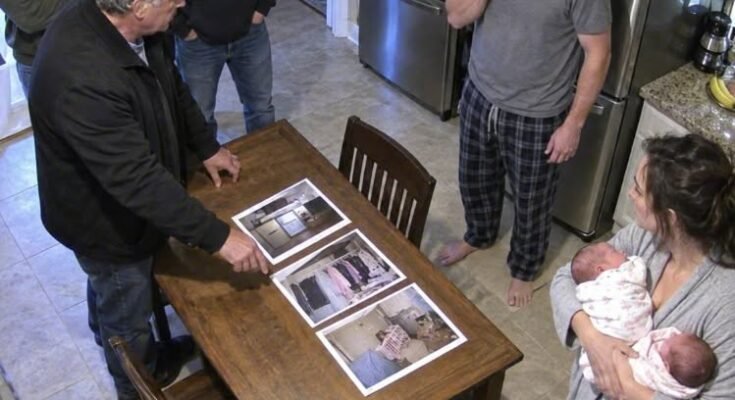
Three days after giving birth to twins, I discovered that my husband had given our bedroom to his mother, divided our groceries into two refrigerators, and decided our newborn daughters were my financial responsibility alone.
He stood in our kitchen, smiling proudly, and told me, “From now on, you buy your own food for yourself and the girls.”
I didn’t scream.
I didn’t cry.
I simply looked at him and said, “Okay.”
He thought I was surrendering.
By the following morning, he would realize that one little word had been the biggest mistake of his life.
And when my father placed two documents on our kitchen table, the truth would turn out to be far worse than either of us imagined.
My name is Lauren Whitmore. I’m thirty-four years old, and before that afternoon, I genuinely believed I’d married a decent man.
Ethan and I had been together for six years. We lived in a comfortable house outside Columbus, Ohio, worked stable jobs, and had spent years trying to become parents.
When our twin daughters, Mia and Sophie, were finally born, I thought our family was complete.
Their arrival hadn’t been easy.
The delivery had been complicated, and by the time the hospital discharged me, every movement seemed to pull at muscles I hadn’t realized existed.
I was exhausted, sore, and emotionally overwhelmed.
But I was also happy.
During the drive home, I kept looking into the back seat at the two tiny faces sleeping in their car seats.
“Can you believe they’re actually ours?” I whispered.
Ethan glanced at the rearview mirror.
“Yeah. Pretty crazy.”
I smiled.
I didn’t recognize the warning signs in his distracted expression.
Not yet.
All I wanted was to get home, take a warm shower, and rest in our bedroom while my husband held our daughters.
Instead, the moment I walked through the front door, I knew something was wrong.
There was an unfamiliar mechanical humming coming from the kitchen.
I followed the sound, carefully holding Sophie against my chest while Mia slept in her carrier.
And stopped.
Beside our refrigerator stood a second one.
It was enormous, stainless steel, and clearly brand-new.
Someone had taped a handwritten sign to its door.
**”ETHAN AND MOM.”**
I stared at the words.
Ethan appeared behind me.
“Surprise!”
He sounded genuinely pleased with himself.
Behind him stood my mother-in-law, Beverly, wearing a burgundy cardigan and a satisfied little smile.
“We made some improvements while you were gone,” Ethan announced.
I shifted Sophie higher against my shoulder.
“What improvements?”
He opened the new refrigerator.
Inside were neatly arranged steaks, vegetables, drinks, dairy products, and prepared meals.
“This one’s for Mom and me,” he explained. “You and the girls can keep using the old refrigerator.”
I stared at him.
“What?”
“It makes more sense this way. Everybody handles their own groceries.”
I waited for him to tell me it was a joke.
He didn’t.
“So we’re separating our food?”
“Exactly.”
“And I’m supposed to buy everything for the babies?”
He shrugged.
“Well, you’re their mother. You’ll be home with them all day.”
Beverly gave a little laugh.
“Oh, Lauren, don’t make it dramatic. Ethan works hard. He shouldn’t have to pay for everything you and the children need.”
Something about those words hurt more than I expected.
**The children.**
As though Mia and Sophie belonged to some stranger.
As though Ethan hadn’t spent months watching ultrasound appointments, decorating the nursery, and telling everyone how excited he was to become a father.
“Ethan,” I said slowly, “they’re three days old.”
He sighed.
“I know, Lauren.”
“And you’re already saying I have to support them alone?”
“You’re twisting my words.”
“Then explain what you mean.”
His expression hardened.
“You’ve always made more money than I do. You act like that means you get to make every decision. Well, things are changing.”
Beverly nodded approvingly.
“Marriage is about compromise.”
I looked from her to my husband.
They were both waiting.
Waiting for tears.
Waiting for an argument.
Waiting for me to become the unreasonable, emotional woman they could later describe to everyone else.
But I was holding my newborn daughter.
I had another baby asleep at my feet.
And I suddenly understood that arguing with them would accomplish absolutely nothing.
So I smiled.
**”Okay.”**
Ethan blinked.
“Okay?”
“Yes. I understand.”
Beverly looked delighted.
“See? I told you she’d be reasonable.”
I picked up Mia’s carrier and walked upstairs.
That’s when I discovered the refrigerator was only the beginning.
Our bedroom smelled different.
Not like our familiar laundry detergent or the lavender lotion I kept beside the bed.
It smelled like Beverly’s expensive perfume.
I opened the closet.
Her dresses hung beside my clothes.
Her handbags occupied the upper shelves.
Her embroidered slippers sat beside my reading chair.
Her face creams covered the bathroom counter.
I stood motionless.
Then I walked into the nursery.
The rocking chair I’d selected during my second trimester had been pushed against another wall.
The little bookshelf I’d arranged before going into labor had disappeared.
In its place stood a large cabinet filled with Beverly’s personal belongings.
**She hadn’t come to help us with the babies.**
**She had moved into my home. Into my bedroom. Into my life.**
And Ethan had permitted every bit of it while I was lying in a hospital bed.
I lowered myself carefully onto the nursery bed.
My abdomen ached.
For several moments, I simply stared at the floor.
The worst part wasn’t the furniture.
It was realizing my husband had waited until I was physically vulnerable to make changes he knew I would never have agreed to.
That realization brought back several conversations I’d tried to dismiss during my pregnancy.
About six weeks before the twins arrived, Beverly had started talking about selling her condominium.
“It’s getting too difficult for me to maintain,” she’d complained.
I’d suggested she consider something smaller.
Then she’d mentioned moving into our house.
“Just temporarily,” she’d assured me.
I’d been willing to discuss the downstairs guest room after the babies were born.
But Ethan had become strangely irritated when I suggested establishing boundaries.
“She’s my mother, Lauren. Why do you always need rules?”
Around the same time, he’d started asking unusual questions about our finances.
Whose name was on the deed?
How much equity did we have?
Did my employer offer extended paid maternity leave?
Could someone sign financial documents on my behalf if I was recovering from childbirth?
I’d answered some questions.
Others had made me uncomfortable.
One evening, Ethan brought home a folder and asked me to sign a document giving him temporary authority over certain financial matters.
“It’s just precautionary,” he explained.
I told him I’d review it with my father.
His expression changed immediately.
“Why does your dad need to be involved in our marriage?”
Because my father had spent his career managing construction projects and property transactions, I trusted his instincts about real estate documents.
When I showed him the paperwork, he studied it for several minutes.
Then he asked, “Why does Ethan need authority to sign documents involving your house?”
“I don’t know.”
“Then don’t sign anything until you do.”
My father also reminded me of something important.
I’d purchased our house before marrying Ethan, using savings and money my late mother had left me.
**My name alone appeared on the deed.**
We’d treated the property as our family home, but Ethan had never become a titled owner.
Dad wasn’t suggesting that Ethan had no legal interests a court might eventually consider.
He was warning me that nobody should be borrowing against property in my name without my informed consent.
After that conversation, I’d started keeping copies of our important financial records.
I’d also enabled alerts on my accounts.
I never imagined how important those precautions would become.
Now, sitting in the nursery three days after giving birth, I realized my father had been right.
I reached for my phone.
First, I photographed the refrigerator and its handwritten sign.
Then Beverly’s belongings in our bedroom.
Then the nursery.
I sent the pictures to my father.
But I didn’t call him yet.
I needed to get my daughters settled.
That evening, I fed both girls, changed their diapers, and placed them carefully in their bassinets.
By then, my back was aching so badly that I could barely straighten it.
I lay down in the nursery.
Downstairs, Ethan and Beverly were talking.
Their voices carried through the hallway.
“You handled that perfectly,” Beverly said.
Ethan chuckled.
“She didn’t even argue.”
“Of course not. She knows things have changed.”
A pause followed.
Then Beverly continued.
“She spent years thinking she was in charge because she earned more money. Now she’s got two babies to look after. She’ll have to learn.”
Ethan laughed.
And then came the sentence that changed everything.
**”Where would she go anyway? Who’s going to take in a woman with two newborns?”**
I stopped breathing for a moment.
They laughed together.
My husband wasn’t worried about losing his wife.
He believed I had nowhere to go.
He believed motherhood had made me powerless.
I looked toward Mia and Sophie.
Their tiny chests rose and fell beneath their blankets.
I thought about the kind of women I wanted them to become.
Brave.
Independent.
Able to recognize love without confusing it with control.
And I made a promise.
**They would never learn from me that marriage required accepting humiliation.**
I picked up my phone and typed another message to Dad.
“Please come before breakfast. Bring Owen and Caleb. Don’t tell Ethan you’re coming.”
His reply came almost immediately.
“We’re leaving tonight. You and the girls won’t face this alone.”
Then I forwarded him the financial alert I’d received while I was in the hospital.
It had come from our mortgage lender.
Someone had requested information related to the equity in my property.
At the time, I’d been too occupied with childbirth to investigate.
Now I wanted answers.
My father called me quietly.
“Lauren, did you authorize anyone to apply for a loan?”
“No.”
“Did you sign anything?”
“No.”
There was a long silence.
“Then we’re going to find out what happened.”
I barely slept that night.
Not because I was afraid of Ethan.
Because every hour seemed to reveal another detail I’d previously ignored.
The sudden secrecy around his phone.
The unfamiliar paperwork.
Beverly’s aggressive interest in our house.
And his insistence that I wasn’t going anywhere.
Just before dawn, two vehicles pulled into the driveway.
I checked both babies before going downstairs.
My father entered first.
Behind him came my brothers, Owen and Caleb.
Owen was an attorney who worked regularly with property matters.
Caleb handled bookkeeping for a small business and had always been remarkably good at spotting numbers that didn’t belong.
Dad walked into the kitchen.
He saw the second refrigerator.
Read the label.
Then looked at me.
“She moved into your bedroom too?”
I nodded.
He closed his eyes briefly.
Owen placed a leather folder on the kitchen table.
Inside were copies of records I’d authorized him to help me obtain and review.
My father looked through the papers.
Then he selected two documents.
“Before Ethan comes downstairs,” he said, “I want you to understand something.”
I pulled out a chair.
He sat opposite me.
“This is an attempted transaction. It hasn’t been approved.”
I felt my pulse quicken.
“What transaction?”
He turned the first paper toward me.
**An application for a $286,000 home-equity loan.**
The applicant’s name was Lauren Whitmore.
My name.
At the bottom appeared a signature that looked remarkably similar to mine.
But I hadn’t signed it.
I stared at the paper.
“That’s not my signature.”
“I know,” Dad said.
My hands began trembling.
The second document was a lender’s notice indicating that the application had been placed on hold because ownership and authorization information needed further verification.
Nothing had been funded.
But someone had tried.
And suddenly, Ethan’s strange financial questions made horrifying sense.
Footsteps sounded on the stairs.
Ethan entered the kitchen wearing a navy T-shirt and sweatpants.
He looked irritated.
“Why are there cars outside?”
Then he noticed the three men.
“What the hell is going on?”
My father pointed toward the table.
“Sit down, Ethan.”
Ethan looked at the first document.
Then the second.
His expression changed.
“Where did you get that?”
Nobody answered immediately.
Finally, Dad said, “My daughter didn’t authorize this loan.”
Ethan swallowed.
“It wasn’t supposed to go through yet.”
The words seemed to hang in the kitchen.
**Yet.**
Not “I know nothing about it.”
Not “There must be a mistake.”
“It wasn’t supposed to go through yet.”
Owen leaned forward.
“Are you saying you knew an application had been submitted using Lauren’s name?”
Ethan ran a hand through his hair.
“It was just preliminary.”
“A preliminary application with a signature she didn’t provide?”
“It’s complicated.”
“Then explain it,” I said.
Ethan looked at me.
For a moment, he seemed almost offended.
“Lauren, you know Mom needs help.”
“Help with what?”
“Getting settled. Making sure she has somewhere secure to live.”
I glanced toward the second refrigerator.
“You’ve already given her my bedroom.”
“This isn’t about the bedroom.”
“Then why is my name on a loan for almost three hundred thousand dollars?”
He looked away.
Caleb slid another page onto the table.
“And why do the disbursement instructions name Marshbridge Properties?”
Ethan frowned.
“What?”
Before anyone could answer, Beverly appeared in the doorway.
She wore a silk robe and an irritated expression.
“What is all this noise?”
Then she saw the documents.
Her face changed.
“Those are private papers.”
My father stood.
“They concern my daughter’s property.”
Beverly folded her arms.
“Family financial arrangements are none of your business.”
“They become my business when my daughter asks for help,” Dad replied.
Owen turned the last page toward Beverly.
“Who owns Marshbridge Properties?”
She stared at him.
“That’s not relevant.”
“It seems extremely relevant.”
Ethan looked from her to Owen.
“Mom, tell them what we agreed to.”
She didn’t answer.
Instead, she reached for the folder.
Owen pulled it out of reach.
“Those documents need to stay intact.”
Beverly’s face flushed.
“How dare you come into my son’s home and interrogate us?”
I stood carefully.
The movement sent a sharp ache through my abdomen.
“It’s my home, Beverly.”
She laughed.
“Oh, please. Ethan has lived here for years.”
“Yes,” I replied. “And until yesterday, I thought that meant something very different.”
Ethan slammed his palm against the counter.
“Enough! You’re all acting like we robbed a bank!”
My father didn’t raise his voice.
“No money was released, thankfully. But somebody attempted to borrow against a house they weren’t authorized to pledge.”
Ethan looked at his mother.
“Tell them it was only for the renovation.”
My eyes narrowed.
“What renovation?”
Beverly hesitated.
Then she said, “We were planning improvements. Something that would benefit the whole family.”
I looked around the kitchen.
“By separating the groceries and removing me from my own bedroom?”
She opened her mouth.
Nothing came out.
For the first time since I’d met her, Beverly seemed uncertain.
Then Sophie began crying upstairs.
The sound cut through the argument.
I immediately turned toward the staircase.
My father touched my shoulder.
“Go take care of your daughter. We’ll keep the paperwork here.”
As I climbed the stairs, Ethan called after me.
“Lauren, don’t make this worse than it has to be.”
I stopped on the landing.
Turned around.
And said something I should have said long before.
**”You made our daughters your responsibility the moment they were born, Ethan. You don’t get to decide they belong only to me.”**
Then I went upstairs.
I picked up Sophie.
Her tiny hand curled around my finger.
Mia stirred in the other bassinet.
I sat down between them, fighting tears.
For the first time, I allowed myself to acknowledge the truth.
My marriage might already be over.
But my responsibility to these little girls was just beginning.
Downstairs, the conversation continued.
When I returned with Sophie, Beverly was insisting that she had done nothing wrong.
“It’s perfectly normal for families to invest in property together,” she argued.
Owen looked at her.
“Then why wasn’t Lauren consulted?”
“Because she’s emotional right now.”
I almost laughed.
There it was.
The explanation they would use for everything.
If I objected, I was emotional.
If I asked questions, I was difficult.
If I refused, I was unreasonable.
I looked directly at Beverly.
“I’m emotional enough to recognize a signature I didn’t write.”
Ethan sank into a chair.
“Mom said we could straighten out the paperwork after the babies came.”
Owen’s gaze sharpened.
“Who prepared the application?”
Ethan hesitated.
“Mom knew someone who could help.”
“Who?”
“I don’t remember.”
Beverly interrupted.
“This is ridiculous. You people are twisting something harmless into a scandal.”
My father rested both hands on the table.
“Then you shouldn’t object to the lender reviewing the application and determining who submitted it.”
Beverly went silent.
That silence told me more than any argument could have.
Over the next hour, we began uncovering the first pieces of the truth.
The proposed loan wasn’t simply for renovations.
Someone had supplied financial information associated with my employment, an estimate of my property’s value, and instructions involving an unfamiliar company.
Marshbridge Properties.
Ethan insisted it was a family investment business his mother had organized.
According to him, they had planned to renovate our home, help Beverly downsize, and create a financial cushion for the twins.
But he couldn’t explain why the money needed to pass through a separate business account.
He also couldn’t explain why I hadn’t been consulted.
Finally, I asked him a question.
“Did you know someone was going to use my signature?”
His silence lasted several seconds.
Then he whispered, “I thought Mom had worked that out.”
My father looked at him with an expression of unmistakable disappointment.
“You have two newborn daughters upstairs, Ethan.”
Ethan stared at the floor.
“And instead of caring for your wife and children, you’re sitting here explaining why you thought your mother could use your wife’s identity without asking.”
Beverly snapped, “Stop speaking to my son that way.”
Dad turned toward her.
“Then stop putting him in a position where he has to explain your actions.”
She looked away.
I was still exhausted.
Still in pain.
But something had changed.
For weeks, I’d felt as though I were being slowly cornered.
Now the corner had disappeared.
I had my family.
I had the documents.
And for the first time, I could see my situation clearly.
I turned to Ethan.
“I need you and your mother to leave.”
He stared at me.
“What?”
“Take your personal belongings. Stay somewhere else while we work out the next steps.”
“You can’t throw me out of my own home!”
“I’m not asking you to disappear from our daughters’ lives,” I said. “I’m asking you to leave this house voluntarily because I don’t feel safe trusting you with my finances.”
Owen intervened.
“Nobody is suggesting we settle property rights through a shouting match. If you disagree, we’ll handle it properly through attorneys.”
Ethan stared at him.
Then at my father.
Finally, he looked toward the stairs.
For a moment, I thought he might apologize.
Instead, he said, “You’re really doing this because of a refrigerator?”
I felt something inside me break.
Not painfully.
Almost cleanly.
**”No, Ethan. I’m doing this because you looked at our daughters and decided they were someone else’s problem.”**
He had no answer.
Beverly, however, had plenty.
She called me ungrateful.
Selfish.
Manipulative.
She accused my father of interfering in our marriage.
She told Owen he was abusing his professional knowledge.
Then she announced she wouldn’t leave because she had already made herself comfortable.
Caleb spoke for the first time in several minutes.
“Beverly, Lauren offered you a guest room. You took her bedroom while she was giving birth.”
“Your sister never appreciated what we did for her.”
Caleb looked at the refrigerator.
“What exactly did you do for her?”
Beverly said nothing.
Eventually, Ethan agreed to spend a few nights at a friend’s apartment.
Beverly reluctantly packed some clothes and followed him.
The rest of her belongings remained upstairs until we could arrange a proper collection.
I didn’t celebrate when their car disappeared.
I sat at the kitchen table and cried.
Not because I wanted Ethan back.
Because I was finally grieving the husband I thought I’d had.
My father pulled out the chair beside me.
“I kept hoping I was wrong,” I whispered.
He put his arm around my shoulders.
“You gave your marriage a chance. Now you have information you can act on.”
That morning, we contacted the lender’s fraud department, confirmed that no money had been advanced, and began the process of formally disputing the application.
I also spoke with my bank about protecting my accounts and reviewing recent transfers.
Owen encouraged me to retain an independent family-law attorney so there would be no confusion about representation.
By afternoon, I had appointments arranged and a clearer picture of what needed to happen.
But the most disturbing discovery was still waiting.
Two days later, Caleb helped move Beverly’s belongings out of the nursery.
I wanted the rocking chair back beside the window.
I wanted the little bookshelf returned.
I wanted the room to feel like it belonged to Mia and Sophie again.
As Caleb shifted Beverly’s cabinet away from the wall, something fell behind it.
A thick envelope.
It had been wedged between the cabinet and the baseboard.
“Lauren?” Caleb called.
I was standing in the hallway holding Mia.
“What is it?”
He handed me the envelope.
There was no name on the outside.
Inside were several printed documents.
A business registration.
A draft property purchase agreement.
A proposed transfer schedule.
And a sheet containing handwritten notes in Beverly’s familiar sloping handwriting.
I read the first page.
Then the second.
My mouth went dry.
**Marshbridge Properties wasn’t a renovation contractor.**
It was a real estate holding company.
And according to the documents Beverly had left behind, it was connected to a condominium purchase in Myrtle Beach, South Carolina.
I flipped through the papers.
The address was unfamiliar.
The purchase price was close enough to the proposed loan amount to make my stomach sink.
Then I saw a note beside the payment instructions.
“Funds needed before closing.”
I immediately photographed every page.
Caleb called Owen.
By that evening, we had begun verifying what the documents appeared to show.
The company existed.
The proposed property purchase was real.
And the money from the unauthorized loan had apparently been intended to finance something very different from the family improvements Ethan had described.
I called him.
“Did your mother tell you she was buying a condominium in Myrtle Beach?”
He sounded confused.
“What condominium?”
“The one listed in the paperwork we found.”
A pause.
Then he said, “That must be part of the investment.”
“Ethan, it’s a residential condo.”
“Mom said she was setting up something for our future.”
“Did she show you the ownership agreement?”
“Not yet.”
I closed my eyes.
Of course she hadn’t.
I wanted to feel sorry for him.
But every time I remembered his laughter downstairs that first night, the feeling vanished.
**He had been willing to take control of my life before bothering to understand whose interests he was protecting.**
I refused to make another financial decision without professional advice.
Over the following weeks, the dispute widened.
The lender requested information about the disputed signature.
Records connected to the attempted application were preserved.
My attorney helped me separate what was known from what still needed investigation.
Meanwhile, a review of our joint accounts revealed something else.
Ethan had transferred $18,400 from our shared emergency savings over several weeks.
He claimed the money was a temporary contribution toward Beverly’s housing expenses.
He hadn’t told me.
He hadn’t asked.
And he hadn’t considered how much emergency savings mattered when we had two newborn children.
My attorney made sure those transfers were documented and addressed during our financial negotiations.
I had thought the refrigerator was an insult.
Now I understood that it had been one visible piece of a much larger pattern.
Beverly wanted me isolated.
Ethan wanted me dependent.
And both had underestimated how carefully I’d prepared for motherhood.
The months that followed were difficult.
There were nights when both babies cried at the same time and I wondered how I would manage.
There were mornings when I woke exhausted and wished I could call the Ethan I’d known years earlier.
But that version of him no longer seemed to exist.
My father stayed nearby whenever I needed help.
Caleb repaired the nursery bookshelf and restored the rocking chair to its original place.
Owen helped me organize documents without letting legal matters consume every waking hour.
And slowly, the house began to feel like home again.
Ethan asked to see the girls.
I didn’t refuse him a relationship with his daughters.
We established a temporary arrangement while our attorneys worked through the broader questions of parenting, support, and separation.
During one visit, I watched him hold Mia.
She reached toward his face.
He smiled sadly.
“She has your eyes.”
I nodded.
“She has your smile.”
His expression shifted.
For a moment, neither of us spoke.
Then he whispered, “I really messed this up.”
I looked at Sophie sleeping beside me.
“Yes,” I said. “You did.”
He swallowed.
“Do you think we could ever fix it?”
I thought about the kitchen.
The sign on the refrigerator.
The conversation downstairs.
The documents.
**The way he’d laughed at the idea that nobody would take in a woman with two newborn babies.**
“I don’t know how I could trust you again,” I answered.
He looked away.
I didn’t soften the truth to make him feel better.
For too long, I’d been expected to manage everyone’s feelings except my own.
Several months after the girls were born, Ethan finally admitted that Beverly had encouraged him to establish financial control before my maternity leave began.
“She said you’d always treated me like I wasn’t important because you earned more,” he explained.
“And you believed her?”
He stared at his hands.
“I believed what I wanted to believe.”
It was the first answer he’d given that sounded remotely honest.
He also admitted he’d known Beverly intended to borrow against the house.
He claimed he hadn’t understood the full application process or the implications of using my signature.
I told him that ignorance didn’t erase his responsibility.
He agreed.
But the final truth about Beverly was still incomplete.
Her attorney had begun responding to questions about the attempted transaction.
She insisted the application was a misunderstanding.
She insisted Marshbridge Properties was legitimate.
She insisted Ethan knew everything.
Then the lender’s records and the documents recovered from my nursery allowed the financial arrangements to be examined more closely.
What emerged was astonishing.
Beverly had been under considerable financial pressure.
Her condominium had expenses she hadn’t disclosed.
She had outstanding personal debts.
And she had been looking for a way to purchase a new property without using money she didn’t have.
The proposed home-equity loan was her solution.
But there was an even more disturbing detail.
Ethan believed Marshbridge Properties belonged to him and his mother jointly.
He’d spoken about it repeatedly as their investment.
He thought the borrowed money would eventually benefit both of them.
**He was wrong.**
The operating agreement found among Beverly’s papers identified her as the company’s sole member.
Ethan wasn’t listed as an owner.
He wasn’t entitled to any of the proposed property’s equity under those documents.
But another draft involved him as a potential personal guarantor for associated financing.
I read those pages several times.
Then I looked at Owen.
“Does Ethan know?”
“I don’t think he does.”
I stared at the ownership agreement.
Beverly hadn’t merely tried to take money from me.
**She had also been preparing to leave her own son responsible for obligations involving an asset he wouldn’t own.**
And she had convinced him to help her do it.
When the documents were presented during the continuing negotiations, Ethan looked genuinely stunned.
“That’s impossible,” he said.
His attorney handed him another copy.
He read it silently.
Then he turned toward Beverly, who had accompanied him.
“Mom?”
She stiffened.
“What?”
“Why isn’t my name here?”
“It’s complicated.”
He stared at her.
“You told me we were building something together.”
“We were.”
“Then why does everything belong to you?”
She looked toward her attorney.
No one answered for her.
Ethan flipped to the draft financing instructions.
“And why am I listed here?”
Beverly reached for his arm.
“Honey, we were going to sort all that out.”
He pulled away.
For a moment, I saw the expression he’d worn in our kitchen when my father first placed the loan documents in front of him.
Confusion.
Fear.
Recognition.
But this time, his mother was the person he was staring at.
“You were going to leave me responsible for the debt?”
Beverly’s voice sharpened.
“After everything I’ve done for you, you’re questioning me?”
Ethan looked down at the agreement again.
And something in his expression seemed to collapse.
He had given his mother our bedroom.
He had divided our food.
He had treated his newborn daughters as expenses he could refuse.
He had watched me recover from childbirth and assumed I had nowhere to go.
All because he believed he and Beverly were protecting their future.
Now he was discovering that **the future Beverly had planned didn’t include giving him an ownership stake at all.**
The cruelty of it was almost difficult to comprehend.
But it didn’t make Ethan innocent.
He’d willingly participated in humiliating his wife.
He’d willingly let his mother move into our bedroom.
He’d willingly agreed to financial arrangements he knew I hadn’t approved.
Beverly’s betrayal of him didn’t cancel his betrayal of me.
It only revealed how thoroughly she had manipulated the situation.
In the end, the unauthorized loan was never funded.
The lender completed its review without approving the disputed transaction, and the documentation remained part of the formal record of what had happened.
Ethan and I proceeded with our separation and eventually reached a divorce settlement.
Questions involving the house, financial transfers, child support, and parenting responsibilities were handled through the appropriate legal process.
It wasn’t immediate.
It wasn’t painless.
And there was no magical moment when signing a paper erased six years of memories.
But it was a beginning.
Beverly stopped contacting me directly after our attorneys established clear boundaries.
Ethan moved into a small apartment and began learning what parenting actually required.
Not announcing himself as a father.
Not posing for photographs.
But showing up, contributing, keeping commitments, and doing the ordinary work of caring for his children.
I couldn’t promise him forgiveness.
But I could insist on responsibility.
As for the refrigerator, it remained in my kitchen for several weeks after Ethan moved out.
Every time I walked past it, I remembered that handwritten sign.
“ETHAN AND MOM.”
Eventually, I had the refrigerator removed.
The empty space seemed enormous.
Then one afternoon, my father helped me rearrange the kitchen.
We moved a small table closer to the window.
I placed a basket of baby supplies on one shelf and photographs of the girls on another.
For the first time since coming home from the hospital, the room felt peaceful.
Months later, when Mia and Sophie were old enough to sit in their high chairs, I told Dad I was thinking about selling the house.
“Too many memories?” he asked.
“Some days.”
He looked around.
“Then make new ones before you decide.”
So I did.
I returned to work after maternity leave.
I hired dependable childcare.
I took the twins to the park.
I watched them learn to crawl, laugh, and recognize their grandfather’s voice.
I discovered that the life I’d feared losing was still mine to build.
And then, nearly a year after that terrible homecoming, one final document arrived through my attorney.
It was a copy of a message Beverly had sent during the earliest planning stages of the property purchase.
The message concerned the ownership arrangement for Marshbridge Properties.
I read it once.
Then again.
Beverly had requested that the purchase and company ownership remain entirely in her name.
She had specifically instructed that Ethan not be added as an owner.
The message also made clear that she expected him to continue assisting with the financial arrangements while she completed the purchase.
But it was one particular sentence that stayed with me.
**”Ethan believes we’re doing this together, but I need the property secured in my name alone.”**
I sat staring at those words.
There it was.
The final piece.
My husband had believed he was taking control of his family.
His mother had been using that belief to take control of him.
The second refrigerator had been labeled “ETHAN AND MOM.”
The proposed property documents told a different story.
**Beverly intended to own the investment alone.**
She had been prepared to take my home’s equity, use her son to help obtain it, and leave him without the ownership he believed he’d been promised.
And Ethan had almost helped her succeed.
I set the document down.
For a long time, I didn’t move.
Then Sophie laughed from the living room.
Mia answered with a delighted squeal.
I walked toward them.
They were sitting on the floor, surrounded by colorful blocks, arguing in their own adorable baby language over a yellow plastic duck.
I sat between them.
Mia climbed into my lap.
Sophie reached for my hand.
And I understood something that had taken me almost a year to fully believe.
**I’d never been the powerless person Ethan thought I was.**
I’d been a tired new mother recovering from childbirth.
A wife who’d trusted the wrong people.
A woman frightened by the possibility of raising two daughters without the marriage she’d expected.
But none of those things made me weak.
They made me human.
That evening, I opened our refrigerator to prepare dinner.
There was only one refrigerator now.
Its shelves held everything our little family needed.
Fresh fruit.
Vegetables.
Milk.
Leftovers from the dinner Dad had brought the night before.
And on the door were two tiny handprints made with washable paint.
Below them, in my father’s careful handwriting, were two names.
“MIA AND SOPHIE.”
I looked at those little handprints and smiled.
Almost a year earlier, Ethan had divided our kitchen because he thought I had no choice but to accept whatever he decided.
He’d said, “Buy your own food for you and the girls.”
I’d answered, “Okay.”
What he hadn’t understood was that I wasn’t agreeing to live by his rules.
**I was agreeing to stop letting him write the rules of my life.**
And in the end, the biggest surprise wasn’t that I had a home without Ethan and Beverly.
It was that the home felt more like a family without their control than it ever had before.
Because a family isn’t defined by whose name is taped to a refrigerator.
It is defined by who shows up when someone is hurting, who protects the vulnerable, and who understands that love is a responsibility—not a bargaining chip.
My husband thought two newborn babies had trapped me.
**Instead, they gave me the courage to open the door and walk into a different future.**
And that future belonged to all three of us.