Part 3
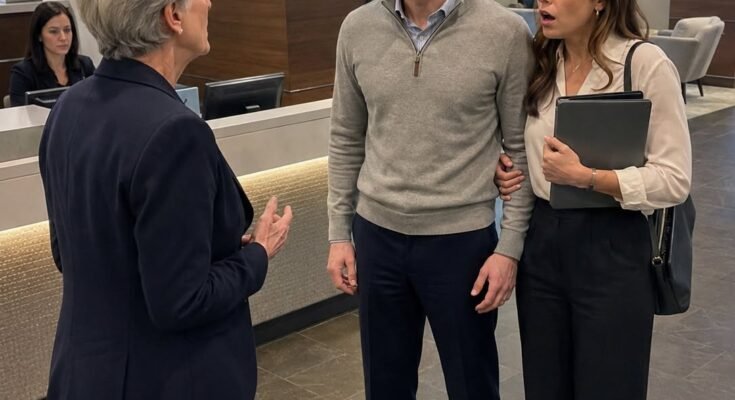
She recovered enough to answer. Barely. We got through the onboarding — brand positioning, launch timeline, media targets — with the stilted professionalism of two people pretending the last twelve hours hadn’t happened. I didn’t bring up the text messages. I didn’t need to. The contract sat on the table between us the whole time, my name printed at the bottom of every page: **Clara Rowan, Founder & CEO, Rowan Strategies.**
Ethan barely spoke the entire meeting. He kept glancing at the framed press features on my conference room wall — a magazine cover, a panel photo, a headline about the firm’s fastest-growing client roster in the region — like he was reading his sister’s biography for the first time and realizing he’d never once asked to read it. At one point he opened his mouth like he was going to say something, then closed it again when Sabrina shot him a look that clearly meant *not now.*
At 11:20, I walked them back to the elevator myself. Professional to the end.
“We’ll have the first campaign draft to your team by Friday,” I said to Sabrina. “Jamie will coordinate the calendar.”
“Thank you,” she said quietly. It was the first thing she’d said to me all morning that wasn’t a mistake.
The elevator doors closed, and I stood in the lobby for a moment, letting the marble letters behind me — my name, my company — settle into something that finally felt earned instead of explained.
My phone buzzed twenty minutes later. My mother.
“Ethan just called me,” she said, without a hello. “Clara, why didn’t you tell us you own a whole company?”
“You never asked,” I said. “You told people I did something in marketing.”
“We didn’t know—”
“You didn’t ask,” I repeated. “There’s a difference.”
She was quiet for a moment. In the background, I could hear my father’s voice, low, asking what was going on.
“I think we owe you a conversation,” my mother finally said. “A real one. Not at Sunday dinner. Somewhere just us.”
I didn’t say yes right away. I’d spent a decade saying yes immediately, grateful for any scrap of attention, and I wasn’t interested in going back to that version of myself just because Ethan’s wife had finally learned my last name.
“I’m free Thursday evening,” I said. “Just you and Dad. Not Ethan. Not Sabrina. Not Aunt Denise and her red hearts.”
“Okay,” my mother said. “Thursday.”
We met at a quiet restaurant, not the one from Sunday dinners past, somewhere new, neutral, mine to choose. My father apologized first, stiffly, the way men who’ve never had to apologize for much tend to — a lot of clearing his throat, a lot of looking at the menu instead of at me. My mother cried a little, which surprised me more than anything Sabrina had said in that lobby. She said she’d spent so many years treating Ethan’s confidence as something to protect that she’d stopped noticing mine had never needed protecting in the first place — it had just never been asked about.
It wasn’t a full repair. Ethan and I still haven’t had our conversation; last I heard, Sabrina Lux Interiors’ campaign is on track, and our account manager reports that Sabrina has started double-checking her tone in every email she sends my team, which tells me everything I need to know about what she actually learned that Monday.
But my parents call more now. Real questions. About the firm, the clients, the year-over-year growth I used to mention and watch land nowhere.
I still keep that unopened bottle of cabernet in my kitchen. I haven’t decided if I’ll ever drink it, or if it’s better as a reminder of the version of myself who used to buy gifts for people who wouldn’t set a place for her at the table.
Either way, nobody gets to decide anymore whether I’m in the picture.
I own the studio now.