
Part 1: The Comment
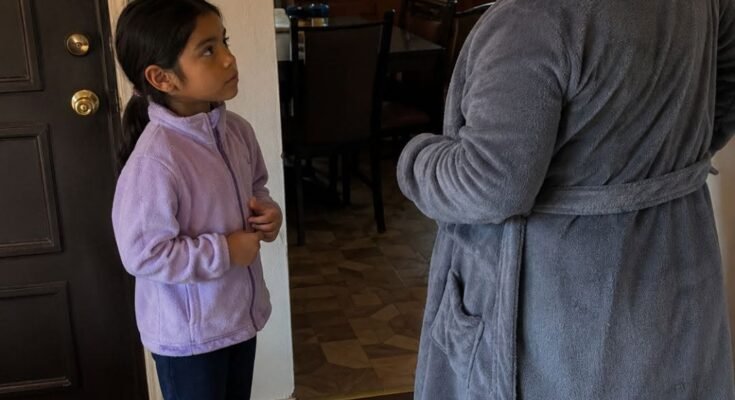
It was a Tuesday, around five o’clock. Lucía got home from school like always, dumped her backpack by the front door, and half-kicked off her sneakers without even untying them. Then, with zero malice, she said: “Mom, sometimes Martina smells funny.”
I spun around so fast it startled her. “We never say things like that,” I snapped immediately. “Never. Do you hear me? Never.” I was sharp. Too sharp. In that moment, I was convinced I was doing the right thing. What a mother is supposed to do. Teach manners. Teach respect. Teach her not to hurt people with her words.
I lectured her about how we don’t comment on other people’s smell, their clothes, or how they look. I told her we never know what’s going on behind closed doors at someone else’s house, and that words can do more damage than we realize.
Lucía just looked at me in silence. She didn’t cry. She didn’t argue. She just quietly said: “But I didn’t say it to her.”
At the time, I didn’t understand what she meant.
Over the next few days, I started noticing little things. The juice boxes were running out faster than usual. The cookies in the pantry were disappearing almost instantly. Two scrunchies were missing from the bathroom. And Lucía’s favorite gray hoodie had been MIA for a week.
I asked her about the hoodie. She just shrugged. “I don’t know.” I figured she’d left it in her classroom or at a friend’s house. At eight years old, that happens all the time. One morning, she even asked me to pack extra snacks for recess. “I’ve just been hungrier lately,” she said. And I believed her.
During those days, we had that damp, bone-chilling cold that creeps up the sleeves of your coat and refuses to leave. The kind of cold that lingers in the apartment entryway, on the stairs, and in damp jeans walking home from school. It didn’t need to be freezing to feel like the dead of winter.
Part 2: The Confession
One evening, after dark, the doorbell rang. Lucía was drawing at the living room table, and I was cleaning up the kitchen. I opened the door and found Martina’s mother standing there. I only knew her by sight—a quick nod at school drop-off, nothing more. That night, she looked exhausted. Her eyes were red, and her hair was slightly damp, like she’d been out in the weather for a while. She was clutching her purse to her chest so tightly that my stomach dropped before she even opened her mouth.
“I’m so sorry to show up unannounced like this,” she said, “but I think you need to know.”
I stepped aside to let her into the hallway, pulling the door halfway shut behind her. She looked down and blurted it out all at once, the way you do when you know that if you don’t say it fast, you won’t be able to say it at all. “My daughter and I have been sleeping in our car for the last few days. We lost our apartment.”
I remember the silence that followed. There are some sentences that just don’t belong in a normal evening. They drop right into the middle of your home and bring everything to a grinding halt. Her voice cracked as she kept talking. “I didn’t want anyone to find out. Especially not at school. I didn’t want Martina to be singled out. But your daughter noticed.”
By this point, Lucía was standing right behind me, still holding a pencil. Martina’s mom wiped her eyes and continued. “She’s been giving her food. She brought her hair ties. She gave her a hoodie because it gets so cold in the car at night. And she told her not to give anything back, so she wouldn’t feel bad.”
I turned to look at my daughter. She didn’t look proud of herself. She didn’t look like she was waiting for a medal. Honestly, she looked worried. Like she was terrified us adults were going to ruin this fragile thing she’d been trying to protect.
“Why didn’t you tell me?” I asked. She looked down at the floor and answered with a calmness that completely floored me: “Because you would have made a huge deal out of it.”
And she was right. Kids have a way of saying small things that put you right in your place better than any lecture ever could.
Part 3: The Lesson
I invited them in. Not with grand speeches. Not with that weird, condescending tone adults sometimes use when we want to “help” and accidentally make the other person feel small. I just said, “Come inside. It’s freezing out there.”
At first, it was just supposed to be for one night. Then one night turned into almost two months. They slept in the guest room. We ate breakfast together. I’d set out clean towels without saying a word. I’d leave folded laundry on a chair like it was the most natural thing in the world. I set the table for four instead of two.
I’m not going to romanticize that time. It wasn’t perfect. It wasn’t always comfortable. We had to figure out logistics, navigate shared spaces, and be careful with our silences. We had to learn not to be intrusive, not to ask too many questions, and above all, not to turn the help into a spectacle.
But over those two months, I realized something. I was still thinking in terms of helping. Lucía wasn’t. Lucía wasn’t “helping” Martina. She was simply sharing what she had. To her, Martina wasn’t some poor girl to pity. She was her friend. Period.
After a few weeks, Martina’s mom found a small apartment. Nothing fancy. But it was theirs. It had a roof, a shower, and a door to lock at night. That was enough. On moving day, she came back to our house holding a large bag. Inside was the gray hoodie, two t-shirts, a scarf, and the scrunchies. “It’s all washed,” she said. “I can’t keep this. You guys have done way too much already.”
I was about to answer when Lucía stepped up next to me and said, with the most disarming casualness I’ve ever witnessed: “Those are gifts. You don’t give gifts back.”
Martina’s mom started to cry. And so did I. Not just out of emotion. But because in that exact moment, I finally understood something that, as a grown woman, I still hadn’t really grasped.
Dignity isn’t just about speaking politely. Or having good manners. Or even just opening the doors of your home. Dignity is giving without making the other person feel indebted to you. It’s being there without making anyone feel small. It’s understanding when a person doesn’t need pity, but just needs normalcy.
My daughter was eight years old. Eight. And that day, I realized she knew how to protect the dignity of others so much better than I did.
Martina and her mother moved into their new apartment. They stayed in touch. The girls remained friends, meeting for playdates, sleepovers, and birthday parties. I learned to let Lucía lead. She knew exactly what her friend needed, and she gave it freely, without expectation, without performance.
I thought I was teaching my daughter about respect. But she taught me about something far more important. She taught me that kindness doesn’t need to be announced. That generosity doesn’t need to be acknowledged. That sometimes, the greatest gift you can give someone is simply letting them know they are not alone—without making them feel like a project.
I still think about that Tuesday evening. I still think about the hoodie. I still think about the way Lucía looked at me when she said, “But I didn’t say it to her.” She had already done the work. She had already seen what I hadn’t. And she had already decided that her friend deserved warmth, food, and dignity—not pity, not lectures, not a big deal.
That’s the kind of person I want to be. That’s the kind of person I hope to become.
And I have my eight-year-old to thank for showing me the way. ❤️