PART 3 — The Truth Behind the Open Garage
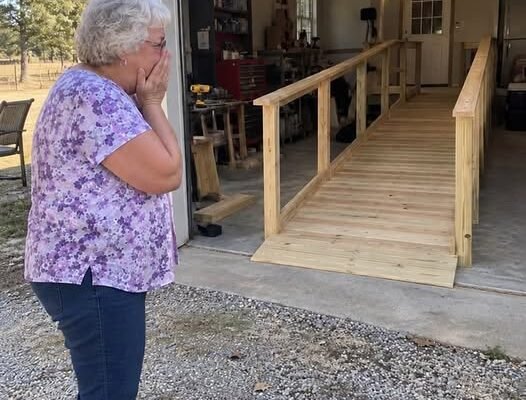
Zach was walking up the driveway.
And he had a key to Wendell’s house in his hand.
For a moment, I couldn’t move.
My son had spent months warning me that Wendell was hiding something. He had questioned his intentions, suggested he was after my money, and threatened to keep my grandchildren away if I continued seeing him.
Yet here he was, standing outside the very house he had insisted I knew nothing about.
With a key.
I turned slowly toward Wendell.
“Why does my son have a key to your house?”
Wendell closed his eyes.
“Winnie, there’s something you need to understand.”
“Then I suggest you start explaining.”
Before he could answer, Zach stepped into the garage.
“Mama?”
He stopped so abruptly that his boots scraped against the concrete.
His eyes moved from me to Wendell, then to the envelope in my hands.
The color drained from his face.
“What are you doing here?”
I held up the envelope.
“Apparently, asking questions nobody wants to answer.”
Zach looked at Wendell.
“You said she wasn’t coming until Christmas.”
I felt something tighten inside my chest.
“Christmas?”
Neither man answered.
I looked at Wendell again.
“Were the two of you planning something behind my back?”
Wendell set down the wrench he was holding.
“Your son helped me with the metal brackets for the ramp. His shop has the equipment to fabricate them properly. I gave him a spare key so he could deliver the parts when I wasn’t home.”
I turned toward Zach.
“You’ve been helping him?”
Zach rubbed his forehead.
“It was a paid job, Mama.”
“For how long?”
“About six weeks.”
Six weeks.
For six weeks, my son had been coming to Wendell’s property while telling me the man was probably hiding another woman.
I stared at him.
“Then why did you tell me you had no idea where he lived?”
Zach looked away.
That was when I knew.
Whatever was happening had very little to do with another woman.
I looked down at the envelope.
The words beneath my name were written in careful block letters.
FOR WINONA ONLY.
I recognized the handwriting.
Not immediately.
But then I remembered the birthday cards my grandchildren gave me.
Their mother always wrote their names inside.
“Jordyn wrote this.”
Zach’s head snapped toward me.
“Don’t open that.”
The entire garage went quiet.
I looked at my son.
“Excuse me?”
“Mama, listen to me. You need to understand something before you read it.”
I had heard that tone before.
When he was fourteen and broke the kitchen window.
When he was twenty-three and drove his father’s truck into a fence post.
When he was thirty-eight and borrowed money he promised to return within a week.
It was the voice Zach used when he wanted to control the explanation before I learned the facts.
I slipped one finger beneath the envelope flap.
“Mama, please.”
I opened it.
Inside were three folded sheets of paper and several photocopied bank records.
The first page was a letter.
Winona,
I should have told you this months ago. I am ashamed that I waited.
Zach has been moving money from your accounts into the business.
At first, he told me you had offered to help us through a difficult period. I believed him.
Then I saw the transfers.
When I asked whether you knew how much he’d taken, he told me you didn’t need to know because the money would eventually belong to him anyway.
That frightened me.
I found these records while helping prepare our business taxes. I don’t have access to all your accounts, so I don’t know the full amount.
I came to Wendell because I didn’t know how to tell you without Zach finding out first.
I’m sorry. You trusted us with your home, your grandchildren, and your kindness. You deserved better.
Jordyn.
I read the letter twice.
Then a third time.
The pages trembled in my hands.
For thirty-four years, I had worked in emergency rooms.
I had seen terrible injuries.
Heard families receive devastating news.
Held the hands of people who had no one else.
I thought I understood what shock felt like.
But nothing prepared me for looking up at my own son and realizing the person warning me about financial exploitation was the one taking my money.
“How much?”
My voice sounded strange.
Zach swallowed.
“Mama—”
“How much?”
He looked at Wendell.
“Don’t look at him.”
My voice rose.
“Look at me.”
Zach finally met my eyes.
“I was going to pay it back.”
That was not an answer.
“How much money have you taken from my accounts?”
He rubbed his face.
“About thirty thousand.”
I looked down at the papers.
One transfer.
Then another.
Then another.
Payments to his auto body shop.
Insurance.
Payroll.
Parts suppliers.
Amounts ranging from several hundred dollars to several thousand.
My stomach turned.
“Thirty thousand dollars?”
“Thirty-one thousand, maybe.”
I stared at him.
Money Dwight had worked for.
Money we had saved for retirement.
Money that was supposed to keep me independent after my husband died.
Zach stepped closer.
“The shop has been struggling. I had two insurance contracts fall through, and the equipment loan—”
“Stop.”
He fell silent.
I looked at Wendell.
“How long have you known?”
His face was pale.
“Two days.”
“Two days?”
“Jordyn brought the envelope Tuesday evening.”
“And you didn’t call me?”
He looked ashamed.
“I should have.”
“Yes.”
I had to stop myself from raising my voice.
Because now I was angry with both of them.
Not equally.
But I was angry.
Wendell took a breath.
“At first, I wanted this house to be a surprise. I thought I could finish everything before Christmas and ask whether you’d like to spend more time here.”
He glanced at the ramp.
“Then Jordyn came with those records.”
He looked directly at me.
“I didn’t know how to tell you. I was afraid you’d think I was trying to turn you against your son.”
“So you decided to wait.”
“Yes.”
“That wasn’t your decision to make.”
He lowered his eyes.
“You’re right.”
The answer disarmed me.
Not because it excused him.
Because he didn’t try to make it an excuse.
I turned back toward Zach.
“Give me the key.”
He blinked.
“What?”
“The key to Wendell’s house.”
He looked toward Wendell.
Wendell nodded.
Zach placed it on the workbench.
Then I said something that seemed to frighten him even more.
“And when I get home, your access to my banking ends.”
“Mama, don’t do this.”
“I’m not doing anything to you.”
I held up the papers.
“I’m stopping what you’ve been doing to me.”
His eyes filled.
“You don’t understand how much pressure I’m under.”
I looked at my son.
The little boy who used to fall asleep against Dwight’s shoulder during church.
The teenager who brought me wildflowers after passing his driver’s test.
The grown man whose children I loved more than I could explain.
And I felt my heart breaking.
But I didn’t move toward him.
“Then you should have told me you needed help.”
“You would’ve said no.”
“Maybe.”
He stared at me.
“And that was my right.”
For a moment, he looked almost offended.
Then his expression changed.
He seemed to understand that I was no longer discussing whether his reason was good enough.
I was discussing the fact that he had taken my choice away.
“I was going to replace it.”
“When?”
He had no answer.
I looked at his face and asked the question that had been sitting in my chest for months.
“Is that why you wanted me to stop seeing Wendell?”
He swallowed.
“Mama—”
“Because you were afraid another person would notice the money?”
Zach’s silence was terrible.
Then he whispered,
“I didn’t want him getting involved.”
I nodded slowly.
“So you told me he was using me.”
His eyes filled.
“I was worried about you too.”
“I believe that.”
He looked hopeful.
Then I continued.
“But worrying about me doesn’t give you permission to lie.”
The hope vanished.
“And being my son doesn’t give you ownership of my savings.”
Zach covered his face.
I watched him cry.
For years, that sight would have ended the conversation.
I would have hugged him.
Told him everything would be okay.
Written another check.
Protected him from the consequences.
But I was sixty-four years old.
I had buried my husband.
Worked thirty-four years in a profession that demanded strength from me on days when I barely had any left.
And somehow, my own children had begun treating me as though grief had erased my judgment.
I wasn’t going to participate in that anymore.
“I love you, Zach.”
He looked up.
“I love you too, Mama.”
“Then I need you to hear this.”
I waited until he met my eyes.
“I will always be your mother.”
“But I will never again be an account you can withdraw from because you believe the money will eventually become yours.”
He began crying harder.
I turned toward the door.
Then he said something that made me stop.
“What about the kids?”
I closed my eyes.
There it was.
The one argument he knew could still hurt me.
I turned around.
“Your children are not payment for my obedience.”
He looked stunned.
“You don’t get to threaten me with losing them every time I make a decision you dislike.”
“Mama, I didn’t mean—”
“Yes, you did.”
My voice cracked.
“And if you ever do it again, you will be teaching them something about family I spent my whole life trying to teach you not to believe.”
He stood there silently.
Then I walked out.
I didn’t remember much of the drive home.
Only the road.
The cotton fields.
The occasional farmhouse.
And my hands gripping the steering wheel.
When I reached Seagoville, I parked in the driveway and sat there for almost twenty minutes.
Then I went inside.
Dwight’s recliner was still beside the window.
I sat in it.
For the first time since he died.
The leather creaked beneath me.
I looked toward the little lamp he’d used when he read the newspaper.
Then I started crying.
Not because I missed the money.
Although I did.
Not because Zach had lied.
Although that hurt terribly.
I cried because I wanted Dwight.
I wanted him sitting beside me, saying something practical and occasionally ridiculous.
Something like:
“Well, Winnie, I guess we better get to the bank.”
He had always been good at making frightening things feel manageable.
I sat there until the evening shadows filled the room.
Then I picked up my phone.
And called my bank.
The next morning, I went in person.
I brought identification.
The records Jordyn had given me.
My insurance paperwork.
And a notebook.
The branch manager, a woman named Denise, listened carefully while I explained.
She didn’t interrupt.
When I finished, she said,
“Mrs. Mitchell, let’s review everything together.”
For the first time in months, someone treated me as though I was perfectly capable of understanding my own finances.
We removed Zach’s access.
Changed every password.
Reviewed authorized users.
Opened a new account for future deposits.
And documented the transfers I had not approved.
The bank began an investigation.
A few days later, I met with an attorney.
My own attorney.
Not Zach’s.
Not Wendell’s.
Mine.
The total was worse than Zach had admitted.
Thirty-eight thousand, four hundred dollars.
I stared at the figure.
Almost two years of careful withdrawals.
Some transfers had been disguised as payments for vehicle repairs.
Others were simply moved into the shop’s business account.
My son had apparently believed small amounts would escape my attention.
And for a while, they had.
That was the part that embarrassed me.
Not because I was incapable.
Because I had trusted him.
I told the attorney that.
She looked at me.
“Mrs. Mitchell, trusting your son is not evidence that you lack judgment.”
I swallowed.
“Then what is it evidence of?”
“That he violated your trust.”
I carried those words home with me.
They helped.
A little.
The next call I made was to Megan.
My daughter listened without interrupting.
When I finished, she was silent.
Then she whispered,
“Oh, Mama.”
I braced myself.
“Are you going to tell me I’m confused?”
“No.”
“Are you going to tell me Wendell is manipulating me?”
“No.”
Her voice broke.
“I’m going to tell you I’m sorry.”
I sat down.
“For what?”
“For acting like being worried about you gave us permission to treat you like a child.”
My eyes filled.
Megan continued.
“I believed Zach when he said Wendell was suspicious.”
“Why?”
“Because he sounded so certain.”
I looked toward Dwight’s chair.
“He always does.”
She laughed sadly.
Then said,
“I should’ve asked you what you thought.”
That sentence meant more than she knew.
For years, my children had asked whether I had enough groceries.
Whether the yard needed mowing.
Whether the car needed service.
But lately, they had stopped asking what I thought.
They had confused helping me with managing me.
I didn’t fully understand how much that had hurt until Megan finally acknowledged it.
“Thank you, sweetheart.”
She sniffled.
“Can I come down this weekend?”
“Yes.”
“Do you want me to?”
That made me smile.
“Yes.”
She arrived Saturday with her husband and a pie from a bakery in Longview.
We talked for hours.
Not just about Zach.
About Dwight.
About the last two years.
About how lonely I had been.
About how frightened my children were of losing another parent.
That part mattered.
Their fear was real.
Their behavior was still wrong.
Both things could be true.
Megan looked toward Dwight’s recliner.
“I never understood why you wouldn’t let anyone sit there.”
I smiled sadly.
“Neither did I.”
She hesitated.
“Wendell sat in it.”
“I know.”
“Did that bother you?”
I thought about the afternoon he’d fallen asleep there.
His large hands resting against the worn armrests.
His face peaceful.
“No.”
For the first time, I understood why.
Because Wendell had never behaved as though he was replacing Dwight.
He simply made the house feel less empty.
That was something entirely different.
The following Monday, Wendell called.
I watched his name appear on the screen.
I almost let it ring.
Then I answered.
“Hello.”
“Winnie.”
His voice was quiet.
“How are you?”
“Angry.”
He paused.
“At me?”
“Partly.”
“Fair.”
I almost smiled.
He continued.
“I’ve thought about what you said.”
“Which part?”
“The part where you told me I didn’t get to decide when you deserved the truth.”
I waited.
“You were right.”
“I know.”
He chuckled softly.
“I figured you did.”
Then he became serious.
“I kept you away because I wanted the house finished before you saw it.”
“But when Jordyn came with those papers, I should have brought them straight to you.”
“Yes.”
“I told myself I was protecting you from more hurt.”
“And?”
“I think I was also protecting myself.”
That surprised me.
“From what?”
“From being the man who gave you terrible news about your son.”
I sat quietly.
Wendell continued.
“I lost Margaret after forty-one years.”
His voice softened.
“I spent a long time believing there was nothing left I wanted from life except keeping busy.”
“Then I met you.”
My throat tightened.
“You make me want things again, Winnie.”
I looked down.
“And that scares me.”
I had never heard him say anything quite so vulnerable.
He took a breath.
“I thought if I finished the house, maybe you’d see I was serious about you.”
“You could’ve told me you were serious.”
“I know.”
I smiled despite myself.
“Would’ve saved you a lot of paint.”
He laughed.
Then said,
“Can I ask you something?”
“Yes.”
“Would you come for supper Friday?”
I hesitated.
“At your house?”
“Yes.”
“Am I expected to bring anything?”
“No.”
“Cook?”
“No.”
“Clean?”
“Absolutely not.”
I smiled.
“Then I’ll consider it.”
He chuckled.
“That’s the best answer I’ve had all week.”
Friday evening, I drove back toward Ferris.
This time, I wasn’t looking for another woman.
Or a secret.
I was simply going to dinner.
Wendell met me on the porch.
He wore a clean blue shirt.
His hair was combed.
There was a small vase of flowers on the kitchen table.
And the kitchen walls were still that beautiful buttercup yellow.
I looked around.
“It’s lovely.”
He smiled shyly.
“Thank you.”
I touched the countertop.
The rounded corners.
The pull-out drawers.
The sturdy rail beside the back door.
Every detail had been considered.
“Wendell?”
“Yes?”
“Why did you go to so much trouble?”
He took a long breath.
“Because one evening you told me you were afraid of someday needing a wheelchair.”
“I was joking.”
“I know.”
He smiled.
“But I noticed your face when you said it.”
I looked at him.
“What about my face?”
“You weren’t afraid of the chair.”
I swallowed.
“You were afraid of needing help.”
I couldn’t answer.
Wendell continued.
“Margaret lost her mobility near the end.”
His voice softened.
“Our old house had narrow hallways and stairs everywhere.”
“I spent her final two years watching her apologize every time she needed me to move something.”
He looked around the kitchen.
“I promised myself that if I ever renovated another house, it would be somewhere a person could grow old without feeling like a burden.”
My eyes filled.
“So this wasn’t all because of me.”
“No.”
He smiled.
“The house was already mine.”
“The work was already something I wanted to do.”
“Then you came along and gave me a reason to finish.”
That mattered.
Because I didn’t want to be someone’s project.
I didn’t want to be saved.
I wanted to be loved without being made to feel helpless.
Wendell pulled out a chair.
“Dinner?”
“What are we having?”
“Chicken and dumplings.”
I raised an eyebrow.
“Homemade?”
“Mostly.”
“What does mostly mean?”
“The chicken is real.”
I burst out laughing.
He looked terribly pleased with himself.
We ate at the little kitchen table.
After dinner, he showed me the house again.
The second bedroom.
The workshop.
The garden behind the pecan tree.
Then he stopped beside the ramp.
“I need to tell you something.”
I looked at him.
“Another secret?”
He winced.
“No.”
“Good.”
He took both hands out of his pockets.
“I wasn’t building this to make you move here.”
I looked at him.
“I hoped you might want to someday.”
“But that’s your decision.”
He glanced toward the kitchen.
“If you never move in, the house is still a better house.”
“And if you only come for coffee, I’ll be happy you’re here.”
I didn’t know what to say.
Then he added,
“I’m not trying to replace Dwight.”
That was when I started crying.
Wendell looked alarmed.
“Did I say something wrong?”
“No.”
I shook my head.
“No, you said exactly the right thing.”
He waited.
I looked toward the house.
“Dwight was my husband for thirty-nine years.”
“I know.”
“We had an ordinary marriage.”
“Sometimes a wonderful one.”
“Sometimes a difficult one.”
“He left his socks everywhere.”
“Never remembered where he put the good scissors.”
“And he insisted that every appliance could be repaired if you hit it in precisely the correct place.”
Wendell smiled.
“Sounds like a sensible man.”
I laughed through my tears.
“He was.”
Then I looked at Wendell.
“I don’t need another Dwight.”
His face softened.
“I know.”
“I need someone who understands that loving him doesn’t mean I have to spend the rest of my life alone.”
Wendell reached toward me.
Then stopped.
He always did that.
He never assumed.
I stepped closer and took his hand myself.
We stood there beside the unfinished ramp while the evening settled around us.
No dramatic kiss.
No proposal.
Just two people who had both lost someone and somehow found a reason to look forward again.
The situation with Zach did not resolve nearly as easily.
I wish I could say he arrived the next morning, returned the money, apologized, and became a perfect son.
Real life doesn’t work that way.
For several weeks, he was angry.
Then defensive.
Then silent.
His attorney eventually contacted mine.
The money could not simply be explained away as family assistance.
There were records.
Dates.
Transfers.
And my clear statement that I had never authorized them.
Zach agreed to a formal repayment arrangement while the financial investigation proceeded.
He sold an expensive truck.
Some shop equipment.
Then took additional contract work.
But the money was not the hardest part.
The hardest part was hearing from Jordyn.
She came to my house one afternoon.
Alone.
She sat at the kitchen table and cried.
“I thought if I told you, I’d destroy the family.”
I looked at her.
“Keeping quiet wasn’t saving it.”
“I know.”
She nodded.
“Zach told me you had offered to help.”
“I know.”
“And when I realized that wasn’t true, I was scared.”
“Of him?”
She hesitated.
“Of what would happen if I challenged him.”
I reached across the table and took her hand.
“Jordyn, I am grateful you told me.”
She started crying harder.
“But I need you to understand something.”
She looked up.
“You should never have had to choose between protecting your husband and protecting the person he was hurting.”
Her face crumpled.
We sat together for a long time.
Then I asked about the children.
“They miss you.”
My throat tightened.
“I miss them too.”
“Zach doesn’t want me bringing them over.”
I looked down.
That hurt.
More than the money.
More than the lies.
Those children had done nothing wrong.
And I refused to use them as weapons in return.
“Tell them Grandma loves them.”
“I will.”
“And when they’re allowed to come, my door will be open.”
Jordyn nodded.
“I promise.”
Three months later, I received a phone call.
Zach.
I almost didn’t answer.
But I did.
“Hello.”
“Mama.”
He sounded exhausted.
“How are you?”
“Fine.”
A long silence followed.
Then he said,
“I’ve been thinking about Dad.”
I looked toward Dwight’s recliner.
“What about him?”
“Something he used to say.”
I waited.
“He always told me a man wasn’t measured by what he owned.”
My throat tightened.
Zach continued.
“He said a man was measured by what people could trust him with.”
I closed my eyes.
Dwight had said that.
Often.
Usually after Zach did something foolish as a teenager.
“He would’ve been ashamed of me.”
I didn’t answer immediately.
Then I said,
“I don’t know what your father would have felt.”
Zach became quiet.
“But I know what I feel.”
“What?”
“Heartbroken.”
He started crying.
Not loudly.
Not dramatically.
Just a grown man finally understanding the damage he’d caused.
“I thought I was going to lose the shop,” he whispered.
“I kept telling myself I’d put the money back.”
“Then I got behind again.”
“And I couldn’t admit what I’d done.”
I listened.
He continued.
“When you started dating Wendell, I was afraid he’d convince you to look at your finances.”
I closed my eyes.
There it was.
The truth.
“I told myself he was after your money because I was the one taking it.”
My throat tightened.
Zach sobbed.
“I know how terrible that sounds.”
“It is terrible.”
“I know.”
For a while, neither of us spoke.
Then he said,
“I’m sorry, Mama.”
I had waited months for that apology.
When it finally arrived, it didn’t magically restore my trust.
But it mattered.
“Thank you.”
He swallowed.
“Can I come see you?”
I thought about it.
“Not yet.”
Silence.
Then,
“Okay.”
That was the first time in months my son accepted an answer he didn’t like without trying to change it.
I noticed.
A few weeks later, Jordyn brought the children for Sunday lunch.
Zach knew.
He had agreed.
When Sadie—my youngest granddaughter—ran through the front door, she nearly knocked me over.
“Grandma!”
I held her so tightly she complained.
“You’re squishing me.”
I laughed and kissed her hair.
“I know.”
My grandson Matthew stood behind her.
He was eleven.
Old enough to know something had happened.
“Are you mad at Dad?”
The question stopped me.
I crouched carefully.
My knees complained.
“Yes, sweetheart.”
He looked worried.
“Do you still love him?”
I thought about it.
Then answered honestly.
“Very much.”
He frowned.
“How can you be mad at someone you love?”
I smiled sadly.
“Sometimes being hurt by someone doesn’t make the love disappear.”
He considered that.
“Will you stop being mad?”
“Maybe.”
“When?”
“I don’t know yet.”
He nodded slowly.
Then gave me a hug.
Children don’t need perfect answers.
They need truthful ones they can understand.
That afternoon, we made cookies.
Played cards.
And sat in the living room while the children argued over which movie to watch.
For the first time in months, my house sounded like family again.
But something was different.
I wasn’t holding my breath waiting for Zach’s approval.
I wasn’t afraid the children would vanish if I made the wrong decision.
I knew I could love them without surrendering the right to protect myself.
That was new.
Almost a year after the open garage, Zach came to my house.
He arrived alone.
Carrying no legal pad.
No bank paperwork.
No excuses.
Just a small cardboard box.
I opened the door.
He looked nervous.
“Hi, Mama.”
“Hello, Zach.”
He held out the box.
“Found something at the shop.”
Inside was an old brass key ring.
Dwight’s.
I recognized it instantly.
My husband had carried those keys for more than twenty years.
A tiny metal tag hung from the ring.
D. MITCHELL.
Zach looked down.
“Dad gave them to me when he stopped driving the old truck.”
“I know.”
“I kept them in my desk.”
His voice broke.
“I thought you might want them.”
I picked up the ring.
The metal was warm from his hands.
For a moment, I remembered Dwight standing in our driveway, jingling the keys and asking who had moved his glasses.
Usually they were on top of his head.
I laughed through my tears.
Zach smiled faintly.
Then he became serious.
“I’ve repaid part of what I took.”
“I know.”
“I’ll keep paying.”
“I expect you to.”
He nodded.
Then he looked toward the living room.
“Can I come in?”
For a moment, I remembered all the times he’d walked through that door without knocking.
All the times he’d opened my banking app without asking.
All the times he’d assumed being my son meant he had a right to manage my choices.
Now he was standing on the porch waiting.
I stepped aside.
“Yes.”
He entered quietly.
We sat in the living room.
His father’s recliner stood beside the window.
Zach looked at it.
“Can I sit there?”
I thought about it.
Then nodded.
“Of course.”
He lowered himself into the chair.
The old leather creaked.
He rested his hands on the armrests.
For a moment, he looked so much like Dwight that my chest hurt.
Then he began crying.
“I miss him.”
I sat beside him.
“So do I.”
For several minutes, we said nothing.
Then Zach looked at me.
“I thought after Dad died, I had to take care of you.”
I nodded.
“I know.”
“But somewhere along the way, I started acting like you belonged to me.”
His voice shook.
“And I used that as an excuse for things I knew were wrong.”
I reached for his hand.
Not because everything was forgiven.
Not because the money no longer mattered.
Because he was still my son.
And for the first time, he was telling me the truth without making me drag it out of him.
“I raised you to be better than that.”
“I know.”
“I still believe you can be.”
His face crumpled.
That was as far as I could go.
It was enough for that day.
Over the next year, Zach continued making his repayments.
He remained in counseling.
Jordyn and I rebuilt our relationship.
Megan stopped asking whether I needed permission to make decisions and started asking whether I wanted company.
And Wendell?
Wendell kept being Wendell.
Quiet.
Stubborn.
Patient.
Occasionally infuriating.
He finished the ramp before Christmas.
The yellow kitchen was beautiful.
But he never asked me to move in.
Not once.
Instead, he invited me for coffee.
Then Sunday dinner.
Then little trips to antique shops where he insisted every rusty piece of farm equipment was historically significant.
He remembered I liked two servings of cream.
He kept a chair beside the window where the morning light was best.
And whenever my knees hurt, he offered his arm without making a fuss about it.
That mattered.
I eventually started spending weekends at his house.
But I kept my Seagoville home.
My bank accounts.
My car.
My routines.
He never complained.
One evening, nearly two years after I discovered the open garage, Wendell and I sat on his porch watching the sun disappear behind the pecan tree.
He reached into his pocket.
My heart jumped.
“Oh, Lord.”
He looked confused.
“What?”
“If that’s a ring, you better give me a minute.”
He laughed.
Then slowly opened a small box.
Inside was a simple gold band.
Nothing extravagant.
No enormous diamond.
Just something beautiful and understated.
“Winnie,” he said, “I’ve spent the last several years learning that being alive and having a life aren’t always the same thing.”
My eyes filled.
“I thought I’d finished the best part of mine when Margaret died.”
He smiled sadly.
“Then a woman at a senior-center meeting complained about her ridiculous name tag and told everyone the coffee tasted like boiled cardboard.”
I laughed.
“It did.”
“And somehow, my life started feeling interesting again.”
He took my hand.
“I don’t need your money.”
“I don’t need your house.”
“I don’t need you to cook for me.”
I narrowed my eyes.
“You might reconsider that last one.”
He grinned.
“Probably.”
Then his expression softened.
“I just want the chance to keep growing old beside you.”
I stared at him.
For years, I had believed loving someone again would somehow diminish what Dwight and I had shared.
But sitting beside Wendell, I understood something.
Love is not a chair that can only hold one person.
It’s not a room that becomes smaller when somebody new enters.
Dwight would always be part of my life.
Wendell wasn’t asking me to remove him.
He was asking whether there was room for another chapter.
I looked at the ring.
Then at the man who had built a ramp because he understood my fear of dependence.
The man who had made mistakes but admitted them.
The man who waited for my answers instead of making them for me.
“Yes,” I whispered.
Wendell blinked.
“Yes?”
“Yes, you stubborn old electrician.”
He laughed.
Then started crying.
I laughed too.
“Good heavens. We’re too old to be this dramatic.”
He slipped the ring onto my finger.
And kissed me.
We married the following spring.
A small ceremony.
No grand ballroom.
No elaborate decorations.
Megan helped me choose a blue dress.
Jordyn brought flowers.
The grandchildren scattered petals down the aisle.
And Zach?
He stood beside me before the ceremony.
Looking nervous.
“Mama?”
“Yes?”
“Can I ask you something?”
I smiled.
“Depends.”
He swallowed.
“Would you let me walk you down the aisle?”
For a moment, I couldn’t answer.
Not because I wanted to punish him.
Because I needed to decide whether it felt right.
I looked at my son.
The money had been repaid by then, though the trust between us was still recovering.
He had done the work.
Not perfectly.
Not without setbacks.
But consistently.
I took his hand.
“You can walk beside me.”
He smiled through his tears.
“I’d like that.”
Then I added,
“But you’re not giving me away.”
He laughed.
“Understood.”
We walked together.
Not because he had ownership of me.
Because I had invited him.
That distinction meant everything.
After the ceremony, we held lunch at Wendell’s house.
The buttercup-yellow kitchen was full of people.
Grandchildren raced between rooms.
Megan arranged flowers.
Jordyn helped serve food.
Zach stood near the ramp talking with Wendell.
At one point, I overheard him say,
“Those handrail brackets turned out good.”
Wendell nodded.
“Your welding was excellent.”
Zach smiled.
Then grew serious.
“Thank you for looking out for Mama.”
Wendell looked toward me.
“She does a pretty good job of that herself.”
Zach nodded.
“Yeah.”
He smiled sadly.
“She does.”
I pretended not to hear.
But I carried those words with me for the rest of the day.
Years have passed since then.
My knees are worse now.
I use a cane most mornings.
And sometimes, on difficult days, I use a wheelchair.
The first time that happened, I cried.
Not because I was ashamed.
Because I remembered the joke I’d made years earlier.
The one Wendell hadn’t laughed at.
He found me sitting beside the bedroom window.
He didn’t tell me to cheer up.
Didn’t say I was being silly.
He simply sat beside me.
After a while, he asked,
“Want coffee?”
I laughed through my tears.
“Two creams.”
He smiled.
“I know.”
Then he rolled the chair into the kitchen beside the little table.
The ramp worked perfectly.
The cabinets were easy to reach.
The yellow walls glowed in the morning light.
And for the first time, needing help did not make me feel as though I had become less of myself.
Sometimes I think that was Wendell’s greatest gift.
Not the house.
Not the ramp.
Not even the marriage.
He helped me understand that independence does not mean never needing another person.
It means having the freedom to accept help without surrendering who you are.
I still have my Seagoville house.
We spend time there too.
Dwight’s recliner remains beside the window.
But I no longer clean around it as though touching it might erase him.
The grandchildren sit there.
Zach reads the newspaper in it sometimes.
Wendell occasionally falls asleep in it.
And every time I see someone resting peacefully in that old chair, I think of Dwight.
Not with the same terrible ache I once felt.
With gratitude.
Because that chair no longer represents an empty place in my life.
It represents a life that was loved.
And a life that continued.
One Sunday afternoon, my granddaughter Sadie sat beside me on the porch.
She looked at Wendell working in the garden.
Then she asked,
“Grandma, how did you know Grandpa Wendell was a good man?”
I smiled.
“That’s a complicated question.”
She leaned against me.
“Tell me.”
I thought about the bereavement group.
The coffee.
The fixed porch light.
The hidden garage.
The terrible envelope.
The money.
The tears.
The years it took for my family to learn the difference between caring for someone and controlling them.
Then I answered.
“Because when I told him what I wanted, he listened.”
Sadie considered that.
“That’s it?”
I smiled.
“That’s a bigger thing than you think.”
She looked toward the ramp.
“Did he really build all that for you?”
“Yes.”
“Because he loves you?”
“Partly.”
“What else?”
I thought for a moment.
“Because he believes people should be able to move through their own homes without feeling like a burden.”
Sadie nodded.
Then asked,
“Does Daddy love you too?”
I looked toward the driveway.
Zach was helping Ethan unload groceries from the car.
“Yes.”
“Even when you were mad at him?”
“Yes.”
She frowned.
“That’s confusing.”
I laughed.
“Sometimes love is.”
Then I told her something I hoped she would remember long after I was gone.
“People can love you and still make terrible mistakes.”
“But love doesn’t mean you have to pretend those mistakes didn’t happen.”
“And when someone truly wants to make things right, they don’t just ask you to forget.”
“They change how they treat you.”
She sat quietly.
Then whispered,
“I think I understand.”
Maybe she did.
Maybe she didn’t.
But I hoped someday she would.
Because if there is one thing I learned after Dwight died, it is that grief can make the people around you frightened.
And frightened people sometimes try to control what they cannot bear to lose.
Zach was afraid of losing the shop.
Then afraid of being exposed.
Then afraid of losing me.
Megan was afraid I would become too old to manage alone.
Wendell was afraid of loving someone after losing Margaret.
And I was afraid that opening my heart again meant betraying the man I’d spent thirty-nine years loving.
We were all afraid of something.
But fear doesn’t give anyone the right to take another person’s choices away.
Not your children.
Not your partner.
Not even someone acting with the best intentions.
That afternoon in Wendell’s garage, I thought I was about to discover a secret woman.
Instead, I discovered a yellow kitchen, a carefully built wheelchair ramp, and a betrayal hiding much closer to home.
I lost some innocence that day.
Especially about my son.
But I gained something too.
I learned that my children’s love did not entitle them to control my money.
That accepting help did not make me helpless.
That I could forgive without pretending nothing had happened.
And that loving Dwight for the rest of my life did not require spending the rest of that life alone.
The garage door that was standing open that afternoon led me into a truth I never expected.
Not just about Wendell.
Or Zach.
But about myself.
I had spent thirty-four years caring for strangers in emergency rooms.
Thirty-nine years building a marriage.
And years after that trying to prove to my children that I was still capable of managing my own life.
But somewhere along the way, I had forgotten that I deserved to be cared for too.
Not managed.
Not supervised.
Not protected from every decision.
Simply loved.
Today, when Wendell makes my morning coffee, he still puts in two servings of cream.
He places the cup beside my chair, kisses my forehead, and asks,
“What do you feel like doing today, Winnie?”
And every morning, I smile.
Because at my age, after everything I’ve lived through, those may be the most beautiful words anyone can say to me.
What do you feel like doing?
Not what I should do.
Not what my children have decided.
Not what someone thinks is best for me.
What I want.
And after a lifetime of taking care of everyone else, having someone love me enough to ask that question—and respect my answer—has become the greatest comfort of all.