
Part 1: The Habit
“Don’t worry about it, sweetheart. Go sit with your friends.”
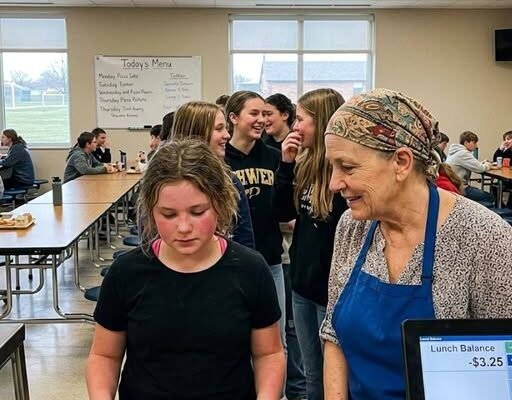
The seventh-grade girl stood frozen at Denise Holloway’s register, staring at the little red number on the screen. Negative $6.40. Behind her, the lunch line kept moving. Plastic trays bumped against metal rails. Kids laughed across the cafeteria. Someone dropped a fork.
But Denise noticed the girl’s face. The lowered eyes. The tight jaw. The way she pulled her tray closer to herself, as though she wanted to disappear behind it. Denise knew that look. She had seen it twenty years earlier on her own children.
Back then, Denise was raising two kids in a small Nebraska town while her husband picked up whatever construction work he could find. Some weeks were fine. Other weeks, the refrigerator held half a gallon of milk, three eggs, and a jar of mustard until payday. Her son once came home from elementary school and quietly asked whether he could stop eating lunch. Denise thought he was being picky. Then he finally admitted the truth. His lunch account was behind, and he was embarrassed that the cafeteria staff knew. He was nine years old. Denise never forgot that.
So when the girl standing at her register whispered, “I’m not hungry anyway,” Denise knew exactly what those words really meant. She leaned closer. “Yes, you are,” she said gently. “Take your lunch.” Then Denise tapped a few buttons and waved her through.
After the lunch rush ended, Denise opened her purse. Inside was a folded envelope containing cash from a small catering job she had worked the previous Saturday. She took out seven dollars. Nobody saw her do it. That became Denise’s habit. Not every day. Not every child. Just whenever she noticed a small overdue balance and that familiar look appeared on somebody’s face. Four dollars. Nine dollars. Sometimes twelve. She never paid enough to attract attention. She never told the students. And she never wanted them thanking her.
“They’re kids,” she once told another cafeteria worker. “Lunch shouldn’t be the most embarrassing part of their day.”
At 55, Denise had spent nearly two decades working in that school cafeteria. She knew which students wanted extra gravy. She knew which little boy hated peas but loved carrots. She knew the football players always came through hungry and that the quiet girl who sat near the window sometimes slipped half her roll into a napkin to take home. Denise noticed things. That was simply who she was.
Part 2: The Surgery
Then, one spring morning, Denise found a lump. A few appointments later, she heard words that made the room seem suddenly too small. Breast cancer. Her treatment began quietly. Denise told only a handful of coworkers. She didn’t want the students looking at her differently. On difficult mornings, she tied a scarf beneath her cafeteria cap and showed up anyway. When coworkers told her to rest, she would shrug. “These kids still have to eat.”
On weekends when she felt strong enough, Denise continued helping a friend cater graduations, anniversaries, and family reunions. The extra cash helped with her own bills. But a few dollars always seemed to find their way back into those lunch accounts.
Then Denise’s doctor told her she would need surgery. This time, she couldn’t simply miss a Friday and return Monday morning. She would be gone for several weeks. Her last day before leave, Denise stood behind the serving counter pretending everything was normal. “Take some green beans,” she told one eighth grader. “I hate green beans.” “You hated broccoli last week.” “I hate both.” Denise laughed. For a few hours, she almost forgot what was waiting for her.
Before leaving that afternoon, she walked through the empty cafeteria. The chairs were pushed beneath the tables. Sunlight stretched across the polished floor. Denise ran her hand along the metal counter she had stood behind for so many years. Then she turned off the lights.
She expected things to continue without her. Mostly, they did. Except for one thing. Within two weeks, several teachers began noticing students behaving differently at lunch. One boy started saying he wasn’t hungry. A girl asked whether she could stay in the library during lunch period. Another student returned part of his meal after seeing his account balance. The school secretary mentioned that more small unpaid balances were appearing than usual.
That was when one of Denise’s coworkers finally said, “I think I know why.” She explained what she had seen Denise do. Not once. Not twice. For years. A few dollars quietly placed into accounts whenever children were falling behind. Nobody knew exactly how much Denise had spent. That wasn’t the part that stunned them. It was that she had been doing it while fighting cancer herself.
Part 3: The Tradition
The teachers could have announced Denise’s kindness. They could have named the students she had helped. They could have turned it into an assembly or fundraiser. Instead, they decided that would betray the very thing Denise had been protecting. Dignity.
So they did something quieter. A teacher slipped twenty dollars into an envelope. The school custodian added ten. A bus driver contributed five. The principal put in cash without signing his name. Then parents heard about an anonymous lunch fund and began contributing too. A retired teacher mailed a check. A grandmother dropped off an envelope with a note that simply said: “For somebody’s grandbaby.”
Nobody kept score. Nobody posted names. Nobody asked which families needed help. The rule was simple. If a child’s account was short, the fund covered it.
Weeks later, Denise returned. She was thinner. She moved more slowly. Her scarf was tied neatly around her head, and she insisted she was ready to work even though everyone told her she could sit down whenever she needed. When Denise reached her register, she stopped. Someone had taped a handwritten sign behind it. It said: “NO CHILD EATS DIFFERENTLY HERE.” Underneath, in smaller handwriting: “Because somebody taught us better.”
Denise stared at it for several seconds. Then she covered her mouth. “Oh, you all…” she whispered. Her coworker hugged her. Denise cried. Not because people had discovered her secret. But because her secret was no longer necessary.
The school had taken one woman’s small act of kindness and turned it into part of the culture. No child would have to stand at a register feeling ashamed over six dollars. No child would have to pretend not to be hungry. No child would be singled out because the adults at home were having a hard month.
And maybe that sounds like a small thing. But anyone who grew up when money was tight knows that small things rarely feel small when you are a child. You remember the shoes that were patched instead of replaced. You remember hearing your parents whisper about bills. You remember pretending you didn’t want something because you knew they couldn’t afford it. And you remember the adults who protected your dignity without making you feel like a charity case.
Years later, most of those students may forget what Denise served on Tuesdays. They may forget the color of the cafeteria walls. They may even forget the number that once appeared beside their name. But some of them will remember that, during one difficult season of their childhood, an adult noticed. She noticed before they had to ask. She helped without announcing it. And she showed an entire community that kindness is not always about giving someone more. Sometimes it is simply making sure they never feel like less.
The best kind of kindness doesn’t put your name on the gift. It makes sure nobody has to wear their need like a name tag.
Denise eventually retired from the cafeteria. The lunch fund continued. Every year, a new batch of students arrived, and every year, someone made sure no child went hungry. The sign stayed above the register. And when Denise visited the school years later, she saw a student walk through the line, smile, and say thank you to the worker at the register.
She didn’t know that student. She didn’t need to. Because she had helped create a place where no child had to feel ashamed. And that, she realized, was the best legacy she could have left.
Some people plant gardens. Others plant hope. Denise planted dignity. And it grew. ❤️